
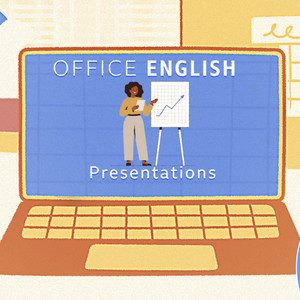
[Mastering Workplace Presentations: Strategies for Confidence and Clarity]-[Office English: Presentations]
📋 Summary
Mastering Workplace Presentations: Strategies for Confidence and Clarity
Public speaking remains a significant challenge for many professionals, often characterized by a profound "fear of judgment" and the anxiety of "forgetting your words." However, as explored in the latest Office English episode, shifting your perspective and employing structured techniques can transform the presentation experience from a daunting ordeal into a manageable professional task.
The Power of Preparation and Structure
According to the hosts, the antidote to the nervousness that typically peaks "half an hour before" a presentation is rigorous preparation. Relying on a clear structure is essential; when you know your topic thoroughly and have practiced your delivery, the process becomes significantly "easier." Preparation is not just about content—it is about managing the psychological weight of the event.
Strategic Opening Techniques
To hook an audience effectively, presenters should follow a logical flow:
- Self-Introduction: Clearly state who you are and what you do to establish credibility.
- Setting the Scope: Explicitly define the topic you are covering (e.g., "Today I'll be covering discovering new markets").
- Engaging the Audience: Starting with a rhetorical question is a powerful tool to "set up what you're going to talk about" and pique the interest of listeners who might otherwise be disengaged.
Enhancing Engagement Through Rhetoric
To keep an audience attentive, the hosts suggest utilizing specific linguistic structures:
- Emphasis Phrases: Using balanced structures like "not only... but... too" helps highlight key points. For instance, explaining that certain marketing strategies are "not only more likely to be seen... they're more likely to be remembered too" creates a compelling narrative.
- The Rule of Three: This classic technique makes information more "memorable" by grouping ideas into sets of three. Whether outlining how to "find new customers," "make them happy," or "get profit from them," the triad structure provides a rhythm that aids retention.
Handling the Q&A Session
Even for native speakers, the Q&A segment is often perceived as the most stressful part of a presentation. To manage this pressure, the hosts recommend several "techniques":
- Buying Thinking Time: Utilize filler phrases such as, "Ooh, that's an interesting question, when it comes to..." or "Funny you should ask that." These phrases provide a brief window to formulate a thoughtful response.
- Embracing the Pause: Do not panic or "rush into the answer." A brief pause displays confidence and ensures a more coherent reply.
- Honest Admission: If you encounter a question you cannot answer immediately, it is professional to admit: "In all honesty, I don't know the answer to that off hand." You can then offer to "research and get back to you," which is far more credible than faking knowledge.
Shifting the Mindset: The Worst-Case Scenario
Perhaps the most valuable advice for overcoming performance anxiety is the "worst-case scenario" technique. By asking yourself, "what really is the worst that can happen?" you gain perspective. Realizing that the outcome is likely just a moment of feeling "a bit embarrassed" rather than "the end of the world" allows you to stay "relaxed" and "positive." Ultimately, in the "grand scheme of things," a presentation is a manageable event, and adopting this mindset ensures you will "get through it okay."
Deep Learning with ListenLeap


