Hi, I'm Kitty Felde.
Eight years ago, Book Club for Kids was invited to present a live taping of the show from the National Archives in Washington DC.
Our celebrity reader was one of my journalism mentors, NPR's special correspondent, Susan Stamberg.
Susan recently passed away and we wanted to pay tribute to her generosity and kindness, which you can hear in this episode.
I've written a bit more about Susan, which you can also read at our website, bookclubforkids.org.
Or if you sign up for our newsletter, I will email you a copy of my essay directly to your inbox.
But first let's hear that glorious voice itself as we present an encore of our episode direct from the National Archives.
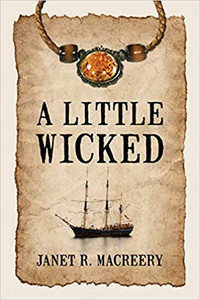
The book, A Little Wicked by Janet McCreary.
It's the Book Club for Kids.
It's a book club for kids, for kids.
It's the book club for kids.
It's the book club for kids podcast.
It's a special on the road edition of the book club for kids.
Hi, i'm kitty feldy and we taped this week's show at the national archives write stuff festival in washington dc.
Our readers are some old friends, the girlfriends book club of baltimore, who tell us why they formed their reading club.
You get to like learn, like a lot of new words and probably, when you're done, you could just I go anywhere and talk about a book with friends.
Our book is A Little Wicked, by Janet McCreary who says she returned from a visit to Scotland haunted by a little girl who would become the main character in her book.
Dory is a resourceful, a respectful, and an honorable person.
And NPR special correspondent Susan Stamberg joins us as celebrity reader.
And she brought with her a very special treasure, a tattered copy of her favorite book.
Here's how much I love this book.
Look at what's happened to the cover of it over the years.
And I pasted it together so that it would hold.
This is the Book Club for Kids, the show where kids talk about books.
Let me introduce our readers this week.
There is Sarah, a sixth grader at St.
Louis School in Maryland, and Michaela.
Oh, heck, you guys, just take it from here.
I'm 11 years old.
I'm going to sixth grade in Glenelg Country School in Ellicott City.
My name's Chimay.
I'm 11 years old, and I'm going to sixth grade at Glenelg Country School in Ellicott City, Maryland.
Hi, I'm Aubrey.
I'm 10 years old.
I'm going into sixth grade at Bally Quarter Middle in Columbia.
And we have to say, we are not unfamiliar with the Girlfriends Book Club.
This is, what, your guys' third time doing the show?
I think so.
I think so.
And you guys have been meeting for how long?
Since fourth grade.
Fourth grade?
Wow.
And you started talking about books then?
Why did you want to start a book club back then?
I love reading, so I think that joining a book club with other people who like reading would be a good thing to do.
Aubrey, how long have you been with the book club?
A couple years now.
It's really fun because we read a lot of different books and sometimes it's not books that we are used to reading and then we get to talk about it and do fun activities.
Michaela, were you there at the beginning?
Yes.
And what made you guys decide this would be some good way to spend time instead of out playing soccer or playing video games or doing something else?
Because...
Well like, because like reading a book really like educate your mind and you get to like learn like a lot of new words by like reading a book and probably, when you're done, like you could like just like go anywhere and like talk about like a book with friends and that's like the fun part about it.
That's good.
Sarah, anything, what's your, what's the appeal for you?
Well, you see, the reason I thought it would be good to join the book club was because you get to like meet people and make new friends and you also just get to read different books and like see what kinds of books that you like.
Well, let's talk about this book that we have today.
It's called a little wicked.
Let's show everybody.
You guys got them on your lap, so show the audience.
There we are, And if you are listening, you can go to our website bookclubforkidsorg, and you can see a picture of it there.
Why don't you guys stick those under your chairs so we don't hear noise.
Who wants to start us off by telling us a little bit what this book is about?
Because I'm sure not all of us finished reading it before we got here this morning.
The book is about a 12-year-old girl named Dory, and her family gets attacked by another clan.
So the chief, their chief, decides Like to let Dory go into the new world.
And I'm going to hold you right there.
You talked about clan.
Where the heck are we at the beginning of this book?
Scotland.
We're in 1962.
1962?
I thought it was 1692.
1692.
Oh, yeah.
Okay.
And what's it like there?
What's Scotland like?
She said that it had a lot of hills and mountains, and it was, like, very peaceful.
Well, sometimes it was peaceful until, like, the neighboring clans came to attack them.
Okay.
And what was life like for our heroine then?
What was she doing?
How old is she in this book?
Twelve.
Twelve.
So what was her... Did she go to school?
Did she... What do we know about her?
What was her daily life like before everything changed?
She said that she liked to go hunting with her friends, the Hendersons.
The Henderson brothers were her friends and she liked to go play with them down by water.
She said she has a bird named Merlin, a buzzard.
And her mother doesn't really approve of the things she does, because she'd just rather her stay at home and cook and clean.
But Dory likes to go on adventures.
So what happened that changed her life?
You mentioned it, Mikayla.
Continue.
The Campbells attacked.
They were going to kill all the McDonald's they could see.
So Dory and her family, they're trying to escape.
But luckily, they survived.
But Dory was just so heartbroken because her friends and family are dead.
So she goes.
They leave Scotland.
Where do they go?
Where does she get on a plane and flies to France or someplace interesting?
No, they find a place that they think might be safe, and they set up a camp there.
And...
At night they gather rocks and sticks to make a fire and they place the rocks next to the fire, so at night you have something warm and hot to hold, so you don't get cold.
Yeah, it really made me not want to be that cold or that hot.
I can imagine a hot rock next to me would be not particularly comfortable.
Eventually, she escapes, gets on a ship.
What's the ship like?
She has to disguise herself as a boy.
Why? because she's going to be part of the crew and the crew is just boys.
And the only person on the ship that knew she was a girl was the captain himself.
And she had to disguise as a boy because the captain didn't want her to be like different from everyone else.
Because there's not really girls on the crew back then.
It was kind of dangerous.
Yeah.
Was it a pleasant trip?
Was it a great trip?
No, because since she was the new person, all of the crew members were playing pranks on her and stuff.
And the captain's parrot was kind of getting her and her bird into trouble.
Her bird Merlin, the captain's parrot was getting Merlin into trouble.
I want to come back to that bird.
So she arrives in America at a not particularly good time or place.
Where does she end up?
She ends up in Massachusetts, and the bad thing is it's during the witch trials.
She arrives in Salem, Massachusetts.
Yeah, not exactly your best timing of places to land.
Somehow she found her uncle, and her uncle paid her fee, and they took her in.
And how are these new relatives?
How do they treat her?
Sarah?
They treat her very well, like family.
The aunt actually knows that she can't really write the English language, so the aunt tutors her on how to write.
They're nervous because they don't want anyone to accuse Dory for being a witch.
Well, let's hear a little bit from this book, so we can get kind of a taste of what it sounds like and what the story is.
So we'll take a pause and hear from our celebrity reader.
Her voice is as familiar as NPR itself, one of what we call the founding mothers of public radio, the first woman to anchor a national nightly news show.
She's been inducted into the broadcasting and radio halls of fame.
Let's have a very warm welcome for NPR correspondent, sometimes known as Josh Stanberg's mama, Susan Stanberg.
Thank you.
This is so great.
You're obviously such good readers.
I love hearing you tell the story.
And now we ought to listen to the language of the story.
Thank you, ma'am, I said.
The food smelled wonderful.
I dug in.
The bread tasted sweet and delicious.
A few minutes into my meal, Aunt Orly handed me a cloth napkin.
I realized I was bent over my plate, shoveling food in my mouth like an animal.
Apparently I had been at sea too long.
Embarrassed by my boorish behavior, i took the napkin, sat back and ate, like the granddaughter of a clan chief that i was.
Aunt orley busied herself with folding linens.
How many languages do you know, she asked when i paused to breathe between bites.
Five, ma'am.
I answered with pride gaelic english scots, french and latin.
Can you read or write any of them?
No ma'am, My pride diminished.
That is fine.
We can teach you to read and write English.
You know your scripture lessons?
Well enough to satisfy father, ma'am.
And urnarch an ticharna?
Do you know that?
Aye, ma'am.
In English, it's called the Lord's Prayer.
Only in Gaelic, ma'am, and French.
Seeing that this disappointed her, I added, I am sure I can learn it in English.
You will have to, she said it is one of the tests.
Tests, ma'am i.
The ministers seem to think that witches cannot recite the lord's prayer without mistakes.
It is part of the examination for suspected witches.
With my stomach satisfied for the first time since i could remember and my body in clean clothes, i had begun to feel stronger and my headache to fade.
A trickle of fear wormed its way into my full stomach.
The talk of witches disturbed me.
Aunt Orly spoke as if I would have to undergo an examination for suspected witches.
If that were true, then Uncle was right.
Everyone in Salem had gone mad.
I decided to brave another question.
Will you tell me more of these witches, ma'am?
I ventured.
It is silliness gone awry.
Witches is the word they use here for anyone they believe is under control of the devil.
Their main crime seems to be making young girls cry.
It started months ago when a few girls became ill and the doctor proclaimed there was nothing to be done.
The minister sat with them and declared them bewitched.
Through prayer and fasting, they healed. then rev paris claimed his slave-woman from barbadoes tituba confessed to bewitching the girls one of whom was his own daughter he claims the slave-woman named others who were with her when she signed the devil's book soon there were suspected witches everywhere not just in salem but other towns too andover beverly boston i nodded Under the table, my hands twisted and untwisted the napkin.
None of that is important right now.
You must get used to your new home and routine as soon as possible.
Justin will expect you to perform the same chores our Margaret did, and I will teach you to read and write as you do them.
You will have some freedoms on the farms, but we must be careful.
Anything can put you under suspicion.
Do not speak anything but English when anyone else can hear you.
Even your uncle.
Would he suspect me a witch, ma'am, I asked, alarmed.
No, child.
He would suspect it a more difficult task to protect you.
Squeals and snorts from the pigs arose to a new pitch.
They sounded frightened.
Uncle burst through the door and yelled, Child, come quickly.
I believe I've found your buzzer.
Thank you later on.
So she'll confess what is her favorite book, which is the question we ask everybody.
So I hope you're thinking about which one is your favorite book.
Let's talk a little bit about Dory.
Do we like her?
Is there another character you like better?
You're nodding, Michaela.
You like Dory?
Oh yeah, tell me why.
Because because she's like brave and strong.
When she went on the pirate ship and like the boys well, the crew was like picking on her.
She like didn't like like blow her.
Cover that she's a girl.
And she was like strong enough to get through the whole like ship ride because there was a lot going on.
Would you be that brave?
I will.
Yeah, I will be that brave.
All right.
Anybody else like Dory or is she not your favorite character?
I like Dory.
She is really smart.
One time when she was going to get on the ship to America, They were trying to find a place for a shelter and there were castle ruins nearby and she had the idea to make the shelter at the castle ruins so the wind wouldn't be coming at them from all sides.
So she was brave.
And she was What do you call that?
When you come up, She would come up with ideas.
She was... Intelligent.
Yeah, she was intelligent, so that's why you liked her, too.
What else?
Are you a...
Dory fan or not?
Yeah, I like her because she was resourceful.
Resourceful, that's the word I was looking for.
Thank you.
She knew how to use what was around her to her advantage and how to get out of some tough situations.
Would you be that resourceful?
I don't know if I would because I don't think too quick on my feet.
I can think, but not too quick on my feet like Dory can.
Are you resourceful enough, do you think, Aubrey?
Kind of.
Not as much a story, though.
Not as much.
We're never as good as the people in the stories, but oh well, right?
Sarah, about you.
Would you be that resourceful?
Yes.
She was my favorite character because she was brave and she never gave up, even when she really wanted to.
Let's talk about Merlin.
He was my favorite character because he was sort of independent and resourceful in his own way.
He crossed borders. the ocean sort of snuck over on his own.
I mean, generally people have parrots as pets or cockatiels or, you know, little parakeets.
They don't generally have buzzards as pets.
Talk a little bit about Merlin.
Well, Merlin, he's a bird.
He gets his own food, like voles or small mice.
And he was trained to come when Dory called him, but He always comes at the exact right time.
Kind of like a dog.
Yeah.
Did you guys study the Salem witch trials in school?
Did you know anything about them before you read this book?
No.
I mean, yes, I knew a little bit about them.
Not too much, but I knew a little bit.
What did you know, and do you know where you learned it?
I don't know.
I think I just went to the library, and I just saw a book about it, and I just picked it up.
But that was, like, when I was in third grade, though, so.
Sarah?
Sarah?
I learned about them in my school.
We were learning about the New World and all about what was happening in there.
And the witch trials, like people just started thinking that people were witches because they saw that they were doing odd things and odd behavior.
You know, I always think about that period of history and wonder What really happened?
What was really going on?
I mean, do you guys believe there really were witches at that time, or was there another explanation for it?
Do you think?
I mean, I think they believe that there are witches, but now I think that us, looking back on it, I don't think that we think that there was witches.
I think that the people who they accused of being witches were just doing things that they weren't used to seeing or hearing about, and they just thought that they were of the devil or something.
Let's say, somebody today was blasted back into the past, to Salem, who do you think they would accuse of being a witch?
I mean, who today would be acting a little unusual that might be accused of being a witch?
Maybe if they were talking about self-driving cars or something.
Self-driving cars?
Yeah, that probably would get you branded right away.
Yeah, that's a good one.
What else?
How you make something fly like airplanes.
They didn't have them back then, so they would probably be like They would be suspicious of anything modern, I guess.
Yeah.
Yeah.
What would you have to be really careful not to do in order to not attract attention to yourself?
To be accused of being a witch?
Probably just like not talk about sort of the things, like I know back then they were more reserved.
I feel like the things we talk about nowadays would kind of make them like think we were kind of like odd or weird.
Like what?
Like all the politics and stuff and just all the things that are going on in the world.
They would probably think that those were a bit crazy.
What about just being a smart girl?
Would that get you in trouble, do you think?
Probably, because girls back then were expected to cook and clean.
They didn't really have a proper education, most of them.
Except Dory.
Dory spoke how many languages?
Four?
Five.
Five.
What else do you have about you that might get people really upset if you were flashed back to the 1600s.
Like the way we're dressing right now.
The way we're dressed.
There you go.
Yeah.
Maybe modern games like soccer or football.
Playing those games, you think?
Yeah.
Yeah, because they would be seen as ungodly or witch-like.
Yeah, people like tackling each other in American football.
They probably wouldn't like that.
I think that too about football, but that's me.
What else?
Probably like well, we just like go to the grocery store and like back then they had to like grow their food and make it, so the fact that you'd expect instant food would be yeah, that would make you stand out the way we talk, maybe because they talk differently.
Like today we go like omg lol, and they would think that was secret code for the devil.
Yeah probably yeah, probably.
Well, would you like to fly?
No, first, let's start with Scotland.
Would you like to be in Scotland now or then?
Now.
Probably not then, especially at the MacDonald tribe or clan, because they were getting attacked and they weren't on the best side of the king.
The king didn't really like them.
So it would be dangerous.
Yeah.
Did it sound like a pretty place, though, to go?
Would you like to go now?
Yes.
It sounded pretty.
Yeah, not in the summers.
But during the winter.
I know when she was in Scotland it was winter and they said there was like a foot of snow everywhere.
So probably during the summer.
In the winter, it sounded really cold.
You get snow here, but not that cold.
Because it's like farther up north.
Okay, so it would be colder in winter.
And we're all a bunch of wusses, is that what we're saying?
Yeah.
How about?
Would you like to have been?
Probably not, but would you like to have been in Salem in the 1600s?
Do you think you could have survived?
Let's put it this way.
Could you keep your modernness under wraps and survive in Salem in the 1600s?
No.
If I had to.
No, because I know I'll be doing really well and then I'll just say like OMG, and then they'd accuse me of being a witch or something.
And then you'd have nowhere to go from there.
Yeah.
What about the way that kids were expected to behave back then?
You talked on it a little bit.
They weren't supposed to talk to adults anymore.
Unless they were talked to by them and they had to say, like, ma'am and sir.
Well, what do you think about that?
Could you do that?
It would be hard.
It would be hard, like trying to like remember what to say and like when to like when to say it.
But don't we still respect elders?
You guys certainly are a well-behaved bunch of people.
You know, we're not insulting people.
What do we do to show respect today?
You can just say, like you could just like maybe don't talk back, or something.
Or you can just say or if like, your parent calls you, you can just say like yes, or something.
But, like, back then it was, like, more strict.
Be very polite.
That's always an option.
Having good manners.
What does that mean?
Like, saying please and thank you.
Probably not, like, say, like, what when they say, like, when they, like, call you because...
Because I sometimes do that.
Yeah, I know, I do too.
What do you want?
So what's that line?
Where's that line you cross when you know you've probably done something that isn't as respectful as it ought to be?
I know, I do this.
Sometimes I talk back, and that's not really good.
Like how bad?
It's gotten really bad sometimes.
I hear it gets worse when you're a teenager.
Yeah.
So what would say the theme of this book, or the you know what's the overall feeling of this book?
I mean, is there something you take away after reading this book?
I feel like just like to always just be brave and just kind of just not really give up and just kind of always just persist.
Yeah, just persist.
Okay, all right, what else?
And it was a harder time back then than it was here now.
We're just kind of laid back, and then it was always work and You had to be on your best behavior all the time.
It didn't seem like there was much playtime for... Yeah.
Yeah.
Yeah.
It feels like they were always doing chores or something back then.
Yeah.
Unless you got up in the middle of the night.
Which some of them did.
Got to milk those cows in the middle of the night, practically, first thing in the morning.
Talk about some of the historical details in this book.
Was this something that... made you realize this took place in a particular place in time.
So you knew that it didn't take place in modern day.
What was the things that stuck out?
They were calling America the new world and colonies instead of states.
Good.
What else?
Witch hunts.
Yeah, we don't have many of that.
We have witch hunts, but we don't call them.
You know, it's so interesting how language gets co-opted.
So they may call it a political witch hunt or they may call it a something else witch hunt, but it's not like you're going and finding witches and burning them at the stake.
It's a different thing.
Well, clans?
Clans.
We have a different connotation for clans today, but back then, what did it mean?
Like a group of people, different groups of people who have different heritage and things like that.
Like family groups and stuff like that, yeah.
And now we can just move from one city or town to another.
They didn't really...
Especially in Scotland.
It developed into towns and cities and it wasn't really common for people to move clans like we move towns now.
Yeah, you'd stick with your own kind.
Yeah.
Yeah.
Would you have the courage to cross the ocean without your parents?
No.
No.
No.
No?
None of you?
Really?
Well, like, Dory knew that...
If she was going to preserve the clan, if I had to do something like that, then sure.
But if it was just a trip, then no.
Yeah, life is like the same thing as Aubrey.
If it was to preserve my family's history or something, I might be able to do it.
But if it was just to go overseas and just go on a vacation or something, I would probably need a parent with me.
Okay.
Yeah, if it was family matters, I would go, but trips, no.
If it's very, very important, I might go.
But I hear that quiver in your voice.
It doesn't sound like something you'd choose to do at all.
No.
No, yeah.
Well, let us do this.
Let us talk to our writer a little bit about Scotland and that world and how she did research.
A Little Wicked is her debut novel.
Please let's welcome our writer, Janet McCreary.
Why this story?
Why did this story speak to you?
So my husband and I were planning our first.
At the time we thought was our one and only trip to Scotland.
And so we tried to pack in as many places that our ancestors came from as we could.
And Glencoe is where the McDonald's are from obviously, and my husband's clan, the McCurys, are part of the McDonald clan.
So I'd known the story of the massacre of Glencoe, but the Glencoe Visitor Center is extraordinary and if you ever get an opportunity to go, I highly suggest you spend at least two or three hours there.
It was wonderful.
And so that is where the story begins.
And how did you get those details about?
You know, like the hot rock that we talked about sleeping with a hot rock
Lots and lots of research.
There have been many, many volumes and articles and blog posts and all kinds of things written about both the Glencoe Massacre and the Salem Witch Trials.
So, researching the time period, reading as many primary sources and chronicles and newspaper articles from the time period, and I stumbled across this idea that, sleeping with a hot rock, Campers today sleep with a hot water bottle, which I think would be more comfortable than a rock.
But at the time they didn't have hot water bottles, and so they would heat up a rock and fall asleep with it.
What about that idea of, I mean, it's sort of like there's two stories going on.
There's this, what was going on in Scotland at that time, and then you've got a big thing that happened in America the Salem Witch Trials.
What made you think about putting the two things together?
When I left Glencoe, Dori was with me.
She was talking to me, jabbering in my head, and I knew I had to write a story about a survivor from the Glencoe massacre.
So I was literally searching online and went to historycom and it typed in the year 1692 and up came The Sandwich Trials.
And I said, there's your story.
Talk about the food.
Again, was that something that came up in your research?
I thought the food was particularly.
That was the detail that stuck in my head as I was reading the book.
Maybe I was just hungry when I was reading the book.
Yeah, again, a lot of research.
Luckily it wasn't our only trip to Scotland, so I got to do a lot of in-person research both in Scotland and in Massachusetts.
And people are very proud of their heritage and if you ask the right questions to the right people, they will talk to you for as long as you let them about.
My great Mary's Six times grandmother was famous for her cornbread.
If you couldn't catch a hare in Scotland, you couldn't survive more than a day.
They love to tease visitors about haggis and what it's actually made of and if it's an animal or a product of an animal.
It's talking to people in the places where these things happened.
It's the best kind of research you can do.
Well, let's ask these guys.
Have you ever heard of haggis before?
Yes.
What did you know about haggis?
I know it's like a bunch of different animal meat like put into like one sausage or something.
Not exactly meat.
Or like lungs or something.
Organs, yes.
I've had it actually.
I had it on Burns Day.
Yes.
And it was actually kind of good.
It had kind of consistency of oatmeal.
And it was kind of spicy oatmeal is kind of what it tasted like to me.
But modern haggis has a lot more oats in it than it would have before.
Yeah.
It doesn't taste bad.
It's very good.
Blood pudding is very similar, but it's held together more with pig's blood and cow's blood than with oats, so it's a little harder to stomach than haggis, I think.
Personal.
Have you ever gone out and slaughtered an animal yourself?
No.
Okay, just thought I'd ask.
All right, well, let's have a round of applause for Janet.
We'll bring her back in a minute or two.
Thank you.
We always like to spend time on the Book Club for Kids talking about our other... favorite books.
How about if we put it that way?
And I'm going to start with you guys, our panel of readers.
But I also want to get our suggestions from Susan Stamberg and Janet McQuarrie.
And we're going to invite you, the audience here at the National Archives, to tell us your favorite book as well, and why.
And you'll see microphones at either end of the audience section.
And we'll have a list of everybody's favorite book at our website, which is book.com.
But let's start off.
Who has a favorite book?
Who wants to start us off?
All right, Aubrey, what's your favorite book?
My favorite book is The Books of Elsewhere.
Which, by the way, is one of our book club selections, so you can listen to other kids talking about that.
But why do you like that series?
I like it because I've actually only read one of them, but the main character.
It was possible to go through paintings in her house.
It's kind of a mystery how.
Do you like kind of fantasy books?
Is that a genre you like?
I like fantasy, and I like adventure and mystery, too.
Okay.
Well, then this suits the bill.
May, what's your favorite book?
My favorite book is the Sisters Grimm series.
I don't know that one.
I mean, like, actually, a lot of people don't know, but it's a really good book.
Why do you like it?
I like it because, like, it has a lot of... It has a mix of mystery and fantasy, and, like, it's...
And there's actually a good plot line and there's a lot of extra characters that help to thicken the plot line even more.
Is it kind of a riff on the Brothers Grimm fairy tales?
Yeah, they actually use these characters.
The characters from their fairy tales are in the story, as well as the other main characters in the book.
Oh, that does sound good.
Thanks for that.
How about you, Michaela?
My favorite book is Courtney Cromren.
The reason I like it because... I shook my head because I didn't know witch.
I don't know that one either.
Because there's a lot of magical creatures and they have this place called Goblin Town and they use a lot of magic and they use a lot of witchcraft.
So you're another fantasy fan too.
Yes.
All right.
Sarah, what's your favorite book?
My favorite book is The Curiosity House. which is actually a series.
And I like it because it's a fantasy book and a mystery book.
And it's about these four kids who live in this museum house.
And their star item was a shrunken head of a chief, Indian chief.
And one day it just like gets stolen and they're out to find it.
So it's a good mystery.
Then, do you like other mysteries as well?
I mean, are those, is that your favorite genre, do you think?
Uh probably yeah yeah, all right.
Well, let's bring our celebrity reader, susan stanberg, back out and ask oh, she not only has a favorite book, she brought it with her.
Susan, what'd you bring us?
I brought you.
This is a very old book, but then again, I'm a very old reader.
Oh, stop.
And this was when I was your age, ladies.
This was my all-time favorite book.
Anybody here read Little Women?
Moms did, yeah, yeah.
And did you love it the way I did?
I was trying to think how many times I read this book.
Were you Joe?
Of course.
In fact, most women I know, were you Joe?
No.
Ladies, yes, we all were.
But let me tell you about it.
The author is Louisa May Alcott, and here's how much I love this book.
Look at what's happened to the cover of it over the years.
And I pasted it together so that it would hold.
It has to be the most tattered piece of paper you can imagine.
Yeah, it's absolutely tattered.
Old-fashioned tape even on the other side of it holding it together.
Yeah, and it's just stuck together as well as I could do it.
That's how beloved it was for me.
It was written something like almost 200 years after the Salem Witch Trials but it's also set in Massachusetts but I think a different part of town of the state.
And I'm an only child.
This is a book about four sisters and I think I loved it for that as much as anything else to see what it would be like to be in a big family all those years ago, and a big, loving family where everybody was in everybody else's business all the time.
The girls' names were, and it's by order of their age the eldest was Meg, the next was Joe.
That's the one that all of us wanted to be Beth and Amy.
Although Beth was the youngest, so that's not really in order.
I think she was.
Was Amy the youngest?
Amy the youngest, yeah.
Thank you.
I kind of think I was actually an Amy and Beth.
Well, amy was the most beautiful of all the girls.
That wasn't why, because she sort of had center of attention disease.
Yes, she loved that.
She loved as much attention as she could get and she was very artistic in her way.
Joe was a writer always and very independent, and i think that's why we liked you so much.
They were a tight and loving family.
But if of all of them, joe was the rebel it if that's too strong a word for her, but she was the one with the great ideas and the one who didn't always like the status quo and had different ways of thinking.
Meg was the oldest and the best behaved, I think.
And the most boring.
And maybe the most boring.
But older sisters are often that way because they have to sort of set the pattern for the ones who come after them.
And Beth was the darling and she wasn't, as healthy and robust as everybody else.
She was ill, and the sisters paid special attention to her because of that.
So those dynamics, how they were with one another, what they learned about life.
It was set during the American Civil War and their father had to go away to serve in the war.
I remember.
I don't really remember this book as well as I ought to, given how many times I read it, but I remember, remember him as a doctor, as did Janet.
We were talking about it before, but I cheated.
I googled the plot before I came to see you, and it said he was a minister.
Anybody who's read it more recently have any idea what the father did?
Anyway, he was away, and he was deeply missed, and life was pretty tough on the family.
They had to fend for themselves in his absence.
They didn't have much money.
They didn't have any delicious food, and I almost memorized the very first words of this, because it gives you a flavor of what the girls were like.
And it's Joe, of course, who does the talking.
Christmas won't be Christmas without any presents, grumbled Joe, lying on the rug.
It's so dreadful to be poor, sighed Meg, looking down at her old dress.
I don't think it's fair for some girls to have plenty of pretty things and other girls nothing at all.
Added little Amy with an injured sniff.
We've got father and mother and each other, said Beth contentedly from her corner.
Beth was the peacemaker.
So right away, isn't that wonderful writing?
It gives you right away a sense of the character of each of those girls.
So different.
Well, I urge you ladies to try to do this.
It's old language.
It's old-fashioned language because it's a very old book.
But there's some good new words to be learned from it.
And the incidents in it are, although the scenery was so different, in the background, the setting, but they're absolutely universal and as modern as today.
So maybe sometime you'll talk in one of your book clubs about this, or anyway.
We'll hope somebody will pick that book.
Oh, wouldn't that be good?
Or you all pick it yourselves and see what you think about it.
Take a look at some of the pages.
Susan, thank you.
A pleasure.
Janet, what's your favorite book?
Asking a writer or an avid reader what their favorite book is is kind of unfair.
But I finally settled on Fever 1793 by Laurie Holtz Anderson.
It takes place during the yellow fever epidemic in Philadelphia in 1793.
And the reason why I really chose that book is because I didn't so much read it as I experienced it.
I feel like I've been to Philadelphia 1793 and bitten by a mosquito. cried through a lot of it.
I celebrated.
I really feel like I experienced the book.
And so it gives me sort of a benchmark to shoot for when I write.
So we want to say thanks this week to Jonathan Jensen, who composed and performed our music, and Emma Steinkalmer, who designed our logo.
And we want to thank our readers this week Jemay Mikayla, Sarah and Aubrey.
Thanks you guys for coming out, as well as to Tanya for organizing our group as usual.
And thanks to Amber Craft and all the folks here at the National Archives for making us feel so welcome.
We have a free newsletter for teachers, parents or librarians full of free tips about how to turn kids into lifelong readers.
You can sign up at our website. bookclubforkids.org.
And we're on Facebook, Twitter, Instagram, even Pinterest.
But most important, please subscribe to the show on Apple Podcasts or your favorite podcast provider and ask another friend to do the same.
I'm Kitty Felde.
Thanks again for listening.
And we're very excited to announce that our other podcast, The Fina Mendoza Mysteries, has been included on School Library Journal's list of series and serial podcasts that will keep kids listening all summer long.
You can listen too.
Just subscribe to The Fina Mendoza Mysteries wherever you listen to podcasts.