Hello and Happy New Year.
It's Michelle Martin from Morning Edition.
Thank you to everyone who donated during our end of year fundraising campaign.
2025 dealt a big blow to NPR and local stations with the loss of federal funding for public media.
But we are so heartened by the outpouring of support and we will get through this together.
Thank you for keeping NPR strong moving into 2026 and beyond.
Director Pak Chan-wook knows how to craft dark and suspenseful thrills.
See Oldboy, The Handmaiden, and Decision to Leave.
His latest feature is No Other Choice, a bleakly comical commentary that's sure to satisfy his fans and quite possibly reel in some new converts to his style of mayhem.
It's South Korea's entry for the Oscars International Features category, which isn't surprising.
It's a very fun adaptation of Donald E Westlake's novel The Axe, with great performances and truly masterful action set pieces.
I'm Glenn Weldon.
And I'm Ayesha Harris, and today we're talking about No Other Choice on Pop Culture.
Happy Hour from NPR.
This week on Up First, the Trump administration and Venezuela.
Can the U.S. run a foreign government, as the president says?
They simply may not adopt the policies that Trump would like to see.
It's a complex, fast-moving story.
As always, we're working overnight and every night, so you can start each morning knowing what matters.
Listen to Up First on the NPR app or wherever you get podcasts.
Up first is a Golden Globe nominee because of you.
Your support makes it possible for public media reporters around the world to bring you three essential stories every morning.
Up first, now a Golden Globe nominee for best podcast.
NPR's podcast Trump's Terms is your source for same-day updates on big news about the Trump administration.
Short, focused episodes, one topic at a time, about five minutes or so.
We carry out reporting from across all of NPR's coverage, so you are always getting the biggest, most urgent stories.
Listen to Trump's Terms on the NPR app or wherever you get your podcasts.
Joining us today is Walter Chow.
He's a writer, critic, and film instructor at the University of Colorado.
Welcome back, Walter.
Thanks so much for having me.
Great to have you here.
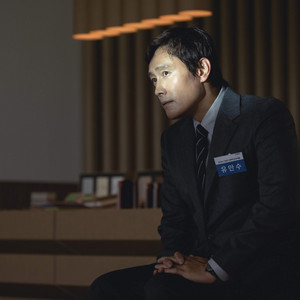
Well, in No Other Choice, Lee Byung-hun, who you may recognize from Squid Game, plays Man-Soo a man at a crossroads.
After 25 years, he's been laid off from his job at a paper manufacturer.
His beloved childhood home, where he now lives with his wife and children, is on the brink of foreclosure.
So he's determined to find a new job in the same industry.
But when he tries applying at a different company, it goes badly.
He resorts to some desperate, unhinged measures.
He tracks down the other job candidates and attempts to eliminate the competition one by one.
Mantoo's wife Miri is played by its son Ye Chin, and one of his primary targets Bummo, is played by Yi Song Min.
No other choices in theaters now, and Spoiler alert, I think we all really liked this.
We were talking about this before we started rolling, but Walter, give it to us.
What are you loving about this film?
Man, I just love this movie so much.
I'm a huge Park Chan-wook fan from way back.
I like to think of him as the little garage band I discovered before.
They were cool and now everybody's filling stadiums to watch.
I feel so protective of him because he opened my eyes in a lot of ways to so many things, like how, How many great movies were coming out of South Korea and have been for so long.
He kind of reminded me of Steven Spielberg.
I was just really so dazzled by Oldboy the first time I saw it.
So I've really been following his career.
And this is sort of to your point, Aisha that I really think it might be a gateway drug for Park Chan-wook for a lot of people.
It's not as violent, although there's violence, but it is not as violent or deranged, let's say, as some of his other movies.
It's funny.
I think really, really funny sometimes.
And I adore Donald Westlake.
I mean, I think...
I even like it better than Elmore Leonard and Ed McBain and those guys.
He just has such a brilliant way with prose and with crime.
And there's all this stuff that I love about this, the crime element, the paper element.
What is it about working at the paper, I guess, that is so funny to us?
But it's so relevant and contemporary, I think. you know, I don't want to steal anyone's thunder.
I think, Glenn, you said it might be the best movie of the year.
It's kind of hard to argue when you're watching it.
You know, for me, it's just so well done and beautifully played.
No complaints.
It is just so much fun.
Yeah.
Well, you've shown Glenn's hand already, but Glenn, tell us.
Oh, this is entirely my jam.
This is probably my favorite film of the year.
It's a wonderfully nasty piece of work.
I love that about it.
It's funny, as you mentioned, Walter, but it's not funny in just one way.
It is satirical throughout, of course, but there is some wild slapstick in here that really works.
It's also and to your other point Walter, it's got this great specificity about its subject, about papermaking.
You'll learn stuff about how paper is made.
Who knew that there is like the roll of paper?
It's just cool like that.
It's also got callbacks in it that I think are going to make a second and third viewing all the more fun.
One I thought about this morning was, at one point, a character says...
Words to the effect of I'm so frustrated with you that I could turn into a mad woman screaming in the woods.
And you're wondering, why would they say that?
That's such an odd phrase.
And then, of course, it comes back.
A mad woman screaming in the woods.
This direction is so old school showy in a really pleasing way.
If he can keep the camera moving in any given scene, he will.
There are pans and zooms and fades that put you in the mind of Hitchcock very intentionally.
It reminds you that you're watching a movie.
If That makes sense.
I mean, there's a place for naturalism and for realism and for you know what the writer John Gardner used to say the vivid and continuous dream.
But there's also room for this kind of sit back, bitches.
This is cinema.
And I just love it.
And that extends to the sound design, right?
There was an early scene where he's tying up this bonsai tree and the foley in that scene goes nuts.
It's really loud.
The sounds of stretching and straining and it's very.
I guess you'd say it's analog or organic or whatever.
Yeah.
And you're like that is a record skip moment.
Because you're like why are we watching and listening to this so loudly and so conspicuously?
And then that also comes back.
So yeah, I'm just going to sit back and listen to you all talk, because I got no notes on this thing.
Perfect movie.
I had a feeling when I saw this film at the Toronto Film Festival that this was going to be your jam.
I'm glad that I know you well enough at this point that I can tell what is going to be very much your jam.
And this was also interesting. very much my jam.
For those folks who might only know him for Decision to Leave, which was.
It's definitely not his breakout in the Western world movie by any means.
But you know, it was one of those movies that I saw on a lot of end of year lists, a year that came out a few years ago.
So this is a very different movie.
That movie is kind of haunting and noir-ish and very dramatic.
And I went into this not really expecting necessarily it to be so funny, but it is.
And there's even a montage that includes Sam and Dave's Hold On, I'm Coming.
And I was not expecting this song in this movie, but that's what we've got here.
We've got a lot of different genres being played with here.
This is also like yes, it's about desperation and the incoming of technology and all these things that we are actively thinking about.
Especially, all jobs seem to be at the threat of AI and at the threat of rapid innovation quote-unquote innovation.
I use that in scare quotes but like, this is also a story about a man trying to keep his family together, and this relationship between Mansu and Miri is just really interesting.
The way that unfolds too, because we learn so much about them, but in very like piecemeal ways, in the way they interact with each other.
And we know a little bit about his history and how that might be affecting how he's reacting to not having a job.
I just love those little moments.
And yes, it's an action thriller.
Yes, it's all those things.
But it's also, it's got characters that you believe are real and feel real.
And that elevates it for me and makes it definitely the type of movie that I want to rewatch again and again.
I really love that you mentioned Mary and how interesting a character they make the wife, because she you know, it's really easy just to overlook that character or just to make her sort of the punchline of continuous terrible revelations.
But yeah, they don't do that.
She's very much an active participant.
She gives kind of an interesting meaning to the idea of domestic loyalty.
And she's very aware of who she is and how she moves through the world.
You know when there are really horrible people wanting to buy their house or looking at buying their house because you know he's been laid off.
And the whole crux of the story is he's been laid off from this very specific job.
And because he's older and he can't really, you know, this job of making paper is going away essentially.
A lot of our crafts jobs are going away to the scare quote innovation.
They're coming to look at the house that they may have to put on the market and she's aware of how she's being looked at and she returns the look and then later glenn to your point again.
It comes back around you know she, she takes a minute to to amplify, you know, certain touch points and there's such a smart thing about it.
We're really involved in this really funny exciting slapstick, violent sometimes thing that's happening Just so a person has the right to thump people.
It's so, you know, quotidian and small.
I got real existential with this at some point.
I was like, really, what am I doing?
You know, what is it in the grand scheme of things that's so stinking important?
But I love that you bring up Hitchcock too, because Park has said that he was inspired by Vertigo, the movie that pushed him into making movies.
I think Decision to Leave, his last film, is his Vertigo.
Yes, absolutely.
It really feels like, you know, that obsessive, right?
This feels like his North by Northwest, which is exactly how Hitchcock followed Vertigo.
It's really fun.
It's kind of like a greatest hits of Park Chan-wook.
Like, hey guys, look, just like Hitchcock, He's never invisible in his movie.
He's always like, watch this one shot that I'm going to carry through a crane through this house.
And he also does an extraordinary needle drop of a Cho Young Pil song.
Cho Young Pil is South Korea's king of pop.
It's called Red Dragonfly is the song that he uses.
It's all layered over this murder sequence where the song is on too loud.
Yes.
And this guy's studying on his record, because he's a poor sad, middle-aged guy like myself who uses his collections in some ways to define himself and insulate himself from the world.
I think.
And there's, like this complete lack, of you know, this ability to communicate over how loud the song is, how ridiculous the situation is.
So that's got some of the slapstick that is so beautifully structured and so beautifully balanced.
And that scene wouldn't work without the scene that came before it.
Without the scene that came before that.
Without the scene that came before that.
It feels like reading a Donald West make.
It feels like this is a guy who set up all of his dominoes.
He was up all night.
He set up 20,000 dominoes.
And there's all these little doodads that are flying around.
And each step is meticulous.
And I really felt this guy's going to take care of you.
Whatever happens, this person knows how to make a movie.
Yeah.
You know, I often feel like you know, you watch those movies and you're like, oh man, I don't know.
I don't know if this guy knows what he's doing.
Archon Walker, truly, just in the hands of a master.
And it's so...
Exhilarating.
It's so exhilarating.
There is in this movie a big logical leap in the story of this movie.
It's a big logical leap.
That could seem like a loose end until you realize no, that's the whole point.
I mean, we sympathize with this guy's determination to knock off his competitors, even though I think their status as his competitors is purely in his head, purely theoretical.
Because when we meet them, of course, they are just as adrift as he is, just as lost as he is.
But then that affinity that they share, that becomes one of the main points of the movie.
He overhears one of them talking to his wife, and then later he's parroting exactly that dialogue to his own wife.
And that's how this film works on you, because it's clear in Mansu's mind that he's taking perfectly logical steps.
But this is the great thing about the film, that Miri keeps coming in to say...
You don't have to go back to paper.
You can just change.
All you need to do is change.
And it's like that old kids in the hall sketch with like, we are men.
We cannot change who we are for to change would mean to make an effort.
Like that's the thing.
It's like the theme of this film is that men will become serial killers instead of going to therapy.
And I love that one of the moments where miri is telling him that it's like one of the best examples of having your title of the movie actually be dialogue in the film, like it works so well, the way it's framed, like i wrote it on my notes, i was like, oh yes, this works.
That's what adds to the sort of bleakness of this and the sadness at the heart of this story, which is that like he's doing all this but for an industry that is dying, like when you find out he's one of many people in his company who get let go because they're cutting back, and i think another corporation is buying them, and so there's all the corporate machinations are at work here and are pointing signs that, like paper is dying.
What are you doing?
And the fact that he goes to these lengths and i love that you note that we sympathize with this character right, even though he's going off and trying to murder people.
I really do love that scene.
You're talking about walter, where that's the scene with bummo played by e sungmin.
That is a very extended sequence.
And this, this movie reminded me, or maybe just finally crystallized for me, that my favorite kinds of movies where we're watching people murder other people
I know this sounds really terrible but like my favorite kinds of movies where they do this is when the characters are so inept and it's not just like you're, you're perfect and it's easy.
It's like no, this is what it would be like if this is just like a rash decision that you've just made.
And it's not something you fantasize about.
It's not something you've dreamed about or meticulously planned.
It's like, These are all the ways it can go wrong.
And all the things that could possibly go wrong.
Like he turns it into farce.
He turns it into like you're on the edge of your seat of like, how is this going to go?
And it's so delightful as dark as it is.
Well, the large overriding themes of it are so fascinating.
Once you sit with it for a minute, like there's something so really sad about this.
It's like.
It's such a humiliating film in so many ways.
It's such an emasculating film and the only people to blame are the men.
They're the ones that are setting themselves up to be emasculated this way.
There's a scene where he's, you know, begging and begging for a job, and he's just, he's on the floor, literally the bathroom, and i think it doesn't escape pock this idea of this ultimate humiliation that we kind of grovel for these meaningless positions, doing meaningless things for people we hate.
And What are we really doing here?
And so the grand joke of the thing isn't just on the characters in the film, but it's on all of us.
It's on this idea of, boy, we have really lost sight of the story.
We've lost the thread a little bit of our lives.
If this is what's the most important thing to us, and whose fault is that?
And how do we get it back, I guess, is ultimately where I'm left with.
And I think that's really the beauty among so many other beauties of Pac's films.
This book was adapted once before by Costa Gavras, the legendary filmmaker.
It's called Le Couperet from 2005.
And it's also remarkable.
And if you're really like this movie, give that a look to as a comparison to see what a more straight adaptation looks like versus what Park has done, which has really made it regionally interesting for, I think, Korean audiences, but also expanded some of those themes in such a universal way that I think anybody watching this can feel sort of this, I'm being indicted here.
You know feeling.
How far am I away from you know considering serial murder if I lose the three jobs that are left doing mild film criticism on the internet.
You know, I mean, why am I holding so hard onto something that ultimately doesn't mean anything?
Yeah, but I mean, that's the thing Walter, because smarter people than me and I'm looking at both of you could write about how this was based on the Donald E Westlake novel.
And on the surface it seems like a quintessentially American story.
In America where self-worth is so tied directly to work,
But its message is so sadly universal that I don't know what that says about capitalism and the human condition, but it says something.
It says that it is a universal condition is capitalism.
Like we are all affected by it in some way or another, regardless of where we are.
Honestly, some of the best films of the last few years have come out of non-Western filmmakers who are touching on those types of themes, these exact themes.
I think I've said this before and I don't want to merely put them in the same box because they're both South Korean directors, but I do think that Bong Joon-ho's Parasite I saw some similarities to that in terms of just the haves and the have-nots and the gap there and what that can lead us to act upon.
I do think it's kind of a perfect ending.
Yeah.
It just really hammers home this feeling of kind of dread around how we think about work and how we think about what we value in life.
As you were saying, Walter, it's freaking bleak, but it also just feels so perfect.
And yeah, I have to think about these filmmakers.
They're working on these films for a long time.
It's not like they just materialize out of thin air.
So I just feel like Park Chan-wook is one of those who's just like.
He put his finger in the air and he was like which way is the wind blowing?
And it's blowing this way.
And he was absolutely right because we are here now where this movie ends.
We've loved this movie.
Maybe you will too.
So tell us what you think about No Other Choice.
Find us on Facebook at facebookcom slash pchh.
And on Letterboxd at letterboxdcom slash nprpopculture.
We'll have a link to that in our episode description.
That brings us to the end of our show.
Walter Chow, Glenn Weldon, thanks so much for being here and geeking out about this fantastic movie.
Thank you.
Thanks for having me.
This episode was produced by Liz Metzger, Janae Morris and Mike Katzeff and edited by our showrunner, Jessica Reedy.
Hello, Come In provides our theme music and thank you for listening to Pop Culture.
Happy Hour from NPR.
I'm Ayesha Harris.
We'll see you all next time.