This is to me astonishing that the Dutch government did not recognize what would inevitably happen.
Basically, the Dutch were saying an experienced CEO, a Chinese CEO, was taking this kind of national security, perhaps related information, from the British and then transferring to a company that he also owned on the side.
I would say that we need some time for them to make a better clarification about these real facts.
I think the national security issue is kind of manufactured.
The Europeans are kind of shooting themselves in the foot.
The Dutch government thought they were exercising control, but what they discovered is, while they may own the logo, China owns the production line.
Ultimately, that's what really matters.
It's not just about the relation between China, Netherlands and Germany.
It's also about what the attitude towards globalization.
The Chat Lounge.
Chat Lounge.
Chat Lounge.
The Chat Lounge unpacks views and opinions on hot issues in a more casual way.
Welcome to the Chat Lounge.
I'm Thuyen.
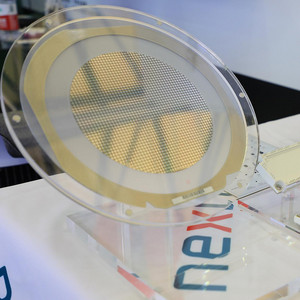
European carmakers are facing the risk of a production stoppage as a result of the Dutch government's abrupt seizure of chip company Nexperia from its Chinese owner Wintec.
Joining me to discuss one of the most dramatic business and, you can say, diplomatic clashes unfolding in Europe.
Eric Horwitz, a professor of Asian Studies at the University of Hawaii.
Dr Joe Mi, the Deputy Director of the Institute of American and Oceania Studies, Chinese Academy of International Trade and Economic Cooperation, and Andy Mock, a professor at Beijing Foreign Studies University.
A warm welcome to the chat, gentlemen.
So let me begin with Andy here in Beijing.
To start, can you walk us through what exactly happened and why Europe's Major carmakers could face production disruptions?
Sure thing, Yoon.
So you know, on the surface of it this looks like a very complicated story, but let me just strip it down to the basics.
So Nexperia is a Dutch company that makes semiconductors that are used in automobiles refrigerators, pretty much any modern device you can think of.
And it's very, very low tech.
It's not like the high-end chips that are used to power AI large language models.
So that's the first thing that we have to recognize.
It's important to know.
So Nexperia just makes these chips that sometimes people call them jelly beans because you need so many of them.
They're very small, they're very simple, but they're actually quite important.
And this company was then acquired by a Chinese company named Wing Tech a few years ago, mainly because Nexperia was struggling to make money.
This is a commodity business, so it's very very, very competitive very, very difficult to make money acquired this company and really helped them survive and thrive, because they were able then to access a much greater share of the China market, etc.
Now, what happened recently which is why we're talking about this today is the Dutch government seized control of the company, which is headquartered in the Netherlands.
However and this is to me astonishing that the Dutch government did not recognize what would inevitably happen because, even though this is a Dutch company with a headquarters in the Netherlands, almost all of its production of these chips are in China.
So what happened then is, by seizing control of the company, saying that look, we don't trust the Chinese essentially, which doesn't make sense, first of all because again, there's no high technology here.
All of the operating expertise is primarily already in China.
So on the face of it, their rationale doesn't really make sense.
But here's where things really get interesting.
So the Chinese... operations of Nexperia continue to operate.
They continue because Wing Tech is the company that is the parent company.
We can think of it like this you know, still provides guidance and says look, you know, we should follow Chinese law because we are in China.
So part of what's happening now is that they say look, we really can't supply European auto companies because in some sense we could say this can be considered an extra legal move by the Dutch government.
And I think what the Dutch government is discovering and again, to me this is quite remarkable that they didn't realize this beforehand that they're really just seizing a nameplate, because all the real assets of the company and there's some in Malaysia and the Philippines as well primarily, and there's some in other parts of the world, but the primary operations, the heart of the company is in China.
So you know, it's astonishing that they didn't realize this and now, in a way i think, have shot themselves in the foot.
And you know, at least that's my understanding of the story and i hope i can make it clear enough that our audience can follow it because again, you know, there's a lot of moving parts.
But i think ultimately, you know, the dutch company sees the headquarters but all the real production assets were in china and that's what's what's happened very detailed explanation and it's also developing.
So probably there are some other details other guests can add, maybe later in the show.
But Yes, like Andy just said, the Dutch authorities maybe they didn't realize that, but they cited the 1952 Goods Availability Act which is a Cold War era relic.
It had never been before enforced, claiming economic security risks and accusing Wintec of transferring technology and capacity from Europe to China.
Sorry, just briefly, if I can say that.
I think it's important to emphasize this.
This is what they claim.
But again, you know, most of the operations are in China and this is a low tech business.
So when we hear chips, it's easy to think this is really high tech.
There's some R&D, some secret sauce here in the Netherlands.
But again, this is a commodity business for a company that was spun out of Philips because you know it was low margin commodity business.
So, you know, it doesn't even survive, you know, even the most cursory business. examination.
Right.
Then to Eric.
From your perspective, I understand you've been following the development of China's technology very closely.
So from your perspective, how credible are the allegations on the Dutch side?
Right.
Yeah.
Well, I would agree with Andy that, of course, these chips are low tech.
I mean, they're what we call a legacy chips.
So you know the really high-end kind of chips we use for AI.
Those are the ones that have the most sophistication.
And so the ones that we're talking about here are ones, as Andy said, used in cars, consumer electronics, those kinds of things.
But the problem here for the Dutch is that they say that the Wintec founder and CEO Jean-Claude, that he had set up another company in China called the Wingsky Semi, which he created in Shanghai a few years ago, in 2020.
And then what they claimed he was doing was he was transferring technology which again, maybe isn't the very high end, but that he was taking trade secrets from their factory in Manchester in the United Kingdom and then sharing them with this Wingsky Semi company, which he also owned.
So basically, the Dutch were saying that an experienced CEO, a Chinese CEO, was taking this kind of national security, perhaps related information from the British and then transferring to a company that he also owned on the side.
In their defense, Wing Tech says that actually Zhang Shijiong abstained from votes related to Wing Sky Semi so that he wasn't doing it on purpose to help his own company.
And also that they were doing this with transparency.
They weren't trying to hide that they were moving the trade secrets from Britain to China.
But this was a main part of the claim that the Dutch said that had become a national security threat, that this technology that the British had developed or that was developed in the British arm of the company was being secretly transferred to the Chinese.
Do they have like a concrete evidence or is it just what they say?
Well, I mean, we do see that Wingsky Semi, this other company.
Their production increased five times from 2025 over 2024.
So there's that kind of circumstantial evidence that they were using the British technology to increase the production in China.
So, in other words, sort of siphoning off the ability to make the chips in Britain, and essentially from the larger company, and then transferring it to China.
So that's the evidence that the Dutch are citing.
So again, it's circumstantial.
And again, whether it's really national security kind of a threat, I mean, that's another question.
This 1952 law had actually never been used before.
The Dutch had to sort of dig around to find a law that they could apply to what probably is more an economic, competitive kind of challenge than an actual national security threat.
So in that sense yeah, the evidence maybe is really not all that strong, but that's what the Dutch are claiming is part of the leak of trade secrets from Europe into the Chinese manufacturer.
All right.
And then, Dr. Zhou, what's the interpretation or argument on the Chinese side?
Well, I don't know the details about this transaction itself but, as Eric has just mentioned, there are something to do with not just between China, but also from another country of the United Kingdom.
So I think that uh, it's uh you know uh, very naturally for the cross border uh, you know uh, transfer of the tech knowledge but uh, trade secret is different.
Trade secret is a kind of uh, intellectual property rights, which is uh, you know, not claimed as a as, like the patents, that can be marked as some labels at the prices.
So if something to do with the trade secret, it will be another issue.
But as Andy has just mentioned that the physical existence are already there in China.
And also the chips are mainly have a very special function in the automobiles.
It's different from those quickly developing chips, because they are functioning in different direction.
But for this one, for these kinds of chips, they have a very special directions of the functions.
So it's not that I mean.
In my understanding it's not that advanced in the competition in the market.
And I don't know, I'm not quite sure about whether they are doing something to to copy or take some of the technology from uk to shanghai or another companies.
That by itself, but i would say that when we heard this message be sent by the dutch government, i think this really remind me some of these connections between what they are declaring and what the us side has, you know, told them to do some of this interference about these kind of businesses.
So I think that it's reasonable for some people to question whether there will be some connections between the decisions of the Dutch government and the US commerce reminder.
And personally, I don't think that I will stick to Chinese companies.
I mean they are right, but I would say that we need some time for them to make a better clarification about these real facts.
So I would say that in the recent times we are seeing that national security becoming more and more popular.
If the Dutch government is trying to do that, we have to take it very cautiously because when we're trying to use the governmental power to interfere with the market behavior, it will have a lot of spillover effects on the possible decisions of the future investment.
So I think that we should respect the companies, to give them more rights, instead of just saying they cannot change their rights of the ownership of the companies as long as one year.
So there will be some time for us to have better consultation or discussion about this.
What is the right and what is concerns?
And do we have some possible alternative ways of addressing those concerns instead of just directly taking the ownership of our company away?
And it's such a sudden message.
The Chat Lounge.
The Chat Lounge unpacks views and opinions on hot issues in a more casual way.
And also if there's any wrongdoing at the British branch of Nexperia.
The company was forced to sell its one wafer fab in Britain last year right to the US firm Vichy Intertechnology.
If it's because of some wrongdoing there.
I think you can definitely take this similar solution, like Dr Joe just mentioned.
Carry out some negotiations and maybe bring up a deal if you want Nexperia to sell or Wintec to sell its branch in the Netherlands to the Dutch right.
Andy.
What's your response to that then?
Well, you know, i think it's hard not to see a geopolitical angle to this, which i think joe me mentioned and eric touched upon, and you know i've been describing this as um killing with a borrowed knife, right.
So that's a chinese idiom that i'm sure we're familiar with But that you know, partly it's the US here.
On the one hand, I think, recognizing it would be too risky and dangerous to directly confront China, but then using the Netherlands, other countries, to try to slow down China's rise, complicate what it's doing.
And we see this with ASML as well, right with the lithography company, which is also Dutch and was also spun out of Philips.
And this is again.
It's hard not to see that this is not, at its core, a commercial issue, because I think you know Eric makes a great point that there's concern about tech transfer from the UK.
But actually, again, I want to maybe emphasize this, is this really is pretty low tech.
And what gives companies an advantage is the expertise.
So it's not hard to make one legacy chip. it's not easy to make billions of them, right?
And ship them on time to customers all around the world.
And that expertise is really the crown jewel of the company.
And that already resides in China.
So again, the commercial explanation doesn't really make sense.
So I think that leaves us with a geopolitical rationale, right?
You know, there's a saying in the US legal field, possession is nine tenths of the law, right?
So, even though the company's headquartered in the Netherlands, most of its key operating assets and the expertise that makes this company valuable is already in China.
So again, I think that's kind of to me the story then.
Indeed, you said a next period is very important to uh europe's, uh like automakers or other industrial players.
So do we have a number here that like it's how many semiconductors probably um next period are supplying to europe, or it's market share, something like that?
Yeah Well, I don't have those numbers, but you know I can tell you that this is a critical input, because the auto manufacturers in Europe you know the German ones are getting very, very concerned because again, you know, if they run out of these chips, the production line stops.
And again, these are enormously expensive businesses, right?
And if they cannot operate, you know, that's a pretty big deal.
So again, it seems that you know this was a decision made by the Dutch government without a lot of, you know, consideration about.
You know what, to me at least, seems fairly obvious effects would be.
So no, I don't have a number for you, but I do know that, you know, this is a very critical input.
All right.
You talked about how the Dutch government hasn't recognized maybe, the consequences that may follow.
Then let's talk a little bit about the impact the incident may have, first on the Netherlands itself.
Like you mentioned, Wintec acquired Nexperia and revived the company through capital infusion and management reforms.
According to the figure from the Dutch side, by the end of last year, Nexperia had grown into a global player with over US2 billion in assets revenue and, according to the china chamber of commerce, to the eu next period contributed 130 million euros, or over 150 million us dollars in taxes to the netherlands.
So eric, how might the dutch government's action here alter the success story?
Um Yeah, I think that I mean Nexperia has really thrived with their relation with the Chinese parent company.
So I think if you cut the ties between Nexperia and China, then it's really going to.
As Jomi said, this is just a one-year kind of probationary action.
So it could be that after the year that maybe the Dutch find that it's not a national security threat, and then things go back to normal.
But I think if the Dutch retain control of the company, then that's going to really stifle, I think, their global business.
I did have one number actually from before you asking.
Maybe not exactly what you're looking for, but China is actually Nexperia's largest market.
So about 48% of the revenue is sold in China and 22% in Europe.
So they've kind of got a diversified market.
So in theory, They could still survive, certainly with the China market.
But I wouldn't be very optimistic that if this isn't resolved in a way that both the Chinese and the Dutch side are satisfied, I don't think Nexperia can really survive, with the Dutch as seizing control of it and not allowing the cooperation with a wing tech that has been managing it for these several years.
Then how do you expect this will affect Nexperia China and its parent company, Wintec, then?
I mean, I think Wintec itself will probably survive.
I mean, as Andy said, a lot of the technology is already in China.
So I think that Wintec and then their various subsidiaries in China will still continue to function.
So it was actually the largest chip factory in the UK, in Wales.
I think it was called the Newport Wafer Fab.
And so, just a year or so after Nexperia bought it, the British government said that they had to sell it off, basically for the same reasons that the Dutch were citing for national security issues.
And so Nexperia then basically caved into the British pressure and, as you said, sold it to this American company, Vishne Intertechnology.
So it could be that maybe that's another possible solution here, but And so that the Chinese side would just kind of take their losses and continue with the technologies that they've already developed in China.
So that's one path where I think the Europeans are the losers more than the Chinese side, if that were to happen.
Not even, you know, in the short term, you mean, there is a big consequence for Wintec.
Not even short term.
Because I think Wintec has already yeah, it's reported some big advancement in profits, I think for last year, but it also warned that things might change, you know, for the coming months.
Yeah, no sure.
In the short term, I think that they're going to be heavily affected by the Dutch taking away the control of Nexperia.
But in the long run I think the Chinese side will probably still, with assets that they have in China, will still be able to survive and carry forward.
Then how do you expect it to affect, like you said, Wintex or Nexperia's clients in Europe then?
For now, especially for Those automakers.
They're saying yeah, they're running out of stockpile in less than a month, right?
Yeah.
Well, I mean, as Andy said, yes.
Could that be devastating?
Well, some of the automakers have stockpiled parts, so they can go on for a while.
Honda, I think, announced recently that they're cutting some of their production overseas because of the shortage in these chips.
So that's certainly true.
The automakers.
I think if they can't get these chips in the near future, then that's going to affect the production.
Some companies are a little bit more immune.
Volkswagen, for example, doesn't use as many chips as Mercedes and some of the other European companies.
So I think it'll be certain companies in Europe, especially the larger German automakers, except for Volkswagen, that are going to be, And also some of the Japanese makers like Honda as well.
So yeah, I mean so I think the Europeans are kind of shooting themselves in the foot, I think, as kind of Andy was saying, by making it more difficult for them to use these chips that aren't high tech, but ones that they need and that the Chinese are making with very good accuracy and also at a very good price.
This has been The Chat Lounge.
Find out what might be the Dutch government's next steps when we come back.
Stay with us.
The best military commander is not he who fights a hundred battles and wins every one of them.
The best military strategy does not lead to the desiccation of the enemy's capital city.
Decoding the Art of War will help you understand why there's no art in war and how Sun Tzu stayed undefeatable using the science of war, with fun stories and insightful breakdown of famous battles.
Find Decoding the Art of War wherever you listen.
Welcome back to the Chat Lounge.
We continue our chat on the next PERIA shock sparked by the Netherlands.
Beijing has now imposed export controls on Nexperia-made chips from China.
And, on top of that, after nearly three weeks supply disruption, Nexperia China resumed supplying its products, but required European customers to renegotiate exclusive agreements and has switched to renminbi settlements instead of US dollars and distanced itself from European management systems.
So Andy, is that it's like what Chinese call like add to rub in?
How would they damage the supply chains for those European users or clients?
Well, you know, I think we have to see.
But you know, I want to go back to this idea that you know, I think that wing tech and Xperia actually will suffer very, very little from this Dutch move.
Because what the Dutch government really has done is they've seized the logo.
Right.
But the real assets of the company are in China.
And there's really two companies now.
Right.
So there's the hollow shell in the netherlands which the dutch government or, you know, the management team they put in controls, and the chinese assets, the team uh, all are continuing to operate and, as you say, you know, under chinese law and you know.
What we could see here then is that a complete decoupling and the real economic value will be in china, will be continued to uh, that wing tech will continue to reap the benefits of owning the real productive assets.
And as you mentioned now, you know, who knows?
I mean this, could you know?
I'm just speculating here but the Chinese government would say look, because of this we don't recognize the legality of what the Dutch government is doing.
We're going to nationalize these assets or transfer them to another Chinese company.
You know, it's all within the realm of possibility.
I think and again here saying look, you know, to the european customers, you know we would like you to pay an r b?
Um.
Certainly again, they're exercising the prerogative of ownership right, and i think this is the key that What the Dutch were looking to do is to show that they actually had control over these assets.
And what they've really done is revealed their weakness by doing this.
And again, I'll go back to this idea that possession is nine tenths of the law.
So if you own the manufacturing capability which you know the wing tech does in China because that's where the assets are you know it's hard to see them coming out the loser from this.
And who's going to be the biggest loser in Europe, the Netherlands or someone else?
Well, you know, so I think that you know.
Certainly, from a credibility perspective, I think certainly this doesn't have the Dutch government looking very good.
Right.
And I think the second group to be hurt are these European automakers.
Right.
Because again, we have to understand that even if there is no act, if the production lines do not stop just the disruption of the threat of it is very, very challenging, right.
I mean, it affects management teams, people having to make all sorts of contingency plans.
This is not a good thing.
And I think it really, I think again undermines the European narrative that they want to be in control of these important assets.
Because again, the reality is possession is nine tenths of the law of all of these productive assets already in China.
You know, it's really an illusion, or I would say a fantasy, to think that you know you could exercise effective control over them.
Right.
Yeah.
People say maybe the biggest loser could be Germany.
Because they've got the biggest number of car producers, right?
Well, we have to see though, Yoon, right?
Because again, if they say okay great, we will pay you in RMB, we will write completely new contracts, right then they suffer a short-term disruption and they may not be the losers.
I would say here that, at this point at least, the biggest loser is the Dutch government in terms of having again exposed their weakness.
Is that why the German economy minister voiced his support for the Dutch move?
Because Germany is not the biggest victim right now.
Well so so we have to recognize to you in that the German government is not the same as German automakers.
Right.
So so they at times have different interests and objectives, and perhaps sometimes even conflicting objectives.
And certainly.
At the supranational level, Europe certainly wants to show its toughness towards China, as we all know.
But again, the unfortunate reality, I think, is that these are all very hollow threats that they're making.
And again, this example, I think, is the proof that the Dutch thought, OK, we're going to demonstrate that we control these assets and we're going to exert our power on over experia and what they've done is they've split the company and you know what they've done they wanted to protect what they consider a european asset and what instead they've shown the world that it already is chinese so you know i think that's to me that's the real story here right but you can't say uh the germans are not upset especially it's uh government officials because we we've seen uh germany's foreign minister eager I can say eager to arrange some meetings with his Chinese counterparts, but his planned visit was canceled last minute because Beijing confirmed only one of his requested meetings.
So to Dr. Zhou, is that like a common or what does that diplomatic gesture suggest?
Well, I don't know the details about those meetings, but I think that they really want to solve this problem.
I think that problem is not only based on this case.
While China and Germany.
We have many discussions about the new energy vehicles, anti-subsidy or some kind of measurements to them, to Chinese companies, and also a lot of issues about the digital economy, about the green economy.
There are so many issues we have to discuss.
But right now maybe, like Andy has just mentioned, the auto industries have a different interest compared with the government itself.
Well, I think that is worth to discuss about the gesture.
I think it's for China side.
We are really want to do more discussion with EU counterparts on the issues.
But I mean, that has to be based on the practical way of dealing with these kind of issues.
We cannot just say that when we are seeing that EU is trying to sign an agreement with the United States and trying to make US companies as an exception on its domestic market regulations about the digital economy, about the the carbon uh, you know taxes or other issues, i think it's unfair for just trying to do that because that us put more tariffs on them.
I think that is definitely not the right thing.
As for my personal understanding, the semiconductor is a very internationalized or globalized industry, so all the countries, all the partners are playing different roles.
We cannot expect that some in the coming future maybe some of the production will go back to the Netherlands or to UK because that the cost has decided.
The company will trying to make a better decision based on the advantages in different countries.
So in this regard, we have to deal with this new scenario and trying to work out our plans for the collaboration and the coexistence based on our own advantages expertise.
So, in this regard, I would say, when we're discussing about this case, it's not just about the relation between China and Germany, it's also about what's the attitude towards globalization.
And I think that we do have a lot of demands to talk with our German counterparts in the issues, especially to strengthen This 50 years cooperation between China and Europe.
I think it's really an important time for us to deal with this problem in a proper way.
And I just thought, if the Dutch government have some opinions or you know the companies that likes Perreault, they do have some opinions about this some not so good behaviors can also come to China in the Chinese court, because you know we have the IP court, intellectual property court, special for dealing with the situation, as we can find that many of these suits have been dealt with.
So as a government, I mean, the principle is very clear.
We are not trying to violate the intellectual property of another company.
We respect them.
And that is a way we are respecting the intellectual property, no matter where they come from.
So any foreign companies, they can also try to solve the problem if they found that in China.
I think that would be very effective.
But when they are trying to put that issue in the term or field of national security, they are trying to just lock it in the black box.
So that's definitely not a... right away for us to deal with, you know, this problem.
Right.
Like the saying, which goes, if you want to play hardball, you'd better have leverage.
Does the Netherlands truly have leverage?
Maybe to Eric?
Oh, do they have leverage?
Yeah.
What could be their next step?
Well, I think you know.
Obviously the Chinese would like to keep their manufacturing investment in in the Netherlands and in Europe.
But I think the Dutch government, they have their laws.
And if they seize the company, then the Chinese.
I think their leverage, as you say, is maybe not that great.
They have to depend maybe on sort of the larger environment, maybe for China-Dutch relations or, as you mentioned before, the German government also has their opinions about national security, but they're also influenced by the manufacturing companies.
So maybe their leverage then is by reminding these automakers that they really are going to be badly affected by the loss of the supply chain of semiconductors they've depended on for a number of years.
So I guess that leverage would come from the industries that are most affected, putting pressure on the Dutch government to maybe make some kind of compromise or concessions to allow Nexperia to continue their cooperation with the Chinese home company.
So I think that probably is about the only way that we're going to see the Dutch give up on their position that national security.
I mean, I think it's you know, as Andy was saying, I think the national security issue is kind of manufactured.
And so that it might be this economic pressure, if that's possible, from the European companies to make the Dutch reconsider their action.
The chat lounge unpacks views and opinions on hot issues in a more casual way.
How likely is it for the Dutch to try to downgrade this tension and send, like Dr Zhou just mentioned, send some people to China, you know, seeking maybe assistance from the Chinese legal system?
Could that be a possible solution?
So I'm not sure if it's... clearly under the Chinese legal system's jurisdiction.
I mean, I think he's quite right that China has developed quite well their intellectual property rights laws over the past 10, 20 years.
But I think in this case it's more trying to convince or use pressure on the Dutch government to change their mind.
I mean, I would say, in the larger sense it's a question of Does Europe really want Chinese companies to come and invest in their companies in European cities, putting European people to work?
I mean in Britain.
For example, I think 1200 workers are employed at the Manchester factory that Xperia has.
So I think that's kind of the larger globalization implication is that if the Europeans don't want to lose the Chinese investment and the cooperation with China and the kind of steady supply chains that we've seen develop over the years, then they have to make accommodations.
And so I think the next period is kind of a test case to see whether the Europeans are willing to cooperate with the Chinese and not to rankle the relations that have developed over the last several years.
True.
Andy, your expectation?
Well, you know, Yoon, I think that two things can be true at once.
So I think Europe, and the Netherlands in particular, are being strong, armed by the United States, to be in the line of fire against China.
So we see this obviously with ASML which, as a company, would love to sell, you know, advanced lithography machines, EUV machines to China, but is prevented from doing so by the United States.
So that is true.
At the same time, I think what is also true is that again, I would say, at the supra national level, at the EU level, you know, there is this concern about wanting to de-risk from China, and we do hear national-level voices, as you mentioned, from Germany.
And I would say that the German government perhaps for the Netherlands in public, but hauls China with great anxiety in private right.
Because again, the auto industry in Germany, this is a pillar of the German economy.
So it's very, I think Europe is very, very conflicted.
And I think, and this includes the Netherlands.
So my hope and I think this is actually what is actually really happening is that, as the US must recognize China as a peer, as an equal, and treat it as such, and i believe i've been saying that september 2025 is the hinge month in history where, with the september 3rd military parade, huawei's matrix 384, that demonstrates, at the system level, china can compete with the best of nvidia.
So, at the chip level, of course, nvidia chips are still more advanced than the best that china can do, but these chips have to be put into systems and the system is competitive.
So that once that happens, the rationale for the US to arm twist Europe, and particularly Netherlands, to withhold important technology from China might go away.
And I think at the same time, I think Europe is starting to recognize the futility of of trying to decouple, or what it calls de-risk, from China just because China is now so good at so many things right.
So from electric vehicles drones, anything you can pretty much think of and obviously all the consumer goods that European consumers really, really need.
Again.
Europeans are struggling with rising costs and China can provide high quality, inexpensive goods.
So this becomes very, very difficult to justify.
So my hope and again I think the data is starting to show this is that Europe's position is not tenable.
You know we will have, hopefully before too long, Europe as well, recognizing that China is quite important and that these measures really are self-defeating.
And do you share similar concern like what Eric just mentioned?
There could be some collateral damage like less investment from China in Europe, especially in the high tech sectors.
Would that be a big concern for Europe?
You know.
So I think certainly if China were to stop investing in Europe, that would be disastrous for Europe.
But I think from the Chinese perspective, they will not stop.
The form of investment may be different.
So maybe outright ownership may not prove to be such a sensible proposition.
But access, I think, is very, very important.
So maybe instead of buying companies, buying assets in Europe, they may fund labs, take minority stakes, hire people.
Again, we're thinking from a more technology perspective.
There are other ways to put your money to use effectively in Europe than just buying outright companies.
And again, I think from a market access perspective, this is something that needs to be worked out.
I think the Germans in particular have legitimate concerns because their automakers were the dominant players in the world of internal combustion engine automobiles.
But in EVs, you know, it seems that you know China really is in the lead, not just in cost, but also technology design, etc.
Now how does Europe, or Germany say, manage that transition that takes care of all of their stakeholders in society, the corporations, the people, that may not have the same kind of work that they did in the past?
These are all legitimate issues that they have to address.
But at the same time, it seems that it would be impossible to keep your citizens from enjoying the technological, the cost, the design benefits of many products in China.
So you know again, I'm optimistic in that.
I think that ultimately rationality and practicality win out.
But in the short term, there are political challenges that do have to be addressed.
Indeed, there's a lot of geopolitical power play here, especially in this case.
But there's also a trend not sure if I can call it a trend Europeans, or some European governments, are trying to accelerate their de-risking drive to reduce dependence on Chinese technology.
So, Dr Zhou, what kind of warning does that sound for China, and how would Beijing adjust its strategy accordingly?
Well, I would say that China's market is playing a different role in the future.
So maybe in the past?
The United States is the main market and the European companies are selling their cars to the United States.
But in the future, what can we expect?
I think that China's market is well becoming more important for the trading partners.
So, as for the investment, I think that it's necessary for us to bear in mind that investment is never just the same as you're investing in your own country.
So as more experience is accumulated from these lessons or the cases, I think Chinese companies are having better understanding about the possible risk of doing business in another country.
And they were trying to, as Andy said, trying to think about different ways of connecting with the other market.
Well, we have to know that there is a fact that if you are trying to isolate yourself from the main market, it will become weaker and weaker.
So, you know, based on the great amount of production in China, I think that the semiconductors can have a better performance in the better experiences and trying to have, you know, more cost efficient ways of using that.
So that will uh even, you know, trying to make the gaps between china and the eu a larger in the in the future on certain areas or directions, but i i believe that we should not try to do that.
So, as many people argue that the digital gaps is one of the possible uh difficulties or challenges for many developing countries, i think that is also true, maybe in the future, not just the between the developing countries, but also in, you know, the different size countries or economies.
So, in this regard, I will say that we will try to make it, you know, more inclusive, because China is never trying to be just a superpower in the world and trying to have a status, trying to push other countries to follow our styles.
We want to cooperate.
We want to deal with these differences.
I think the differences are really important for us to try to not stay in the original position.
We can keep on, but we also need some actions, attitudes, and signals from the other sides.
And the EU is now facing many challenges.
Among them, we discussed about the investment intentions.
The cost of doing business in Europe is getting more and more expensive.
That is another reason why some companies are thinking again about whether they want to put some money in EU.
So I will say that maybe in the future we are saying we need to sit down and discuss about the rules.
I think that is already started.
The EU is now trying to do more coordination in this regard, especially on this case.
I think that is a good signal.
And we have to do the things based on the market instead of just imagining from the government or the forces from another government.
All right.
Thanks for that.
And Andy, your last bit of thoughts here, please.
Well, again, I think that the Dutch government thought they were exercising control.
But what they discovered is while they may own the logo, China owns the production line.
And ultimately, that's what really matters.
All right.
That's very brief.
And last but not least, Eric, please.
Yeah no, I just want to amplify also a point that Andy made before about technologies like electric cars.
I mean they really depend on the kind of chips that that China makes, these kind of legacy chips that you know you wouldn't put into a computer for artificial intelligence.
But electric cars maybe need 2000 of them, maybe double what a gasoline power car would need.
So Europe, they're not going to start building their own legacy chips.
They're, you know, these kind of older chips.
They really have to depend on China, even for this newest technologies like electric vehicles.
So the idea that Europe can de-risk and just substitute the kind of technologies that China is providing just won't make sense.
But I think Andy's other point also is maybe what's possible going forward is if the Chinese don't move in and take over companies with 100 ownership, if they have joint ventures, maybe with minority ownership, kind of a quieter way of tapping into the European market and cooperating with the Europeans, that'll be the better way to go.
Kind of quietly interacting with Europe, keeping the ties, but not doing it in an alarming way that'll trigger the European knee-jerk reactions that we've seen from the Dutch government.
And as the saying goes in China, those who try to steal a chicken often end up losing the rice.
And with that thought, we'll leave it here for today's session.
Big thanks to Eric Horwitz, professor of Asian Studies at the University of Hawaii, Andy Mock, a professor at Beijing Foreign Studies University, and Zhou Mi, the deputy director of the Institute of American and Oceania Studies University.
Chinese Academy of International Trade and Economic Cooperation.
Thank you for joining us and tuning in.
Drop us a line anytime at radio at cgtn.com.
We'd love to know what you think.
Catch us next week for more insights and stories at the chat lounge.
Talk to you soon.
Love, passion, resilience, and our everlasting bond with music.
I loved the guqin, but it was really hard to buy a guqin at the time.
I took apart my guitar at home and tried to figure out how to play it.
Local parents were skeptical about whether I could truly offer free music training.
Life is meant to be experienced.
It helps you to appreciate the beauty around you.
I think learning to play the dong shao has changed me a lot.
I think I am more patient with myself.
It expresses a deeper part of you, the way you feel.
Music tells our stories, stirs our deep emotions and brings people together across time and cultures.
I'm Huang Rui, host of Music Talks.
In the three-episode podcast series Music of My Heart, I'll share with you my journey of meeting different people across China who live and breathe traditional Chinese music.
Search for Music Talks on all major podcast platforms for this and more.
The strong wind was howling and whistling.
He was the first Chinese citizen to graduate from Yale University in the mid-19th century.
I was born on the 17th of November.
She had prominent features.
Three of us were old enough to lend a helping hand.
He navigated between two vastly different cultures and moved further to realize his dream and promote understanding between the people of China and the United States.
Ye Mingxin was a native of Hanyang.
I realized no danger.
China is really awakening.
Come and join us in discovering the incredible journey of Yong Wang in his autobiography My Life in China and America.
Check out the audible stories on radio.cgtn.com and all major podcast platforms.
Just search for the podcast Books and Beyond and find My Life in China and America.