Hey everyone, it's Darian Woods here.
Just quickly before we start the show, I want to take a minute to talk about public media.
This is what makes The Indicator and other NPR podcasts special.
Public media was founded to inform, to educate, and to expand our perspective.
But, as of this fall, federal funding for public media, including NPR and local NPR stations, has been eliminated.
Despite that, we remain committed to this work.
Just this year we've done episodes on why the trade war is missing a referee on the stock market and the magic of diversification on the surging cost of health care for pets.
We go beyond the headlines to show you how the economy affects your life.
In 2026, with your help, we can do even more.
Thank you if you already go the extra mile as an NPR Plus supporter.
If not, you can join the Plus community, get a bunch of perks like bonus episodes from across NPR's podcasts and support public media by signing up for NPR Plus today.
Just go to plus.npr.org.
NPR
This is The Indicator from Planet Money.
I'm Darian Woods.
And I'm Waylon Wong.
It is Jobs Tuesday.
Yes, Tuesday.
The government is still catching up with some delayed data releases after the shutdown.
Today, we have numbers for November, and they show signs of a cooling labor market.
The Bureau of Labor Statistics says that the US economy added 64000 jobs in November, but the unemployment rate ticked up to 46 percent from 44 percent in September.
The BLS couldn't calculate a jobless rate number for October because of the shutdown.
One of the areas that did see job growth was health care.
This is a field that has trended up in the last few years.
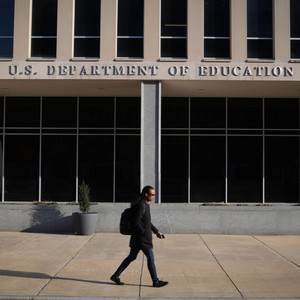
But the One Big Beautiful Bill Act made some dramatic changes to federal loans for graduate students.
And this could reduce the pipeline of new health care workers, from dental hygienists to physical therapists.
Today on the show, we explain these changes and how they might play out in the labor market.
Support for NPR and the following message come from Edward Jones.
What does it mean to live a rich life?
Maybe it's full of brave first leaps, tearful goodbyes and everything in between.
And with over 100 years of experience, your Edward Jones financial advisor can help.
Edward Jones, member SIPC.
This message comes from Capital One with the Capital One Saver Card.
Earn unlimited 3% cash back on dining and entertainment.
Capital One.
What's in your wallet?
Terms apply.
Details at CapitalOne.com.
This message comes from Capital One.
Capital One offers checking accounts with no fees or minimums.
What's in your wallet?
Terms apply.
See CapitalOne.com slash bank for details.
Capital One N.A., member FDIC.
We are focusing on graduate students today.
This is a group whose borrowing has driven most of the growth in student debt over the last 15 years.
Many graduate students in the US check out loans through a federal government program called Grad Plus.
This program was introduced a couple of decades ago during the George W. Bush administration.
Under Grad Plus, students could borrow to cover not just tuition but books and housing and even childcare.
There were no other restrictions on borrowing.
The generous nature of Grad Plus caught the ire of the Trump administration.
It got rid of the loan program for new borrowers under the One Big Beautiful Bill Act.
Preston Cooper is an economist at the American Enterprise Institute.
It's a right-leaning think tank.
Preston says the government made the right call because Grad Plus loans had led to high debt levels and tuition increases.
I think the problem we ran into is that colleges took a look at these unlimited student loans that were available and said hey, we could actually kind of use this as a cash cow.
We could create some new programs.
We can raise our tuition.
And the result is that the graduate portion of the student debt portfolio really grew.
There's actually a name for this idea that increased generosity and federal student aid leads to schools hiking their prices.
It's called the Bennett hypothesis, named after an education secretary who served during the Reagan administration.
The Bennett hypothesis has been the subject of debate for decades.
But does it bear out for the Grad Plus program?
We called up economist Leslie Turner at the University of Chicago.
She recently co-authored a working paper about these loans.
When you got started studying the Grad Plus program, did you have any inkling that it was just going to go away entirely?
No, I did not.
I think this is the first time that my research has been incredibly well aligned, in terms of timeliness, with public policy decisions.
Leslie and her co-authors studied the impact of the GradPlus loan on students and schools.
They used the data from Texas as a representative sample for the whole country.
We looked at the increase in federal borrowing and then we looked at whether there were corresponding increases in sticker price and then net price.
So tuition fees, net of grant aid.
What we found was that for every dollar increase in average, federal borrowing sticker prices went up by about a dollar.
Leslie's data seems to back up Preston's point, a dollar-for-dollar increase.
Now some schools did offer grant aid, but even then, Leslie says the net increase was notable, at around 60 to 65 cents.
Now the Trump administration has eliminated Grad Plus, and so should we expect this chain of events to work in reverse, with schools cutting their tuition prices.
The Education Department says yes.
And Preston Cooper at the American Enterprise Institute points to the law school at Santa Clara University in California.
The school announced a new scholarship program in response to the federal policy changes.
This move effectively lowers the cost of law school.
It is still early on in the process, but the early signs of tuition cuts are encouraging.
Okay, we'll see if this is spread around the country.
Yeah, economist Leslie Turner is skeptical that schools in general will cut sticker prices for their programs.
I think it's...
It's quite rare to see price decreases in sort of nominal dollar terms.
If there is an effect on graduate program prices, it will be an effect that shows up over time as programs increase their prices by less.
Without Grad Plus, students and their families may borrow more from private lenders.
That's according to Aisa Conchola-Banez.
She's the policy director for Protect Borrowers.
It's a national organization that advocates for students and other people with debt.
Federal loans come with an array of protections and benefits that are just non-existent within the private student loan market.
One benefit is debt forgiveness for graduates who work in public service.
Another is repayment plans that are tied to income and family size.
Aissa says students turning to private lenders will be at a disadvantage.
And many of these students already face disparities in the workplace.
According to the National Women's Law Center, Black women working full-time and year-round have to earn a master's degree to make more than white men with only an associate's degree.
When we talk about who is most likely to have to borrow in this country, we know it's lower-income families, it's first-generation families and it's Black and brown families in particular.
So we were very concerned about the elimination of the Grad Plus program, especially as they were not considering increasing grant aid.
Still, the data from economist Leslie Turner's study of Grad Plus didn't show the program had an impact on access for underrepresented students in graduate programs.
And she believes there could be many reasons why Grad Plus didn't move the needle for these students.
Like maybe their barriers to education had more to do with their grades or family commitments than whether or not they could borrow money from the government.
Even with the end of Grad Plus, there are other federal loan programs for graduate students.
But the One Big Beautiful Bill Act changed how much those students can borrow.
It set both annual and lifetime limits.
For most graduate students, the lifetime cap dropped from around $139,000 to $100,000.
A smaller group of students in programs designated as professional can borrow up to $200,000.
Preston Cooper at the American Enterprise Institute says these are programs that tend to be expensive but also lead to high-paying jobs.
That means graduates have a better shot at paying back their loans.
11 programs got the professional designation.
They include medicine, dentistry, pharmacy, and law.
Other graduate programs in fields like dental hygiene and nursing did not, and this caused a bit of an uproar.
This is simply a technical term to define which programs get access to these higher student loan limits.
And I should also mention my degree, which is a PhD in economics, is not professional.
And I still consider myself a professional.
I mean, maybe your listeners won't, but you know I consider myself a professional and I'm not really insulted by the fact that my degree ended up on the standard side.
The pushback against this new definition, though, is more than just about semantics.
The American Medical Association says the changes in federal lending could make medical school unaffordable for most students.
The cost of attending for many programs is well above $200,000.
The AMA has warned that prospective doctors could be put off by the high cost of education and choose not to pursue a degree.
The exact language around the Department of Education's new rules aren't finalized.
It is expected to collect public comment next year.
This episode was produced by Corey Bridges with engineering by Debbie Daughtry.
It was fact-checked by Sierra Juarez.
Keegan Cannon is our show's editor, and The Indicator is a production of NPR.