This message comes from Intuit TurboTax.
Now, taxes is matching with an expert backed by tech to get you the most money back at TurboTax .com.
Experts only available with TurboTax Live.
See guarantee details at TurboTax .com slash guarantees.
This is the TED Radio Hour.
Each week, groundbreaking TED Talks.
Our job now is to dream big.
Delivered at TED conferences.
To bring about the future we want to see.
Around the world. To understand who we are.
From those talks, we bring you speakers and ideas that will surprise you.
You just don't know what you're going to find.
Challenge you. We truly have to ask ourselves, like, why is it noteworthy?
And even change you.
I literally feel like I'm a different person.
Yes. Do you feel that way?
Ideas worth spreading.
From TED and NPR. I'm Manoush Zomorodi.
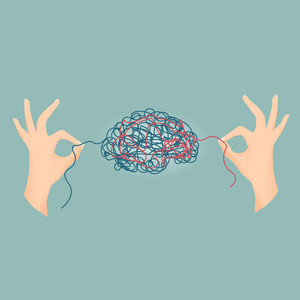
Today on the show, managing our emotions so they don't manage us.
But we start with a story about a violin.
Good morning, ladies and gentlemen.
Not long ago, Sotheby's in New York held an auction for a Stradivarius.
The Joaquin Ma Stradivarius, a masterpiece of sound.
And we can start the bidding here at $8 million, at $8 million, at $8 million.
The bids rose quickly.
Some from anonymous clients phoning in.
The numbers went up and up until...
Sold. $10 million. So what makes a Stradivarius so valuable?
Well, for one thing, they're very rare.
only about 600 Stradivarius violins are believed to exist today.
But perhaps more important are the sounds that they produce.
Musicians swear by their exquisite craftsmanship and say no other violin can match their rich tones.
A Stradivarius is this instrument that is capable of creating this magical music that transports us and creates beauty in the world for those who listen to it and for the person playing it as well.
But here's the thing.
Even a Stradivarius can sound terrible if it's played poorly.
Have you ever heard someone play a violin the wrong way?
Oh yeah, it's painful.
Please stop. Painful is the perfect word, right?
Because if you don't know how to play that instrument, it can cause pain.
And that's true of our emotions as well.
This is Ethan Cross.
He is a psychologist and neuroscientist at the University of Michigan who specializes in emotional regulation.
His latest book is called Shift, Managing Your Emotions So They Don't Manage You.
And he compares regulating our emotions to playing an instrument.
Our brain is like our very own Stradivarius.
When our emotions are triggered out of proportions, that's akin to me trying to play a Stradivarius violin.
It can cause enormous pain for both the player as well as those around us.
Now, we can all learn to play that instrument effectively.
It takes practice. I genuinely believe that the same is true when it comes to our emotions.
We can all learn to manage our emotions more effectively.
To do that, though, we need to know what tools are out there to help us achieve that goal.
And the big problem I think that so many of us face is that we're never given that blueprint that science -based blueprint for steering our emotional lives.
Emotions can feel overwhelming.
For some of us, they overpower our common sense and ability to make decisions, sending us spiraling into feelings of doom and despair.
So how can we modulate our emotions to help us make better decisions in stressful situations, become more in tune with what we need?
Today on the show, Ethan Cross shares the latest tools and research from his Emotion and Self -Control Laboratory at the University of Michigan.
So what we do in the lab is we try to understand the nuts and bolts of the human mind.
So in other words, how can you think, feel, or behave the way you want to think, feel, and behave?
And sometimes that can be kind of tricky to do.
And so we really get in there and just try to figure things out.
What's happening in your brain and the patterns of thoughts that are streaming through your head and your bodies?
Can we create interventions to help kids and adults manage themselves more effectively?
I'd love to put sort of an asterisk here or conversational footnote, if you will, because there's a lot of self -diagnosing going on on social media.
help us understand is there a line?
What is a normal part of being human and what is an illness?
Because we live in an era where we pathologize each other's behaviors a lot.
Well, one thing I would love listeners to know is that if they experience negative emotions at times, welcome to the human condition.
We all do. And there's nothing wrong with you.
In fact, there's everything right with you.
I am of the belief that all of the emotions we experience are useful when they're experiencing the right proportions.
I have found that when people hear that, when they realize that if they're experiencing anxiety or anger or sadness or envy or regret or guilt, that there's nothing wrong with them, in fact, that this is how they should be operating to a large degree, this is something that people really find liberating.
And I think for really good reason, because we're often told we should constantly strive to lead a life free of all negative emotions.
We should just yearn to be totally happy.
Look, I love being happy.
But I also recognize that the quote -unquote bad emotions are my friends.
They are not de facto toxic.
They can be useful as long as they're not triggered too intensely or not intense enough too long or too short.
So there's an example you give in the book when you're talking about emotions getting the best of you is a lot of times how we think of it.
There's an example you give in the book about a woman named Louisa.
Can you share what happens to her in terms of her emotions?
Yeah. She's this mom.
She's taking a flight home with her young child.
They were 35 ,000 feet.
It's a pleasant flight.
And all of a sudden she sees her kid begin to stir a little bit.
And then she looks down and sees that her kid took a bite of this granola bar, and in the ingredient list, she sees peanuts.
And so her child had a pretty severe peanut allergy and immediately begins to go into this allergic shock reaction.
First thing she does is reach for her bag.
She does what she had practiced in her mind countless times before.
She reaches for the EpiPen that she carried with her and jams the EpiPen into her daughter's thigh.
And after a few minutes pass, her daughter begins to recover.
Everything was fine after that scenario.
Her daughter walked off the plane.
She felt totally fine.
But Louisa did not feel fine because she kept on thinking after this incident about what we call counterfactuals.
What might have happened?
What if she didn't have the EpiPen.
And then she also started projecting herself into the future and finding additional ways to worry about her experience.
What if her daughter goes to a birthday party and the parent serves cake that was prepared in a facility that had peanuts?
What if her daughter's at school and another kid gives her a taste of a snack that has peanuts in it?
And these thoughts begin to really consume her.
All true, right? I mean, those things could happen.
Minouche, our minds are unbelievable hypothesis generating machines.
We can generate all sorts of hypotheses.
Many of them are actually quite feasible and not outlandish.
We are also sophisticated at generating the outlandish variety of possibilities for things that might occur too.
But yes, these are all possibilities that begin to consume her.
And as a result, she begins to lead a life that is not the kind of life that she wants to lead, because she finds herself continually overcome with anxiety.
To the point where she begins to question whether she can actually control her emotions at all.
Right, that is the big question.
And I think, you know, we assume that some people are more prone to negativity.
And if you are a person who's always struggled with that, you think, well, that's just the way it is.
This is who I am. But is there research into what we can do or if that can change?
So there was this remarkable study that was performed in Dunedin, New Zealand, back in the early 1970s it began.
and it's actually still going to this day.
What happened in this study is the researchers started tracking about a thousand kids right around the time that they were born, and they measured these kids periodically over the course of their lives.
And every few years, they assessed the kids' ability to control themselves, which also includes how we control our emotions.
And they looked at how does a kid's ability to exert control when they're young predict different outcomes later on in life?
And what they found is that kids who are really good at self -control, they progressed further in their careers, they saved more money, they planned more conscientiously for retirement, and they were physically healthier.
So one's ability to manage themselves has implications for lots of really important things in our lives.
The other thing that we learned from the study that was so interesting was, as time progressed, some kids got better at self -control, and some kids got worse, just quite naturally.
And the kids who improved in self -control, their progress on all these different outcomes also improved.
The kids whose self -control success went down over time, they started faring more poorly.
And so the reason I like to mention that last finding is because what it really demonstrates is that how we manage our emotions is malleable.
It can change. If you're not good at it at one point in life, whether you're a child or an adult, that doesn't mean you're destined to always be bad at it.
We have the capacity to get better or worse.
And that's where I think understanding how self -control works, familiarizing ourselves with the tools that are out there.
That's why that's such an incredibly important thing for all of us to do.
And so back to Louisa, it wasn't until an experience she had with her daughter that really helped break her out of her funk, she realized that when she was stuck in one of these doom loops, her daughter came in just rushing into the room, you know, had a problem she wanted to talk to her about.
And then they did a behavior together and activity.
And after the activity was over, Louisa realized that she wasn't stressed anymore.
And so she had the epiphany there that if she distracts herself by engaging in something that is really immersive and a positive experience, that turned the volume down on the intensity of her anxiety.
And that ended up really renewing this belief that she had that she actually could manage her emotions.
What I love about her story is it demonstrates just how important believing that you can manage your emotions is for bringing that outcome to fruition.
When we come back, more with Ethan Cross on the tools that can help us in moments of anxiety or crisis, including the strategies of the world's youngest Nobel Peace Prize laureate.
Today on the show, managing our emotions.
I'm Manoush Zomorodi, and you're listening to the TED Radio Hour from NPR.
We'll be right back.
This message comes from Intuit TurboTax.
Now, Taxes is matching with an expert backed by tech to get you the most money back at TurboTax .com.
Experts only available with TurboTax Live.
See guarantee details at TurboTax .com slash guarantees.
This message comes from Greenlight.
Parents rank financial literacy as the number one most difficult life skill to teach.
With Greenlight, the debit card and money app for families, kids learn to earn, save, and spend wisely.
Get started risk -free at greenlight .com slash NPR.
This message comes from Capital One, presenting sponsor of the 2025 Tiny Desk Contest.
The Tiny Desk Contest is back, and artists from around the country have submitted videos of original songs to see if they'll be the next winner to play the Tiny Desk.
Now, while the judges take a listen, you can pick your favorites as well.
Visit npr .org slash tiny desk contest to browse the entries and find exciting new artists.
You can filter by genre or check out musicians from your state.
You don't have to leave home to enjoy these performances, but when you're ready to get out and see your favorite bands live, you can do it with the Venture X card from presenting sponsor Capital One.
With Venture X, you earn unlimited double miles on everything you buy.
Plus, get premium benefits at a collection of hotels when booking through Capital One Travel.
What's in your wallet?
Terms apply. Details at CapitalOne .com.
This message comes from Capital One with the Capital One Saver Card.
Earn unlimited 3 % cash back on dining and entertainment.
Capital One. What's in your wallet?
Terms apply. Details at CapitalOne .com.
It's the TED Radio Hour from NPR.
I'm Manoush Zomorodi.
On the show today, we are spending the hour with psychologist and neuroscientist Ethan Cross, talking about how we can shift our perspective on our emotions so that they don't overwhelm us and our lives.
And Ethan says that there are many tools that we can use that a lot of people don't.
One of those tools, he says, is language, in particular, the way we speak to ourselves.
One person who's very good at this, he says, is Nobel Prize winner Malala Yousafzai.
Here's Ethan Cross on the TED stage.
Right before Malala Yousafzai became the youngest person to ever win the Nobel Peace Prize for advocating for the rights of young girls to receive an education, she was invited onto The Daily Show with Jon Stewart to talk about her experience.
At one point during the interview, she begins to explain what went through her head when she first discovered that the Taliban were plotting to kill her.
And I used to think that the Taliban would come and he would just kill me.
She's talking to herself in the first person, the way we typically think about our lives.
But the moment she gets to this part of the experience, right, the Taliban, they're on my doorstep.
Once she gets to that part, she does something kind of strange.
But then I said, if he comes, what would you do, Malala?
Then I would reply myself that, Malala, just take a shoe and hit him.
But then I said, if you hit a talib with your shoe, then there would be no difference between you and the talib.
You must not treat others that much with cruelty and that much harshly.
You must fight others but through peace and through dialogue.
So she starts off in the first person, but then she switches.
She's coaching herself.
She's giving herself advice like she would someone else, using her name and the word you.
In this instance, what Malala is doing, she's using a tool that we have studied.
It is called distanced self -talk.
And it is useful because we human beings are much, much better at giving advice to other people than we are taking our own advice.
There's even a name for this phenomenon.
on. It's called Solomon's Paradox, named after the Bible's King Solomon, who was famous for being able to give great advice to other people.
But when it came to his own affairs, he stumbled mightily.
Using your own name and you shifts your perspective.
It gets you to relate to yourself like you were giving advice to someone else.
And that makes it much, much easier for us to wisely work through our problems.
It's funny, though, because I was talking to my producer, Rachel, about this.
And she said that she often refers to herself in her head as young lady, when she really needs a talking to young lady, get it together.
And, and it, you actually did a study that showed that people who did this referred to themselves with this distance self -talked, they experienced less negative emotion within seconds of doing that.
And she said, well, that makes sense.
I, it really works for me.
Yeah. The reason this is one of the first tools that I use is it's a remarkably simple tool.
We've done some neuroimaging studies to demonstrate that when you tell people to use this tool in the context of an experiment, you see reductions in the amplitude of their emotional responses that occur within seconds.
And you don't see any concomitant increase in signs that people are really exerting a lot of effort to rein their emotions in.
And that's noteworthy because oftentimes the tools we use to manage our emotions do feel really effortful.
And I should say there's nothing wrong with that.
Effortful things can be really good for us, as anyone who ever goes to the gym knows.
Like sometimes physical exercise takes a lot of effort to see gains.
Some of the tools that are out there require more effort than others.
What I like about the low effort tools is the easier something is to do, the more likely one is to do it.
And that's because we're all lazy to some degree.
And yeah, that's all of us.
That's human beings.
We're always trying to conserve our resources.
So the low effort stuff is often my first line of defense and then I'll ratchet it up and bring in some more heavy hitting tools if I find that I need to do so.
But that often isn't the case.
I mean, one of those easy things to do is, you know, put on a good song, a like hype up song to make yourself feel like you're ready to go do something hard.
Or, you know, my daughter's very much in a stinky candle phase right now in the evenings when she wants to chill out.
And you say, like, that you were surprised there was no research into this using the senses to control our emotions.
So you've been doing some of that.
Yeah. So I find the senses as a tool for shifting our emotions, both really powerful and just super interesting, right?
Like sight, sound, touch, smell.
We've had those experiences since before we were born, right?
Touch develops in the womb.
think about what is the first thing we do with babies that are born into this world screaming their head off we engage in skin to skin contact to sue them and yet i think we often overlook the potential of the senses to help us manage our emotions when we're struggling and maybe i'll start with the personal experience actually i've been listening to music my entire life and it has always been a fundamentally emotional experience and yet if you ever asked me like when I was struggling with a problem, anxious or angry or sad or needed to be lifted up, did I strategically put on music to shift my
emotions? No, the answer would be to that question.
This is true of people more generally.
So if you ask people in the context of studies, why do you listen to music?
Close to 100 % will report they like the way it makes them feel.
If you then do studies where you ask people, hey, the last time you were anxious or angry or sad, what did you do?
Between only 10 and 30 percent report using music to shift their emotions and so that's just an example of low low hanging fruit for pushing our emotions around and now that i know how this works on my phone i have a playlist it has songs in that playlist that consistently shift my emotions my positive or negative emotions up or down and i i use it when i need to and music and And sound is just one example.
Scent is another. Think about perfumes and cologne.
Think about the sense that hotels pipe through their ventilation system to make you feel a particular way.
Vision. Think about art.
Think about beauty.
These are all shifters.
And if you think about them with that lens on, it gives you the possibility to start incorporating them into your lives more strategically.
That brings me to my favorite.
It's experiencing awe.
About 10 years ago, scientists at Berkeley tracked a group of military veterans and first responders as they paddled down Utah's majestic Green River.
They measured participants' levels of PTSD and stress both before and after the rafting trip.
Not surprisingly, they found that most of the participants, their stress and PTSD levels declined from the beginning to the end of the experiment.
But what was surprising was the factor that predicted those declines in PTSD and stress.
It was participants' experience of awe.
Awe is an emotion we experience when we are in the presence of something vast and indescribable.
Lots of people get it from an amazing sunset.
I'm a science geek, so I get it when I contemplate outer space and interplanetary travel.
we have an SUV on Mars right now sending us footage back of that terrain.
That is awe -inspiring to me.
When we experience this emotion of awe, it leads to what we call a shrinking of the self.
We feel smaller when we're contemplating something vast and indescribable.
You had a study come out just very recently.
It was called Managing Emotions in Everyday Life, why a toolbox of strategies matters.
This was absolutely fascinating.
Thousands of people who you had keep track of what tools they were using, whether they knew to call them that or not.
I'm curious. Tell us about that, the research that you just put out.
So in short, what we did is we ran these studies during the COVID pandemic, and the question we were interested in was really simple.
Lots of research up until this point or up until relatively recently has looked at how individual tools work.
What we've begun to do as a field more recently is begun to look at how different kinds of tools work together.
And so what we wanted to do in the study is we wanted to see what, if anything, were people doing each day to manage their COVID anxiety?
And importantly, did any of the tools that they used actually move the needle on their anxiety from one day to the next?
So did it make a difference?
And so we track people for several days, a couple of weeks.
And each day we gave them a checklist at the end of the day.
Which of the following, I believe it was 18 tools did you use to manage your COVID anxiety?
And we had them rate how anxious they felt each day.
So let's go through, like, we are Swiss Army Knives.
What are these tools?
That's a big toolbox.
Yeah. So we asked about talking to other people and going out in nature, journaling, positively reinterpreting things, thinking about that this won't last forever.
We looked at some harmful tools too, like substance abuse.
We asked people whether they were suppressing their emotions.
We looked at whether people exercised, spend time outside, whether they interacted with someone, sought out physical touch and comfort from another person.
So we looked at a very broad collection of strategies and the strategies also varied in terms of how quote -unquote healthy or unhealthy they were, according to a group of experts in this area.
Now, what we found that was really interesting was, number one, most people used multiple tools each day to manage their emotions between three and four.
Number two, and this is really the finding that hits home for me.
There were many combinations of tools that made a real difference in terms of how anxious people felt.
When people used these three or four tools, they ended up experiencing a decline in their anxiety from one moment to the next.
But there was tremendous variability in terms of the combinations of tools that worked for different people.
The way I like to think about this is that it's not unlike going to the gym and exercising.
We all have our unique ways of physically exercising to meet our health goals.
And what I take away from this study is that the same is true for people who participate in our studies.
Each person had their own unique way of managing their COVID anxiety.
There are no one -size -fits -all solutions when it comes to managing our emotional lives.
I wish I could tell a person who comes to me with a particular problem what three or five or seven tools they should specifically use to manage that problem.
I cannot make that type of prescription.
What we can do in the absence of that data is give people individual tools, invite them to learn about what these tools are, and then encourage them to start self -experimenting with those tools.
Try a tool out. If it works for you, great.
Keep using it. Layer on another one.
See if a combination helps.
If it doesn't work for you, move on to something else.
Can I ask you a question?
One of the tools that you mentioned, this might surprise people, but you have found actually we think it might be useful, but it's not, venting.
Yeah, so venting is a really interesting phenomenon.
There's a very strong cultural belief that when you are struggling with a big emotion, you should just vent it, get it out, express it to someone else.
And there's been a lot of research on this.
And what we've learned is that venting your emotions to someone else can be very helpful for strengthening the friendship and relational bonds between people.
It's good to know that there are other people who care about you.
The problem is if that is the only thing you do, you often leave that conversation feeling really good about the person you just communicated with.
But all the negative feelings are still there.
sometimes they're even more activated because you've just spent, you know, however long you're with that other person talking about this experience, just going over all of the things that are stoking your emotional response.
What we've learned is the best kinds of conversations when it comes to managing our emotions actually do two things.
First, it is important to express your emotions to some degree.
We do have these needs to connect with other people and feel validated and empathized with.
But after those needs are met, ideally you speak to someone who helps you broaden your perspective.
It's a person who is adept at allowing you to look at that bigger picture in ways that helps you generate a solution to what you're going through, helps you reach a sense of closure.
You describe this in the book as well.
Well, you say that there's an exercise that people can do to help them pinpoint the right people to talk to when you're dealing with negative emotions.
Can you walk us through that exercise?
Yeah, let's do it. We're going to do an emotional advisor audit, and we're going to do this exercise to help you build your emotional advisory board, which I think is a critically important asset in all of our lives.
So here's how it goes.
I'd love for you and everyone who's listening to take out a piece of paper and draw a table with two columns all right I'm doing it now I want you to label the first column personal stuff use a technical term and the other column work or school stuff problems then what I want you to do is I want you to take a minute to list all the names of people that you go to to talk about the problems you experience in those two important domains of your life.
Now, some of you may have the same names in both columns.
So you talk to the same people about problems regardless of where they come from.
Others may have totally different names in each column.
Still others may have no names.
There is no right or wrong way to complete this exercise.
Okay. So now what I want you to do is I want you to circle the names of the people who do two things for you when you come to them with a problem.
First, they let you express your emotions.
They listen. They empathize with you.
They validate what you're going through.
They normalize it. But then after they do that, they start working with you to broaden your perspective.
They help you work it through.
They help you problem solve.
They help you reach closure.
Circle the names of the people who do both of those things in that order.
Mm -hmm. Okay, so do you have any names on your list that you did not circle?
Yes. Okay. Get out your thickest red Sharpie and cathartically put an X through their names.
And what I mean by that is they're not on your advisory board.
This doesn't mean you need to sever your connections with these people.
There are many people in my life who I'm exceptionally close to.
I don't talk to them about the problems I experienced in those domains.
I talk to them about lots of other things.
But they don't help me.
work through my problems.
They don't follow those two steps.
And that's totally fine.
And improvement is absolutely possible.
I am an example of that.
Prior to me knowing about how this all worked, prior to me knowing about the science, I remember distinctly when people would come to me with really big problems, like they'd lose a loved one or something really bad would happen at work.
And they'd call to talk to me or they'd come over and I just wouldn't know what to say.
You know, intuitively I would try to empathize.
I'm so sorry. Oh, it sounds terrible.
I can understand. But beyond that, I had no compass to steer the conversation.
What the science does here is it gives me a compass to steer those conversations that I have with people who come to me for support.
And it also helps me identify who I should talk to.
And And that is an invaluable tool that I possess, that science -based compass.
So these are people who are constructive in your life.
Constructive, absolutely, in steering you the right way.
Other people are a remarkable asset when it comes to manage your emotions.
Because in those moments, they can help us find those tools that we already possess and activate them to our benefit.
In a moment, more from ease and cross on that little voice inside your head that can often get in your way with all its chatter.
On the show today, managing our emotions.
I'm Manoush Zomorodi, and you're listening to the TED Radio Hour from NPR.
Stay with us. support for this podcast and the following message come from fisher investments svp judy abrams explains the importance of education and resources when it comes to planning to and through retirement it's interesting people put money into their retirement accounts for years, but they have no idea what's supposed to happen when they have to start taking money out.
When I'm speaking to a prospective client for the first time, one of the ways that I work to establish trust is to listen to them.
Is there anything we should know about their spouse or their children or plans to move or their health?
Our job is to get the full picture.
Then we can take a look at their resources and see if we can improve their situation.
It's far more comprehensive than just managing the money.
When clients realize that we have the resources and the competence to be able to handle a wide array of financial questions, they know they're in good hands.
Learn more at FisherInvestments .com.
Investing in securities involves the risk of loss.
This message comes from Silversea.
If you could travel deeper and linger longer, where would your curiosity take you?
From the Arctic to the South Pacific, Silversea opens up a world of discovery, bringing you closer to the remote, the rare, and the remarkable on spacious, intimate ships where all -inclusive luxury is just the beginning.
To learn more, visit silversea .com.
This message comes from NPR sponsor Viking, committed to exploring the world in comfort.
Journey through the heart of Europe on an elegant Viking longship with thoughtful service, destination -focused dining, and cultural enrichment on board and on shore.
And every Viking voyage is all -inclusive, with no children and no casinos.
Discover more at viking .com.
It's the TED Radio Hour from NPR.
I'm Manoush Zomorodi.
On the show today, a conversation with psychologist and neuroscientist Ethan Cross on managing our emotions better.
These days, many people are bringing in an expert.
They're seeing a therapist to work through their problems and learn to coach themselves in tough situations.
There are lots of different therapeutic approaches and we know that different kinds of therapy work for different people.
Having said that, I do think the science here is pretty clear in the sense that the emotional connection, the rapport in therapy talk that's sometimes referred to as therapeutic alliance, the alliance between the therapist and the client.
You want to have that, but you also want to help people ultimately reframe an experience so it ceases to be an active source of distress.
And there are lots of ways you can change the way you're thinking about something.
Sometimes you could do it directly, like when a friend encourages you to think about times when you've dealt with similar things in the past, or what did you tell me if I was dealing with this experience?
Those are ways of shifting perspective.
Sometimes our perspectives naturally shift with time.
We realize as time goes on and we get some actual, what we call temporal distance, some time away from the problem that it's not as big as it seems.
So there are lots of ways that you can get people to think differently about experiences that are are bugging them but getting them to that point is pretty important because if you don't you have this think about it as like a memory of an experience and every time the memory is activated every time you're reminded of it all the emotions come flooding back into your awareness a key to managing one's emotions effectively involves understanding how to harness this mysterious force called the voices inside our head.
Here's a scientific fact that I absolutely love.
We spend between one half and one third of our waking hours not focused on the present.
Between one half and one third of the time, our minds, they are drifting away.
We are thinking about other things.
Some of you are doing that right now.
Please stop. Once we find ourselves drifting away, one of the things that we're doing is talking to ourselves and listening to what we say.
Now when scientists like myself use the term inner voice, what we're talking about is our ability to silently use language to reflect on our lives.
And it turns out this is one of your superpowers.
Because your inner voice lets you keep information active in your head for short periods of time, like when you go to the grocery store.
And if you're like me, 15 seconds into the expedition, you forget what you're supposed to buy.
You repeat that list in your head.
Apples. Cheese. Pepto -Bismol.
TMI. We also use our inner voice to simulate and plan, like when we silently rehearse what we're going to say before an important presentation or an interview.
Perhaps most magically, we use our inner voice to make sense of this messy world that we often live in.
When we experience challenges, we turn our attention inward and we try to work through them.
And our inner voice helps us create those stories that shape our sense of self, stories that really craft our identity.
So your inner voice, this is a remarkable tool.
The problem is it is a tool that often jams up on us when we need it most.
We don't come up with clear solutions to our problems.
We get stuck in negative thought loops instead.
We worry. We ruminate.
We experience what I call the dark side of our inner voice, chatter.
How do you know if you're experiencing chatter?
If you ever find yourself trying to work through a problem but not making any progress, or if you find yourself berating yourself incessantly.
I'm an idiot. Such an idiot.
Those are two telltale signs.
One thing that chatter does, it makes it really hard for us to think and perform.
It consumes our attention, leaving very little left over to do the things that we often want and need to do.
One of the things therapists often do when they work with people is teach them to reframe their emotions, to put them in a more constructive light.
That is something that you have studied, right?
What our brains look like when we do that?
Yes, we did do a study on this.
And what we wanted to do was we wanted to understand, do people who tend to really struggle with reframing things, i .e.
people who are worrying, what's really going on when they're trying to reframe things and what we did is we brought in a group of women and we profiled them on the degree to which they tended to dispositionally worry about things and during the actual procedure we put on essentially this skull cap that was had electrodes hooked up to it it's an eeg cap electroencephalogram and it's a technique that we used if you really want to out with me here we use this technique called event -related potentials and what it allows us to do is see just how quickly different types of psychological processes or experiences
like becoming emotional or exerting effort this technique allows us to see how quickly those different processes activate in your brain and so in the study we presented these participants with images that were selected to arouse a negative emotional response.
And we gave the participants the instruction to try to positively reframe these experiences, find the silver lining, if you will.
And so what we found in the study, which was really, really interesting, was that the more prone participants were to worrying, number one, the more effortful it was to try to positively reframe what they were seeing, but then number two, in many cases, it often backfired.
The attempts to reframe actually weren't successful, so they actually start feeling worse when they're trying to do this.
It reminds me of this experience.
I tell this story very briefly in my book.
My wife and I were out to dinner with another couple several years ago and we were driving back from Detroit and you know we're talking about life as couples are apt to do when they go out and at one point my friend in the back seat starts talking about this difficult situation at work that's really affecting him it's really bringing him down and his wife says to him why don't you just think differently about it just focus on the bright side.
And, and my friend then looks, looks over, pauses and goes, yeah, easier bleeping said than done.
And I like almost crashed the car from, from laughter.
But what I think that response really captures is that many of us know intuitively that if, if we could reframe how we're thinking about something, we would feel better, but we struggle to do it when we're anxious, when we're sad, when we're angry, when we're filled with regret.
That's where knowing about these different tools that are out there can be so useful because they can help us shift precisely when we need it most in those circumstances.
That's so interesting.
I'm thinking about someone in my life who I'm like, well, you just, I'm the wife in this scenario.
I'm like, you just change the way you think about it.
Just do it. And for him, he's like, oh, my God, there are so many reasons why I can't do that.
And I guess what you're saying is, yes, maybe you are prone to rumination.
Maybe you didn't develop that tool as a young person, so it's hard for you to do it now.
Maybe your brain just doesn't work like that.
Well, you know, that's somewhat fatalistic.
So here's another message that I hope listeners find liberating.
It goes back to this no one size fits all solution idea.
A, it's true. Like we see that different tools work for different people in different situations.
But B, I think what that does is it conveys to people that if you try something that everyone is telling you is this panacea, but guess what?
It's not having that effect for you.
No big deal. That's true of all of us to some extent, right?
Different tools for different people in different situations.
I can't tell you how many people have come up to me over the course of my career and said something to the effect of, everyone tells me how much they're benefiting from mindfulness or going for a walk in a green space.
It just doesn't do it for me.
And I think that's a common response, right?
If everyone else is benefiting from this other tool or if we think everyone is benefiting from it, because I assure you, it is not everyone, we start to feel bad for ourselves.
Recognizing that different strokes for different folks, right, it just it alleviates that additional source of pressure and judgment we often put on ourselves, inviting us to seek out additional tools that do work for us.
in the last few minutes i want to talk about someone who maybe did the opposite of what our culture thinks is the right way to deal with a painful emotion and that is your grandmother you wrote about her in your book she was a holocaust survivor and you say that she really avoided talking about the trauma that she experienced and i think very often people think, at least in the United States, we think, oh, you need to dig into your grief.
You need to explore it so you can get over it.
But you actually come to a very different conclusion after thinking about your grandmother's approach and all the studies that you have done in the lab.
That's right. We tend to talk about avoidance as a universal harm.
It's toxic. It's true that chronically avoiding things is linked with negative outcomes across the board.
But what's often lost when we talk about avoidance as toxic and approach as useful, and by approach I mean confronting our negative experiences to work through them, is that you don't actually have to choose between those two states.
You can actually go back and forth flexibly between them.
You can approach things for a while, take some time off, avoid them and then come back.
And lots of research demonstrate that that can often be really useful for people.
This was true of my grandmother.
So my grandmother had this really extraordinary set of circumstances befall her.
She's growing up in Eastern Europe, in Poland around the time of World War II.
She in many ways has an idyllic childhood.
Then the Nazis come in.
She witnesses her family be slaughtered for the most part.
She flees and goes from ghetto to ghetto, living in the woods with partisans, freezing woods.
She's almost killed several times over.
She ultimately makes it out.
And when she gets to the States with nothing, she and my grandfather begin a new life and they ultimately thrive and they have kids and their kids have kids and I was one of them and I spent almost every day after school in elementary school at my grandmother's she was watching me while my parents worked and I remember constantly asking her to tell me about her experience but she would never do it she would talk to me about lots of other things and she was an exceptionally expressive and warm grandmother, but she didn't like to revisit those traumatic times, understandably.
Except for one day a year, when there'd be this Remembrance Day that she and some of her fellow survivors organized, where I'd go to this synagogue, and for a full day, I'd listen to all of the people who survived the war, including my grandmother and grandfather, in tears.
They would scream and cry as they recounted the atrocities.
And what I didn't realize at the time was she would dose thinking about her experiences during the Holocaust.
And that was a strategy that really worked well for her.
It wasn't that she would chronically avoid it.
She would deliberately not think about it for long stretches of time.
But then during the Remembrance Day event, she'd allow herself to really get in there.
If she happened to see another survivor, they would talk about it.
And that ability to be flexible is a skill that works for some people.
There are no, again, one size fits all solutions.
And this is true for dealing with trauma and grieving as well.
There are different trajectories and different kinds of tools that people can benefit from.
this lesson that we learned from my grandmother is not just relevant to dealing with the extraordinarily disturbing circumstances that befall some of us during our lives it's also relevant to the more minor blips that we sometimes encounter I was raised to always approach my emotions the moment something happens you should deal with it right then and there What I've since learned based on the data that I've encountered, but also just experiences I've had, is that sometimes forcing myself to take some time away from a problem, whether it be a few hours or days, and then coming back to that problem
with some more psychological distance, if you will, can be quite useful.
Because when I come back to the problem later on, the intensity is often diminished, and I can often view it in a different light.
That is a case of being strategic with how I divert my attention.
It's being strategic with avoidance, if you will.
So the real take -home lesson here for me is you don't have to choose between approaching and avoiding.
You can go back and forth between them.
I want to wrap things up by sharing with you a set of observations about our at times messy emotional lives that I find myself thinking about quite a bit.
and every time I do it fills me with both dread and I find it inspiring.
Between eight and ten thousand years ago our ancestors invented the first surgical technique.
Its name was trepanation and what it involved doing was drilling holes in people's skulls.
One of the reasons why this technique was believed to be used was to help people manage their emotions.
Big dysregulated emotional responses.
Let the evil spirits out.
Fast forward to 1949.
A Portuguese physician wins the Nobel Prize for another emotion regulation intervention.
This one's name, the frontal lobotomy.
We have come a long way, thankfully, from carving holes in people's heads and sticking ice picks in our frontal cortices to provide people with emotional relief.
Our art toolbox of science -based skills is vastly improved.
What we need to do a better job doing is using these tools in our lives and sharing them with other people.
We spend enormous amounts of resources teaching ourselves how to communicate more effectively with other people.
What we need to do is devote an equivalent amount of resources to teaching ourselves how to communicate more effectively with ourselves.
Thank you. That was psychologist and neuroscientist Ethan Cross.
He runs the Emotion and Self -Control Laboratory at the University of Michigan.
His latest book is called Shift, Managing Your Emotions So They Don't Manage You.
Before that, he wrote Chatter, the voice in our head, why it matters, and how to harness it.
You can see his full talk and many other talks at ted .com.
Thank you so much for listening to our show today.
If you found it helpful, please share it with a friend or a family member, or take a moment to follow us and write a review on Apple Podcasts, Spotify, or wherever you like listening to podcasts.
We really appreciate it.
This episode was produced by Rachel Faulkner -White.
It was edited by Sanad Zmeshkinpour and me.
Our production staff at NPR also includes Fiona Giran, James Delahousey, Matthew Cloutier, Katie Monteleone, Hersha Nahada, and Kai McNamee.
Our executive producer is Irene Noguchi.
Our audio engineers were David Greenberg and Gilly Moon.
Our theme music was written by Ramteen Arableuie.
Our partners at TED are Chris Anderson, Roxanne Heilash, Alejandra Salazar, and Daniella Ballarezzo.
I'm Manoush Zamorodi, and you have been listening to the TED Radio Hour from NPR.
This message comes from NPR sponsor Informatica.
Everybody's ready for AI, except your data.
Informatica offers the only end -to -end AI -powered platform that connects, manages, and unifies your data across virtually any multi -cloud hybrid environment.
Informatica accelerates your AI readiness and scale at a pace that allows you to pay for only what you use without compromise.
Get your data ready for AI at informatica .com slash AI.
Informatica, where data and AI come to life.
Support for this program comes from Texas Mutual Insurance Company, a workers comp carrier dedicated to handling claims proactively to help injured employees get back on the job and policyholders get back to business.
More at texasmutual .com slash claims.
This message comes from Warby Parker.
If you wear glasses, you know how hard it is to find the perfect pair.
But step into a Warby Parker store and you'll see it doesn't have to be.
Find a Warby Parker store near you at warbyparker .com slash retail.