Discussion keeps the world turning.
This is Roundtable.
You're listening to Roundtable, I'm Yeo Hong -lin with Lee E and Steve.
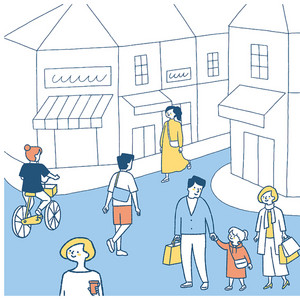
Coming up. Have you noticed more big restaurant chains popping up around your local neighborhood?
This trend is shaking up the community dining scene as small shops face stiff competition.
Today, we'll talk about what's driving these changes and how it impacts both customers and business owners.
And Disco has danced its way back into the spotlight.
But this time, it's not just for the dance floor.
It's soothing the elderly in sparking street parties.
Ready to discover the surprising way silent Disco is bringing joy and connection around the world?
Just stay tuned. But first.
Chang restaurants are making their way into China's cozy neighborhoods.
But it's bigger, always better.
As competition intensifies, local small businesses are feeling the heat.
So whether this shake -up is here to stay?
To answer this question, let's first take a look at what's going on around the country.
I think we see this kind of phenomenon quite a lot in different places, do we?
Exactly. And also, I know there are some reports focusing on this trend, especially in Shanghai, the city.
And I think there's a reason, because when you discuss the catering business here in China, we always mention Shanghai, because this city really has 27 franchise brands headquartered there.
So it's sort of like a key hub with a high concentration of different restaurant, especially retailers brands.
But by the way, that number, 27, is more than any other city here in China, raking the top in China for five consecutive years.
And while in late August this year, the paper, a news outlet based in Shanghai, they sent different researchers to interview owners of four community catering businesses in Shanghai.
And they found a notable trend, as you mentioned, New Honglin.
On large dining enterprises, they seem to be replacing those individual vendors in local communities, especially in community catering market in Shanghai.
And over recent years, Shanghai has witnessed a surge in terms of large chain restaurants moving into these areas, such as established hot pot brands such as Haidilao, Xiaopu, Xiaobo, and Dongai Shun.
These are very well -known hot pot brands and also some new brands.
They're also launching their stores, branches in those residential areas.
And these are brands that we normally expect in shopping malls.
But in recent years, you do see more of them coming to local neighborhoods and not only in Shanghai, I think, in Beijing.
Do you notice a local Beijing cuisine and snack brand called Zguang Yuan?
Yes. Yes. Now you can see a lot of these stores across the city and in residential areas.
And actually in 2019, there were only 20 stores of these brands.
But in 2020 and 2021, even during a pandemic, this brand had launched more than 100 new stores and most of them are in residential areas.
This is actually very interesting because the layouts of most cities here in China, if you take a look at it, because there are relatively newer cities and relatively older cities.
But the majority of the cities were the layouts of the majority of the cities.
You see that the residential communities, residential areas are located relatively concentrated.
Yet there are a lot of different small shops, convenience stores, community -based canteens and restaurants scattered around these residential areas.
So if you think about the kind of suburb area in Western countries, for example, it's almost all suburban area, residential areas.
So you do not see a lot of these stores.
You drive big brand shops as well as pop and mop shops because you would, for example, drive for around 20 minutes, 15 minutes to a supermarket to get your daily grocery and go back and just spend a week.
But in China, we see a lot of these small shops.
We see a lot of these little restaurants and seeing them being replaced by big brand chain restaurants is something that baffled me a little bit.
In the suburban areas in Beijing, you're still in the city.
You're still in Beijing.
Right. So it's not like you're in a rural area, but it does feel like even though we think you're within the city of Beijing, it still feels a little bit rural, a little tiny bit rural.
So what you're saying is in the past, you wouldn't see these bigger brand or chain restaurants located in the suburban areas.
You would see almost exclusively mom and pop shops.
But nowadays, these bigger brands, these larger chains, they're showing up more and more in the suburban areas, including Shanghai, your example, right?
Yes, I would say previously, you do see more of this catering retailers majorly appearing in shopping malls.
That's where you want to go to if you want to, say, have a meal in this one of these catering brands.
But now these brands, they're really shifting their focus or they're just expanding to local neighborhoods, meaning that you might expect one of the famous hot pot stores just outside of your residential area, which is something that people don't normally expect because we normally expect some smaller
stores, smaller restaurants, mom and pop.
So why are they moving then?
Why are they suddenly showing up in these neighborhoods?
I think one reason is that you do see a lot of upgrading projects here in China, especially in bigger cities like Beijing and Shanghai.
So the local government would want to upgrade the local districts.
For example, we want to have a high burnishment and we want to have a redecoration of the whole area.
So which means that gentrification might be the one factor.
And meantime, I think for those catering businesses, somehow in those like downtown area, especially shopping malls, I was in the market, this is big enough.
It's even like a saturated.
So they really want to expand their business.
And when comparing like cost, which is the most important factor for those businesses, of course, communities and residential areas, the rental and everything, it's much cheaper than those commercial areas.
For a while it is. This is actually until it's not anymore.
It's actually very interesting because previously my feeling about different restaurants in different locations.
Actually, I have my personal labels for them.
So if I'm going to a mall, if I would be looking for supper or dinner in the mall, I would definitely go to these big brand, big name brands.
That's my expectations.
And if I am dining in community areas, I am thinking about definitely cheaper ones and also the ones that are I'm very familiar with.
I can say hi to the shop owners.
I can even leave my, for example, cat or dog in the place and have them babysitter for me for a little while.
It's a community feel.
It's a community feel.
And in the meantime, I would also expect certain places.
For example, I know this one is not very up to standard or it's no longer something that you should do in today's cities in China.
But I used to go to this little restaurant in a community, in a residential building, the first floor of the residential building.
And to basically enter someone's home, it's like someone's home, the layout and everything.
And it's definitely not for commercial use, which is why I said it's not OK to do that anymore yet.
They provide one of the best seafood I've ever tried and they're really good at what they're doing.
And it feels like you're sitting in someone's living room and enjoy the food.
And that's my expectations to these little shops in the community area.
But that's apparently is changing.
Yeah. And that's what happens when you get gentrification, that word that communities are kind of afraid of.
I mean, there's advantages and there's disadvantages from a business point of view, from a big brand point of view.
It's easy to see why they would do that.
You get a competitive edge.
There's brand visibility.
You know, you think about Starbucks is this one that pops to mind for me.
You can see them all over the place.
And sometimes the whole point is just to remind you that they do exist and you'll pop in for a coffee.
It's the same thing with these restaurants as well.
When we talk about gentrification, we're talking about humble neighborhoods that have been around for a long time.
The people tend to know each other.
It's mom and pop shops.
It's affordable housing, cheaper rents, things like for homeowners or for renters and for businesses alike.
But all of a sudden when the neighborhood becomes a little bit popular, then all of a sudden bigger brands start to come in.
And you mentioned the affordable rent.
Well, yeah, that's when they come in.
But then what happens after that is rent prices tend to go up.
People will sometimes have to leave the community because they can't afford to live there anymore.
Business owners sometimes will have to close their businesses because they can't afford rent anymore.
There are positives and there are negatives to gentrification, of course.
And I just listed, I guess, some of the negative sides.
What are the situations in other places outside of China?
Well, I lived through a neighborhood that experienced gentrification in Seoul, in South Korea.
There was a neighborhood...
Itaewon is kind of the popular foreign food area of the city where a lot of foreign restaurants are owned.
And I lived in a neighborhood right behind that called Kyungri -dang.
When I moved there, it wasn't popular at all.
And then all of a sudden it became like the hot spot.
You know, people started instagramming it and because there were some nice cafe, like little tiny mom and pop cafes there.
And then like a TV show went there and then all of a sudden, boom.
Then what happened after that is you got your big brand coffee shops that started to move in.
And then everything that I just mentioned before, it happened.
Home prices went up, businesses went out of business because they couldn't afford rent anymore.
My friend owned a bar there and he said all of a sudden, and it was illegal, but his landlord just said, oh, your rent is going up right now.
Double. And so, yeah, so this is this is the downside of gentrification.
There are a lot of positives as well.
You know, it can decrease crime if crime was a problem in the neighborhood before.
It can give it a facelift kind of to make it cleaner and nicer, aesthetically pleasing.
Those are some of the positives.
But yeah, it happens all over the world.
It's just kind of an inevitability when a place becomes more popular.
Yeah. I feel it's like a natural trend when you look at the rapid urbanization not only in China, but also across the globe.
You know, Beijing used to be called as the food desert, being that Beijing in Beijing, you can't really find anything that any good food, any good food.
Really? I didn't know that.
That's not true. Of course, in Beijing, there are like a lot of catering brands.
They're launching their branches here in the city, but people are really complaining about the declining number of this individual or mom and pop shops in Beijing.
So but meantime, I mean, when you when you think about this phenomenon or a problem, when you add a perspective of those business owners, it really makes sense because well, people are complaining about Beijing being the food desert.
They're also complaining about Hongjo also being the food desert.
But these are like major cities here in China, meaning that cost everything can be so expensive.
You don't really expect those individual shop owners or store owners.
They can really sustain their business and then they can make a huge profits when they're offering affordable, delicious.
And meantime, they're also having to support their stores by paying like huge expensive costs.
So that's that really makes sense when you look at this catering brands.
They're expanding to these neighborhoods because not only those super expensive food restaurant brands, some affordable, like more affordable food brands, they're also expanding the business around neighborhoods here in the city like Beijing and Shanghai, which is rather good news because that's sort
of offering like services to all groups of consumers, some of like elderly people and family and family with kids.
They might also need those affordable and convenient food choices just around their neighborhoods.
Definitely. When I was looking into the topic and reading all these stories, I was thinking if I am a shop owner, a restaurant owner in the community, what would I do to keep the edge?
To answer that question, I was again thinking, what do I want if I am living in this neighborhood and there are certain restaurants that I can choose?
And I realized for these small restaurants or for in general, if I am dining in the neighborhood, I do not want to the super heavy ones.
I do not want very spicy, very salty, very savory and also very sweet.
Yes, very delicious, but not very healthy kind of food.
I go to the malls for these kind of tastes and fun.
But if I'm dining in the community, if I am someone who's already retired, if I am someone who is still going to school, that I need to kind of relying on the restaurants in the community for my everyday meal, then I want it to be relatively light, want it to be again, affordable and also tasty in a comfortable
kind of way. I want the comfort food to be on the menu of these restaurants.
So for the small businesses, continue doing what you're currently doing.
Be nice to the customers, make friends, doing a little bit of favor for them and accepting their favors and also provide healthy and clean and nice food that you would provide for your kids or for your parents at home.
That would give you the edge.
Yeah, but it's easier said than done, isn't it?
When these bigger brands come in, and I'm not vilifying bigger brands at all.
They're doing what they need to do to make their businesses more successful.
But everything that you just mentioned is true.
But when a big brand comes in and they can afford to say, for example, they can afford to say 50 percent off of our menu for the first month.
Since we're new in this neighborhood, we want to give the customers a nice treat to say thank you for welcoming us to the neighborhood.
They have deep pockets.
They can afford to do something like that.
A mom and pop shop, they can't afford to do that.
So part of the problem is is that these smaller businesses that have been there for a long time, they just don't have the financial means to compete long term with these bigger brands.
And this can be a difficult thing for them.
And that's when local governments get into the game.
Some of the local governments would provide subsidies for these small.
They call it small and medium enterprises, but they're just really just small shops and small restaurants.
And also they would open the they call it community canteen.
It's a certain kind of community restaurants that have the support of that little community.
Is that like a community food court?
A little bit. Yeah, kind of.
And they would make sure that the supply is there and they're clean and they are with certain kind of help from the community as well as from local governments.
I think these would be good ways to go.
I think community like market definitely deserves more attention because we do have more emphasis on community surveys in general across different cities here in China.
We're emphasizing we're offering like 15 minute life circle around neighborhoods, meaning that you can guarantee your local residents to get their everything they need in daily life within 15 minute walk.
And that's something has already been equipped in a lot of like neighborhoods.
So and also when you look at more people, especially younger people these these these days, especially me myself, I don't really I don't really want to cook on the daily basis.
So I'm so I really want to have this like more affordable, convenient dining options around my neighborhoods, which is also in line with the rise of food delivery service here in China.
So I do think this market deserves more attention and is definitely a promising market.
And meantime, besides talking about how to control your cause and also the price and everything, I think when you look at those big catering brands, they're expanding the business to neighborhoods.
One thing they can notice is that to have different position, to have like a different brand position or store position from their stores in shopping malls would be a good choice.
Because when talking about this dining options around neighborhoods, a lot of people are saying that, Oh, I just love that small store because it really gives me a feeling a comfortable feeling.
I think that's something that those brands can achieve by maybe have a different decoration and also to have different maybe local community services, special services only offered in those smaller stores.
I think that might be a good strategy for them.
While large restaurant chains are claiming there's space in our neighborhoods, there's always room to preserve the community spirit that smaller eateries bring.
You're listening to Roundtable coming up next, silent disco.
Are you a fan? Let's groove into it.
Looking for passion?
How about fiery debate?
Want to hear about current events in China from different perspectives?
Then tune in to Roundtable where East meets West and understanding is the goal.
It's Roundtable with myself and your home in Steve Heatherley and Lee, silent disco music.
That's all in your head, literally, whether it's helping seniors find calm or turning sidewalks into dance floors.
This new twist on disco is making waves.
So what exactly is a silent disco?
So a silent disco is when you have a group of people, let's say all of us here in the studio and we all put on headphones, then we tune into the same channel and that channel will be playing wirelessly, will be playing disco music.
So we, wherever we are, we can be dancing in this studio.
Now, for someone who isn't wearing headphones, they would look at us and think, wow, crazy, what are they doing?
But for us, we're all experiencing the same song at the same time, but nobody else can hear it if they're not tuned in to the channel.
That's why they're called silent discos.
Sounds like a good choice for long distance couples.
You're dancing together, looking at each other with a camera and you're not interrupting any other people.
This reminds me of some kind of short videos I've slipped around where I've slipped around before.
That is the kind of acting scene without the after effect.
It looks ridiculous.
This is kind of the same thing.
It's odd if you're not taking part, but if you are taking part, it's really, really fun according to the people that do it.
A couple of different spots I want to talk about, one outside of China, one inside of China, popped up in the news recently, there's an old age home in the UK and they've added what they called the move and groove program to their list of activities.
Awesome name, right?
So that's what they do at the old folks home is that they have 10 residents and they connect to a single device and they dance along to this music.
And the people who are taking care of the elderly in this home say this is really working out very, very well for them, because for those with dementia, the evening can be a difficult time.
So having this type of experience to them, available to them is really, really helpful for many residents.
They haven't heard the songs that they love in a really long time.
So this is an opportunity for them to do that and also share the experience with other members of the home as well.
So it's a really, really useful tool.
It's therapeutic in a way, it's cathartic in a way, and it's really well received.
Now that's in the UK at an old folks home.
Now we come back to China and we go to Shanghai once again.
This time it's in the streets at each silent disco event in Shanghai.
Attendees are given headphones with specific coloured lights that link them to the same audio channel.
It's the same, it's the same process here.
And as a silent guide leads the dances, the music plays through the headphones and people in Shanghai outside in the streets are enjoying these silent discos as well.
And they have a guide, they have a teacher there with them.
Well, on one hand, I find that quite interesting and quite useful because I'm not really sure if you're familiar with China Square Dance Culture.
Tell me. We dance at squares and we dance for a really long time with a really large crowd.
And the music is really, really loud as well.
Now, I have not seen this in Beijing.
Is this a rural activity?
Walk around. You can see it around your homes, actually.
Especially during nights.
During nights. And the thing is, I understand sometimes, especially when it's around community, residential communities, it can be a little bit too loud, noisy, and it can be a little bit irritating to people living around.
I was going to say, this doesn't break any noise laws.
Not really. And it actually helps.
Well, because it's not going to be that late usually or on paper.
And the idea is that I understand if people can adopt this kind of new, you know, silent disco mode or silent square dance mode, it help with the noise situation.
But on the other hand, I've visited several different cities and I have participated in several of these.
Square dances? Yes, yes.
And you know, on a really large square in Xinjiang, actually, because the square is large enough, there are different groups of square dances.
There are, you know, the disco ones, there are the kind of dances that requires a lot of skill that I cannot really do.
So different ones would have different music and you can jump in and join with whichever you want and you can get out.
But if it's a silent disco, it's going to be hard for me to join.
You think so? Well, you'd have to get a head a head, a set of headphones, I guess.
Lian is the director of the 1862 Fashion Art Center and organizer of the silent disco activities in Shanghai.
And Lian said it shatters conventions of traditional theater by taking performances out of confined venues and into the public sphere.
For our audiences, it cultivates all the desired experimental experiential elements like relaxation and existence and social connection and atmospheric vibes.
I think it's a really cool activity.
Put on some headphones and groove along with your fellow dancers in the middle of a downtown area.
I'm thinking, you know, people are considering this silent disco as therapeutic might be.
It is because of their using this headphone.
So they don't really have to worry that they are disturbing other people around them and they can just move freely, dance freely, as free as they want.
But yeah, I think sometimes, you know, I know people are debating about the noise coming from those squarer dances here in China.
And I know some people, they're already using Yerba's to have this squarer dance to solve this problem.
But meantime, I feel like, again, it's sort of like for me, it's a symbol of the vibrant atmosphere of this local residential area.
I think it's really fun.
It started in Europe.
Young people were holding these dance parties in the forest, but they didn't want to disturb the animals there.
So they decided to put on headphones and tune into the same channel so that they wouldn't there wouldn't be any noise pollution bothering the bunnies and the foxes or whatever.
That's where this all started.
But speaking of the UK, there can be a little bit of controversy with these silent discos because of the location.
In Shanghai, as far as I know, there's no problem with the locations that they're selecting, but there was a time in England where they wanted to hold a dance party at the Canterbury Cathedral.
Now, this is a very religious place and more than 3000 people were expected to show up at a church to have a silent disco.
And the Church of England did not like that very much.
And they had a petition with 1700 signatures saying that this was profane and that there was no problem with the activity.
But the problem of doing it at a church, at a sacred church, they did have a problem with that.
So if you're planning a silent disco, make sure you're doing it in a spot where you won't offend anyone.
Wow. I didn't see that coming.
But at the same time, I feel like technology has been helping us to be ourselves without disturbing others nowadays in different tourist spots instead of having this really loud speaker with well, having a loud speaker of these different tour guides, giving the explanation of different places to everybody.
Everyone now is having a headset and you see the tour guides whispering to the little microphone they have.
So instead of bothering others, they can also, you know, enjoy the kind of experience they want.
And that is happening all around the world.
So, yes, with the help of technology, we can, again, be ourselves without disturbing others.
Let's have silent disco during our editorial meeting.
We can do that every day in the office.
Someone's back in work mode.
Or wait, maybe you're not.
Well, make your choice.
And that brings us to the end of today's roundtable, Annyeong Hong -in with Steve and Lee.
Thanks for listening.
Bye -bye, everyone.