Discussion keeps the world turning.
This is Roundtable.
10 billion yuan and counting.
The movie Neja the sequel isn't just a massive hit.
It's rewriting film history.
Now it's hitting cinemas overseas.
Will it capture hearts worldwide?
And everyday wins, heartwarming tunes, and pure good vibes.
We invite you to Roundtable's happy place.
Join us for your weekly dose of sunshine.
Coming to you live from Beijing, this is Roundtable.
I'm He Young. For today's program, I'm joined by Steve Hatherly and Yishan, first on today's show.
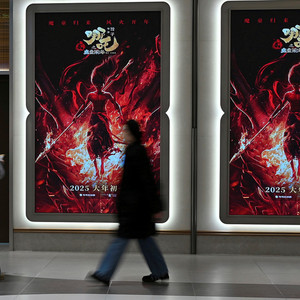
Now we revisit the phenomenal success of Neja the Sequel, an animated masterpiece that has redefined box office expectations in China.
Achieving over 10 billion yuan, that's approximately 1 .37 billion US dollars in the box office earnings and becoming the first Asian film to enter the global box office top 20, it stands as the highest grossing film in a single market, surpassing big movie titles such as Star Wars, The Force Awakens.
As this cinematic triumph reaches audiences overseas, we discuss its cultural impact and the future of Chinese animation on the global stage.
So yes, since last night, your social media must have been exploded, bombarded with all these discussions and posts about Nezha.
The sequel has raked in 10 billion yuan.
What makes this milestone a turning point as it feels for Chinese cinema?
I mean, for a lot of the online comments, one actually grabbed my attention because I absolutely agree with this.
That would be China's Noja 2 marks a deep -seek moment for global film industry.
That's a very true metaphor there, because we now see that Noja 2 has surpassed Black Panther and the Super Mario Bros.
movie to rank fourth among animated film globally.
And also, it has become the first non -Hollywood film to break into the global top 20, which reflects China's growing cultural soft power in a way that it attracts global attention nowadays.
That's why it's commented that, well, the Nezha 2 movie may indeed mark the coming of age of the Chinese film market on the global stage.
And also we see that there are many social media buzzed with frustration as eager fans of this movie try to secure IMAX seats in the U .S.
movie market as well, only to find that the best spots were already taken.
So one example would be in Manhattan, two or three of the city's seven or eight AMC theaters are showing the Neja Tu.
And the overall number of screening, although it's not really that high, but attendance is strong.
And that's according to a young film critic studying at Columbia University in New York.
And also we see Neja Tu being a huge success in the domestic market as well, Because like you mentioned, He Yang, last night when the spectacular moment arrived, when the movie surpassed the 10 billion yuan mark of total box office revenue, everybody was kind of like watching the live streams as there
were this online news media and movie related social media all live streaming that moment at around 7 p .m.
last night. So everybody was anticipating this.
So in general, we see that the remarkable box office in general is expected to continue, actually.
Yeah, people aren't finished watching it yet.
Yeah, exactly. And also industry insiders predict that its final total box office revenue could reach to 15 billion yuan or about 2 billion U .S.
dollars. That's according to CGTN.
So we see that Nezha has been such a series that's catching global attention and also domestic attention.
And for the two weeks it's been released, it's breaking, shattering several world records as well.
So, yeah, definitely it's a turning point for Chinese cinema.
We were not planning on covering Nezha 2.
Exactly. Again, on Roundtable because we talked about it before Spring Festival.
Well, actually, if I may interject, we talked about it in a more serious manner, at least twice after the Spring Festival vacations, since we've come back.
But yesterday, we're like, well, actually, it's more like last night slash this morning, we were like, all right.
And since we saw your messages, lovely listeners, we'll do it again.
Yeah. And so I thought, OK, well, let me see if I can find something from foreign media outlets.
And I must admit, I thought, I don't think anybody's going to be covering this, will they?
Goodness me. New York Times, NBC News, lots of media outlets are covering this because it is going to be showing in hundreds of theaters in the United States.
And we have we have to talk about this again.
I don't know if we could have predicted this.
I mean, we were talking about the big films that were coming out.
We were talking about the fact that Spring Festival time is a really popular movie goer time, and this movie's coming out, and that movie's coming out.
And I don't know if we could have predicted this success, right?
I mean, we were kind of fingers crossed that people were going to go and use their movie vouchers and check out popular films, but I don't think we saw this coming, did we?
I don't think we did.
And also, with this movie proving to be this successful, maybe it shows that the Spring Festival movie season is going to be more of a serious, put your big bucks down, invest into good films and show it at that period of time as it proves, well, I mean, those who bet it on the right movies, well, you
will have a very handsome return.
Can I share with you what was said in the New York Times?
Yes, please. The new king of the Chinese box office is an adorably ugly demonic child fighting off monsters.
Nuja 2 is a sequel to what had been the highest grossing animated film in China.
In the 2019 original, Nuja is born as the reincarnation of a demon with supernatural powers, but destined to live only three years.
But he fights back against his fate and saves his village.
And in the sequel, a similar theme is revisited for any of our outside of China listeners who may not have caught the buzz just yet.
But I thought, goodness me, you know, this is breaking records, not only here in China.
This is breaking international records as well.
As I said, the first film not made by a Hollywood studio to cross that billion dollar ticket sale mark.
That is incredible.
It is indeed. And what made it such a smashing success at home?
And then we'll look abroad.
I mean, for me, I would agree that the way that the story is told, kind of retold in the new Neu Jiao sequel movie, has its really strong appeal that especially welcome and make it popular among younger viewers in China.
Because we kind of know that the Neu Jiao story is not a new story.
It's adapted from tales from the 16th century novel called Investiture of the Gods.
And in the original story, it's really a sad kind of term because Nguja, also a rebellious and a very strong -powered figure.
He bravely slew an evil dragon and its son in order to bring peace to the sea.
But in the original tales, he was not understood and eventually caused him to kind of commit suicide in order to pay for the things that he did.
But we see that nowadays in a new narrative, this whole story is retold through a breaking free kind of spirit that kind of constrains the framework of ancient mythology while it retains the core elements as well because the new animation plays the great responsibility onto Noja's shoulder and also it's
strengthened on the point which is so appealing to young people that your path is created by yourself and your fate is determined by you.
You alone are the one who dominates your future in a way.
So that's kind of like really attracting young people, especially the younger viewers nowadays in China to really get involved and resonate with the role that's depicted in the movie.
I think that's one of the biggest selling points of this story.
Well said. And I think what they've done really well is basically also balancing tradition with tradition in ancient slash Chinese traditional aesthetics with a super modern twist and modern storytelling.
That's sort of what you alluded at, Yu Shen.
And to give you a few examples, the movie opens with the scene of a whole bunch of people, villagers, picking lotus roots.
I mean, nobody outside of China would be doing that or to feature that, you know, as the movie opening.
And then it was done in a really comical way.
And also so many character designs, aesthetics, appreciation.
Oh, well, if you're a Chinese person, then you hit all the cultural and historic references, which is really great.
But if you don't have that background, it's fine, too.
It's probably just going to look really exotic and mystical to you.
And also to the more modern side of things, the plots that really got everybody crying, shedding tears in the cinema, I believe are the modern renditions of the family relationships.
So like the Neja and his relationship with his parents, as well as his best friend, Al Bing, with his dad.
You don't really need to know that much background of these characters, so I won't get into the details in a great length.
But here what I want to say is that these relationships were so moving, and these were the modern ways to look at family relationships.
is completely a departure from the traditional ways of looking at parental intergenerational generational relationships in the sense that you have absolutely 100 supportive parents who are willing to apologize to you when they did something wrong would you have seen this in Chinese cinema 10 years ago
20 years ago no no no no no so when I heard all these people crying and myself also shedding tears and i was like yes this is what chinese young people dream of of ideal family relationships and you got it from the animation film in the spring festival period of 2025 so i think the some of the core
um ideals portrayed by the movie it so resonates with contemporary audience and also the younger chinese audiences who are willing to pay to buy tickets to go see it so um so if so commercially it's a great success as well um this is from the new york times too uh raymond ju who is a who is an independent
chinese film critic he said this nuja too is the rare movie that hits all the marks it targets all demographics and has successfully won over all of them yeah right and it's all it's all the things that you're talking about so So this is an animated film with lots of fun storytelling and exciting action scenes.
I watched the trailer.
I haven't seen the movie just yet, although I really want to.
But I watched the trailer and it's got that stuff that would appeal to kids.
It's visually appealing and it's got the action and the excitement.
But when you tell stories like that, that young children here in China, even they wouldn't be able to grasp that difference between now and 10, 15, 20 years ago.
But the adults can, right?
So you're hitting on all the marks as a filmmaker there, as a storyteller there, which probably speaks to why it was so domestically successful.
And as a matter of fact, I just watched an interview with the director of this movie just a few days ago.
And according to him, they had to delete part of the action part in order for the movie to be appealing enough to the kids' audience.
because sometimes the actions, the fightings can get overly violent in a way that kids might find is not...
Too much. Yeah, it's a bit too much.
And also, they kind of balance the laughing points throughout the movie in order to have it more in line with all ages of audiences as well.
And also, there's some news that was super popular in Chinese social media just yesterday that in Guangzhou province, I think, there is um sorry guangdong province yeah there's this um a foreign um viewer who cried so bad together with everyone in the cinema all the chinese viewers in the cinema when he
saw the sacrifice of noja's parents and that i'm not going to tell too much details as um spoiler alert yeah but but it just shows that like you said heu yang this is something universal that people no matter which country you're coming from, can resonate with and feel through the movie.
And also, can we just briefly remind people, aside from great storytelling, the animation technology is fantastic as well.
So basically, we've seen...
It looks great. It really does.
And in a previous show, we did talk about that this movie has attracted, It's almost like the best of the best of Chinese animation industry to join forces in sometimes only contributing to a few seconds of a sequence, but to really show the world what they've got and making the best animation possible
at a limited budget and sometimes basically coming to help with no freedom of charge.
Yeah. But what it appears on the screen, the big silver screen, is fantastic.
Yeah. I mean, still going back to that interview with the director who said that when making this movie, while producing this No Jazz series, they basically reached out to almost all the animation studios, the most animation studios all over China, which is true if you look at the numbers here, because at the end
of the movie, we see a very long line of credits that's featuring a lot of names.
And according to the paper statistics, a total of 142 companies were listed in the film, and that includes 135 production and also co -production companies.
Among these 135 companies, over 90 % are domestic Chinese firms.
And in terms of company size, small and micro enterprises accounted for more than 80%.
And by small and micro, I mean companies less than 20 people.
Yeah, that won't get a lot of the credit when you talk about the success of this film, but it really was almost a community effort, right, to put this together.
And I'm reminded suddenly this is how we spoke when we talked about Black Myth Wukong, when we talked about the success.
This is a domestic video game that achieved massive international attention and success.
This is a domestic film that was made domestically with a lot of different hands helping out.
And that is that is a very cool thing as well.
Indeed. And when we look at the grand and imaginative ideas and all the sceneries that's depicted in the movie, some individual scenes in Ne Zha sequel took almost a year if not more in order to produce and some even took the entire movie making process in order to beautify to a state that the director says yes.
So there are over 4 ,000 animators involved and also Ne Zha 2 features three times as many characters as the first one that is the first sequel of this movie back in 2019.
And also, there are more than 1 ,900 VFX shots, and that is surpassing the total number of shots in the first movie as well.
So one of the fun fact is that, do you know who are the bunch of people who don't want to watch the movie?
Who? The animators themselves.
Oh, yeah, who spent a year putting it all together.
Yeah. Also, the film success has led to a 200 % surge in Enlai Media's stock, and that's the movie's production company.
And also, it owns some of the best animation studios in this country.
So kudos to them. They've got their investment return back.
And also, just to echo what Yushan said just now, I mean, we don't really have much time to go into details, but the director, Jiao Zi, his life journey is quite remarkable.
But what really stood out to me is that真诚 is the sincerity.
Yeah, it's the most, it always touches people's heart in the most profound way.
And director, Jiao Zi, dedicated five years to perfecting Ne Pizza, the sequel.
And now he speaks of Ne Pizza, the third one.
He's thinking about five years as well.
So it's like if you put everything in and making the storytelling everything so great, then it's worth the wait.
And for those creators out there and also just humble everyday workers like you and I, sometimes I think we are overwhelmed by the speed of society.
You feel like you have to catch up.
You have to continue the race.
You fear to slow down.
But actually, you know, when you really put the time's worth into it, I think you can come up with something remarkable and even rewriting history.
I think this is – okay, that's the really inspirational side of it.
But also, guys, since now it is opening in the U .S.
and around the world, Steve, especially this goes to you.
Do you think that this might have the potential of rewriting some of the expectations or perceptions?
towards Chinese films?
100 % I do. I saw this quote from the foreign media outlets is that this film is redefining the heights of China's film industry.
And several Hollywood producers, after viewing the movie, expressed interest in pursuing more collaborations with Chinese counterparts.
And I think that's really cool.
Here's another really cool thing.
We talked about Xiaohongshu.
And when the TikTok thing came out and a lot of American viewers or TikTok users came over and joined and new friendships were formed, well, international movie fans, they've taken to that social media outlet to engage with their new Chinese friends to discuss the film's storytelling and the spiritual
depth and the stunning visual effects as well.
I think this is something that will be appreciated for different reasons.
You talk about the lotus roots, the picking of the lotus roots.
People in America or Canada, this, by the way, opened in Australia and New Zealand in over 100 theaters too.
People probably won't get that, but that's not really important, right?
That's for perhaps the domestic audience, those little Easter eggs perhaps that you might enjoy, but I don't think that makes a difference at all.
The thing that I think is the best thing about this and Black Myth Wukong is that—and I'll use this quote.
I was watching the news during the Xiaohongshu popularity time when American users were joining, and they were interviewing an American blogger, an American social media star who had joined.
And the person said this.
This is what I didn't know before.
He said, people in America, people in the West, we don't know much about China.
So we kind of think of it as one thing.
It's just China. And that's all we know.
But when we have artistic successes like Black Myth Wukong, like Nijia 2, then it shows people that China isn't just one thing.
It's capable of creating beautiful art done by wonderfully talented people.
And there's a lot going on here in the country, culturally speaking, that now people will know about.
And if you're wondering why the arts is such an important part of education in general, this is exactly why.
And I think this is really exciting.
I mean, I totally agree with you on this, Steve.
And if we look at previous comments on Chinese animation industry in general, we'll look at something that sounds like maybe it's going to make people fall asleep because, you know, a lot of times people don't understand what's going on and it's not even dubbed in English, et cetera.
And some series franchises are able to show that China studios are now mature enough that they can release original shows that can compete with some of the best shows that's from Japan or from North America, but they can't do it consistently.
But nowadays, well, I was quoting from a 2023 medium comments on the Chinese animation industry, But now we look at Nejia 2, the sequel, presenting us with this technology plus culture kind of narrative that's becoming the dual driving mode of Chinese animation or动画 industry.
So this is not really one movie that impresses people all over the world with our cultural implications anymore, but it's a combination of storytelling, like Steve said, and also the technology as well.
And, well, I was watching the first Nezha movie with some of my foreign friends just earlier this week because back then the sequel movie hasn't been screened in their respective countries yet.
And they told me from a non -Chinese perspective, they don't necessarily know all about the mythologies and stuff, but they feel for the story.
So that's a successful example for Nezha in order to captivate attentions and also make people understand what's going on and that they actually feel for the movie.
As Nezha, the sequel, bridges cultural myth and modern global audiences, what can stories like this teach us about, I'm thinking, embracing both cultural uniqueness and shared human struggles in today's world?
And is the future of storytelling not just about showcasing your own culture?
And as a Chinese person, actually, in recent years, when we earned this chance to do so, we feel immediately proud.
But is the future about also creating narratives that allow us to see ourselves in one another?
And that's something I would invite you, our dear listeners, to think about and even write to us.
And there's a place to do that.
roundtablepodcast at qq .com share with us your thoughts whether you've seen this movie or not and if you haven't it's still in the cinemas in China and around the world so go check it out if that's something you would like to spend your precious time hopefully it'll be in the theaters for a little while
more too yeah yeah I hope so and I think it pretty much will coming up during the second half of the show gift giving is going digital in China and it's quickly becoming the new battleground for social media giants such as WeChat and Douyin, the Chinese version of TikTok.
As e -commerce heats up, yeah, that's essentially what's happening behind the gift -giving.
How are these platforms navigating China's unique social customs and relationship dynamics?
And we all know that is crucial in having a happy life in this society.