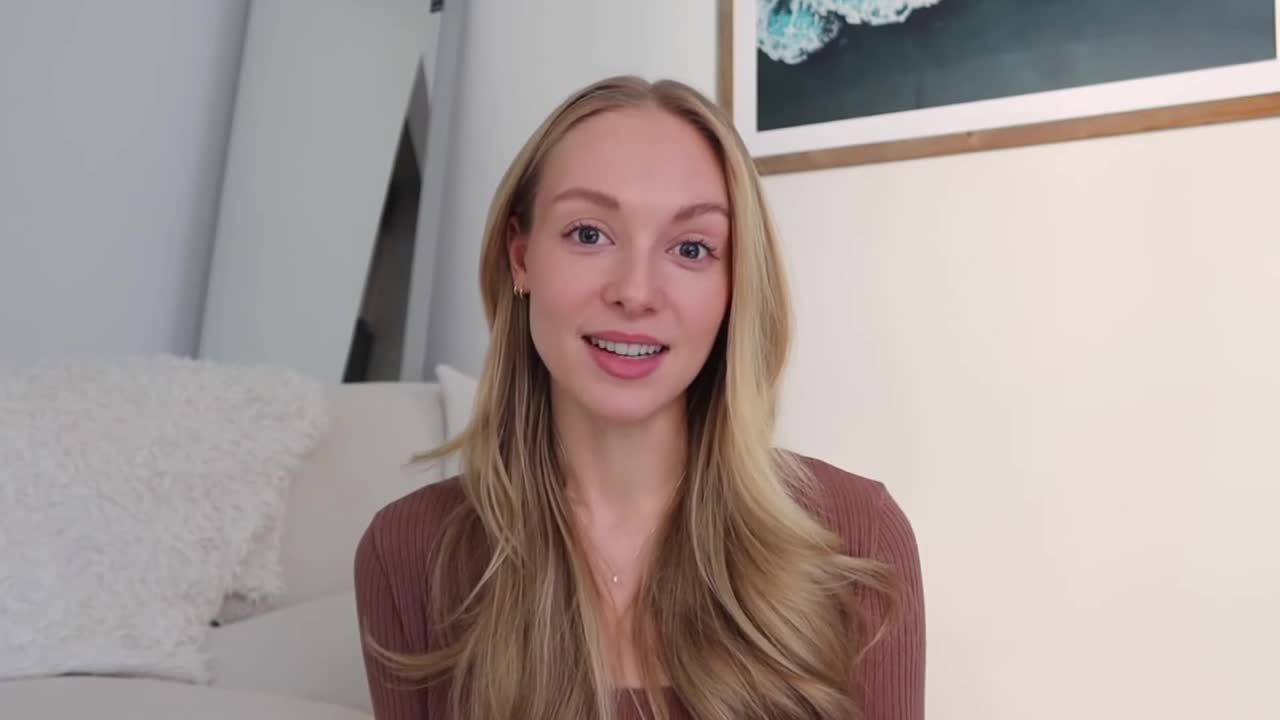
I thought today we could talk about friendship.
We spent so much time talking about dating, falling in love, how to find the right partner, but what about the relationships that actually carry us through life?
In this video, we're diving into the world of friendships, how they change us, how to make new ones and also how to let go of relationships that aren't serving us anymore.
Friendships, especially in our 20s, can be so tricky to navigate, but they can also teach us a lot about ourselves, our needs in a friendship and also our capabilities as a friend.
Today I'm sharing some of the biggest lessons that I personally learned throughout my friendships in my twenties.
The things that I wish I knew sooner, because we all have those things that we wish we knew sooner.
Also how to actually make new friends in 2025.
There are a number of things that I wish I knew sooner about friendship, but if I had to pick one is that it's not about history, it's not about proximity, it's about friendship compatibility.
For years I didn't know that this was a thing, but once I understood that there is such thing as friendship compatibility, just like there is in relationships, romantic relationships, it started to make sense to me why certain friendships felt more difficult than others.
When I talk about compatibility in a friendship, you have to understand that it's not about being the same.
You don't have to be a clone of this person in order to be compatible, similar to a romantic relationship where you don't have to always like the same things.
You don't have to have the same interests to be compatible, but it is about having the same needs.
I'll use myself for an example.
I'm the kind of person that thrives in low maintenance, but high quality friendships.
So the kind of friendships where you don't need to talk every day, but when you see each other it's like nothing's changed.
You maybe don't even talk every month, but when you do talk, it's the kind of moment where you're maybe FaceTiming for an hour or an hour and a half and you're catching up about everything.
Those are the kind of friendships where I thrive.
I'll be honest, it took me a long time to be okay with being that kind of friend, because not everybody likes that kind of friend and not everybody feels that that kind of friendship is enough for them.
Basically, I learned that when I'm in friendships that require a lot of emotional dependency or even just constant communication, I can feel very suffocated, and then I don't end up showing up as the best version of myself.
The hardest part about this realization for me was letting go of the guilt and accepting the fact that me needing space and a friendship and me needing a healthy, balanced dynamic doesn't make me a bad person.
It's actually healthy.
And now that I'm at this age I realize that.
But in my early 20s I felt a lot of guilt around making someone feel rejected, making someone feel like they're not good enough.
And so I ended up staying in these friendships longer than I probably should have, because I was too afraid to break it off or too afraid to honestly tell them how I felt.
Before I tell you how I eventually let go of these friendships, there are other signs of being incompatible with a friend.
It doesn't just have to happen the way that it happened for me.
A common sign of incompatibility in friendships is sabotaging your own wants and needs for the sake of the friendship.
Even feeling the need to change yourself to fit the friendship, or when the friendship feels like work.
That's a feeling that I remember having a lot when I was in friendships that just didn't feel right for me.
It just felt like I had to put in a lot of work to maintain this friendship and now, being a little bit older, I know that the right friendships to me feel like something I want to do.
It's something that I look forward to doing, you know?
Hopefully, everyone watching this video is in healthy, thriving friendships.
But if any of these incompatibilities sounds familiar to you, I challenge you to look at that friendship and see how you actually feel when you're around these people.
See if you're feeling as seen and as loved as you deserve to be feeling.
Or maybe, if you're even relating to what I'm saying about my own experience, you know, and maybe have to let a certain person go.
And now comes the part of letting people go.
This is the hardest part.
And if I think back to my own experience, this is the part that took me the longest to learn and the longest to do.
And it's one of those lessons that kept coming back over and over again until I learned how to actually do it.
There are two ways that you can go about letting go of a friendship.
The first one is deliberately taking space or distancing yourself, and the second one is having a direct conversation.
I think that there's a time and a place for each one of these, but i always recommend starting with the first one, because sometimes, if we're lucky, the other person will feel a similar way, or they will, i guess, take a hint that we're taking space and we're distancing ourselves, and hopefully this is always, I think, what we all want.
The relationship will just naturally fizzle out and a conversation is never needed to be had.
Then you inevitably have the opposite where someone feels the distance.
This is usually that type of friendship where this other person really needs the emotional dependency or they need that communication and so As soon as it's taken away from them and as soon as you kind of distance yourself and step back, this person feels that.
This is unfortunately the kind of situation where you'll have to have the direct conversation.
At that point, you have to just address it.
There are a couple things that you can do to prepare for a conversation like this.
The first one is that it has to come from a place of truth and authenticity.
So you can't be making up an excuse as to why this isn't working, or pushing it off until later and being like okay, I'm gonna make up something for now and then I'll deal with it later.
It actually has to come from a place of truth.
You also have to accept that this conversation is probably gonna be uncomfortable and not very fun to have.
But just because it doesn't feel comfortable doesn't mean that it's the wrong thing to do.
Doing the thing that's comfortable in the situation is probably gonna make this continue on.
It's not gonna take care of anything.
And the reason that it feels uncomfortable is because we don't deal with this every day.
We don't have these kinds of confrontational, vulnerable conversations every day.
Obviously it's going to feel uncomfortable.
The last thing that I would say to prepare for a conversation like this is that it's probably going to feel personal for this other person, but we don't have to make it personal.
The best way to go about conversations like this is to always make it about you and make it about your experience, rather than putting the blame on the other person.
The reality is that we are the ones that want to end the friendship because of how we feel and because of our experience.
It's not really about the other person because we can't control the other person.
By putting the blame on the other person, we're essentially telling them that they need to change in order to fit our lives.
And who are we to tell other people what they should and shouldn't be doing, right?
We only have control over ourselves and our own actions.
And so, instead of putting the blame on someone else, we have to take responsibility for how we feel and be the ones to remove ourselves, rather than trying to change the other person.
Some examples of things that you could say in this conversation is you know, I've been feeling disconnected, or I feel overwhelmed, or I don't feel like I'm showing up as myself, this friendship anymore, and i don't know how to show up in this friendship.
I don't know if i can show up in this friendship anymore.
You know and that's not to say that that might not feel personal to the other person, but that's not something that we can control right.
The best thing that we can do is make it about ourselves and keep it as gentle and as kind as possible, without blaming them or anything.
The biggest thing is trying to let go of the guilt and remembering that you're not a bad person for needing different things in a friendship.
The other thing that actually really helped me when I was going through this a couple years ago is that it's better to hurt someone with the truth than comfort them with a lie.
Basically, it's better to be honest with someone than to stay in something that isn't right just to spare someone else's feelings.
Trying to remember that by you being honest and letting go of something that isn't right, you're also allowing them to be open to meeting the kind of friend that actually is right for them and letting them be fulfilled.
Sometimes you have to trick your mind a little bit and look at the bigger picture to actually push yourself to have this kind of conversation.
Another thing I just want to mention is that having these kinds of realizations are amazing and you should be so proud of yourself for having this relationship with yourself, where you are in tune and connected and realizing what's right for you and what's not.
I think we punish ourselves sometimes for feeling these feelings when we're actually supposed to celebrate them, because not only are we living a more honest and authentic life, but we're actually getting closer to the highest version of ourselves.
And I know that might sound woo-woo, but that's ultimately the goal, right?
Is living a life that feels good to us.
You're going through this right now and you're kind of having a similar experience.
Recognize that this is a good thing and something that you should be celebrating, and give yourself a high five for leaning into it and doing the thing that's ultimately going to be best for you.
Now we can't have a friendship video without talking about the qualities of a healthy friendship, and so i want to highlight some of the qualities that i think are the most important in a healthy fulfilling, long-lasting friendship.
The first one I mentioned a little bit earlier, but it's the sense of ease.
A real healthy friendship should feel easy.
It's similar to a healthy romantic relationship, like 99% of the time it should feel easy.
Honesty is another one of those qualities.
There's an amazing podcast that I'll try and link in the description box, where they talk about honesty in a friendship, but they go a step further and essentially call this wise compassion.
Without going into too much detail, it's when you're able to call out your friend for their behavior that they may or may not be seeing, rather than the opposite, which they refer to as idiot compassion.
And so, in an example, it's like if you have a friend who keeps dating the wrong guys and you keep telling her oh it must be, these men, like men, are stupid whatever, instead of saying that, you gently but firmly suggest to this friend that they might also be playing a role in this.
And I think that this is one of those qualities if you can find a friend that is able to give you the wise compassion that you need, I think you've won the lottery.
That's definitely a quality I would add to the list.
Some other qualities that come to mind for me are things like acceptance, Forgiveness.
This isn't necessarily quality, but I think that healthy friendships also understand that different friends serve different purposes.
And so, just like in a romantic relationship, where a partner can't be every single thing, we need them to be, a friend also serves its purpose.
Some friends are really fun to go out with.
Some friends you can have really deep conversations with.
Some friends you can travel really well with.
And just because some of these friends don't fit in all the boxes doesn't mean you can't have a healthy friendship with them.
Now I want to end this video talking about how to make new friendships.
When I think about how to make friends in 2025, the first thing that comes to mind for me is initiation.
I think that people are starving for connection, like starving for good quality friendships.
I truly believe that.
I think that people are just afraid to make the first move and to initiate the conversation.
You can be the one to start the conversation or to ask the question.
You are already opening so many doors, because I think that that's what's stopping people from actually meeting friends.
I actually get this question on my Instagram a lot from people who've just moved to New York and are looking to make friends.
And the example that I always use is my Pilates class.
I go to Pilates many times a week and it's so easy to just start up a conversation with someone who's on the bed next to you, and sometimes i'll even start with something simple like asking them if this bed is available and then asking a second question.
I'm going to keep referencing podcast episodes, but they recently had a guest on diary of a ceo talking about communication and connection and he said always ask second question.
Something along those lines it's just great advice, because me asking someone if the bed next to them is available will probably give me a yes or no, but it's not always gonna get me to that next step.
You know what i mean.
And so asking the second question of like do you come here a lot?
Or like do you live in the neighborhood and these are all women like it's not a creepy type of question to ask, but just asking them something to keep the conversation going, could be the start of a new friendship.
In terms of where to meet new friends, I always recommend starting with the things that you're already doing, so you can kind of start within your comfort zone and slowly work your way out of it.
And so I'm going to use the Pilates example.
I would try a new studio and maybe, if you're you know a young working professional, go at a time where you might also meet young working professionals.
Those are probably the earlier classes in the day, or maybe the later ones at night, or maybe the classes around lunchtime, because someone's taking like a class on their lunch break.
Another great way to meet people is through things like book clubs or things like online workshops.
In order to keep up my coaching credential, I have to take classes and workshops throughout the year, and I have to say that this is one of the best ways to meet people, even if it's, you know, like a one-off workshop or a one-off class.
Such a great way to meet people that you might not meet in real life.
And then obviously there are so many ways to meet online.
You can meet people through Instagram, apps like Bumble BFF.
I actually have a friend of mine who ended up moving to a different city and she used Bumble BFF to meet some new friends in the area.
That's always a good option if you don't want to like throw yourself into public events and things like that.
If you guys have any ideas on how to meet new friends or if there's anything that I maybe missed, I would love to hear about it in the comments.
Also, if you have any stories on how you met new friends in a new city, please feel free to share.
I would love to read them and I'm sure it would be helpful for other people to read them too.
Before you go, I just want to remind you that friendships are meant to evolve and change, just like we are.
We are not meant to stay the same way our whole lives, and so Let's try and normalize friendship shifting without feeling all this guilt, and start leaning into the friendships that actually feel good and make us feel like the best version of ourselves too.
Again, I would love to hear about your experiences in friendship, how they changed over time, the things that you maybe learned.
Please feel free to leave those in the comments below.
I hope you enjoyed this video.
Thank you so much for watching and I will see you guys in the next one.
Bye.