October 1st marked the first day in over 50 years that NPR and member stations began operating without federal funding.
We are still here.
We're not going anywhere. but it's challenging.
And it makes me think about why I do this work.
And a story that I always come back to is a story that I did in Selma Alabama, where I talked to one of the youngest people that were on the bridge on Bloody Sunday Joanne Bland.
And she gives these tours of Selma talking about the history of of the civil rights movement that she lived through.
And I'm grateful that I work for a place where I'm able to give a voice to Joanne Bland to raise up those people who lived through truly turbulent times and made the world a better place.
Even in this moment, I feel like I'm talking to people every day that are living through historic moments, moments that we'll be talking about decades from now and that I'm able to bear witness.
And I think that's what NPR does.
I think NPR bears witness to what's happening, that we provide a place where we can provide a record of the truth.
And as long as you are here, as long as you are tuning in, NPR will be here bearing witness, telling the truth without fear or favor.
Thank you.
I'm Ayesha Roscoe and this is Sunday Story from Up First, where we go beyond the news of the day to bring you one big story.
A few years ago I was at an event for radio people where we were selling our shows to programming directors at member stations.
One of NPR's major competitors was presenting.
Now, I'm not going to say which one.
But when they got to the QA portion of their presentation, my colleague, All Things Considered host, Mary Louise Kelly, stood up and started asking them some really tough questions.
Fair, but challenging.
And I have to stress, this was in person, live.
This wasn't hiding behind no computer screen.
This was up close and personal.
And she was, I could say, you know, giving them the business.
I remember thinking to myself, and I kid you not, this woman is fearless.
Don't mess with Mary Louise Kelly.
Well, some people have had to learn that the hard way, like back in 2020, during President Trump's first term in office, when Mary Louise sat down with Secretary of State Mike Pompeo for an interview.
The interview mostly focused on Iran, but at the end Mary Louise turned to the topic of Ukraine, and Pompeo wasn't happy.
Change of subject.
Ukraine.
Do you owe Ambassador Marie Yovanovitch an apology?
You know, I agreed to come on your show today to talk about Iran.
That's what I intend to do.
I confirmed with your staff last night that I would talk about Iran and Ukraine.
I just don't have anything else to say about that this morning.
But Mary Louise Kelly, she did not back down.
She kept pushing for answers.
She was fair and fearless, just like at that event all those years ago.
I just want to give you another opportunity to answer this because, as you know, people who work for you in your department, people who have resigned from this department under your leadership, saying you should stand up for the diplomats who work here.
The interview was eventually cut short by Pompeo's deputy assistant secretary.
After the interview, Pompeo asked to speak to Mary Louise in private, an interaction she later described on air.
I was taken to the secretary's private living room, where he was waiting and where he shouted at me for about the same amount of time as the interview itself had lasted.
He was not happy to have been questioned about Ukraine.
He asked, do you think Americans care about Ukraine?
He used the F word in that sentence and many others.
He asked if I could find Ukraine on a map.
I said yes.
He called out for his aides to bring him a map of the world with no writing, no countries marked.
I pointed to Ukraine.
He put the map away.
He said, people will hear about this.
And then he turned and said he had things to do.
And I thanked him again for his time and left.
Well, people did hear about it.
The interview went viral, as did the public back and forth between NPR and the Secretary of State's office in the aftermath.
What stood out to me about this whole situation was how cool, calm and collected Mary Louise was throughout the interaction.
Even when she was being berated by a powerful member of the administration, and how she kept pushing for the truth.
NPR's public editor called it quote exemplary ethical journalism.
Now Mary Louise Kelly is bringing that trademark, exemplary and ethical journalism to a new national security podcast from NPR that just launched last month.
It's called Sources and Methods.
We'll be right back with Mary Louise Kelly to hear more about our new show.
This message comes from Jackson.
Let's face it.
Retirement planning can be confusing.
At Jackson, we're working to make retirement clear for everyone, starting with you.
Our easy-to-understand resources and user-friendly digital tools help simplify your entire experience.
You can have confidence in your retirement with clarity from Jackson.
Seek the clarity you deserve at Jackson.com.
Jackson is short for Jackson Financial Incorporated.
Jackson National Life Insurance Company Lansing Michigan and.
Jackson National Life Insurance Company of New York, Purchase New York.
This message comes from NPR sponsor Rosetta Stone, an expert in language learning for 30 years.
Right now, NPR listeners can get Rosetta Stone's lifetime membership to 25 different languages for 50 percent off.
Learn more at Rosetta Stone dot com slash NPR.
Support for NPR and the following message come from American Jewish World Service, committed to the fight for human rights, supporting advocates and grassroots organizations worldwide.
Mary Louise Kelly, welcome to The Sunday Story.
Aisha, I am so happy to be here with you.
Thanks for inviting me on.
Well, I'm glad to have you here.
I'm glad I'm on this side and not the other side.
Although you have interviewed me many times before.
I'm joking.
And you live to tell the tale.
I've lived to tell the tale.
So tell us more about the podcast.
Why is it called Sources and Methods?
Now, what is that, a spy thing?
It is a spy thing.
Very common term in espionage, national security circles.
And it speaks to how do they know what they know?
Who told them?
Who are the sources?
By what methods did the intelligence, this secret information get gathered?
And People who work in US intelligence and national security circles will tell you they sweat bullets to protect sources and methods.
They don't want it getting out how they know what they know, because then that source could be burned.
They could be endangered if it's a human source or if it's a satellite or something else that that method of collection could be shut down if your adversary knows how you're spying on them.
So It's kind of a cool spy term, but it occurred to me.
It resonates in our world as journalists as well.
We also work sources.
We also work to protect their identity.
If there are people who are putting themselves at a position of risk to share what they know with us.
So it kind of – there was a nice little double entendre there.
And the podcast is about how we reporters work our sources to cover national security stories.
And what made you want to focus on national security in particular, especially at this moment?
Well, it's my background.
It's what I always wanted to do.
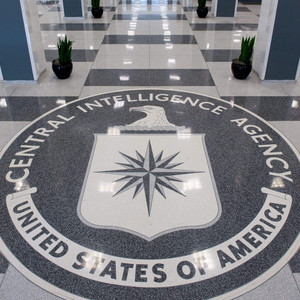
I've always started covering the State Department and then launched the intelligence beat for NPR back in the days after 9-11 and the US invasion of Afghanistan and then Iraq.
Spy agencies don't tell you what they're doing.
By definition, they want to keep it secret.
And I found that such an intriguing challenge, starting out as a reporter trying to cover the CIA.
There is no staff directory.
You don't get a hard pass.
You can't wander around the halls the way you can on Capitol Hill, for example, or the Supreme Court or other big Washington beats.
They almost never hold a press conference.
They don't tell you what they're doing.
So how the heck do you cover them?
You have to work sources.
I found that really interesting.
I still find it really interesting now.
And we have a great national security team here at NPR who's doing that kind of work every day.
And I thought if we could pull back the curtain a little bit on how they are doing it, what lengths they are going to to try to get stories out there that are in the public interest, to try to ask questions, that could be really interesting.
Why don't we try it?
What has been some of your favorite topics that you've covered so far?
Or has there been something that's been really surprising to you that you've gotten at on the podcast?
So an example I was in Alaska for the big Trump-Putin summit to try to figure out how do we start to try to end this war in Ukraine.
It was fascinating to be there in Anchorage.
It was fascinating to hear the White House take on what was a Mm-hmm and kept a bureau fully staffed in Kiev all through this war.
We do.
We have them.
And they're sitting watching what's happening in Alaska, to be able to push them and say how's that playing where you are?
Like when you walk to the coffee shop and get your morning cappuccino, what's on people's minds?
Greg Myrie, who was then in our Kiev bureau.
When we were having this conversation, he and I had a fascinating exchange where he's trying to tell me how normal daily life often feels in Kyiv.
There are kids in the street.
There are people buying ice cream.
People are getting their nails done.
It's kind of normal life.
It's not like you see soldiers out and about in the streets all the time.
You know, Ukraine did have a lot of troops in the city in the early days of the war.
But now you can really walk around the center of the city, throughout the city and not really see any troops.
Occasionally, you'll see some here or there.
But don't really have checkpoints or even just see troops walking around.
It's fascinating.
For a country that's been at war for three and a half years, you don't see troops regularly out and about on the street.
Not in civilian areas.
You know I've been to three cities this week Kiev, the capital Dnipro, sort of south central, 60 miles from the front line, and now Lviv.
And you just don't see that many.
I had just come in on a train where, walking through Union Station here in Washington, there were three guys with firearms strapped to their legs walking in front of me.
And Greg and I went back and forth and realized, At this precise moment, you're seeing more soldiers on the streets in the capital of Washington DC than in the streets of Kiev Ukraine, a country that has been at war for three and a half years.
Huh.
Here we are.
What do we make of that?
When we come back.
Mary Louise Kelly talks about how the national security beat has been changing under the Trump administration.
Support for this podcast and the following message come from Lisa.
Lisa has a lineup of beautifully crafted mattresses tailored to how you sleep.
Each mattress is meticulously designed and assembled in the USA and designed with specific sleep positions and feel preferences in mind.
Visit Lisa.com for 20% off plus get an extra $50 off with promo code NPR.
That's L-E-E-S-A dot com promo code NPR.
Until then, over 42000 businesses have future-proofed their business with NetSuite by Oracle, the number one cloud ERP, bringing accounting, financial management, inventory and HR into one platform.
With real-time insights and forecasting, you're able to peer into the future and seize new opportunities.
Download the CFO's Guide to AI and Machine Learning for free at netsuite.com.
So you know, obviously national security has been all over the news lately and I wanted to get your thoughts on kind of the significance of some things.
Like, for instance, the administration's rebrand of the Department of Defense to the Department of War.
Obviously, that has to be officially changed by Congress, but that's what they are calling it right now.
How do you make sense of that as an approach to national security?
What does it say?
I don't know how I make sense of that as an approach to national security.
I think it's fascinating.
It was changed after World War II by President Truman, who said, look, we've had enough war.
Maybe we should focus on not having a war, on having some peace.
So let's change it.
And he changed it to the Department of Defense.
So it is interesting to me, knowing that history— why our current president, President Trump, who is fond of telling us how many wars he has personally helped to end in his campaign for the Nobel Peace Prize, which he feels he's earned, why he wants to have a Department of War?
And we had a little bit of that conversation on Sources and Methods before they changed the name, when we were just hearing reports and rumors that that might be where they're heading.
So I think it remains very much a live issue, as you say.
They're going to try to get this through Congress and then go about changing the name officially, which is a huge process, in embassies and military installations all over the world.
And there also have been.
There's been a lot of talk about changes in how the Pentagon is trying to deal with reporters.
The Pentagon has its own press pool, like the White House has its press pool, etc.
And they want new requirements that journalists not gather any information that hasn't already been authorized for release by officials, even stuff that's like declassified.
And if they do, they risk losing their press credentials or being deemed a security risk.
So how do you think that impacts national security stories?
Because when we talk about sources and methods—
At the Pentagon, there are briefings.
People have offices, little booths there.
They can talk to the press office.
It's a part of the job.
So talk to me about how that could have an impact.
It will have a huge impact if this does come to pass.
It's one of the subjects we're going to tackle on on Sources and Methods, because it's a big deal if it happens.
You talked about news organizations having booths at the Pentagon so we can broadcast live when there's news, or so you can get the official you're trying to interview and plunk them down in front of a microphone and go live.
That has already changed for some news organizations, including NPR, which is one of the news organizations that was booted out of our Pentagon booth earlier this year.
Our correspondents continue to work covering that department in every way they possibly can.
But this would be... unprecedented.
And I say that as someone who's had a hand in covering the wars in Iraq, covering the war in Afghanistan, covering the wars currently unfolding.
I've reported from Ukraine.
I've reported from the Middle East.
Pre-censoring information before it comes out.
That's not the way that the press works and breaks stories.
And I think back on how many stories on my time covering national security we wouldn't know from torture at Abu Ghraib prison in Iraq.
That wasn't something the Pentagon was issuing press releases about.
Reporters had to dig and work sources and try to verify what was happening and what wasn't.
The black sites.
CIA black sites after 9-11.
Warrantless wiretapping was the original term for domestic surveillance.
And what was the National Security Agency doing?
With U.S. taxpayer dollars after 9-11, there were real legal questions that needed to be answered.
And they came to light because of reporting done by reporters who were –
Working sources and bringing information to public attention that the Defense Department and other institutions in the US government didn't want to be out there.
To war, to risk their lives, that tough questions should be asked and should be answered.
If we lose that, then it will become much, much harder to bring stories that are in the public interest to light.
And that's even with stuff like Afghanistan, the withdrawal from Afghanistan, which raised lots of questions from people who are now in this administration.
Like a lot of that was reporting, right?
Reporting not based on just press releases and press conferences.
Absolutely.
And it's not just roaming Pentagon hallways.
I mean, it's what happens with reporters who are embedded with US troops who are out and about in the world.
Reporters go in and there is a good faith agreement that they will do their best to report things fairly.
And as completely as they possibly can.
And of course we understand the security considerations and their agreements that can be negotiated.
Nobody's trying to put anybody in harm's way here.
But it is important to be able to ask the questions that occur to you as an eyewitness to big events unfolding around the world.
And so is there someone who you would really like to talk to on the new show, like someone who's like your big get.
Ooh, that's such a good question.
I have interviewed many of the former still-with-us CIA directors.
I've interviewed them either when they were in the job or after or both.
With a couple of exceptions.
Gina Haspel, who was CIA director, never gave an interview to any journalist ever.
Mm-hmm.
I would still love to interview her.
I will say that.
The current director, John Ratcliffe, has been very good at keeping his counsel and has not done a lot of press, and I would love to ask him questions.
Not in any kind of gotcha capacity.
That's not how I operate.
But in terms of what he sees as the priority for that organization in a moment where the global world order is changing—.
And resources are not infinite, never have been, never will be.
How's he thinking about how to prioritize things, what that agency should be doing, what its job is?
That would be a really fascinating conversation to have.
Ultimately, what do you hope listeners will learn from listening to Sources and Methods?
I think it is the reporting.
I mean when we were thinking about launching this podcast.
I will just say I said there are a lot of podcasts out there already.
Do we need another one?
And there are plenty of national security and foreign policy podcasts out there.
Most of them, if you listen and I do are former officials or academics working, Really smart people with sometimes really fascinating views.
But it's very much the armchair analyst approach.
And so what I wanted to do in launching this was say let's do the reporting, because I think that's so central right now to public mistrust of journalism is there's all these people telling you what to think about something and giving their opinions.
I want to do reporting where we go out in the world, boots on the ground, and just say here's what I see.
Here's what I hear.
Here's what it smells like.
Let me describe this road that I'm taking to get to the hospital that's on the front lines in Ukraine.
Bring listeners along for that experience and let you hear the facts as best and fully and completely as we can describe them.
Let you hear all the things we don't know that are going to inform what we wake up tomorrow and try to get answers to and make up your own mind what you want to think.
I would listen to that.
Me too.
Me too.
Mary Louise, thank you so much for talking to us today and for all the work that you do.
Thank you.
This has been an absolute delight.
Thanks for having me, Aisha.
You can find Sources and Methods wherever you get your podcasts, new episodes every Thursday.
This episode was produced by Michelle Aslam and edited by Liana Simstrom.
It was mastered by Robert Rodriguez.
The Sunday Story team also includes Justine Yan, Andrew Mambo, and Jennifer Schmidt.
Our executive producer is Irene Noguchi.
I'm Ayesha Roscoe and up first.
We'll be back tomorrow with all the news you need to start your week.
Until then, have a great rest of your weekend.
Support for this podcast and the following message come from Lisa.
Lisa isn't just about sleep.
It's about impact.
They donate thousands of mattresses each year to those in need, while also partnering with organizations like Clean Hub to help remove harmful plastic waste from oceans.
Visit Lisa.com for 20% off mattresses, plus get an extra $50 off with promo code NPR.
That's L-E-E-S-A dot com, promo code NPR.
Our easy-to-understand resources and user-friendly digital tools help simplify your entire experience.
You can have confidence in your retirement with clarity from Jackson.
Seek the clarity you deserve at Jackson.com.
Jackson is short for Jackson Financial Incorporated.
Jackson National Life Insurance Company Lansing, Michigan and Jackson National Life Insurance Company of New York.
Purchase New York.