Discussion keeps the world turning.
This is Roundtable.
Close your eyes and listen.
The hum of the city, the whisper of the wind, and the voices that matter most.
Hearing connects us, but are we taking good care of it?
On this National Ear Care Day and World Hearing Day, let's turn up the awareness and ensure everyone can fully participate in the sounds of life.
And Mondays are firm momentum, and Motivational Monday is your fuel.
Let's get you winning all week long.
Coming to you live from Beijing, this is Roundtable.
I'm He Young. For today's program, I'm joined by Lai Ming and Steve Hatherley in the studio.
First on today's show.
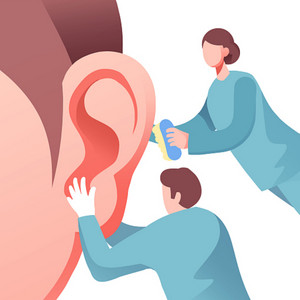
Did you know March 3rd is all about ear health?
China's National Ear Care Day has been raising awareness about hearing protection since 1999.
The date, March the 3rd, or 3 slash 3, was chosen because it looks like two years.
Pretty clever, right?
It also lines up with the World Health Organization's World Hearing Day, making it a global moment to focus on better hearing for everyone.
And also, I think it's kind of particularly relevant to us because we're a radio show, podcast show, and so many of our listeners enjoy our show via hearing.
So I think we have a personal stake in this as well.
And guys, please explain the importance of this date in China and around the world.
Lai Meng, take it away.
Well, this thing started in China in 1999.
1999, China's Ministry of Health issued the clinical use guidelines for common autotoxic drugs to better regulate the clinical use of drugs that can harm hearing.
I personally know of this because my grandpa, before he died, he once went through treatment for tuberculosis.
But unfortunately, he was somewhat allergic to the main treatment, the drug.
So he had the alternative, which turned out to be harmful to his hearing.
And we could tell that his hearing deteriorated.
Therefore, I know that certain drugs are not to be used easily and should be used with discretion.
So that was in 1999 when the health watchdog or authority came up with the regulations on drugs that may harm people's hearing.
This is actually the first regulation of its kind.
and this recognized that hearing and speech disabilities are the most prevalent among all disabilities in China and acknowledges that the high incidence and significant impact of hearing loss alongside insufficient preventative measures can be very harmful to human beings and 10 governmental bodies
including the Ministry of Health, Ministry of Education and Ministry of Civil Affairs collectively designated March the 3rd as National Ear Care Day.
And there's a lot in China, there are a lot of activities aimed at educating the public on such a day?
Yeah, National Ear Care Day in China, we call it the 亚日 and literally translates as to love your ear.
And so it involves various activities aimed at educating the public on preventing hearing loss and promoting ear health.
These initiatives include medical professionals providing information sessions, conducting ear examinations and distributing educational materials to communities.
I think this should also involve us, the media, teaching and doing special programs and coverages about hearing loss and taking care of your ears.
So the concerted efforts on this day reflect China's commitment to enhancing public awareness and encouraging proactive measures for hearing preservation.
And also, this marks the 26th, China's National Ear Care Day, quite the history here.
Started back in 1999, right?
As you mentioned, World Hearing Day.
This is from the World Health Organization website.
It's held on March 3rd each year.
And the same, it's to raise awareness on how to prevent deafness and hearing loss and promote ear and hearing care across the world.
Every year they decide the theme, and then they develop evidence -based advocacy materials like brochures and flyers and posters and infographics and all those types of things.
Its headquarters are in Geneva, Switzerland, and the WHO organizes an annual World Hearing Day event there.
And in recent years, an increasing number of member states and other partner agencies, they've joined by hosting a bunch of different activities and events in their countries as well.
Speaking of the theme, this year it is changing mindsets, empower yourself to make ear and hearing care a reality for all.
And in China, the theme is healthy hearing, unlimited communication.
Yeah, these banner slogans, they sound really great.
How many people in China and around the world suffer from hearing loss or deafness?
Well, the figures can be a little hard to get.
In 2006, that's very early on, China's second national sample survey on disability reported that approximately 27 .8 million individuals in the country had hearing disabilities.
Focus on the word disabilities, and that's about one third of the total disabled population at that time.
However, this is, like I said earlier, this is as far as 2006, so very old data.
We still see news reports citing that number.
I imagine that this is because this is termed as a form of disabilities.
Certain hearing loss that comes with old age or that doesn't go diagnosed might not have been put into this consideration.
So hearing loss is often associated, in fact, with old age based on demographic data and studies about hearing loss.
A more recent Beijing Daily report estimates the number of people suffering from hearing disorder to be around 120 million.
So this is more like an estimate rather than a precise number about people who's been diagnosed with disabilities, more severe form of the situation.
Around the world, 5 % of the world's population.
That's about 430 million people require some form of rehabilitation to address their disabling hearing loss.
That includes, by the way, as you mentioned, Lyman, you know, it's often associated with older people, but that figure includes 34 million children as well.
It's estimated by 2050 that over 700 million people or one in every 10 people will have disabling hearing loss.
That's a bit of an alarming statistic.
And when we talk about disabling hearing loss, by the way, that refers to hearing loss greater than 35 decibels in the better hearing ear.
Nearly 80 % of people with disabling hearing loss live in low and middle income countries.
The prevalence of hearing loss increases with age.
Among those older than 60 years old, over 25 % are affected by disabling hearing loss in that group.
And as a final statistic, by 2050, nearly two and a half billion people are projected to have some degree of hearing loss.
And at least 700 million will require hearing rehabilitation.
Over one billion young adults are apparently at risk of permanent avoidable hearing loss due to unsafe listening practices.
And speaking of unsafe listening practices, what types of things are people doing unwittingly to damage their hearing?
Yeah, I mean, a lot of the time we're doing things that we don't even realize that we're doing.
For example, if we, in our profession, sit here in the studio and have the volume on maximum with our headphones, which I'm often guilty of doing, that would be one example, but not everyone's an announcer, of course.
We're talking about things like pubs or bars or nightclubs if you enjoy those during your private time.
But if you're not a club goer or a pub goer, then it could be things like your headphones and music players listen to at unsafe volumes for long periods of time.
It's not necessarily the volume.
It can be the volume that's the dangerous part, but also the length of time that people tend to listen to music.
It can be for hours and hours and hours at a time that people can have their headphones in.
Right, so if you listen, if you wear your earplugs in the middle of the night and you forget to put them off, then that could lead to some form of damage if you keep this going.
And I think this is, by and large, the result of modernization, because really back in the days before industrialization or before digitalization, before we had speakers all around us, I don't think people used to have that kind of experience being exposed to a large volume of sound.
Unless you say you work in the infantry and you deal with cannons.
That or you work next to an airplane engine or something like that.
Among teenagers and young adults aged 12 to 35 years old in middle and high income countries, nearly 25 % are exposed to unsafe levels of sound from the use of their personal audio devices.
And around 50 % are exposed to potentially damaging sound levels at clubs or bars.
So, again, it's how we are treating our ears in, I think we can call them unknowing ways, right?
We don't realize it when we're doing it at the time.
Yeah, and I think it's particularly salient for young people wearing headphones.
Because I can't, I would invite you to recall as well.
But I remember as a teenager in a developing country, back at the time, anybody who brought a Walkman or a CD player, a portable CD player, of course it all comes with the earphones, into the school, you're considered the cool person.
And then I think for a lot of young people around the world, wearing headphones has become a sign of almost like rebellion, that I'm in my own world, don't you mess with me, I'm in my own bubble, this is me, don't you mess with me.
And then that's become actually potentially something dangerous to your hearing for a lot, swaths of people.
100%. I mean, go on the bus or the subway or walk down the street and you'll see almost everyone wearing a pair of headphones, it seems.
And listening to high volumes for long durations, that risk is associated with permanently damaging your hearing.
And it can be irreversible because when you expose your ears to loud sounds for any length of time, it causes fatigue to the ear's sensory cells.
And the result is temporary hearing loss or tinnitus.
Have you been to a concert before or a club or standing in front of loudspeakers and then you come out and you hear that that's tinnitus.
That's that ringing in your ears.
Yeah. And that's not necessarily going to damage you permanently.
But over prolonged periods of time, you can do irreversible damage to to your ears.
What happens there when you get that tinnitus, that ringing in your ears, then your cells recover after a while and then that ringing disappears.
ears that's why it goes away also apparently when you're under severe stress that could also um induce this kind of tinnitus or our meal in chinese and some people think that if i wear noise canceling headphones then that's really good for my ears because it drives away the bad noise but apparently
did you know noise canceling headphones actually create noises to cancel out noises?
So I'm not completely safe, am I?
Tell me what's going on.
It really depends on what kind of noise cancelling device you're using.
There's the active noise cancellation which uses the technology to generate some form of noise to cancel out the noise that you may be hearing outside of the earphone that you're wearing.
It's kind of counterintuitive, isn't it?
Creating sound to cancel sound.
But there are essentially sounds that are essentially vibration.
So one form of vibration in that direction can be canceled out by another form of vibration to the other direction.
So that makes kind of sense.
But in the hope of canceling out noise in your environment, you're actually exposing yourself to constant noise that's produced by the device, which can be harmful to your hearing.
There's another problem with noise -canceling headphones, and this is perhaps new information to a lot of people around the world.
This is from the BBC.
So researchers in England, they're looking into the topic of the damage that can be done by noise -canceling headphones, and they were talking about auditory processing disorder, or ADP.
And this is a neurological condition where the brain finds it difficult to understand sounds and spoken words.
So the issue with noise canceling headphones isn't a question of hearing per se, but it's a question of listening.
They told the story of a 25 -year -old British woman who wore these noise canceling headphones for more than five hours a day.
And that's not uncommon for people to do.
As a result, she developed a problem distinguishing where sounds were coming from.
If she wasn't wearing headphones, her brain and her ears couldn't coordinate the origin of a sound.
And that was very stressful for her, as a matter of fact.
And the issue here is that it's important to hear a diversity of sounds so that your brain can decide what is important to focus on.
They have to do a lot more research on this topic.
But researchers are suggesting and they're thinking that you could be doing damage to your ears in the sense that when you're blocking out all other sounds, you're limiting the noise that your brain gets a chance to hear.
So when it hears it from various sources at the same time, it doesn't know where to focus.
So even with noise -canceling headphones, moderation of usage is advised.
What advancements have been made in the hearing loss fuels that's worth our attention?
Well, a really exciting finding is the Medical University of South Carolina will be the first clinical trial site in the country, in the U .S., to test a new kind of cochlear implant for adults with hearing loss.
This is different from the traditional implants that's visible to others, and this thing isn't visible.
This thing is buried entirely under your skin, and it doesn't require daily charging.
So traditional cochlear implants have something, like I said earlier, on the outside.
And so therefore, some patients might find it inconvenient.
They don't want people to know that they have a hearing condition, and they have to go through certain surgery in order to have the implant embedded in their head.
And I imagine there might also be some, you know, infection or, you know, special health needs to be taken care of once they have the implants.
This one, though, this is very exciting.
It's called the Acclaim, this implant, and it has a mechanism, a pickup mechanism that turns your eardrum and ear bones into the microphone, and that's the reason why you don't have to wear any external parts.
And the doctors say, just like you said, Lyming, this is a major selling point.
The fact that it's not attached to the outside of your ear, because for a lot of patients, they are not interested in getting that kind of treatment because of the stigma, right?
People will look at them and they feel uncomfortable with that.
So that's one big advancement.
And there's another big advancement.
This is from the Harvard Stem Cell Institute, and the scientists there are working very hard.
This is from their website from 2024.
24. So this is how the brain works, or how the ears work, excuse me, the cells that collect sound information from the environment and send it to the brain.
Those are called hair cells.
Now, when people are born, we have 11 ,000 of those hair cells in each ear.
And those 11 ,000 hair cells in each ear, they need to last us our entire life.
But we experience slow progression of hearing loss, and those cells, which are very fragile, they die due to things that we just talked about, excessive noises, also aging is a factor too.
And as those hair cells die, then nearby brain cells that once carried sound information to the part of your brain that processes audio, well, those parts expire as well.
So what they're doing is they're working with stem cells that could stimulate the regeneration of hair cells and that could potentially restore hearing in people.
So they've done it with mice so far and they've produced drugs capable of partially restoring hearing in deaf rats.
And the next steps are identifying the right mixture, the right cocktail of drugs, if you will, that will regenerate the largest number of hair cells and assess ways that they can be delivered to the ear.
This could potentially be a huge discovery.
That's what they're working on at harvard right now does this mean i can keep my noise canceling headphones on for five six seven hours a day best to reduce that time just for now anyway yeah it's incredible to think that there are all these little hairs in your ears and just like your teeth well you
get two sets of them luckily and then you know just with your body like i when i was younger i used to be a little bit um And how do you say it?
When you're young, you just feel like you're invincible.
But actually treat your body like a temple because you only get one set of these.
And then, you know, with your hearing as well, it's important to sort of pay attention and don't do damage to it.
Because, you know, with old age, we're going to lose some of that hearing anyway.
And we covered a story about how China has expanded insurance coverage for cochlear implant procedures in the later part of last year.
Do we have any updates there?
Well, the Beijing Medical Insurance Bureau recently announced that starting on March the 3rd, 2025, which is today, the city will adopt the results of the national bulk buying program for cochlear implants, making selected products eligible for medical insurance coverage.
And so the notice also outlines how much insurance will cover for employed city residents who've joined the insurance plan, the project will pay 80 % of the cost of selected cochlear implants while the individual covers the remaining 20%.
So if we end up paying for a 30 ,000 yuan cochlear implant, we end up paying 20%, which is 6 ,000 of it if you are covered by the insurance.
Yes, and there's a limit.
There's a ceiling price, which is 32 ,400 yuan per implant.
And if, well, you got to pick that is on the list chosen by the National Insurance Program.
Otherwise, because we know cochlear implants can be very expensive, easily go to like six digits in Chinese yuan.
So anything that's outside of the list, then that's not covered.
And also, we've seen that up till now, there are lots of – there are developments with this.
At least now we see four more provinces and municipalities have included the cochlear implant into their medical insurance coverage, and that's four more from last time when we talked about it in December last year.
And we are seeing Beijing joining forces as well.
And what do we see as the possible steps that we can take to protect our hearing?
Well, you said a couple of minutes ago, Laimin, you can continue to listen to your noise -canceling headphones.
I'm hoping that technology will catch up with the rate of my hearing deterioration.
Yes, well, the advice now would be don't do that.
And you can follow this rule if you want.
They call it the 60 -60 rule.
This is a good one.
I hadn't heard of this before, but the 60 -60 rule means this.
Listening to audio devices at no more than 60 % volume for no longer than 60 minutes at a time.
So listen to music or listen to whatever for an hour.
Keep your volume at 60%, but after that one hour is finished, then give your ears a break.
They call that the 60 -60 rule.
Also, avoid loud activities in places wherever possible.
We gave the examples before, pubs and bars and things like that.
Maybe stay away from the speakers, the loudspeakers.
That would be a good idea.
If you're using things like power tools, wear headphones to get rid of that sound from entering into your ears.
And if you're going to concerts, I know a lot of my friends, even when I was back in my 20s, and at the time I couldn't understand what they were doing because we were young, right?
and you said invincible, Huyan.
But even in their 20s, some of my friends would put in little, you know, those little cotton things, cotton balls.
They'd shove them into their ears when we went to an outdoor music event to help protect their ears.
Yes, and I remember saying to them at the time, you're defeating the purpose of coming to a concert.
You're canceling out the music.
They said, no, we can still hear it quite comfortably, but that's too loud for me.
At the time, I thought they were being silly.
Little did I know, they were geniuses.
Yeah. It really impresses me a lot.
I mean, because I'm under the impression that in Chinese families, not every one of them has a pair of earplugs because I only began looking for them online, shopping for them when I began to have problems sleeping in the middle of the night because of the noise from the babies and then from the neighbors.
So now I customarily have a pair of earplugs near my bed.
And so as such, it's come to my attention that this thing, this thing about noise has been ignored in Chinese families for a long time.
So I think it's wise for me to have something by our hands and when it's necessary, we just put them on.
Question, when you are doing the show, do you keep the volume on your headphones really loud or really low?
I try and keep them at 40 % or below.
I work in this industry.
I know the importance of keeping my hearing intact for as long as I can.
Well, why didn't you alert me, friend?
Why are you keeping this a secret?
Well, there are certain people who just couldn't resist the charm of loud music.
I mean, I know with a much louder volume, you can hear much more detail with certain music.
Yeah, it's just also sometimes, let's say, you know, if you work in a loud office and you're trying to mind your own business and you don't want to have the conversation.
Because in China, sometimes we're so indirect.
You don't want to say, shut up.
You don't want to say, please keep it lighter, less loud.
And then you put on the headphones.
And I think also, you know, with this line of job, because we're always wearing the headphones, doing editing, doing the show, et cetera.
And Lai Ming, I'm afraid I have much worse hearing than you do.
This is not a competition that we would like to win.
You don't want to win this one.
I don't want to. Yeah.