My name's Ryan Shelton.
I'm a co -host on The Imperfects, the Jewish grandson of Austrian and English immigrants.
And I grew up on, and I'm now currently living on Wurundjeri country.
I'd like to recognise the traditional peoples of this continent whose land was stolen nearly 250 years ago.
In particular, we at The Imperfects would like to acknowledge the Wurundjeri people of the Kulin nation as the traditional owners of the land on which this podcast was recorded.
And we extend our respect to all Aboriginal and Torres Strait Islander peoples.
The rich storytelling history of the world's oldest living culture is what we proudly pay homage to when we share stories on the imperfects.
If there was some sort of procedure available to me tomorrow that would restore my sight I actually wouldn't jump at the opportunity because it's a life that is totally foreign to me and I've created this beautiful life and And it's the only life I've ever known, and I'm really happy with it.
The Imperfect invites you into a very safe place.
A place where we share without judgement and drink heaps of vulnerability.
Grab yourself a cup, this is The Vulnerability House Whenever someone who is in the triple j cinematic universe enters the studio, I feel just a little bit cooler.
It's also very nostalgic, I find.
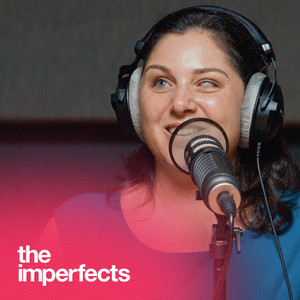
It is. Yup. We are joined by Naz Campanella who is the first ever in the world blind newsreader.
Which is just the most, I feel like saying, I won't be the first person to say this, but bloody congratulations.
Oh, thanks. Thank you.
It's so amazing. Yeah, we have so many questions for you.
So for those who don't listen to Triple J, you wouldn't know that in 2013 Naz started as the Triple J newsreader.
And then from there, I think it was in 2020, we pushed the ABC.
It was seven years.
Yeah. Seven years. Wow.
What a long time to be in the same role.
What was I thinking!
I mean, it's, it perfectly, it's why your voice is just such a important part of my teenage years.
I mean, no, not teenage years though, but like...
Hang on. No, it wasn't teenage years.
It was like later years, but still a big part of my life.
It was kind of the teens of the 20th century.
Just turning 30 I am.
Go with that. I know so many questions, we chatted on the phone yesterday.
And one of the things I found myself, I found myself being a little bit nervous about.
With disability, I don't want to ever say the wrong thing or say something that the person might find a little bit jarring.
Because I, I mean, there are certain things that I would say just because that's what I've heard people describe things as before, but I found myself, even on the phone to you, being a little bit nervous with the words that I use.
I thought maybe we could start with a conversation around what words you like, some words you don't like, what you find jarring, what you don't mind at all.
Good question. And that's not just for this interview's sake, but also just for all of us who are anyone out there who's thinking here I would like to use the right words and not be jarring to anyone.
But I think that would be a nice place to start if you're okay with that.
Yeah, I think like language has always meant different things to different people And I think it's really important to remember that it has evolved over time and it will continue to evolve.
And in some ways it's really good that it's evolving because there are words in relation to disability that have been very much used in the past that should absolutely not be used anymore.
I won't talk to those particular words because, for exactly that reason, they're offensive.
But there's also just an acknowledgement, I think, that people go through different journeys of disability pride.
And so for a really long time I was, you know, I'm a person who's vision impaired.
I'm a person who is blind.
And I kind of used that phrasing because I was very much of the view, well, I'm a person first and foremost, and my disability is this tiny part of me and it's not who I am.
But I think I felt like that very early on, you know, as a kid, as a teenager, because you're kind of trying to fit in and be quote unquote, normal and like everybody else.
But as you get older, you realize that actually each and every single one of us, disabled and non -disabled is is unique and individual.
And I'm actually really proud of my disability and it's not just a tiny part of me, it's a huge part of me.
And it really does kind of dictate the way I live my life, and it is quite a unique way of living.
And so, you know, I kind of use the phrases interchangeably of, you know, I'm a disabled person or I'm a person with disability, just kind of whatever feels good at the time.
But I think what I'd always say is just ask the person with disability how they want their disability described.
For me, I've got multiple.
I've got a neurological condition, which is basically it affects the sensitivity and balance in my body.
So I don't have enough feeling in my fingertips to feel braille dots on a page, for example.
Sorry to interrupt, but does that mean from a young age, I mean you can't read and then then you everyone's saying, well, you can do braille, I'm guessing it, you went through a stage where you were trying but couldn't do it and people didn't know what was going on.
Exactly what happened.
Yeah. So basically it was the only way that, kind of the teachers and my parents and everyone around me sort of knew that a person who was blind would learn, would be through braille.
Yeah. And I was really struggling and it was a really difficult time actually.
You know, I would sit most nights with a Braille book in front of me, my parents would have the printed version of the book and I would try and read alongside them, but I just couldn't.
And at the time I had a teacher at school who, sorry, this is a really long winded answer, but basically, you know, I had a support teacher at the mainstream school I was at and it was job to make sure everything was accessible to me in terms of class work.
And she would say things like, you know, your daughter is lazy, she needs to try harder.
She used to segregate me from the rest of the class.
And literally I would have to sit and read even one page and it might have taken me one or two hours.
But until I read it, I wasn't allowed to kind of leave and go and be with friends and do things.
It was a really horrible time.
And I think for a really long time, my parents were sort of asking, there's got to be something that's going on here.
Like she's not lazy.
She's actually pretty smart.
There's something here.
And their concerns were always dismissed.
By doctors? No, but by the teachers, by this particular teacher.
And, you know, she was kind of seen as the Oracle on how things work in terms of discipline education.
Sounds great! Yeah, doesn't she?
And really in the end, I was taken to a neurologist and that's where, I was 10 when that happened.
You know, that's pretty late in the piece.
I was falling really, really behind at school and anxiety really had set in by that point.
Um, I was arguing a lot with my parents.
I'd always end up in tears because they'd say, we've just got to keep trying.
And you know, you've got to keep trying to read this particular page or whatever it was.
And it just wasn't working.
And so yeah, that, that's how it, we kind of discovered that, but you know, that's, That's one disability and then the other one is that I'm totally blind and I really, I mean, when strangers asked me on the street how I lost my sight, strangers ask me all the time.
Strangers do. All the time.
All the time. Waiting for the bus, waiting for my coffee and I usually just say to them, oh, you know, from birth because I just can't be bothered to tell the story and it's also like, just go away.
But, um, I lost my vision when I was six months old.
So blood vessels basically burst in the, in the back of my eyes.
It's no idea why, what had happened, there's no official medical term for it.
It's just listed as something that was rare and abnormal that happened and basically I lost my vision.
So, but you know, I've always said that I'm either vision impaired or blind.
And to answer your question, because we're going full circle and I've got on to a thousand different tangents, basically just ask the person with a disability how to describe their disability or how they want to be referred to and do it in the right context.
Like don't just go up to someone who's deaf or in a wheelchair, you know, in the line waiting for their coffee that you have never met before.
It's got to be in context as well.
I mean, even though I realized this is not an episode of you can't ask that, but um, I did want to ask something else because before you said this is a really long winded answer and you sort of said, sorry, I find myself on this podcast all the time, like talking a lot and then I'll have the ability to look around and see the looks on people's faces and go like oh.
To know whether you've bored people.
I can get a sense of like oh shit I'm losing them.
I don't have that luxury.
I know. So how do you sense, like I know you can't look, you can't see body language so is there a way that you can sense those sorts of things?
Interesting question, no one's ever asked me that.
So look, a few things.
I guess to give you a sense of what I can see, I mean, it's nothing, it's basically shadows.
So like, I'm holding my hand up in front of my face at the moment and I can sense there is something there, but I can't actually see what it is unless I reach out and touch it.
So, um, but in terms of body language, facial expressions, actual people, objects, I can't see any of those.
But I think you can pick up on body language in other ways.
Like if someone, if I can sense or hear that someone's fidgeting it means they're not really listening to you paying attention.
So like the three of you don't make a noise.
Otherwise I'm going to think.
I've never been so still in my life.
And it's really funny because I do public speaking and emceeing and events and things like that.
And everyone always says to me, it must be so good that you can't see the crowd.
And it actually is because it doesn't make a difference to me whether there are two people or a thousand people in the room.
It's all the same to me.
And, you know, it it is less nerve -wracking.
Which is, you know, you gotta take the wins where you can.
That's true. So we say that, I mean people feel like they have their first memories from when they were about, I don't know, four or five.
I think that's pretty well accepted.
So you could say there was six months of your life when you could say, do you have memories of seeing things?
No, no, I really don't.
I have a few really vivid memories, but they are from when I'm about four.
And I think, I mean I definitely couldn't see so my mind is absolutely playing tricks on me, but I have this vivid image of like white hospital walls and I think it's just the trauma of having spent the first few years of my life, in and out of hospital so frequently.
Like I've got real phobias of hospital, the smells when you walk in really jar me, noises make me really nervous in hospital like any kind of machinery.
and I think I've just held onto this one visual memory, not because I actually can remember physically seeing it, but just because it's the only thing that kind of I can pinpoint so early on.
I don't have a lot of memories from that time in my life, except that one, which I didn't, I don't even, yeah, I didn't even see it.
Definitely. So was childhood, I'm trying to imagine and you getting through each day at school with the pressure of people wondering why you weren't able to read braille and you knowing that you're not lazy.
Was primary school in particular really difficult for you?
Do you have memories of it being a really tough time?
Look, apart from that side of things, no, I actually have really beautiful memories of school.
So firstly, I went to a school, like a special school, and that was really great in terms of kind of finding a sense of community.
I mean, I was there with other people with disability, but really, early on, the teachers there encouraged my parents to have me transferred into mainstream education.
And for me personally, it was the right decision.
So basically, when I went to the new school, if you like, the mainstream school, I mean, there was so much work that my parents did, you know, so early on to kind of make sure that I had really nice friendship groups, you know, we'd have lots of play dates.
And I was, I just fit it in.
I mean, I've always been quite a big talker and a big social butterfly.
And I, you know, I think when you are a person who come, you know, comes into the school when you are different and people haven't seen anyone like you before or met anyone like you before, they were kind of, wanted to know more and I guess, drawn, drawn to me because I had questions and curiosities about vision impairment and the technology that I used.
you know, I used cool looking kind of braille machines and software on my laptop that talked out aloud like a little robotic voice.
So, you know, people were quite interested by all of that side of stuff.
And then, and then I guess they, they realised that, you know, it would be cool to be friends with me as well.
We want to get to the question, but before we do that, just, just to add something to your bio, which I didn't mention at the start, which I just think is so great.
But in 2020 you pitched to the ABC, The Need for Disability Affairs reporter, in light of the 2019 Disability Royal Commission, and a few weeks later, they offered you the role.
They did. And four years later, here I am.
It's an amazing role.
It's a role where basically I cover anything to do with disability across Australia.
And I get to do it on kind of all of the ABC's platforms from television, radio, online, social media.
And the best bit about the job is that I get to interview people with disability each and every day and find out about how they live their lives and what makes them tick and what makes them excited.
And also a big part of it, just purely because a lot of news is negative, otherwise it tends not to make the news.
I get to highlight issues that are important to people in my community and I don't think you can get a better job than that, really.
Yeah, I imagine it'd be a lot more comfortable for people you're interviewing to be interviewed by someone who has sort of walked in their shoes and can kind of understand a little bit more than a normal reporter, you know.
I think so. I think they know that I come to interviews and also preparing them for interviews with a level of empathy and understanding that perhaps other journalists don't have. So for example, I'm sure some journalists out there do this, but it would be pretty rare.
But, you know, I have done things like learn how to use someone's communications device because they're non verbal and the only way for them to do an interview is, you know, through a sort of a blinking or pointing to letters kind of mechanism.
And so I'll learn how to work with that person and their support worker.
I will go to great lengths to work out how do we best shoot a story so we can then Auslan interpret the whole thing?
How can we put deaf people on radio so that their voice can still be heard?
how do we make that accessible, doing MOC interviews with people.
Like my interviews, the stories we put together are not hard and fast. You just don't go in and point a camera and shoot with so much leg work that you do beforehand.
And I think that's what's really great that I'm able to provide that support for people so that they do feel comfortable.
All right, well, the Vulnerability House involves a set of cards, Naz, and the cards are in front of you.
I'm going to move my coffee cup out of the way.
All right. So the way this works, for those who don't know, so you just pick the top three cards.
It's been shuffled.
Just pick the top three cards and I can read them out for you.
And then if... Is that three?
I can't feel. The paper on this card is very thick.
We intentionally chose the best stock you can get, so that's probably what you're noticing.
All right. So I've got three cards here.
If any of these resonate, feel free to answer the best way you vulnerable can.
And if none of them do we can just pick another one.
Just keep picking until they do and if none of them work, then God, the episodes absolutely fucked.
We've got a fair bit already actually.
Well, that's true. That's true.
Okay. The first card question is what parts of aging scare you the most?
Oh, okay. the second card is what fear would you like to be free of mm -hmm and the third one is what childhood challenges best prepared you for adulthood oh they're all really good and I'm happy to answer all three to be honest I mean the few ones easy just birds really really terrified and I would love to just get over it because every time my son throws chips at a seagull I'm like oh please don't, I'm like cowering in the corner.
So how about we go to the childhood challenges one.
Okay, what's childhood challenges best prepared you for adulthood?
Well I feel like we've kind of already touched on one of them, which is a kind of that interaction with that teacher who initially was saying I was quite lazy.
I, you know, when I look back at that scenario and that time and how that made me feel, I think about the kind of long -term impacts a scenario like that has on me.
I think it did, it made me an incredibly anxious kid and the anxiety went away for a little while but then it really did return again in kind of you know, end of school.
So year 11 and 12 where I felt like there was a lot of pressure on but I think the anxiety started during that and so that was a really big challenge to kind of have to navigate with.
You remember what the voice in your head was saying?
Like what was the, Well I think you start to believe things that people say So you do believe that you're lazy or that you're not trying hard enough and that there's something inherently wrong with you and what you're doing.
And yeah, okay, I've got a neurological condition and my fingers physically cannot make out, you know, that the sensations on, on the page when you're reading brail, but that doesn't mean it's anything wrong.
It just means I've got to find a different way to do things and we absolutely did.
But I think when I kind of consider that situation now, I think about how that's really shaped how I've navigated so many other challenges since then.
And it really has made me like, no one can ever tell me I'm lazy again.
And I really don't let other people's kind of prejudices or thoughts bother me all that much. I mean, you know, we're all human and we all, you know, take on a little bit of what people say and you know, it gets us down sometimes.
But on the whole, I'm actually really good at saying, I think that says more about you than it does about me.
And so I'm actually quite grateful for that scenario that it did happen so early on because it has made me, you know, when things have popped up.
I've kind of gone, okay, well, we just need to find a different way to do this.
So for example, when I couldn't read braille anymore, we had to find a new way for me to basically learn at school and that was through screen reading technology.
So a little kind of robotic Americanized voice that's loaded onto the computer screen and it reads everything out on the screen.
And I essentially learned by listening and it meant I could use a regular looking computer like the rest of you guys would, but I would use it through sort of different combinations of keystrokes rather than, you know, clicking away with a mouse.
But it meant, you know, thinking outside the square and coming up with different innovative ways to achieve the same thing as everyone else.
And I really think that's how I've kind of lived life since then, to be honest, always thinking about some innovative ways to do the same things.
I mean, this is actually quite an incredible thing that most people wouldn't know is how you are actually able to be a newsreader who can't read or read Braille.
So basically, I had the laptop in front of me, I had headphones on, and I would be listening to the little robotic voice reading scripts or stories into my headphones, and I would be repeating what I was hearing simultaneously.
And so I'd have one hand on the laptop, like on the up and down arrows of the keyboard, like going up and down the stories.
And then another hand on the actual panel of the desk so that I could kind of work the desk at the same time because I didn't want a panel operator.
I wanted to, you know, do everything on my own.
Wow. So it was pretty intense.
And the robotic voice wasn't the only little voice in my ear.
We also had to have very carefully timed bulletins like if you wanted to go over, you couldn't, you'd get cut off.
It's just the way it was.
So I had a clock kind of timing me in and out, I had my voice coming through the microphone, and then you also have a fourth audio stream which was basically the little snippets of audio that you play during the bulletin.
So like the little songs at the top of, top and bottom and all those kinds of things.
So there were, there were four streams of audio and it was really intense.
And sometimes, you know, you'd have time to preread and you know, you'd be writing the stories and get it all in order.
And then I'd also hear a little voice in my headphones, which was a colleague sitting out at the desk saying, Hey, I've just dropped a breaking new story in there.
So that story that I wouldn't of red.
And so you'd have to just slow down and, you know, try and listen and ad -lib a little bit and hope that, you know, you get it right.
I've always wanted to ask actually, like a news reader, is that I imagine, like in all those years doing, reading the news, I imagine there are some really heartbreaking, huge stories that come out.
How much emotion are you able to show or do you have to be completely neutral?
Completely objective.
That's just the way the news game works.
And I think that's really important for journalists.
For me, I just inherently would go through the stories, go through sentence by sentence and realise, okay, what is the most important point in this story?
And, you know, you would, you would maybe pause at certain points, or you'd kind of emphasise certain words because they were particularly important.
But in terms of emotion that all needs to be taken out because you are there to inform the public and it's up to them, how they feel, think and perceive stories.
That's not your job to tell them what to feel and think, but there are some really difficult ones.
I've had so many stories that have come across the desk and I'd be lying if I said I hadn't shed multiple tears.
As a newsreader, there have been, for example, lots of family violence cases.
There have been, you know, children, but you know, particularly children or young people involved in accidents, all those sorts of things.
I mean, it's very hard not to kind of fall apart.
Thankfully, I didn't fall apart ever during, you know, a bulletin because of a story.
But certainly when I was covering the disability Royal Commission over the four years that that ran, I think I cried in each and every single hearing that I sat in.
and I sat in more than 23 of them.
And that was really difficult but I think it was really important for me to feel that emotion as well because remembering that I could identify with so many stories that were being shared because similar things had happened to me like discrimination or low expectations or being denied certain opportunities based on disability.
And then other things that had happened to people that I knew and loved like abuse in group homes.
So, it was really difficult not to fall apart in times.
It did not air, but certainly just sitting in the hearing room listening to those things, writing my copy or my stories, and needing a box of tissues near me regularly was a regular occurrence.
You're clearly a very driven person as well because last year I filled in on Radio National for seven weeks for Life Matters.
Such a good program.
That's a beautiful program.
I was just reflecting on, I didn't think of it at the time, but it was such a visual experience for me.
I I had four screens in front of me, I had the clock there.
I had printed out the running sheet and then behind the glass is the producer who were doing like, she's doing a lot of hand signals to me and a lot of, and if someone had said to me, no, you need to do this with your eyes closed, I would've said, well, I'm not, it's impossible.
It is possible. So I've done that.
So I, I have, I also present some shows for the ABC on our different radio networks.
And so me and the producer, it's based on trust really.
You have to really trust the team and they have to trust me.
So we use the same technology to, on my laptop and we connect it into the desk and they will write particular notes and things that I need.
I will go through them really carefully but in terms of those hand signals, me and the producer decide what hand signals mean what but I'm signaling to them, not the other way round.
So if I'm talking to someone live on air, a listener's called in for something and I'm feeling like this call really needs to be cut, it's like, okay, like this.
So we decide, for example, if I need them to repeat something, I will touch my right ear.
If I haven't understood what they've said, I'll touch my left ear.
So we decide all of those cues before we go on air and we go through them several times to make sure that everyone's across them, but that they constantly talk to me.
It's a process of trust and communication.
But this is still an incredible challenge to overcome because I end up saying to my producer, can you not talk to me too often?
Because as soon as you start talking, I can't concentrate on what I'm saying or what I'm listening to if a caller calls in.
So she would give me minimal stuff at very… But you are constantly hearing things and being able to speak and listen.
And I think that's just, what an incredible hurdle to overcome.
But is it incredible or is it just the way I work?
Like that's how I have to work.
Okay, fair enough. But it, like I'm used to it.
I have to, like what I, one thing I love is that I am able to sit in a cafe and listen to whoever's talking to me at the table and also eavesdrop on the conversation behind me.
And that's the skill.
That's the skill of a spy.
I trust you less now.
What are you working for?
So what the beautiful thing is, like, there will be times where there's also a signal I have for stop talking to the producer, because I'll be, I will need to focus on whatever it is I'm, you know, maybe I am getting confused by too many voices in my head.
But for me, that's just how I operate everything is so sound based, that, you know, it's just what I'm used to.
So my recollection as someone who listened to Triple J that was that I was unaware that were vision impaired for a few years.
And then I think I discovered there was a video that was produced online about it and started to learn more and was just fascinated by it, but I was unaware.
Was that the way it would have worked for most people listening for those first few years?
Yes, yes, definitely.
And that was a conscious decision on my part.
I started the role and And just wanted to find my feet in it, basically.
Like we were using a system that had never been designed before, it had never been used before.
It certainly wasn't perfect when we went to air.
And my biggest advice to anyone kind of trying to do something new is don't wait for the system to be perfect, because you actually need to use it to perfect it.
So otherwise, you'll never kind of give anything a go.
So I just wanted to really focus on the job and finding my sense of, you know, comfortable, just being comfortable.
And I had really early on people come to me and say, you know, we really want to do a story about this.
It's quite a unique way of reading the news.
And I was saying to them, look, just not yet.
I'm not ready for that.
And then when I did, I guess I didn't expect all the kind of reaction that it would get.
But I mean, I think when you live your life a certain way, and for me, it's not unique.
I just do everything blind.
And so for me, this was just another thing that I did, I just went to work, I was a news reader and this was the only way I could do it.
And it wasn't that special or unique.
I hate the word special.
That language, don't use that.
But for me, it wasn't that unique.
You know, it was just the way I did things.
But when the story did and the video did come out about how I read the news, I realised, oh actually, this is kind of cool and it isn't, it's not something that anyone's done before and I actually can be really proud of this.
And what really struck me was the number of disabled people who emailed me and either said they wanted to be a journalist or a newsreader, but just decided not to cause it all got too hard and they'd gone down a totally different path and it was too late for them.
All the number of people who said that they were studying and they now felt like there was someone that could kind of give them a sense of hope and motivation, that they could actually achieve this.
Or people who had said we never thought of this career, but my goodness, like, you've actually made it possible for us to see that this could work and be something for us.
And I realized then actually, there is real power in talking about how you do your role, even if you don't personally think it's unique or special.
Yeah, it feeds beautifully into what I wanted to ask you.
because I thought it was interesting the way you talked about getting to a point where you're proud of your disability, you described also, you know, people coming up to you in a cafe and just feeling like they can ask you and see that as the first thing as opposed to you as a person, which is, you spoke to beautifully.
I wondered if there was comfort in the medium of radio at the start of saying, well, I'm just judged for my work and nothing else.
No one knows. And therefore it's the quality of me as a person in the work that I do for the listener.
A little bit of that for me.
Yeah, definitely. For me that wasn't important.
And I think it all stems from the huge amount of discrimination I faced with actually getting a job in the first place in the media.
I had done a university degree, I did very well at university.
I did unpaid internships from the age of 17 is when I started writing for my local newspaper.
and then did, you know, more fully fledged kind of internships that were all unpaid throughout university.
And I felt like I had done so much work because I knew that it would be more difficult for me to find a job.
And I chose never to disclose my disability on a job application because it wasn't relevant.
I knew I could do the job and I felt like my resume and my internships, that all spoke to the fact I could do the job as well.
And so I always got an interview, thankfully, because those things did speak volumes.
But it was when I got into the interviews where I, you know, obviously would walk in with a white cane and people would notice that I was vision impaired, where it would all totally change.
And so I think for me, it wasn't that I wanted to hide my disability, but it didn't have a bearing on whether I could do the job or whether I could be successful.
But when I realized, actually there's something here that's unique about, you know, and gives me a good reason to talk about disability and I could actually do a lot of good here, not just for myself, but also for other people and also for non -disabled people, in that he's a person that can have a high profile role like this.
And you haven't seen it before.
You haven't heard it before and you have probably thought it's not possible, but here it is.
And it's been happening without you realising for a while now.
Yeah, exactly. Yeah, there's something beautiful in that and then also those responses that you got from everyone or a lot of people.
Yeah, I mean, good and bad.
I mean, there were times on the text line where people would absolutely obliterate me for, you know, like, not timing out properly or stuffing up the pronunciation of something because remember that I was listening to like a robotic Americanised voice.
And so, you know, cricket season was fun.
Tennis season was fun.
All those tricky names, you know, pronounce them quite, you know, the names were, I had to practice the names before listening to them because it, if I had just listened to my little speech software that read them out, I would be pronouncing them wrong.
But I would get obliterated on the text lines sometimes for just doing, you know, really nothing, just making a mistake.
But then. That triple J text line sounds brutal from everything I've heard. But but then more often than not, it was actually beautiful, beautiful feedback and beautiful kind of interactions with people.
And, you know, those texts were few and far between.
But when they came, they were they were full on.
But that's part of being someone who's in the public spotlight.
It kind of comes with it.
It's not nice, but you do learn to work through it and you have good people around you to support you and pick you up when when, you know, times get a bit tough.
And that's how you get through it.
I mean, trust is a big deal for everyone.
But I imagine trust is something that has been a big part of your life.
And has there been moments where trust has been broken?
And how do you how does that affect your relationship with trust?
I've never really thought about it.
It's a very good question.
I'd say that, yeah, I do have to trust people quite a lot, but that doesn't mean I'm relying on them if that makes sense.
Obviously there's a level of trust where you're in a taxi and you're getting out and you have to pay and you have to trust that what they are telling you, they're charging your car is actually what's written on the meter.
And there's definitely been situations where I've been way overcharged and had lots of arguments with taxi drivers.
But I think I've always been a pretty good judge of character.
Like, my friends are friends that I've had for years, but it kind of is a learned thing, isn't it, for anybody, trust. Like, you have scenarios where the trust can be broken, like, particularly, you know, with kids at school.
Like, there'd be people who you'd be sitting in a group and they'd pass notes, you know, thinking that I didn't know they were passing notes to each other.
But that's just what kids do.
But those little scenarios make me quite wary, and I learned to like really listen to what was happening around me, so, you know, I could hear that they were writing, you could hear like, scribbling, like writing on notes, and then then passing them like literally in front of me because I couldn't see them.
And that's always a scenario that's stuck with me because I've really learned to kind of be aware of people's behavior and the way they talk and what they're doing and kind use that as instinct to know whether to trust someone or not.
Do you still experience discrimination now, to this very day?
Yes. We all do. There are 5 .5 million Australians that live with disability and I can tell you that every single one of them would have a very regular story for you about discrimination.
For me personally, it could look like you not getting access to something because you are blind.
So for example, going on a website and just doing something simple like buying some concert tickets.
There's all these kind of - what are those things called where you have to - it says like, you have to view the letters and type them in.
So unless I actually have someone there with me to buy a concert tickets for me, I can't do that.
I did a story a few months ago on a woman who's blind who was with an electricity company receiving bills but couldn't actually read the bills.
So she had no idea what she was paying for and she spoke to the company, and they basically said, we don't really know how to make them accessible to you.
And she'd offered to work with them on it, get them in touch with different consultants and they just couldn't be bothered.
So she went elsewhere.
But you will often hear of people in wheelchairs, for example, turning up to a job interview and the only way into the building is stairs.
What does that mean for them?
They can't do the job interview, probably can't work in that building if they do get the job anyway.
So it's all these little things.
And then you have the scenarios where people just don't even see you as a person.
I flew here today to do this interview with you guys and get to Sydney airport, go to check in, and I'm there with the person standing next to me, giving me some assistance.
and the person behind the counter says, not to me but to the person assisting me, what time's her flight?
What gait is she like?
What does she need?
And I actually said to her, sorry, you can talk to me.
I've never actually met that person and she's got no idea about my flight details.
And you know, I was kind of eight months pregnant went in for, for example, my last scan and the person behind the desk said to my husband, when is her baby due?
or the time that, you know, and regularly this happens where my husband will get asked in the cafe or a bar like, what does she want to eat?
What does she want to drink?
And it happens all the time.
It must always be a nasty kind of feeling.
Like I'm sure that's something you would never, I mean, you might get used to it, but it never, that feeling of, it just must feel unpleasant every single time.
Yeah, it does. Even this morning, I mean probably because I was quite tired, I just, I just snapped at her and I had to, I apologized in the end and kind of said, look, I just, I'm sorry, I snapped at you.
But you've got to understand that you asked a total stranger about questions to do with me and how that made me feel.
And I think, yeah, look, she definitely got it.
I think she felt quite embarrassed, but I just see it as a way of educating people.
I don't mean to get snappy or annoyed, but sometimes it just feels like they think you have no agency and it just couldn't be further from the truth.
I was actually trying to pay a parking fine this morning and those letters came up on the screen saying, is this really you?
You have to prove it, it's you and I was thinking, who's trying to get on here and pay my parking fines?
Just to bring us back to the question about childhood, I feel like we heard one and you said there were many others, but we never actually got to them.
We'd heard about the negative experience with the the teacher at the school.
But was there other stuff that came to mind as well that you wanted to talk about?
I think yeah in in I guess in the teenage years I mean teenagers are just terrible for anyone, right?
But I think for me particularly I found it quite difficult because I was trying to fit into this world with sighted people and at the time I would still go to braille camp even though I wasn't doing braille And so I kind of would go between that community and then the cited community.
And, you know, for example, with Braille Camp, you know, I was there, but I didn't quite fit into that community because I didn't use braille.
And then I didn't fit into the cited community because I had no site.
So I think, you know, it was kind of this weird sense of who am I and where do I fit in and what parts of me.
Can I, can I show each community, if that makes sense.
And also this really big sense of not wanting to use my cane at the time as well.
Like I've really struggled with that because I felt like it was a real, a real signifier, a visible signifier that I was different to my sighted peers at school.
And so I didn't actually use my cane until, really until I left school, I just grabbed like a friend's arm.
And I And I guess now I look back, I never really kind of went anywhere independently.
And it was something I really struggled with.
And now I look back and I think, gosh, if only I'd done that, I would have been able to do so many different things earlier on my own.
And I wish like I'd had the confidence to kind of go, it's okay that I use a cane.
Yes, people notice it, but it's okay.
And so I struggled, I guess, a lot with you know, identity and definitely pride about disability.
And I really only started to feel disabled pride until I kind of entered the workforce, I think, if I'm honest. In terms of becoming a news reader?
No, just finishing university and needing to be kind of brave in sticking up for myself, particularly when I was being discriminated against in saying, my blindness is actually a good thing.
It makes me really perceptive.
of it makes me kind of a good listener and thinking about all the good things about it as well.
I mean, there are loads of good things, but you know, trying to tell others about the good parts about my disability.
And I think that really made me kind of go, actually, I can be really comfortable with this.
I'm really happy with this.
And I mean, I've always felt like this, but if, if there was some sort of procedure available to me tomorrow that would restore my sight.
I actually wouldn't jump at the opportunity because it's a life that is totally foreign to me.
And I've created this beautiful life, and it's the only life I've ever known, and I'm really happy with it.
And so I get that some people wouldn't understand that, and I get that it's particularly different if you've lost your vision when you're 10 or 15 where you know what the difference is.
But for me, I'm really happy and it's taken me a while to get to this point but definitely in my early 20s I started to feel that way because I thought I can harness this and I can tell people how good it is and it's okay to be my authentic self.
So amazing. Beautifully said.
I'm sure you get the experience or you get the chance to speak to a lot of young people and children with different varying disabilities who might not be at that point yet of being proud.
Is there things you say to them, or is this, is there things that you would like them to hear if they're listening for this?
Yeah, I don't think you can force anyone to be proud at a certain point.
I think you need to realise that everyone is on their own journey.
And I think it's, many of the young people that I have mentored in the past or still mentor, are people who have actually lost their sight later in life.
So they have a completely different experience to me.
So they've gone through, in a sense, a bit of a grieving process where they now have no vision.
And that's a big thing to get used to when you're 10, 15, 16.
It's not a perspective that I can understand because I haven't walked that walk.
No, no different. So I go into these mentoring sessions fully aware of that.
And I am absolutely upfront with them about that.
But I want them to acknowledge that each and every journey is different.
And that whatever journey they're on, it's absolutely fine.
And it's totally valid.
And whatever they're feeling, it's very normal to feel a sense of wanting to be like of colors, or wanting to be something that you're not anymore.
And I think we can't rush these things, and nor should we.
I think it's all part of the process.
And so for me, it's about saying, let's just keep talking about how you're feeling and why you're feeling like that.
And what can we do to help you through it, rather than stop feeling that way.
I'm a big believer in you kind of have to feel things in order to work through them.
And if you don't, they're gonna end up coming to bite you down the track in ways that are very destructive.
There's something lovely in the way that you speak there about talking to younger people with disabilities.
But I feel like it's a lesson that if you are an employee of someone with a disability or interviewing someone with a disability, or just in any interaction in the day to think it's gonna be this...
I hope this doesn't come out wrong, but this sort of awkward conversation of how it's gonna to go and what's going to happen, but also the way you're spoken today, like what a gift to have to use and reach out with more empathy than you usually do.
What a gift that is to both of you to have that interaction and to start to not only have empathy, but curiosity about how other people live their lives.
Yeah. And I think this is the one thing, like a lot of people ask me, I mean, I do a lot of talks and things, particularly for corporate entities, around how they can become more inclusive in regards to disability.
And it might be helping them develop a disability action plan.
It might be doing disability awareness training with them.
It might simply be going in and doing an hour presentation and allowing their employees to ask questions.
And in all of those sessions, without fail, one line that I will always say is you don't know what you don't know.
And no one disabled person ever expects that every non -disabled person will know everything about disability.
If you've never met or worked with someone or lived with someone with disability, how could you know how we live our lives?
And each and every person lives our lives so differently.
And so it's your opportunity, really, when you meet someone with disability, if it's in the right context, of course, not just at the bus stop.
But it's your opportunity to listen, to learn, to be respectful when asking questions.
and to acknowledge that you don't know how to describe a disability or how to hold someone's arm, or what they need.
You know, I think acknowledging that you don't know what to do and acknowledging that you're probably going to get it wrong, those are really important things to acknowledge.
And myself as a disabled person really loves it when people acknowledge that because then I know that this is a person that actually wants to learn.
and I think that's really, really important.
So I think just me being empathetic and understanding and open means that the person who I'm working with or talking to will as well.
Beautiful. I know you're from a big Italian family.
I am. What role did the family, I know your parents obviously were very much with you all the time as a kid, but as far as extended family, Like, how did how did that play a role in your life?
Yeah, good question.
Very, very close with my mum's side of the family.
Currently, our immediate family on mum's side stands at 52.
We have always been a very, close, a very close, a very loud, a very, everyone knows everything about each other type of family.
We, you know, before my grandmother, my Nona died.
We would have family dinners at her place every couple of weeks.
How many people are at those dinners?
I mean, at the time, it definitely would have been over 20.
Wow! Yeah. So, you know, it was always surrounded by food and laughter and music and there were never any excuses because you had disability, you had to set the table, you had to peel the potatoes, you had to do whatever was needed and I think that's been a really beautiful part of my upbringing as well.
And my family's always been the type of family that has always kind of sought every opportunity to, whether it be work opportunities, they've all been very hard workers, all of them.
I guess that's a migrant, I don't know, lots of families.
But particularly with migrant families, I think, you know, my grandparents came from nothing and really worked them work themselves hard and work themselves from the ground up.
And so always really hard working, always seeking out opportunities for socialization and fun.
Our door was always open, no one ever rung or made an appointment to come over.
It was like the house was always full.
And now it actually, it frustrates me because when I leave my son with my parents, I'm like, can you just have a quiet day?
Like he really needs a nap.
And then I go and pick him up in the afternoon and they've had like a lunch party.
Lockie's had way too much sugar or whatever it is.
and, you know, but it's a beautiful upbringing for him too, because he is surrounded by people all the time.
And I think, yeah, I definitely was surrounded by people and laughter and all beautiful things.
So parenthood, how are you finding being a mom?
It's the best job in the world.
I adore it. It's hard. It's definitely the hardest thing I've ever done.
So, how's lucky now?
Lucky's two and a half, and he is the most energetic, fun, loving, talks constantly.
He's just a beautiful, beautiful little soul, but yeah, it's hard. It's I think motherhood is hard anyway.
Parenthood is hard. But particularly as a mum who's vision impaired, I guess I'm acutely aware of particular things that I've found hard now.
Like when he was a baby, things were so easy.
I'd put him down. He would be in the same spot when I came back.
Um, you know, like, but now he jumps off couches and, uh, you know, I can't leave the house without someone coming with us because he's so energetic.
Like he is a climber and a runner.
And, uh, you know, so I, I think that's one thing that, that does sadden me a little bit that it saddens me that I can't kind of just go, okay, cool, you know, let's go to the park, just you and I.
we always have to kind of make sure we've got a friend or my husband or someone to come with us.
So there's a little more planning involved.
But really beautiful interactions.
For example, he's at daycare and everyone at daycare knows that Lockie's mum doesn't see with her eyes, she sees with her hands, or you need to talk to her.
If you want her attention, you need to say, hi, my name's Joey, or you need to tap me on the shoulder, or you can't just hold toys up to my face.
it's been a really beautiful experience to teach all the kids around Lachie about disability.
And Lachie has always been very switched on to it.
Obviously it's all he's ever known.
His mum has no sight and that's all he'll ever know.
But he knows that before we leave the house, you need to go and get Mummy's cane out of the cupboard because she never leaves the house without her cane.
He knows that he can't shake his head yes or no when I ask him questions.
He has to be verbal.
He doesn't point to things.
he's, he's, he tells people, my mommy's eyes are broken.
That's what he says.
And mommy sees with her hands.
And so he's just learnt from a young age, how to use the right language and to use it in a really positive way as well, which is really lovely.
And now it's super helpful.
I can like hold up two T shirts to him and I'll say which color is this?
Which is really cool.
So the other day I had two shoes that were different colors that felt exactly the same.
And he said to me, mommy, why are you wearing one yellow shoe and one black shoe?
And I was like, yep, this is great.
So, you know, he's, he's, he's just, yeah, it's, there have definitely been, some, you know, some challenging kind of times, you know, particularly just with, with getting out of the house with him.
I mean, I can't use the pram.
I always need someone to be with us.
So, you know, I can't push the pram and hold the cane as well.
There are some vision impaired parents who have a PRAM, but they kind of like attach to their waist and they pull it along behind them.
But because of my neurological condition, my balance is not great and I was quite worried about falling over and then the PRAM toppling over.
And that there's another reason why I didn't use, for example, I don't know what those things are called where you put the baby on your chest. Yeah.
I would have loved to have done that.
That would have been so nice.
But I was just worried that I would be walking somewhere unfamiliar and trip over something and then drop him or whatever.
So I wasn't able to do those sorts of things.
But it did mean that I could get a whole bunch of beautiful support workers or whoever, you know, friends to kind of come out with us and get us out of the house.
When something like that pops up for you, like there's a challenge of, oh, I've got to work out how to use a pram.
No, I can't use a pram because of this reason.
And do you go, fuck, this is so unfair.
Or do you just go, huh, how are we going to fix this?
Like, is there, do you ever have moments of?
I think when I was younger, there were a few more this is really unfair moments, but they are less and less now because you learn over time that there are ways to do everything and they might take you a little longer, they might be harder to do, they might take a little bit more research, But there's always bits of equipment or people you can hire or have around you.
And I've realized that I say that with a sense of, you know, I'm very aware of the privilege I have to be able to, you know, get support workers or have the technology to do research. I'm very aware of that.
And also the fact that I have parents and in -laws close by, that can help.
But I don't see any point in wallowing in what isn't possible.
I just, I'm a proactive person and I just want to get on with what I can do.
That's a nice reminder for all of us, because I think a lot of us can have that attitude to small things that get in our way from day to day, but to think of you going, no, there's always a way.
I mean, I still do.
It's sometimes annoying that you know, my straightener dies when I really need to straighten my hair, but it's not the things that you would think.
It's the tiny frustrating things, like no one's home and I've dropped to the back of earring and like, damn it, I can't find it.
It's stuff like that.
It's not, it's not the big, bigger things.
It's, it's strange.
I, even when I was thinking about you know, the dexterity of my fingers is pretty, pretty bad because of my neurological condition.
And when I was like looking for baby clothes, all those press studs, like who invented press studs and buttons on baby clothes?
No one should ever put them on there.
Zips only. Yeah. Zips.
Zips or like I found magnetic suits.
Oh. Magnets. So you're just at two o' clock in the morning when the baby's like absolutely wet themselves, you just get it and you rip it open.
Like every parent needs those things.
Yeah. So like you just, I forget my whole point that I was trying to make here.
I'm with you on press studs.
They're shocking. Yes.
But it's like, it's just, you just need to get on with finding solutions to things.
Because otherwise you just end up wasting time.
And I'm not about wasting time.
I've got so many things I want to do in life.
You Remind me asking if you got to that point of realization, like, through self -examination on yourself.
Have you ever seen a psychologist or therapist only to help?
Because I imagine with, I mean, I've seen a psychologist that has been hugely helpful in my life to deal with things that I've told myself about myself.
From teenage experiences, you spoke beautifully about, well, actually beautifully but also tragically about how bad that teacher was.
and then some of the negative self -talk that would have developed off that.
Is it a DIY approach or have you had therapy?
It is a little bit of a DIY approach, I've seen a therapist once a very long time ago and I did find it helpful but I've always been very lucky to have a fabulous group of friends.
You know, the school counsellor was quite helpful but that was mostly around anxiety, around study.
I had this intense fear and paranoia that I wasn't going to pass exams and I wasn't going to get into, like, I didn't just want to go to any uni, I wanted to go to a specific uni and do a specific course, and it really made me quite anxious.
And so I saw a school counsellor for stuff like that, but I've always had a really great support network around me, whether it be friends, whether it be family.
They haven't always understood my perspective, or they haven't always been able to sort of help, but just being able to talk to them has been really special.
I have done quite a lot of self -examination.
I'm really a big meditator, and when I was younger, I think because it was also really difficult to find a part -time job as a teenager, all my friends were working part -time, I spent quite a lot of time alone at home.
And so that gave me a lot of space to very much figure out who I was and what I wanted early on in life.
And as a consequence, it wasn't a bad thing because I love being with people, but I also love being on my own and taking time for me and I'm really good at knowing when I need time for me.
And I think there's real power in learning how to be quiet with yourself and your thoughts.
And yoga meditations definitely helped me through that.
And I think another really big part of that is the reason why I am not able to sit still much anymore in life.
like I've always got 1 million projects on the go is because I did spend a lot of time alone as a teenager while friends were off doing other things that I remember, while there were good things about that, there were also, you know, depressing things about that.
And I don't ever want to feel like that again.
So being busy is a way that I used to cope with those, those feelings I guess as well.
That is totally incongruent of each other, but yeah, I know how to be quiet, but I also know how to, I know that being busy and exercise are the two things that keep me going.
Did you ever feel lonely during that time?
Yeah, there were at times, you know, a sense of me feeling lonely or left behind and you know, that there were times where I would think, is this gonna like now it's because they have part -time jobs, but then what about if they get into uni and I don't?
Or what if they move out of home but I don't?
What if they then, you know, have enough money from their part -time jobs to go overseas?
You know, as many of us do now, you know, early kind of, you know, 19 -20.
And I don't… like none of that ends up happening, because, you know, I ended up getting internships and a part -time, a part -time job once I left school.
And I also went to uni, like, thankfully, all those things didn't happen.
But there were times where I would think, Am I going to continue to be left behind in bigger ways?
And I guess particularly with relationships as well, like, it was, some of my friends had, you know, boyfriends at the time, and I didn't.
And so it was a sense of like, is it going to be harder for me to find really like, to be involved in relationships than it is for them?
Um, and so they're, there are a lot of big topics that I thought of really early on, but I think that's just cause I was, I was born quite an old soul.
And so I was constantly thinking of like future plans.
I'm always like future planning and like, what do I want next and where do I want to go?
And, and I've always been like that.
And so I think I think that mindset really helped me navigate those kinds of depressive anxiety inducing times.
Our parents must be immensely proud of you did I tell you that?
Yeah, they do. They do particularly dad.
I think, you know, dad has always had big hopes for me even even if he didn't say that he did, I know that, you know, he didn't get the good fortune of being able to finish school or go to university.
And so for him, it was very important that I get access to all the opportunities for education, and, you know, he didn't understand the first thing, neither of them did, Mum or Dad understand the first thing about navigating life with a disabled child, but I think they've done an incredible job just to, and I don't mean with me, I mean, for them personally to navigate all of that, like to, to get this life that you weren't expecting and you didn't know how to navigate it.
that they've sought out all the different resources they've always been proactive.
And I think in a sense I'm proactive because particularly my mom was.
She never sat on the computer googling what my conditions were.
She was just like, right, well they're not going anywhere so what do we do about them?
You know like, what do I need to know?
And where are the kind of, you know, occupational therapists or physiotherapists or whoever it is we need to see on a regular basis to make sure my daughter can have access to all the different opportunities that everyone else has.
Very early on, my parents, I think, held on to the idea that there would be a cure, and they were prepared to try anything.
So there were lots of different ophthalmologists, various doctors, kind of coming from overseas across Australia to, in a sense, check out what had happened and why, and try and figure it all out, particularly because my medical condition doesn't have a clinical name or there's a lot of ambiguity around it and so very early on there were lots of procedures being done to try and save my sight and I had surgeries a lot.
And it wasn't until there was one particular surgery, I think we'd gone to Perth for that and I actually just said to my mum like, I don't want to do this anymore.
I actually don't care about – How old were you then?
I think I just started high school, it might have been before, just before high school.
And I just, I can't remember word for word the conversation, but it was in a sense basically saying, like, the only person holding on to this is you and dad, it's not actually me.
And I think that was a really big realisation for them.
But obviously they, you know, they were very respectful and, and understood it.
And you know, I think in the back of their minds, they were also of the view, it didn't matter.
Like they knew it didn't matter because I was, you know, 10 or 11 and I'd lived, you know, a really big, fun, beautiful life with lots of friends and, you know, had all the good things anyway.
But I think, you know, I guess as a parent they still held on to some little shred of hope.
And I think when doctors come up and tell you, we've got some fancy new procedure that could work, you know, it's hard not to get excited about those things.
But for me personally it just it was never a thing.
It was just trauma rather than anything positive.
And yeah, that they are incredibly proud.
And you know what, I like, I guess I'm proud of them because I kind of wouldn't be as, you know, enthusiastic about opportunities or motivated about life and is resilient without them and their support and their outlook on life.
You know, you're not born like this.
I mean, the relationship you have with your husband, you've mentioned a few times, raising a child together.
I'm sure there are so many, like any relationship, there's so many situations where he depends very heavily on you and vice versa.
How has it been having a new child I mean, what was that done through a relationship?
That's a great question.
Look, we've always been, we were very good friends before we got together.
We've always been fantastic communicators.
And I think when you have a, when you throw a kid in the mix and sleep deprivation and, you know, stressful scenarios where you've got like a kid vomiting and, you know, I don't know, something boiling on the stove or whatever, I think communication has been really key for us always.
And it's definitely helped us particularly with raising a family.
But I think we also kind of just know each other really well.
He knows what situations stress me out, and I know the same for him.
And I think we've been together since, I don't know, 2012.
And so we've gotten to know what makes each other laugh, cry, and what we need in certain scenarios as well.
And I think that's really important because raising a kid where, you know, we don't know what we're doing and we've definitely got a sense of like working together.
So for example, you know, he cooks I clean.
I do all the like the washing, sorting out the clothes, getting everything sorted for Lockie and he does the, you know, chasing around the park.
And so we've definitely got our kind of delineated roles and so much so that sometimes when I go to make Lockheed food, he says, no that's daddy's job.
So, um, you know, we talk about everything all the time.
For example, like, you know, gosh, like he did this at daycare and like, I don't want to, I want to make sure that he doesn't, he didn't actually do this, but let's just, for example, say that he bit someone at daycare.
He hasn't, I promise.
And if he does, it's normal behavior, right?
I've got to bite her.
So no one feel bad out there.
But like, you know, we kind of sit down and we say like, okay, he did this, like what, how do we navigate this together?
Like we literally do sit down sometimes say, how do we navigate this together?
And I think that's really important for a healthy relationship, but a healthy parenting relationship as well.
And I think those, those few things have really kept us, kept us going and kept us afloat.
And you know, he's just a gem of a person.
Mm. What's his name?
Tom. Tom. Tom the Gem.
Tom the Gem. Well it's an amazing story and I feel like in being the first person doing what you're doing I think you've given other people a disability just so much hope and motivation and I think also just this feeling that I can do what I want to do.
And I think what a wonderful legacy, I mean you've got a long way to go, but what a wonderful legacy you are currently leaving.
I hope so. I think for me, one of the biggest things is, and it kind of comes back down to always being busy, I guess, I've always got multiple projects on the go.
And I think that's what I would love for disabled people to know is that you can do so many things and you can do them all at once.
And I think one of the biggest things that I hear from people particularly now is like, well, you've got, you know, this one job and as a disabled You're lucky to have a job because there's so many other disabled people that don't.
So you want to hold onto that with both hands.
And what I say to people is you can do so many different things.
I mean, at the moment, I've got a children's book that I've just signed and have written and will be coming out in 2026.
And I've got my amazing job at the ABC.
I'm a public speaker.
You can do so much with your life when you have the right support and the right technology and the resources at your fingertips.
And if you don't, there are so many places to reach out for that support.
Well it's just been such a joy chatting with you today.
I was saying on the phone yesterday, I'm such a big fan, I was quite nervous on the phone yesterday but it's so wonderful to have you with us here today.
Thank you so much for joining us, Naz.
Thank you so much for having me.
If you enjoyed this episode there's a very good chance you'll love the vulnerability mail, our weekly newsletter to help you remain imperfect.
Each Each week, we'll send you one vulnerable question inspired by the current episode to help you unpack your own Imperfect life.
Subscribe at www .theimperfects .com .au.
The Imperfects is not a licensed mental health service and is not a substitute for professional mental health advice, treatment or assessment.
The advice given in this episode is general in nature but if you're struggling, please see a health care professional or call Lifeline on 13 11 14.