Hello guys.
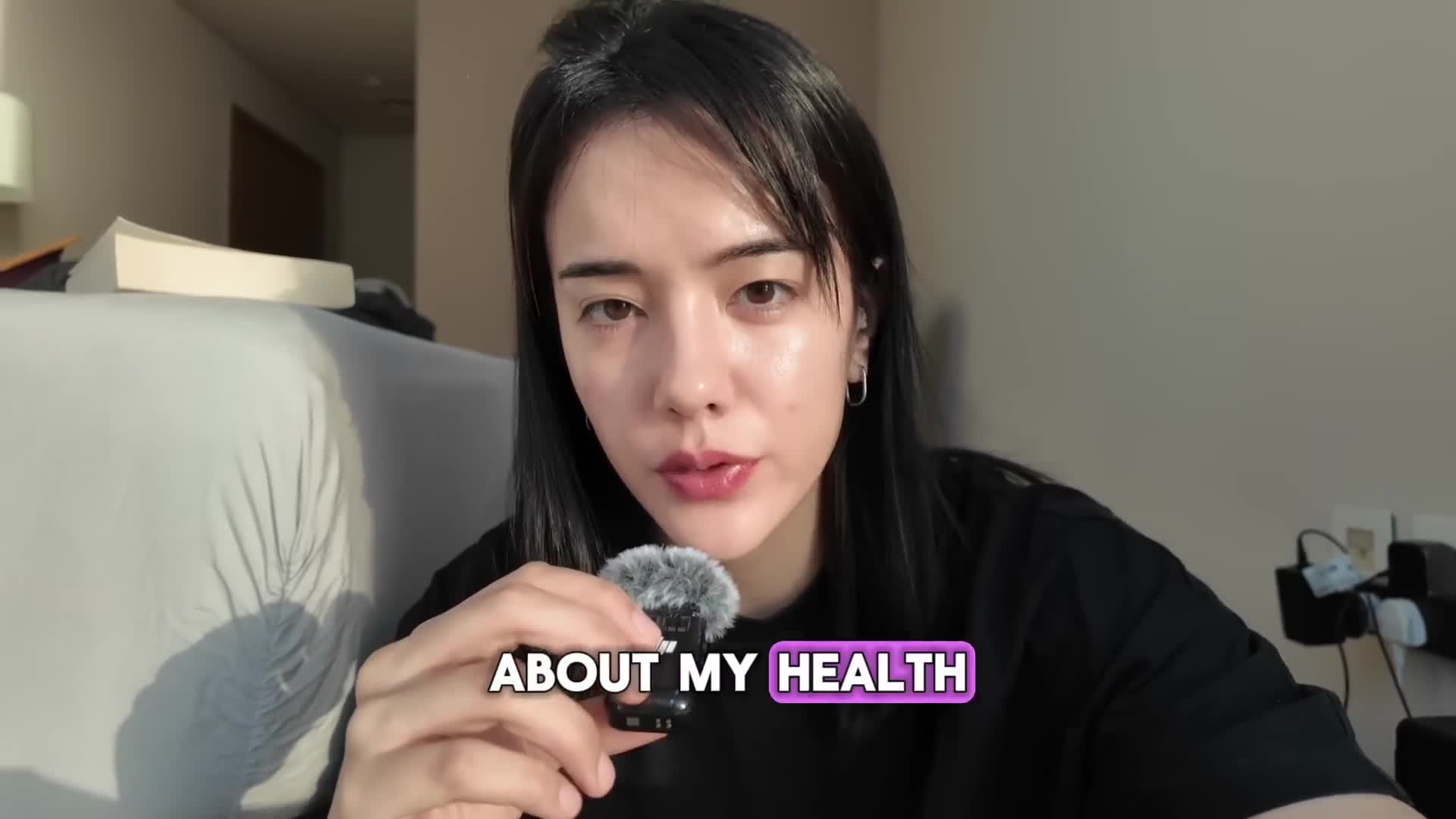
I want to give a quick update about my health.
So about a month ago or so, i made a video talking about how long i've been feeling so bloated, tired after every single meal and i'm almost like becoming a pregnant lady every single afternoon after eating food, because apparently i can't digest majority of the foods and i'm not doing really well, or i haven't been doing well, in terms of, like gastrointestinal wise, And so you can watch this video to learn more about it.
But anyway, after I made that video, a lot of you guys recommended me to get a SIBO test, which stands for small intestinal bacterial overgrowth, to see whether I have it, because most of my symptoms were overlapping with that which is bloating after eating.
And I get bloated so much that I, you know, struggle with breathing.
It's that bad.
And I'm always like gassy also, i'm just like struggling to digest anything and i feel very sleepy after meals, etc etc.
Anyway, i got that test yesterday done and the results were negative.
So i don't have SIBO.
So i've done an endoscopy, i've done a colonoscopy, i've done blood tests, i've done also stool tests, i've done the SIBO test.
So i have done so many things and the answer is that we don't really know.
I got diagnosed with pen gastritis gastritis as well as the ibs, irregular bowel syndrome but we don't really know what the trigger is.
You know, after getting so many tests done i realized that sometimes you don't know the answer.
But i feel like the reason is because, like especially in western medicine, how we treat the symptoms or how we treat diagnosis is a one part of the body.
So if i'm struggling with gastrointestinal issues, they only look into digestive system and they don't really look into other parts of the body.
What i mean by that is, for example, the gut and brain is connected right like the gut brain connection, and your gut health affects your brain, your ability to focus, your mental health quite a lot, and your mental health also affects your gut, etc.
So like it's vice versa.
But when I go to the hospital there is no way of checking the link between them and how both of them are affecting each other.
And after getting so many tests done and talking with multiple doctors, this is my theory of what is going on with my body.
Okay,
But take it with a grain of salt because this is not medical advice, neither what my doctor told me.
My doctor told me just this.
We don't really know what's going on, you know?
Just avoid the foods that are triggering you, was it?
That's the conclusion?
And they prescribed me like probiotics and entire like gas relieving tablets.
That's it.
So this is my conclusion and this is my guess based on my very limited medical knowledge.
Okay, you know there are books like this, for example, the food mood connection, and there are also so many researchers about the gut and brain connection.
So my hypothesis, you know.
But all of my symptoms started like around four or five years ago.
And since then, every single year I'm getting endoscopy, literally every single year.
And every single year we figure out that my stomach is inflamed.
So what can be the cause?
I think like when I think about it, five years ago is the exact time where I was depressed.
Like, you know, I got diagnosed with major depression a few years ago.
I'm fine now.
This is also what my doctor told me is that my gut microbiome probably changed due to something.
That could be food poisoning.
That could be something else that we don't know.
And in my opinion, it changed due to depression.
My dad went bankruptcy.
He failed businesses.
My uncle scammed us.
My father's like family side abandoned us.
We were struggling financially and I was probably at darkest mentally ever.
Like I don't even want to remember that time and surprisingly, i actually don't remember many of the things because my brain probably like labeled that so traumatic that it deleted from my memory, which is kind of scary.
Like i don't remember majority of the things that happened during that time, even like people's names, people faces it's just a blank, but i remember that it was bad.
So, like during that five years of time, like every single day i was so stressed and i would wake up and feel another day, you know, i would feel so drained all the time and i was struggling with sleep.
I was struggling even.
I remember like my heartbeat was so fast all the time because how stressed i was.
And my theory is that, like five years ago, because of due to that like high amount of stress and anxiety and depression, probably it affected my gut that my gut microbiome changed a little bit, That it started to react to foods.
First it started with like dairy.
Till then like I was fine with dairy.
I was able to digest dairy.
But I started to get bloated after eating dairy products.
And then it started to get worse and worse and worse.
So I got tested for a lactose intolerance.
But it was negative.
It shows that I don't have lactose intolerance.
And now I'm kind of fine with dairy products.
Like I can tolerate to some sort of degree.
But if I eat a lot and if I'm stressed out day, I react to it badly.
And anyway.
So I started to kind of like react to dairy, and then I started to react to like onions and garlic and also spicy food and then to artificial like sweeteners and stuff like that.
And also my bloatings get actually worse during the periods of time where i'm more stressed.
Maybe there are like multiple projects going on, or maybe my views are declining, or maybe there's an external something happening in my you know own small tiny world that i'm putting myself more pressure in.
During those days i feel more bloated.
Where i'm not doing anything, or like i'm doing a lot of things but i'm, you know, just like enjoying my day, then those days I don't really bloat.
Especially also like if I'm working out regularly, I tend to bloat less or less frequently.
So those kind of signs, you know, show me that it might be related to actually stress.
And the kind of like the starting switch was my depression.
Like this is my personal opinion, okay?
This is not medical or this is not based on scientific evidence.
This is based on my hypothesis.
So like, what i'm planning to do is that obviously be less stressed, if that possible, or like create systems to manage my stress better?
And i've been working out like pretty consistently for the last three, four years, but there are periods of time where i would be less consistent.
But i decided to make working out a non-negotiable in my life, because when i don't work out, i get so stressed, i get so bloated and i just struggle with breathing that i can't do anything.
I am not able to focus because my brain fog is so bad after meals and i'm so sleepy that i don't do anything.
So, instead of like trying to save time from not going to the gym, i decided to like do it first thing in the morning so that i make sure that i work out that day, that i release my stress, so that i don't get bloated.
Therefore, i can't focus.
So that's the first thing.
The second thing that i'm doing is that i also started to do meditation, like i've been always like, kind of like towards meditation.
You know, like i didn't grow up in the western world, how you would call, and i would be like oh, it's like a thing where you know rich western people are doing, where they go to yoga on sunday and meditate, and even though you know it's like originated from india as well as in chinese culture and also in japanese culture, like zen meditation, those things are big.
I didn't like the representation of what kind of person it is, you know.
It kind of felt fake to me.
But the more I learn about, you know, meditation, the more I learn about our brain, and also the more I learn about also about ADHD, executive functions, frontal lobe, and how meditation can help with every single thing that I'm struggling in life, I actually decided to give it a try. and so i have been meditating like for the past few days like even just five minutes before i start my work day and i hate to admit but it actually helped me quite a lot you know during the day i would be like ah so distracted and so like impulsive and like trying to do that trying to do this i'm like oh my god i remember to that when i do that meditation even like after a few days i'm just calm af i'm like okay i have to do this right now i remember something yeah okay but it's not time for that so let me know down and i'll do it later i'm actually calmed feel in peace which is weird and you know it's been only a few days and if i can see that much of a difference then i think it's a really good sign that it's working like i don't know i don't know maybe it was my limiting belief that i don't really have good impression towards meditation like every person that i know that meditates regularly are kind of fake not everyone though okay they're wholesome people i know that meditate that i love but they're also people that are like pretentious pretentious that's the word that i'm looking for like yes meditation is good and they're people that actually practice it for the benefits but there are also so many people that i know that do yoga and meditation that is only for instagram and that's only to like look i don't know like like it's pretentious anyway i might get cancelled for saying this but anyway so i decided to give a chance for that and it's working the another thing that i want to try is the vagus nerve stimulation where there's like a nerve in your you can also stimulate it from your ear you can stimulate it from your throat if i remember correctly and it basically helps you to regulate your nervous system and to calm down.
So that's another thing that I want to try, and there's like a device to do it and I definitely want to get it and try to see whether it works.
And the another thing is obviously like I've been using Whoop for a long time.
Whoop is a health device that allows you to track your sleep, track your stress during the day and recovery all that stuff.
I've been using it for many years.
And I love it.
And I decided to take it more seriously.
Like I would look at my recovery and train and things like that.
I was like, OK, I would do nothing about it.
You know.
So I decided to actually actively try to improve it little by little and also avoid the food groups that i can't tolerate, or at least don't eat them during the day, so that i don't get bloated and i don't get distracted.
So i eat them at night because if i get like bloated at night, it's usually okay because i'm going to sleep anyway.
So this is my basically conclusion.
Oh also, another thing that i decided to do is learn more about gut health, learn more about gut and brain function.
I like connection, because I remember I actually read, like in a book about autism and ADHD where it was saying that most of the time, like neurodivergent people have weaker gut-brain connection, or something like that.
Correct me if I'm wrong.
But still, like the brain and gut connection, gut-brain axis, or however you call it is relatively new and not that established from my limited knowledge.
So i decided to learn more about it and this is the next book that i'm going to be reading.
The food mood connection says ocd depression anxiety, adhd and more, and indispensable guide to surprising food that fight those things.
Basically, i'll read about it and if it's helpful, i might make a video about it and yeah, so basically this is a little update and i want to know how's your health is going.
You know, or if you have experienced those kind of symptoms, what have you done that helped you?
Yeah, let me know because, like in the in the previous video, you guys told me so many things and it was genuinely really helpful and i appreciate you for telling me that, because i genuinely struggle, like you know, going out.
It's kind of like a nightmare for me because i know i will get bloated and i will struggle with breathing and it's like so stressful that i started to not go out.
It's not really good right, it's like a loophole.
It's making me more and more isolated.
I'm already anti-social quite a bit, so i shouldn't isolate myself even more.
Okay, so i'll try the things.
I'll, you know, experiment with the things that i said and i might make another update video if things goes well.
But for now conclusion i'm working on it and we don't know what's going bye.