I'm very risk averse.
And so I had a very cushy job in IT.
I was consulting with some of the best brands in the world, but we did a food festival.
And once I saw the potential, I just started learning as much as possible.
AI was starting to become a thing.
So I was like, is my job going to be around forever?
Why not take the risk?
I thought I'd be like a VP of some IT company right now.
And so this is very surreal to actually have my own restaurant.
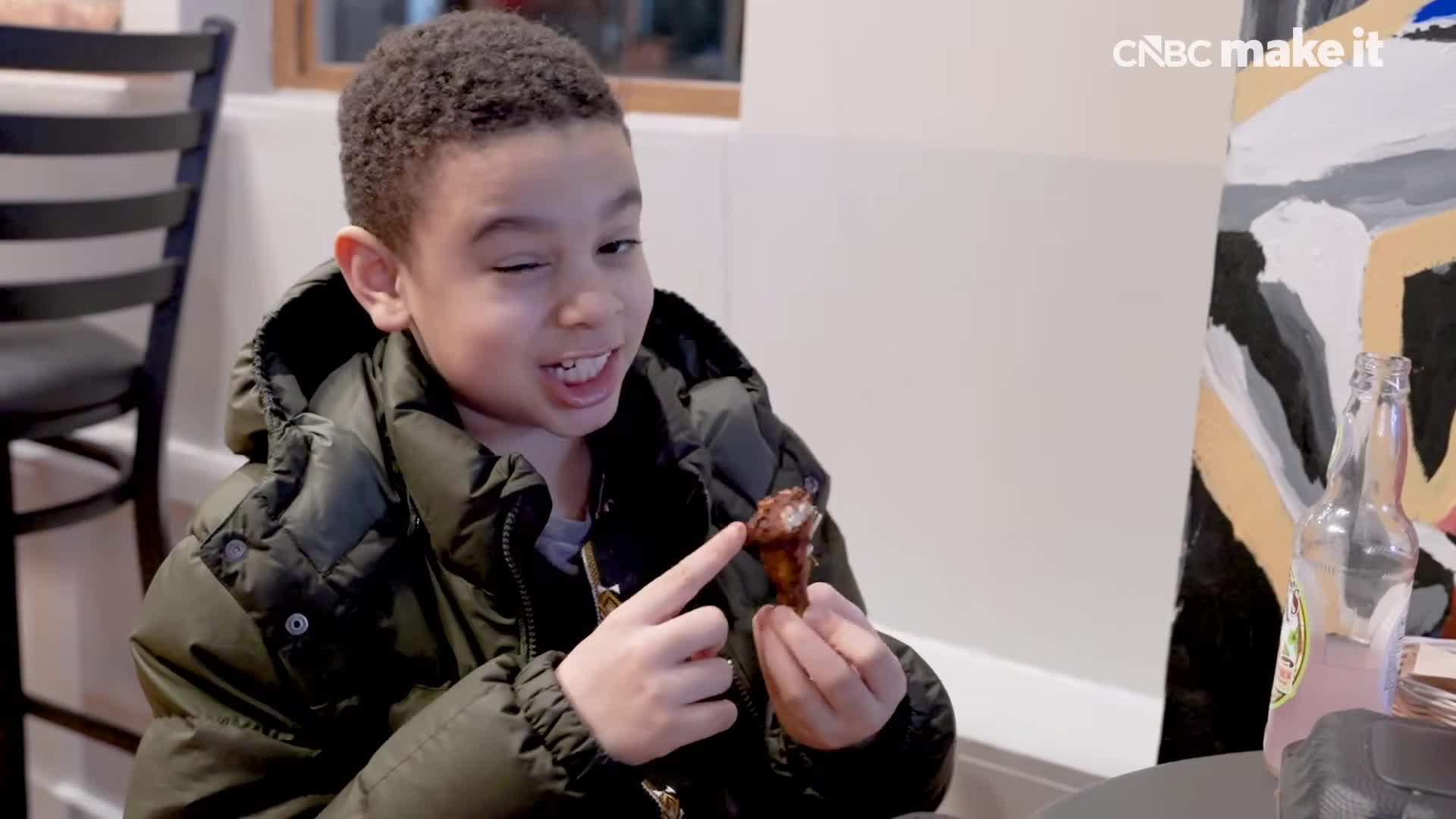
A plus, like the best chicken I've ever tasted.
My name is Shazak Contractor.
I'm 44 years old.
I'm the founder and CEO of Cousin's Burger.
And my halal restaurants bring in over $4 million a year.
We were the first smash burger that's halal in Philadelphia.
We started out originally as burgers, but now we've spun it off into many other things.
We do chicken sandwiches, we do cheese steaks, we do wings loaded fries and we have a delicious milkshake.
I own Cousin's Burger, and then we've spun that off into multiple other brands.
So we have a Texas-style barbecue place called Cousin's Smokehouse, and then we also have a pizza and hoagie shop called Cousin's Pizza.
I started all these restaurants because I wanted more halal options for me.
I'm a big foodie, it's really important.
So Muslims are prohibited from eating anything that's not halal.
Halal is the way that the animal is slaughtered specifically for Muslim consumption.
There's a prayer said over the animal and it's a very specific way that the animal is slaughtered to be very humane and it's very clean.
Right now, across the US, there's only really one mainstream halal option, which is the halal guys.
They were a cart out of New York that became famous, and they have a bunch of locations now.
I kind of wanted to see more than that.
So growing up, there was never really great American halal food.
It was kind of like an afterthought.
I built this brand not to be just some good Muslim burger.
I wanted something that would appeal to everybody, and that's what's kind of happened.
I think it's a great way to connect people, kind of destigmatize these things, right?
Bring it to the forefront.
I don't really love how Muslims are portrayed in the media.
Let's break down those barriers.
Let's bring people together.
So from day one, we've been profitable.
My halal restaurant business brings in over $4 million a year.
We have two silent partners that own 10% collectively in Cousins, Food Inc., the parent company.
It's very important for me to keep as much equity in the company as possible for as long as possible because, first of all, it lets me keep control of the brand and the direction that it goes in.
If you bring in more partners, they get more say in it.
I'm kind of a control freak, and I don't want to give that up just yet.
Growing up, I think I was maybe one of two Muslims in my high school.
It was a difficult time for me, just connecting with people.
I came here when I was six, so English was a challenge for me.
I was born in Gujarat, India.
My parents bought us over here for a better future for us.
They came with, I think, $20 in their pocket.
They fully believed in the American dream.
You literally can make whatever you want out of yourself.
So before starting Cousins Burger, I worked in IT for about 24 years.
I had a really great six-figure income.
I was making close to $300,000 a year.
In Pennsylvania, that goes a long way.
My buddy Tabish, he's back there.
He's on the picture on the bottom over there.
He knows that I like to like do barbecue and cook for friends and family.
And he's like, I'm going to sign you up for that.
I really don't want to do it, but you know what's the dumbest?
I hate to say it, but the dumbest, easiest thing I could do.
And I thought of smash burgers.
I did a little bit of research.
I did some taste testing.
I ended up getting meat for about 500 people, thinking like OK, if it doesn't sell, then I'll just do a cookout the next day and I'll give it away to the members of the Muslim community in my area.
Slowly, we started developing a really long line at the location.
We sold out by 6 p.m.
It really was a family affair at the food fest.
My mom was making the balls of meat for the smash burgers.
My wife was packaging them up and handing it to the customers.
My daughter was the cashier there.
I had to recount the money make sure everything was all there.
It was like a really interesting feeling to sum up with an idea, really quickly, iterate on it, build it and see it be successful.
That was like a high that you don't get to feel normally.
Three months in, I quit all IT consulting to be able to focus on this fully because it requires it.
This is our first location ever.
This one's really close to my heart.
For me, it took a $15,000 investment out of my own personal savings to get it up and running.
Some of the challenges that we had when the grand opening happened the receipts weren't printing and it wasn't giving everybody a number.
So 50, 60, 70 people in this dining area and they were just like waiting, looking at me.
And I wasn't sure like what food belonged to who.
It was really stressful.
The first day, the line was just till I can see the end of the street.
It was beautiful.
So at the beginning, I basically lived here.
Rizwan lived here and we were engaging with the customers.
We were doing restaurant depot runs.
My cars.
Sometimes I couldn't even close the doors because that's how many things were inside the truck.
That was tough, but you know, I'm glad we did it because we've been very successful with it.
We have about eight locations of the Cousins Burger brand.
We also have the Smokehouse and the Pizza.
We're in three states right now, Pennsylvania, Philly mostly, and then some of the suburbs.
But then we also have some in New Jersey and then we have Newark, Delaware.
Do I cook the burgers anymore?
No, absolutely not.
I have PTSD from the food festival.
My day-to-day as the owner and CEO of Cousins Burger is revolving around mostly marketing the branding, meeting with business partners and making sure that we're continuing to grow the brand.
The challenges a restaurant owner has is there's a couple of things, right?
Food costs, it's getting really difficult.
I'd love to be able to sell like a $4 burger, but it's simply impossible.
The economics of it doesn't make sense.
Our smash burgers, they start at $7, depending on the location.
A sit-down restaurant with the higher rent.
So we have to kind of change it accordingly to make sure that we're making a profit.
They go up to, I think, like $13, $14 if it's a triple.
The current challenges that I'm facing as I grow is that each store is not created equal.
So we want to make sure that each store is getting what they need.
So some stores need better or more marketing, better staffing.
So it's just kind of figuring out the model.
We're doing really well across the board.
We have one location that we're perfecting right now.
And then in the future, we have three locations already ready to go.
The meat is really good.
So our goal is to be like the next In-N-Out or the next Shake Shack.
I want to be across the whole United States.
I want to be in Canada maybe by the end of this year.
In the Middle East, maybe Europe in the next two years.
So we have grand expansion plans.
We want this company to become as big as possible while keeping the really high standards that we have.
Halal.
It's a really important thing in the Muslim community, but now it's become more and more prevalent.
We wanted to kind of bridge that gap.
I wanted to bring in really great customers who just want to have solid food, but then I want Muslims to be able to eat it as well.
So that's what halal is for us, is bridging those two communities.
I think it's a great way to connect people.