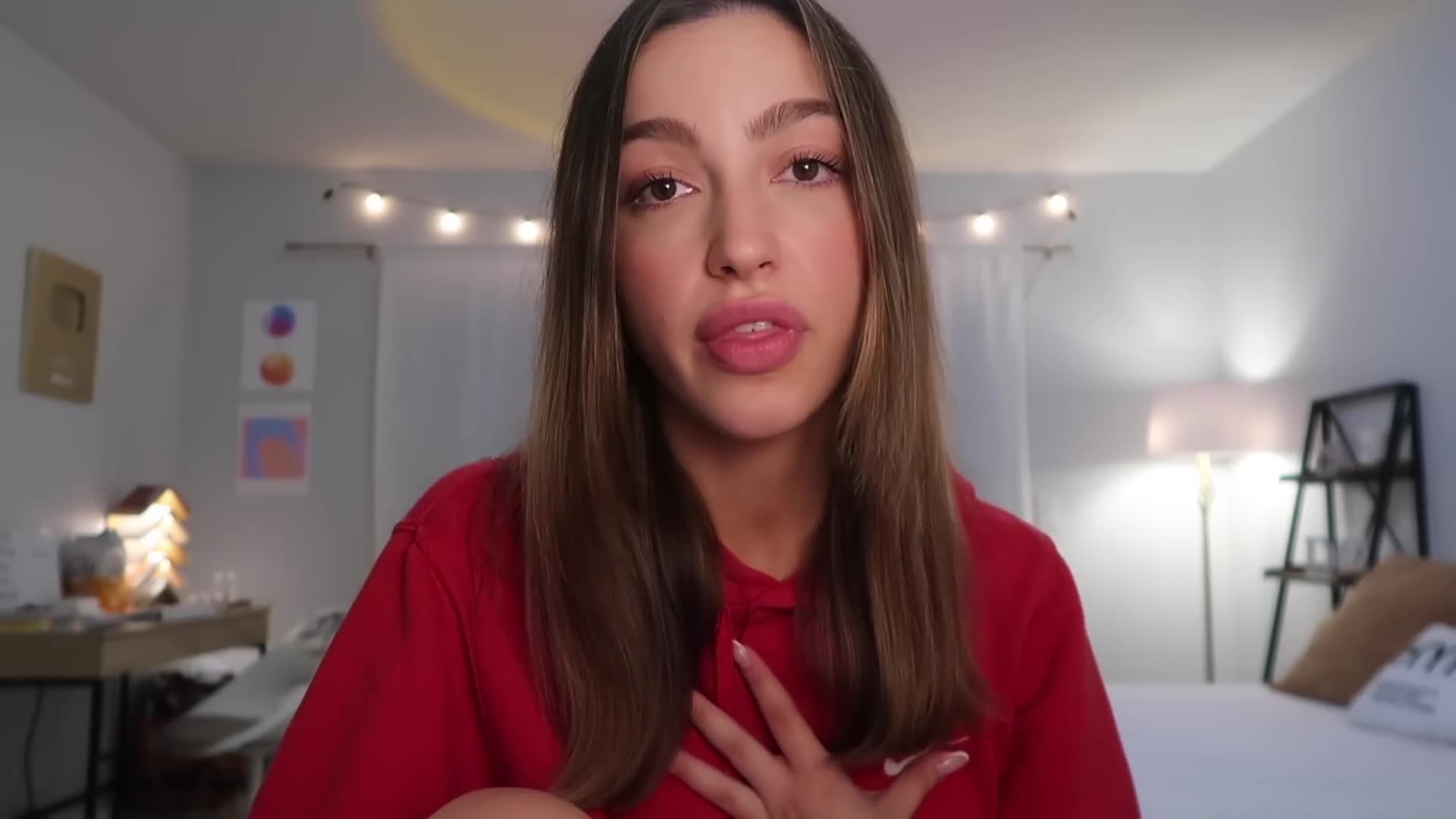
Hey guys, it's Sid and welcome back to my channel.
Today's video is going to be very different than my normal vlogs that I post because I wanted to post something that I think is very important to talk about, and it surrounds mental health and eating disorders.
Those topics are just so highly stigmatized that I want to talk about them because it's been something that recently I have been dealing with and it's been very large part of my life.
I know when I was going through this at its worst times I felt so alone.
Whether or if you're struggling with mental health or maybe an eating disorder, there is a hope for you.
It can get better and also, you're not alone.
I hope that i can help at least one person.
This is a trigger warning.
If these types of eating topics are sensitive to you and you don't feel like it would be healthy for you to watch this video, please click out now.
So i'm just going to kind of tell you guys my story and then talk about my process in Treatment.
So I started my junior year of college in the fall.
I also was still doing work I was trying to meet new friends.
I moved into a new house, new girls.
There was just a lot of stressors occurring in my life.
At one time I was so anxious, so stressed about all the things I had to do.
I kind of just I literally forgot to eat.
I just prioritized studying, going to this class, finishing this exam.
Eating just like wasn't a priority for me.
I started to skip meals, but it was very unintentional.
So over the span of two months I lost like 15 pounds.
So fast forward to january i genuinely didn't think i had a problem.
I didn't realize that i wasn't eating enough.
I also hadn't realized that i lost as much weight um, until i had a photo shoot with my friends like i remember this so vividly in this like parking garage.
And i remember looking at the photos after and i was like, oh my gosh, i lost weight like this doesn't even really look like me.
And then right around that same time i had a little incident where i was driving at night.
I almost passed out on the freeway while i was driving because i hadn't eaten all day.
Then i started to kind of connect the dots like, oh my goodness, i Clearly I'm not eating enough.
So it seemed like a quite an easy fix for me.
That was actually just the beginning of like a bigger issue.
I realized this was about March, by the way, when I started to like try to fix this problem that I realized I self-induced.
So I started to try to eat more, of course, and I would go to like, in and out, I would go to just try to get high calorie foods in me.
Nothing sounded appetizing to me.
Also, throughout this period, i had really started to eat like a lot less variety of foods.
I just had no appetite at all.
When i would try to eat, i felt very sick.
I thought that there was something wrong with me, like medically.
So i went to the doctor.
The doctor did blood tests.
He's like no, like everything's normal, you're good to go, which obviously is good to hear, but it's also a little frustrating and it feels a little bit unvalidating.
When I was like no seriously, I wish I you could feel how I feel, because I I have been trying so hard to eat and put on weight, but I literally can't.
My stomach feels so full all the time.
Having lost so much weight in such a short period, I felt like I wasn't, I don't want to use the term as feminine, but I had lost any sort of like curves I had.
It definitely took a toll on my confidence.
During this whole process, one of the hardest parts for me was reading and also, in real life, hearing comments about my weight.
I had people saying, oh my gosh, eat a burger.
You look so skinny.
Why don't you just go eat?
You need to eat.
And hearing those things was really hard for me.
Little did those people know how much I was struggling behind the scenes and how I was so insecure about how I looked.
I know that those people had no idea that I was going through this, but it doesn't make it hurt any less.
I just remember being on the phone with my mom.
I don't know what to do.
And she ended up asking me like, how would you feel about getting tested for an eating disorder?
And I was like, sure, I'll get tested, but I definitely don't think I have an eating disorder.
And she's like, yeah, I don't really think so either, but you could try.
So I was super open-minded.
I went on this phone call and kind of had an assessment.
I answered all that and the doctors and like psychologists ended up coming back to me and they said that we think you would be a good candidate for our inpatient program.
At first I was just so shocked because I just didn't expect that.
So I was definitely kind of taken aback.
I was also, again, still quite busy.
And the thought of having to dedicate hours a day for six days a week towards this problem just sounded not.
I don't want to say not fun, but yeah, not fun.
But I kind of just came to terms with the fact that there was no way that I would be able to fix this on my own.
So around a month and a half two months ago, I ended up being admitted into the eating disorder program consists of six days a week i think it's four hours a day where you just go in and they sit with you while you eat meals and try to help you fix your relationship with food.
Going into this program, i want to be completely transparent with you guys.
I had very much a preconceived notion that they wouldn't be able to help me because i didn't have anorexia bulimia.
That is something that i have learned throughout this process that there's more eating disorders than just the more common ones that you hear about.
But anyways, i actually ended up finding that they were incredibly helpful to me.
They diagnosed me with arfid.
Arfid's definitely not as common as the other eating disorders you probably hear about.
It is actually a feeding disorder, so it has nothing to do with body image or intentionally trying to lose weight.
It can manifest in so many different ways.
Some people with ARFID have fears of choking or vomiting or are super selective and picky with their foods.
For me, it manifested in a general lack of interest in food.
Having struggled by myself for months with this, having someone that was able to validate how I was feeling and I don't want to say put a label on it, but also provide an explanation was very validating for me.
The psychologist and dietitian kind of explained to me that when I had gone through this period over I mean eight months of really significantly eating so much less that my hunger cues were just completely off because my brain wasn't sending the right signals to my stomach and vice versa.
That is completely normal and I guess when you do try to like refeed yourself after going through a period where you don't eat much, it is very expected to feel like nauseous and sick.
Having been in the program for over a month now, i have made so much progress, which i'm so happy about.
I have weight restored almost all of my weight now and i really just feel so much better In my body.
I feel so much more confident.
I'm definitely not 100% yet.
It's definitely something that I'm still struggling with.
Just trying to remember to eat meals.
Also going to treatment and having people kind of reteach me how to eat again and what proper portion sizing is and the importance of having three meals a day and fueling your body, has been incredibly helpful, of course.
I just wanted to also share this, because the entire reason this happened to me is because I wasn't taking care of myself and I wasn't putting myself first.
And if I had just taken the time to eat and take care of my body, I wouldn't have been in that position.
But I do believe everything happens for a reason and whether food is something you struggle with or just having self care in general, I think is just so important because mental health is incredibly important.
So I think it's just a really good reminder, and I hope that for you guys it serves as a reminder as well, because no one is gonna be able to take care of yourself for you but yourself.
If you have gone through something like this or if you are going through something like this, I'm gonna try to put all of the resources that I can below.
People struggle with different eating disorders, people struggle with other mental illnesses and it's hard.
I like will say this has been genuinely one of the hardest things I've had to go through.
Also, just remember to check in on your friends and if you are struggling, Talk to your friends, talk to your family, someone you can trust, because having support is just so crucial in times like that.
I hope this video was helpful to at least one person.
That is the whole reason I'm making this.
Just know that you should not feel ashamed if you are going through something, whether it's mental health related, eating related, whatever it is.
Everyone has their own struggles and it's important to remember that and to treat people with kindness, because you never know what someone's going through.
I hope that you take care of yourself.
If there's one thing you take away from this video, is to please take care of yourself in any capacity, whatever that means, because the most important relationship that you have in your life is with yourself.
I love you guys and thank you for watching and I'll see you in my next video.
Bye guys.