This message comes from Capital One with the Venture X Card.
Earn unlimited double miles on everything you buy.
Plus, get premium benefits at a collection of hotels when booking through Capital One Travel.
What's in your wallet?
Terms apply.
Details at CapitalOne.com.
This... is the TED Radio Hour.
Each week, groundbreaking TED Talks.
Our job now is to dream big.
Delivered at TED conferences.
To bring about the future we want to see.
Around the world.
To understand who we are.
From those talks we bring you speakers and ideas that will surprise you.
Just don't know what you're going to find.
Challenge you.
We truly have to ask ourselves, why is it noteworthy?
And even change you.
I literally feel like I'm a different person.
Yes.
Do you feel that way?
Ideas worth spreading.
From TED and NPR, I'm Manoush Zamorodi.
Were you one of those lucky people who knew exactly what you wanted to be when you grew up?
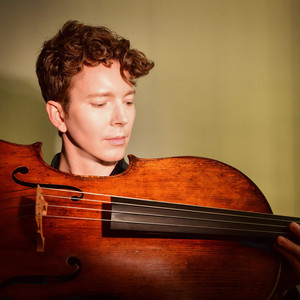
Cellist Joshua Roman was.
You know, I went through a phase when I was 10 or so, a few of these kinds of things, where it's like oh, I could be a fighter pilot or a firefighter, or it was always something heroic.
Fastest man in the world.
But only if I break my arm and can never play the cello again.
Oh, wow.
Then I'll join ski patrol.
It was that sort of thing.
He has always spent most of his days practicing his cello.
It's pretty all consuming.
It's a practice not just practicing the cello, but the practice of sitting with a friend and working on something together.
All of the things that I think other people might explore and really get into, I would do that.
But it was always kind of on the side.
I never put more effort into anything than I did into the cello.
Was it love at first sight or was it more of a slow burn?
You know, I don't remember my first time playing the cello.
I was three years old.
But I do remember the UPS lady at the front door.
And we had one of those glass doors and a wooden door.
And the wooden door was open.
And she was standing there in her brown shorts with this box that was bigger than me.
And I was so excited.
And yeah, I don't remember ever not loving the cello.
So it's been inseparable since memory began.
Growing up in Oklahoma City, music and faith were two sides of the same coin and what his family stood for.
By the age of 13, Joshua practiced cello five hours a day, often at church alongside his father.
When I was growing up, it was very religious.
We went to church all the time.
My dad was the music director.
He's Reverend Paul David Roman.
We were at church almost every day of the week, my whole life.
And music was a service to God.
That's how I saw it.
Eventually, Joshua went on to study music.
He joined the Seattle Symphony Orchestra.
This is him on cello playing Shostakovich.
At 22, he was their principal cellist, their youngest ever.
At 24, he left to pursue a solo career playing with orchestras around the world, live streaming on YouTube from Carnegie Hall in 2009, introduced by Yo-Yo Ma.
Occasionally, I get to meet an extraordinary young musician, such is the case with Joshua Roman.
Tens of thousands of fans online traveling the globe.
Life with his cello was exactly what Joshua had hoped for ever since he was a little kid.
By the time I was six or so, I was telling everyone this is what I'm going to do for the rest of my life.
And I just knew it.
It wasn't a question.
It wasn't a consideration.
It was just, that was what I was going to do.
No question.
I think a lot of people or I won't speak for a lot of people, I'll speak for myself, which is that I'm envious that you had that clarity at such a young age.
You know, you can imagine that's something that I get told a lot or asked about quite a bit.
And I think it cuts both ways.
For me, it's been great.
It's been great, but it's also been something my whole life has revolved around and my time has always been limited because of your commitment, because of my commitment.
That commitment to his craft gave Joshua Roman the focus to become a world-famous classical musician.
But like millions of other people, in 2020, his life shifted when the pandemic happened.
Not only because he couldn't tour or play concerts, but because after Joshua got COVID, his body completely changed.
His health, which he had always taken for granted, became fragile.
And his old friend, the cello, it was like they hardly knew each other anymore.
Today on the show, an hour with cellist and TED speaker Joshua Roman.
An identity crisis that nearly ended his passion for his cello, and how he had to rethink his approach to life and music so he could love both.
But first, let's go back to a typical day for Joshua in 2018 before all that happened.
A typical day pre-COVID was packed.
It was all super intense.
I used to practice anywhere from six to 10 hours a day.
I was always reaching, striving to make myself better, whether at the cello or some skill or more, reflective learning meditation.
But it was all 100 miles per hour.
My idea of relaxing was to sign up for a 10-day silent Vipassana meditation course.
And you're really grounded, but I wouldn't call it relaxing in the sense of not doing anything.
And that's what I would do to take a break.
And I would get up early.
I would run.
I got my mile under six minutes again the year before the pandemic.
While I was bouncing around, I had been so busy gone about 80 of the time playing concerts that I decided I didn't want to bother living in New York anymore.
And so in 2019, I left everything in storage.
And I just.
For the first six months I just lived in hotels and host family homes while I played the concerts that I had and occasionally needed to add an extra night or crash at my sister's.
So I'd spent a long time kind of just roaming, being a kind of nomad.
And it had been, I think, eight or nine months of doing that when the pandemic hit.
Hi, everyone.
What a day.
All the concerts were canceled that March 12th or whatever it was.
Got a phone call from my manager that wiped out the entire future income that I had, except for, I think, one concert.
And I immediately went into a kind of musical response mode.
Welcome to Cello Bello.
And started doing daily live streams on Facebook.
I was doing this project called The Musical Journal.
And I would record these multi-track cello things.
When I would get somewhere and unpack, the first thing I would do is set up my recording equipment, my little mobile studio, and record an entry into the musical journal.
And that was what music was doing for me at that point.
It was an outlet to serve.
Looking back, I think that I was really ignoring my personal relationship with the cello.
I think I was using the cello as a tool, trying to extract all the good that I could from it in a way that would make an impact for other people.
But I wasn't really considering what does this sound, what does this practice mean for me?
I was on a mission and that was it.
And then we get to January 2021.
That's right.
And like the vast majority of us, you got COVID.
Yeah.
Yeah.
Where were you?
I was in Jacksonville, Florida, the one concert that wasn't canceled.
And I just I will always say for the record the Jacksonville Symphony did a great job with their safety protocol and measures there.
No one else got COVID.
They canceled the second concert.
We played the first concert and I woke up the next morning and I couldn't smell.
Couldn't smell the Altoids.
Oh, man.
Stuck my nose in the box and I couldn't smell a thing.
I was like, this is not good.
So I took the test.
And then, you know, in those days you would cancel the whole concert.
And I was just kind of stuck and I had no idea what it was going to do to me.
But from the very beginning, it was an ordeal.
Yeah, because like it's really hard to remember, which is so weird because it's not that long ago.
But I think, you know, it's not fun to think about.
But let's just remind ourselves that for some people, it was no big deal to get COVID.
And for others, it was an extremely big deal.
How did your symptoms progress?
And at what point did you realize like, oh, nuts, this is not good?
Yeah, it was weird because I didn't feel like I had such a bad COVID.
I mean, it was strange.
What I didn't have is the extreme regular flu-like symptoms.
I basically had the weird stuff that COVID brings and not a whole lot of traditional sick stuff.
I had a lot of trouble breathing.
That was a thing.
And I had incredible fatigue which was like nothing I'd ever experienced, where it wasn't being tired because I had done something or being sleepy.
It's this feeling like I'm wearing weights inside of my body, or something that I just lifting an arm, can be so difficult.
It just feels like it weighs a thousand pounds.
Yeah. and the brain would have similar things.
I was really struggling with brain fog.
It was very difficult to read, and it was very strange.
I didn't feel sick.
I felt like I was inhabited by something else, like I'd been possessed with some weird thing.
And then it just didn't go away.
Ugh.
And I'm very, very lucky that my primary care doctor knew about and understood enough about long COVID, both to suggest that that might be what I had and also to say you need to get extra help because I'm not an expert in this.
When we come back, Joshua puts away his cello, unsure he'll ever return to it.
That was probably the lowest point.
Nothing on the calendar.
No confidence in my ability to recover.
A crisis of faith about what music meant at that point.
It was a really dark time.
More from my conversation with Joshua Roman.
I'm Manoush Zomorodi, and you're listening to NPR's TED Radio Hour.
We'll be right back.
This message comes from NPR sponsor, UKG.
Nothing feels as good as a great place to work. and a great place to work is very good for business.
UKG is the only partner that delivers the HR pay, time and culture solutions needed to create a great workplace which gives employees everything they need to succeed, no matter who they are, where they work or what they do.
See what UKG can do for your business and your people at ukg.com slash great.
UKG, our purpose is people.
That's the AT&T guarantee.
Terms and conditions apply.
Visit att.com slash guarantee to learn more.
AT&T, connecting changes everything.
This message comes from Capital One with the Capital One Saver Card.
Earn unlimited 3% cash back on dining and entertainment.
Capital One.
What's in your wallet?
Terms apply.
Details at CapitalOne.com.
This message comes from NPR sponsor Viking.
Committed to exploring the world in comfort.
Journey through the heart of Europe on an elegant Viking longship with thoughtful service, destination-focused dining and cultural enrichment.
On board and on shore.
And every Viking voyage is all-inclusive with no children and no casinos.
Discover more at viking.com.
It's the TED Radio Hour from NPR.
I'm Manoush Zomorodi.
We are spending the hour with cellist Joshua Roman.
By age 26, he had a flourishing and frenetic career.
By 30, he was traveling the globe, playing the world's biggest venues.
But when the pandemic hit and Joshua developed long COVID, everything ground to a halt for him, including the pleasure he'd always gotten from playing his beloved cello.
I was facing the possibility of never playing this beautiful music again.
Here he is on the TED stage.
In January of 21, I caught COVID and unfortunately, I never fully recovered.
I could tell something was wrong when I continued struggling to read even after my initial infection.
Sometimes even basic sentences wouldn't make sense.
A few weeks later, I was returning from the trip I'd been on when I got sick.
And when I arrived home, the simple act of of walking up the stairs to my bedroom completely laid me out.
I only made it halfway before falling to the floor on the landing, unable to continue or even to lift myself to a sitting position.
I was there for half an hour, frustrated and crying.
So what happened next after that?
Well, eventually I made it home.
Well, home.
I made it to New York.
To the last place that I had been staying.
And I only had two concerts, but they felt so important.
So I kept those concert dates.
Oh, wow.
Yeah.
That was wild.
Of course, my manager and I had several conversations about it.
Am I going to be able to do this?
I worked my way up to playing the Saint-Saëns Cello Concerto.
It's a solo cello with orchestra piece, and it's only about 20 minutes long, which is unusual.
The big cello concertos, the famous ones, are 30 or even 40 minutes long.
But this one was only 20 minutes long, and it's one that a lot of kids learn.
So I had learned it when I was 12 or 13 or something.
I don't know. and if there was any piece i was going to be able to perform at the level that i expected myself even with long covid it was going to be that piece so i got it ready it was nuts at first i could only play two to five minutes And eventually I got up to 20 minutes and I could do that, but I would have to rest so much to be able to just play the cello for 20 minutes.
So when I did that performance, I definitely had to recover.
But right after that, I was working for the very first time with Edgar Meyer and Tessa Lark.
The only way some concerts went on was that they were videotaped.
And so that's what we did at Edgar's house.
And we were able to spread out our work over the course of a week so that I could manage it.
And it wasn't until after I pushed through those two things that I truly, truly just crashed.
That was probably the lowest point.
Nothing on the calendar.
No confidence in my ability to recover.
A crisis of faith about what music meant at that point and whether I wanted to continue at all.
It was a really dark time.
I abandoned the daily practice routine that I'd been cultivating for over 30 years.
I put my cello in its case, and I left it there.
Doubts that had been lurking for years came to the surface.
I'd been stuck in a gig mentality for much of my career, waiting for the phone to ring, afraid to say no to any opportunity, and completely unaware of the exhaustion that ran through my body and spirit.
I've always wanted to feel like what I do matters.
But after decades of ambitious effort to play every note in tune, make every phrase clear and powerful, I was having trouble seeing that possibility through my fatigue.
With the difficulty I had even lifting the bow, let alone putting in a decent practice session, I lost hope that it mattered.
You say you put your cello in its case and you left it there.
Yeah.
How long did that break last?
It was like two and a half months, almost three months.
Oh, wow.
Yeah.
That was probably the biggest break you'd taken ever in your life, basically.
Yeah.
Because my rule was somebody told me when I was a kid that Heifetz said I've never looked this up because I don't want to know.
If I miss a day of practice, I know.
If I miss two days, the critics know.
If I miss three days of practice, the whole world knows.
And even as like a six-year-old, that was the mentality that was drilled into me.
So almost three months was inconceivable.
What do you think your cello thought of this?
I'm starting to think of them truly as your life partner.
Yeah, they're not happy about I can tell you, Midge is her name.
And she.
She had been put in the closet a few times, I'm sorry to say, but always because I had another cello that I would be playing.
It was never me not playing the cello.
But there's something about cellos when they don't get played for a while.
They get stiff.
It's hard to get a sound.
You don't have a lot of sound.
It's kind of crazy how much this wood changes when it's played and when it's not played.
So she was very unhappy but also my fingers.
I had pretty much lost my calluses, which is something I think any string player will understand what I'm saying with that.
I had pretty much lost my calluses.
When you were in the midst of that, of not playing, did you miss it?
Did you miss Midge?
Did you start thinking?
No.
No, I started thinking about other things I could do.
I mean, it was not, I don't think I was very in touch with myself.
You know we talked about earlier.
I knew from such an early age and people, a lot of people, look at that and think that's awesome.
But that flip side is real, that there are all of these other things happening that just got pushed to the side because I knew what I was supposed to do.
And so I wasn't going to let anything that would counter that narrative become real.
So when I did put the cello away, I was flooded with those doubts that had been shoved down.
And it was the first time that I'd truly voiced those things that had always kind of been there.
I want to try and understand that.
Why you don't know if music is going to do it?
Because physically I don't feel able because wow, I haven't given the rest of the world a chance in my life.
Was it that you still had long COVID and you were just like, I'm just so damn tired.
I'm just going to sit in this not knowing like what exactly?
You know, this is getting this is cutting to the quick of it.
When I was a kid, I grew up in a church.
Music was a service to God.
I was able to have incredible ambition to serve in this place where there's meaning attributed to those things which can't be articulated, sometimes by science so well.
So spirituality, really.
And I left the church when I was 16 or 17.
And at the point that we're talking about, it had been, gosh, 20 years of not being a Christian.
And so a lot of what I had done for service was kind of like automatic.
And in this moment, all of that that had been building up just came down on me.
And I didn't know if I could believe anymore that music would save people, because I didn't believe in the construct that had given me that in the first place.
And I hadn't yet found a new one.
Hmm.
So COVID almost forced you into confronting this confusion in that you just stopped playing.
A hundred percent.
It totally forced me into facing something that I could have faced a long time ago.
In those very dark days, you got a call from a friend.
Yeah.
That ended up changing things for you.
What did they say?
Like, I know you're struggling right now, but would you consider playing just for us friends?
It's so funny to me because I had this friend who asked me to play for her summer solstice party.
And...
You know, I said yes.
At that point, I wasn't really sure if I was even going to continue a career as a cellist.
And I think I had in the back of my mind, you know, I can just cancel.
It's fine.
She'll understand.
But then I procrastinated actually thinking about it.
And so...
I couldn't say no anymore.
And that is actually when I picked up the cello.
It was the day before this party.
And that's why I took Midge out again and started playing.
And that's the moment where everything changed for me.
There's a place on probably most, if not every, cellist's chest that has marks on the skin from where the cello touches it.
And for me it's right on the breastbone, slightly to the left, close to the heart, which is kind of crazy.
And when I started playing the Bach Prelude after not having touched the cello for so long, I think I was extra sensitive to the vibrations.
You can feel the whole cello vibrating.
You're holding it with your knees.
It's against your chest.
Sometimes your head is touching the scroll a little bit.
You feel it in your hands.
I know that that vibration wakes the cello up.
This is something that we know.
It's studied the effect that vibrations have on the instruments.
I started crying because it was something that I really needed.
¶¶
Pretty immediately, I felt that here is the thing that I've been missing.
It's my own personal connection to the music and to the cello that...
All of the other stuff has to come from that, that I'd been so singularly focused on putting music out there for other people that I wasn't, you know, and some of it's ironic.
I wasn't even really doing that as well as I could, because I wasn't letting myself be a part of the equation.
And I was trying to disappear.
I was trying to make myself a perfect empty vessel for music.
And that's just not how it works.
And being moved, literally feeling the vibrations and emotionally feeling the vulnerability that I had in that moment, be touched in a way that I hadn't experienced before.
That showed me that music is, on its own, powerful and necessary movement.
And all of the layers that I've been peeling back since that moment come from.
That basic element of I had to be taken down to my knees before I let go of pride and let myself be vulnerable and experience the beauty of music.
With that veil pulled away, what did you see in front of you then?
Because it looked different, it sounded like, than where you'd just been.
Very different.
Very different.
I wasn't immediately sure what to do with it, except that I knew that I wasn't going to quit the cello that, in fact, the cello is my partner and my life, and that I just needed to have a healthier relationship with it.
And I think setting out to explore that, what is my relationship with music, with the cello?
What is the power of music?
Those have become my structure in a way, those questions.
And it's led me to do very specific things.
Like there was a point that I realized and I think it was many months after that, but there was a point that I realized I needed to stop practicing when I didn't want to practice.
And that's just so weird for me to, even now, for me to hear myself saying.
But whenever I would feel the urge, I started asking myself Is this because I really want to practice, or is this because I feel like I should practice?
And I discovered that when I started that I actually started being able to keep my mind on the cello more when I was playing.
My mind wasn't wandering off like it used to sometimes.
I wasn't just playing by rote.
I was there.
It took a little while, but now that's very true.
And also, I found that I really love playing the cello and that I really love practicing.
And it's not just this is the difference.
It's not just about getting better at something.
It's about just enjoying doing it.
And another paradox, or irony, or whatever you want to call it, is that I think I'm playing better than ever.
Yeah.
And I don't show up unprepared and stuff.
You'd think that's what would happen if you said, I'm not going to practice unless I want to.
But no, it's not really that.
At my core, I'm working on trusting myself.
Hmm.
Practicing is about trusting.
And just like in any other relationship, trust is a matter of building the trust part, not the verify part.
And I had been so focused on all of the little check boxes.
Have I done my scales?
Have I done this?
Then maybe I can relax and trust myself.
But I hadn't ever actually practiced trusting myself.
Because that's scary to do.
What if you fail?
It's really scary.
Yeah.
Well, that's the other thing.
I realized I'm going to fail.
That's OK.
That's going to be part of it.
And I'm going to somehow find a way to let people experience this thing that I feel right now.
And that's going to make me fail in other ways, ways that I would have considered failure before.
But maybe now that's actually the point, that truly I can put my bow where my mouth was and really do this thing of truly giving something.
In a minute what Joshua Roman went on to produce his debut solo album and a piece improvised just for you, dear listener.
It's the TED Radio Hour from NPR.
I'm Manoush Zomorodi.
Stay with us.
This message comes from AT&T.
Whether you're calling your parents to say happy anniversary or checking in with your kids before bedtime, staying connected matters.
That's why AT&T has connectivity you can depend on, or they'll proactively make it right.
That's the AT&T guarantee.
Terms and conditions apply.
Visit att.com slash guarantee to learn more.
AT&T.
Connecting changes everything.
This message comes from NPR sponsor Fixable, a podcast from TED.
Hear unfiltered expert advice from CEO Ann Morris and Harvard business professor Francis Fry on how to build, regain and maintain your confidence.
Find Fixable wherever you listen.
This message comes from ServiceNow.
People should do the creative work they actually want to do, not boring busy work.
Now, with AI agents built into the ServiceNow platform, you can automate millions of repetitive tasks in every corner of your business IT, HR and more.
So your people can focus on the work that they want to do.
That's putting AI agents to work for people.
It's your turn.
Get started at servicenow.com slash AI dash agents.
This message comes from NPR sponsor, U.S.
Bank.
With U.S.
Bank Business Essentials, you get more than just a bank.
You get a dedicated partner that provides you a powerful combo of checking and card payment processing with quick access to the money you've earned, proving that there is nothing as powerful as the power of us.
Visit usbank.com today to learn more.
Do you have a question that no one in your life can help with?
Something that makes the people around you go, yikes, what a weird question.
Well, Freak, here on How to Do Everything, we want to help you out.
Each week, we get fantastic experts to answer your questions.
People like U.S.
Poet Laureate Ada Limon, bodybuilder Arnold Schwarzenegger, and rapper Rick Ross.
Season 2 just launched.
Go listen to How to Do Everything from NPR.
It's the TED Radio Hour from NPR.
I'm Manoush Zomorodi.
On the show today, cellist Joshua Roman, and how long COVID changed his life and his approach to music.
So you went through a lot but it has brought you to sort of this unexpected and kind of wonderful place.
Your debut solo album.
It includes classical pieces, original compositions.
You also do covers of more contemporary music.
And features you on guitar as well as cello.
And you sing.
That's right.
Tell us about the album and the process of putting it together.
Well, it all started with that moment and trying to figure it out.
But there was a catalyst which was a friend of mine who ran still runs a series at the Princeton University concert series.
And it was new at the time called Healing with Music.
Oh, yeah.
I'm familiar.
Okay, awesome.
Right.
So the basic idea you know, you hear artists playing music that has helped them through their health journeys.
And it was very scary to think about that, to be up on stage saying, I'm not OK.
You know, I'd played a couple of concerts at that point.
And of course, we told everyone, the presenters, to make sure that everyone backstage knew.
But I wasn't going out on stage and being like, I've got long COVID.
Oh, you weren't.
I'm going to be tired after this.
Until this moment.
I see.
This proposal from my friend Dasha was come do a concert where the whole point is something's wrong, and here's how music helps.
One of the challenges I face is that especially classical music is hard for me now because cognitively it's not that simple.
It's actually pretty taxing and can take a lot out of me, but it has been the center of me understanding my relationship with myself and being kinder to myself.
So I started thinking about the pieces that had meant something to me on this journey.
And all of the pieces that were on that concert ended up being a part of the project.
And this idea that I would be on stage and I would tell my story in words and music came from that experience.
That was another layer being peeled back of, sure, I'm performing, but I'm not...
I'm not performing to hide in a way, I'm not trying to be bulletproof up here.
I'm showing people something that really matters personally to me, not just something I've picked because it seems important, but because like, it truly affects me and that that was different.
Well, it goes like this the fourth, the fifth, the minor fall and the major lift, the baffled king composing Hallelujah.
It's so interesting to me because it's not what I ever would have imagined said I should have done as a debut album, and yet I think 12-year-old me would not have been surprised at all.
It would have made so much sense to 12 Like.
Of course, that's the music that you would put on an album.
And I... Like, 12-year-old me didn't know what musical genres and boundaries were supposed to be.
It was just...
Things that fit together, fit together.
I mean, what you're talking about is vulnerability.
Exactly.
And one might think, oh, that means he's going to sound wistful or sad.
But no, that is not the case.
This is joyous.
Yeah.
I mean, there's sadness.
But what's interesting, actually, is when you put it all together, it's just life.
Yeah.
There's a moment.
You know I did write a piece specifically for the project much later, when it came time to record it.
And the idea was this is going to be the piece that's about my experience.
And I really desperately wanted it to have this up and down, feel the journey, kind of Lord of the Rings landscape.
At the same time, it's supposed to be a five-minute piece for solo cello.
And I'm such a doofus, but I...
I couldn't get that piece out.
And I kept trying and failing.
And so I started improvising every day to see what would happen and how I would get there.
And it was really fun.
But I wasn't making this epic that I had in mind.
And it was the weekend before I was walking into the studio.
I still didn't have that thing done.
Huh. or even really know what it was going to be.
And so I finally just totally gave up and I said, all right, whatever's coming out is the piece.
And like, it just kind of, it just kind of showed itself immediately.
And very quickly those fun improv sessions evolved into one of the most unabashedly joyful compositions I've ever written.
I couldn't force myself to write the piece that I wanted.
But when I let go and just played, I came away with the piece that I needed.
I gave it the same name.
I've given my project immunity.
¦ ¦
¦ ¦
.
.
.
Thank you.
¦ ¦
¦
Here was this joyful celebration that was just dying to burst out of me.
And I'd been trying to restrain it and turn it into this serious thing.
It was.
So I still don't quite understand, except that a lot of, actually a lot of religions and spiritualities and philosophies have this idea of the paradox.
And it's, I think it's really real, you know?
We don't have to be all one or the other.
I guess I'm also thinking that maybe Freud might say you lost the ego, or that you – Well, that sounds nice.
It does, right?
Well, but it just reminds me of being – having honestly postpartum depression.
And the one thing that came out of that was that I lost my filter and just kind of said what I thought and –.
That's when my career took off.
Yeah.
What was that like?
Yes.
I think that's something that I don't feel like I can articulate it very well.
For me it's another one of those paradoxes where, in music and in life, understanding enough to be able to let go is like even just that sentence is a weird thing to chew on.
But they go together understanding and letting go.
Do you think you essentially came back to being the same sort of musician or are you very different?
No.
Oh, my gosh.
I mean, there's, you know, the roots are there.
I would say that something has been unlocked.
Yeah.
Something you know.
It was like I was circling something for so many years, trying through skill, through dedication, through commitment, through brute force, trying to get at something.
And all of those skills, they're not useless skills, but.
They're good.
They help.
They help do the thing.
They just weren't the thing.
They were just tools that help when you have the thing.
So I'm the same person with less and less fear of being who I am.
So I would love to use the time that we have left together to ask you would you play some music for us?
I'd be happy to.
Yeah.
Who is this with you?
Because I know you were talking... This is Cindy.
Oh, Cindy.
Cindy, yeah.
That was the response Cindy likes.
One piece back.
Oh, she's got curves, Cindy.
Yeah, yeah.
How long have you and Cindy been together?
Oh, wow.
Two and a half years?
Actually...
We were a little bit on and off at first, so it's hard to remember.
Well, you were with Midge before, right?
I was with Midge, yeah.
All right, so talk to me about what you and Cindy are going to do for us right now.
Well, I think there are a lot of things that I could do, but probably the most appropriate thing, given our conversation, is just to play a short little what's happening right now.
And I have no idea what that's going to be.
So this is today.
¶¶ ¶¶
.
.
.
.
.
¦ ¦
¦ ¦
That was amazing.
Oh, thank you.
That was very gentle.
That just came out of you?
Yes.
Yeah.
It was a gentle something.
I loved it.
Thank you.
It was what I needed to bring me down a little bit today.
And I don't mean like sad.
I mean like just like take a deep breath.
Yeah, I think probably me too.
Sharing this story, what we have been speaking about, it's always hard.
I still feel anxious sharing these things and having something that was just so simple and grounding.
So there we are.
That was Joshua Roman.
His album is called Immunity.
The selections you heard come courtesy of his record label, Bright Shiny Things.
You can see his talk and all of his TED performances at TED.com.
Thank you so much for listening to our show today.
If you enjoyed it, got something out of it.
Please leave us a comment or a rating on Spotify, or email us at tedradiohouratnprorg.
We read every comment and we love hearing from you.
This episode was produced by Matthew Cloutier and edited by Sanaz Mashkinpour and me.
Our production staff at NPR also includes James Elahoussi, Rachel Faulkner-White, Katie Monteleone, Fiona Guerin and Harsha Nahada.
Our executive producer is Irene Noguchi.
Our audio engineers were Patrick Murray and Simon Jensen.
Our partners at TED are Chris Anderson, Roxanne Heilash, and Daniela Valorezzo.
I'm Manoush Zomorodi, and you've been listening to the TED Radio Hour from NPR.
This message comes from NPR sponsor Shopify, the commerce platform behind millions of businesses around the world and 10 of all e-commerce in the US.
Get started with your own design studio.
Sign up for your $1 per month trial at Shopify.com slash NPR.
This message comes from NPR sponsor Informatica.
Everybody's ready for AI to help them with the next big breakthrough.
Accept your data.
Get your data AI ready at informatica.com slash AI.
Informatica, where data and AI come to life.
This message comes from NPR sponsor Fixable, a podcast from TED.
Hear unfiltered expert advice from CEO Ann Morris and Harvard business professor Francis Fry on how to build, regain and maintain your confidence.
Find Fixable wherever you listen.