
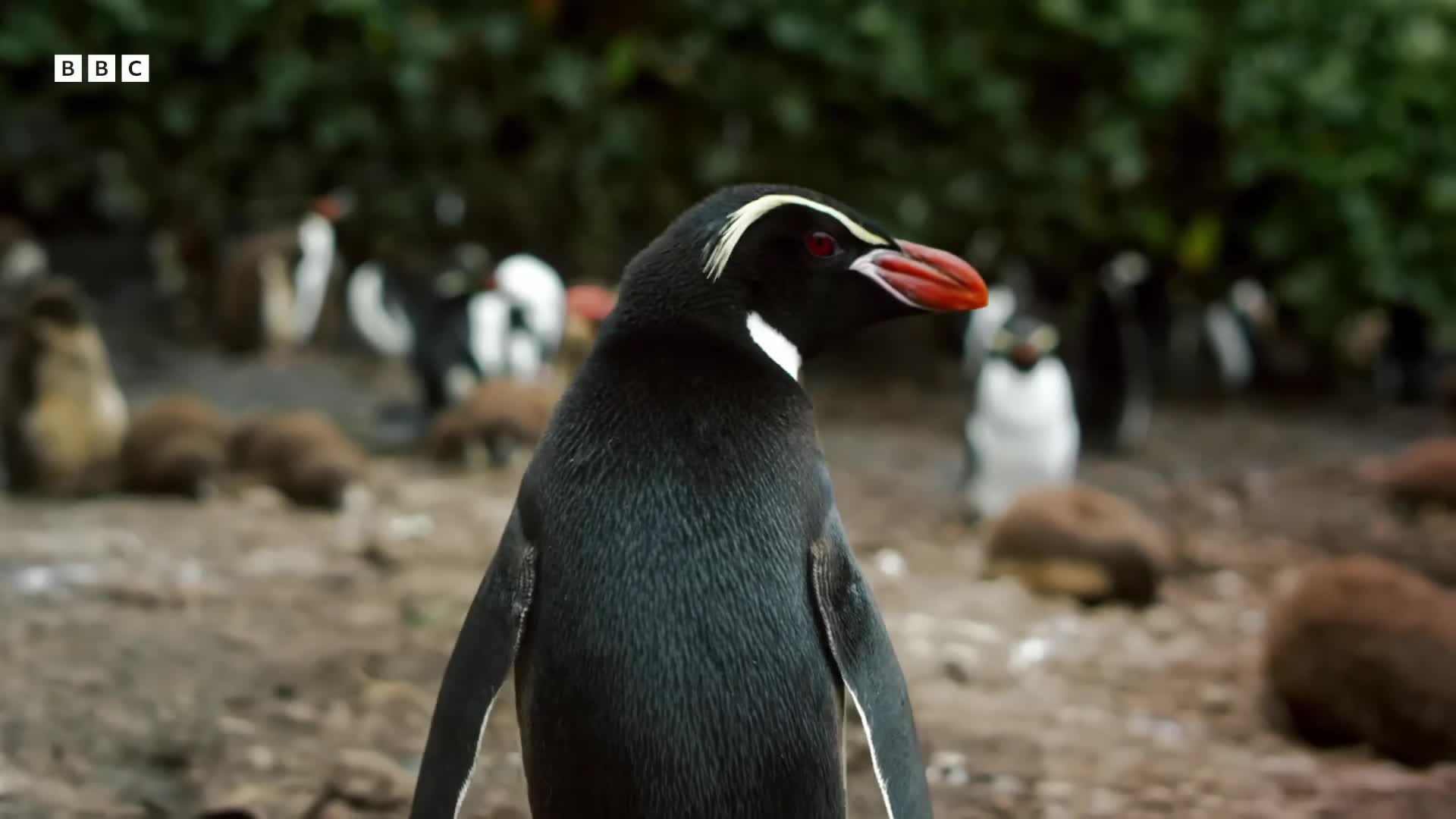
[The Survival Strategy of New Zealand's Forest-Dwelling Penguins]-[Muddy Penguins Get All Cleaned Up | Penguins: Meet the Family | BBC Earth]
📋 Summary
The Paradox of the Forest Sanctuary
New Zealand has historically served as a unique "sanctuary" for flightless seabirds, providing a rare environment with "no native land predators." This allows penguins to utilize inland forest clearings as a "safe haven for rearing their young." However, this evolutionary adaptation comes with a significant environmental cost: the prevalence of "mud." In these nesting sites, "thousands of tiny webbed feet" transform the forest floor into a "veritable quagmire," creating a constant struggle for the birds to maintain their physical health.
The Deadly Threat of Clogged Plumage
For a penguin, cleanliness is not merely a matter of aesthetics; it is a fundamental requirement for survival. The transcript highlights that "a penguin's feathers are crucial for waterproofing and insulation out at sea." When these feathers become "clogged with mud," the birds lose their ability to "regulate their body temperature." In the harsh conditions of the ocean, this failure in insulation can lead to a fatal outcome, as the penguins "could die from the cold." Thus, the very forest floor that protects them from terrestrial threats poses a direct risk to their physiological integrity.
The Ritual of the Penguin Baths
To mitigate the dangers posed by their muddy habitat, the penguins have developed a sophisticated grooming ritual often referred to as a "trip to the penguin baths." This process is essential for restoring the functionality of their plumage. After a "thorough rinse," the birds engage in a meticulous grooming process, spreading a "very special wax" through their feathers. This substance is "produced in a gland at the base of the tail" and serves multiple life-sustaining functions.
The Multi-Functional Benefits of Preening
The wax is far more than a simple cleaning agent; it is a multifunctional biological tool. By creating a "waterproof barrier," it ensures the birds remain insulated against the frigid ocean waters while simultaneously helping to "streamline" their bodies for efficient swimming. Furthermore, the wax is described as "antimicrobial," which serves as a critical defense mechanism by "deterring unwanted germs."
The Investment in Survival
While this grooming ritual is demanding—taking "up to three hours a day" for some individuals—it is a calculated biological investment. The penguins demonstrate a clear understanding of the trade-off involved in their lifestyle choices. By dedicating significant time to maintenance, they successfully manage the hazards of their environment, proving that the effort is "a price worth paying for their forest sanctuary." Through this complex interplay of habitat adaptation and rigorous self-care, these seabirds continue to thrive in their unique New Zealand home.

Deep Learning with ListenLeap


