Who's claiming power this election, what's happening in battleground states, and why do we still have the electoral college?
All this month, the Through Line podcast is asking big questions about our democracy and going back in time to answer them.
Listen now to the Through Line podcast from NPR.
Before we start, we want to hear your questions.
Now that the election is over and there will be a second Trump presidency, we want to know, what would you like us to cover?
Do you have questions about tariffs or immigration or presidential control of the Federal Reserve?
You can email us your questions about the economy to planetmoney at NPR .org, or tag us on social media.
Thanks. Here's the episode.
This is Planet Money from NPR.
Five years ago, we did an episode about the American dream.
What does it take to climb up that economic ladder?
And how real is that ladder, anyway?
Well, since then, there's been kind of an explosion in answers to those questions led by work from Raj Chetty and his team based at a Harvard.
They've got some new workout just recently.
So here's our original episode, and then we'll talk with Raj Chetty about the latest insight into the American dream from 2024.
Here is Karen Duffin back in 2019.
Once upon a time, in a cubicle not so far away, sat a government bureaucrat in his government -issued chair preparing for a very big meeting.
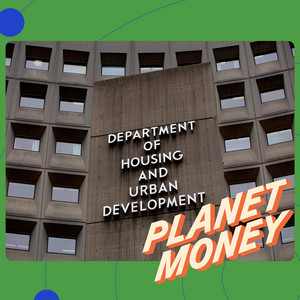
It was 1994, and Mark Schroeder was an economist at HUD, the Department of Housing and Urban Development, and his team in D .C.
had just flown in local public housing authorities from five major cities.
Baltimore, Boston, Chicago, Los Angeles, and New York.
The staff gathers in a basement conference room with about 30 people.
These are people who run what's now known as the Section 8 Voucher Program, which is a voucher that subsidizes rent for low -income families.
It's like a monthly payment to a landlord.
Families can wait years on waiting lists just to get one.
Everyone settles into their chairs, you know, sipping their government -brewed coffee, and the meeting starts.
They learn that they are about to join a test program, small in the scheme of HUD overall, but a huge change.
They're going to start handing out a new kind of voucher to a small group of their tenants, and then HUD is going to run an experiment on them.
Hasn't been an experiment quite like this ever before.
With the old vouchers, people could, at least in theory, move anywhere they wanted.
But people who get this new voucher, they are required to use it to move to what HUD calls low -poverty neighborhoods, so just a nicer neighborhood.
This is sort of a radical change for HUD.
A big part of the program had always been unlimited choice of neighborhood.
Unlimited in theory, at least.
But what the majority of tenants have chosen was to use the vouchers to stay in high -poverty neighborhoods for a lot of complicated reasons, including discrimination.
Landlords often refuse to take Section 8 tenants.
So back in the basement at HUD, as this big new idea gets introduced, I imagine people, you know, put down their government -brewed coffee and start raising their hands.
Like, why are we doing this?
Our job is to move people into housing, period.
Now HUD is basically asking them to reverse that, to move people out.
I couldn't believe the public housing authorities would go along with inducing turnover among their tenants.
Mark and the people running this meeting, they're like, yeah, I know, but now our job is to move people to opportunity.
You know, the government spends money across all kinds of programs just trying to improve people's lives, like give them better education or health or increase their income.
And the big idea that they want to test is, can we improve all of those things and more all at once just by moving a family somewhere new?
But, of course, to get the government to give money, you have to prove that it works.
If you want to really know whether this works or not, you need an experiment.
You know, control group, independent variable.
We will run an actual scientific experiment and we'll track the data for decades.
The only randomized experiment that tests the impact of neighborhood on people's lives.
Can changing someone's address change their life?
The answer to that seems very obvious, but this experiment did not at all go as planned.
Almost everything about moving to opportunity has been a surprise, not only to me but to practically everybody else.
Hello and welcome to Planet Money.
I'm Karen Duffin. Today on the show we are riding a social policy roller coaster.
Alongside the researchers who ran this experiment and the people they tested it on, people who were not always excited to be experimented on, it is a quest to make the American Dream a reality.
A quest that economists thought failed but is in the midst of an unexpected revival.
This message comes from Wwise, the app for doing things in other currencies.
Send, spend, or receive money internationally and always get the real -time mid -market exchange rate with no hidden fees.
Download the Wwise app today or visit wwise .com.
Tease and see's apply.
Alexi Horowitz -Gazzi here.
Sure, subscriptions offer convenience, but are they bad for competition?
When you're not canceling because you forget about it or it's difficult to cancel, those forces of consumers taking their business to another product are blunted.
That's from our recent Planet Money bonus episode, my extended interview with Stanford economist, Miel Mahoney.
Listen with NPR Plus at plus .npr .org.
Donald Trump has won the 2024 election.
How did it happen and what are his plans for a second term?
Find out by listening to the NPR Politics Podcast.
We'll keep you informed every weekday with the latest news from the presidential transition.
Listen to the NPR Politics Podcast.
Mark and this tiny band of public housing staff leave that conference room, go forth from DC and start signing up tenants.
The way it worked was this.
Tenants from the five chosen cities would be assigned by lottery to one of three groups.
Like any good experiment, there would be a control group.
This group already lives in public housing and they would stay in public housing, so no change to group one.
Group two would get a regular Section 8 voucher.
This is the rent subsidy that they can theoretically use with any landlord who will take it.
And group three. This group is the experimental group.
They would also get the Section 8 voucher, but they had to use it to move out to a completely different neighborhood.
One where just 10 % or less of their neighbors were what the government has classified as poor.
For context, most of them had been living in neighborhoods with about 50 % poverty.
So HUD was asking them to move to what should hopefully be a better neighborhood, but not everyone was excited about that.
There were some people who were praying, literally praying.
They would be in the regular voucher group because they did not want to have to find another place that far away, either socially or physically.
When HUD surveyed families about this, the family said, yes, we do want a voucher, but we want it just because we want to make sure our house is decent and we want to get into a safer neighborhood.
Only like number three or four was better schools for my children and better jobs for me.
Those were way down there.
For them, housing was just housing, not opportunity.
I think they didn't buy into the hypothesis we were testing.
Was that disappointing?
I have to say that I wasn't that surprised.
We're asking them to do something that people were not doing.
The vast majority of people who get vouchers do not use them to move to areas with lower poverty.
Also, Mark and his HUD crew were asking people to participate in a science experiment on themselves.
Asking them to be living test subjects for a theory they have not proven yet, which is an especially hard thing to take from the federal government, a government that has a history of intentionally segregating people of color into high poverty neighborhoods.
The experiment took years to set up, but in the end, about 4 ,600 families were part of it.
And in 1994, the moving began.
We were not able to talk to the families that moved, but NPR's Morning Edition did cover the study while it was happening.
Steve Inskeep spoke to a mother named Shirley Hudnall who had moved with her 15 -year -old son, Brian.
She talked to him about some of the things that do make these kinds of moves hard.
When Brian moved out of Baltimore, he lost touch with his friends.
He was expelled from junior high school for fighting with his new classmates.
I was like, have I failed or what is really happening?
And the thing that I found out that it was him having to adjust, feeling that I was taking something away from him until I really sit down and talk to him, that this was for his betterment.
For four years, across the five test cities, people like Shirley moved.
And the researchers waited.
And in 2008, the researchers finished gathering the data, and what it told them surprised them.
Impacts we expected, in many ways, didn't happen.
Impacts that we didn't expect that did happen.
For one thing, moving was better for girls than for boys.
Which we certainly did not expect.
Parents reported better health, something Hudnall hadn't even originally planned to measure.
Improved mental health and physical health.
We saw impacts on diabetes, obesity.
All of which, of course, is wonderful, but this is not what the experiment was designed to test.
What they wanted to test was the quote, long -term housing employment and educational achievements of families involved.
And this massive, scientifically designed and rigorously tested social experiment that had moved thousands of people.
Just to answer the question, can changing someone's address change the course of their economic life?
The answer to that question was no.
We did not find any impacts on children's test scores.
We did not find any impacts on grown -ups' earnings.
Basically no impact on educational outcomes, employment, or income.
If you want to improve those things, the final report said, housing is not your answer.
Housing is just housing.
And with that, all of the hopes and dollars and research and programs that had been going towards this idea about housing, a lot of that just got rerouted to other ideas.
But then this thing happened.
About four years after that final ZADMTO data came out, another researcher badged into his government cubicle, this time on the 10th floor of the IRS headquarters in D .C.
And like Mark, he wanted to understand how to improve people's economic lives.
We had been working with data at the IRS.
This is Nathan Hendrand.
He's an economist from Harvard.
And for a few years, he and some of his research pals had been granted access to tax records at the IRS with all kinds of privacy restrictions, of course.
Before this, I was working mainly with survey data sets where if you had 10 ,000 people in your data set, you were quite excited in this data.
You know, you're dealing with millions.
Having that much data allows them to be so much more precise.
And what that allows you to do is really kind of put a sharp knife into your analysis and really uncover patterns.
Nathan is trying to understand the impact of tax policies on upward mobility, which is economists speak for can you achieve the American dream?
Can a child go from the bottom income bracket to over time, the top income bracket?
And this is an issue that has become increasingly urgent.
Right now, the data says that you are twice as likely to be able to achieve the American dream in Europe, or at least a lot of countries in Europe.
So Nathan is looking at tax records from across the country, and he does start seeing a pattern, a pattern that surprised him.
That huge MTO study, it looked like it had missed something.
Something enormous.
Actually, I remember the day vividly.
After the break, the experiment that changed everything has to change.
Okay, so does this sound like you?
You love NPR's podcasts, you wish you could get more of all your favorite shows, and you want to support NPR's mission to create a more informed public.
If all that sounds appealing, then it is time to sign up for the NPR Plus bundle.
Learn more at plus dot NPR dot org.
From poll numbers to talking points to all the drama, we get it.
Election season can be a lot.
That's why here at NPR's Pop Culture Happy Hour podcast we're in the business of providing a little release from the squeeze of the political season.
Try out any of our shows on the latest in TV, movies, and music to keep you grounded and bring you back to Earth.
New episodes every week on Pop Culture Happy Hour only from NPR.
This message comes from Wondery and T -Boy.
The Best Idea Yet is a new podcast about the untold origin stories of the products you're obsessed with and the people who made them go viral.
Listen to The Best Idea Yet wherever you get your podcasts.
Okay, so Nathan Hendren was knee deep in all of this income tax data at the IRS alongside his researcher Pal Rajcetty.
So Raja and I were both working away at the Internal Revenue Service.
They'd seen this data that showed a pattern.
People who are rising from the bottom income bracket to the top income bracket aren't just randomly scattered across the country.
They're clustered. And your chances of escaping poverty vary widely depending on which cluster you're in.
So Nathan digs in deeper.
He's starting to look at families who moved into higher mobility neighborhoods.
The longer a child spent in a neighborhood with higher rates of upper mobility, the higher their outcomes were in adulthood.
Like let's say you have two kids and you move them to this better neighborhood and one of your kids is four when you move and the other one is eight.
You'd actually see higher outcomes on average for the four -year -old relative to the eight -year -old.
Where you live matters for whether you have a shot at achieving the American dream, which sounds terribly obvious.
But that contradicts what Moving to Opportunity found, that huge HUD study.
At that point we were of the mindset of, well, geez, we should probably get the MTO data.
Nathan starts to map income tax data from the actual MTO participants.
And this more precise MTO data confirms the pattern that they saw nationally.
In fact, the data is so strong that they can say the new neighborhood actually caused the person's economic improvements.
That's how much a change of address mattered.
But they also start to realize that it really only mattered for a subset of the MTO participants, only for kids who were younger than 13 years old when they moved.
And this explains why HUD missed this outcome.
Nathan was looking at the data in 2014.
HUD had last looked at this data six years before that, in 2008.
Back in 2008, you wouldn't have seen it.
There just weren't enough young children into the labor market where you'd really be able to say, oh, it looks like there's an effect here.
But wait five years and all of a sudden you can really start to see these patterns emerge.
Those younger kids had now grown up, started earning money, started producing income tax data, and they were finally grown up enough now for the data to reveal itself.
And what the data was saying was that housing had been hope.
Even though they had spent 14 years on this study, they had just counted it out too early.
It's so crazy how just by happenstance, kind of, you guys were studying this at a moment where you could actually see that.
Yeah, it's nice to get lucky sometimes.
What they found specifically is that kids who move under the age of 13, over time they earn about 30 % more.
Were 4 percentage points more likely to go to college?
Teen pregnancies, less likely.
The data also seems to indicate that these benefits will probably be passed on to their children.
This all did come with a caveat.
For kids who are moved when they're older than 13, they earn less over time.
The move is actually slightly harmful for that group.
But when you look at the younger kids, and over time as they earn more money, they pay more income taxes, and with that, the program actually looks like it pays for itself.
So Nathan and his research pals are looking at all of this really exciting data.
You could kind of feel that we had something that was going to change the way people thought about neighborhoods, and change the way people thought about inequality of opportunity in the United States.
They write all this up in a paper, they release it, and then...
Overnight we were inundated.
We got a lot of emails from people who were eager to think about what we should be doing to use housing policy as a way to think about improving upward mobility for children who are most disadvantaged.
Did you get a lot of those emails before this?
No. No, we did not.
Many of these emails are coming from people who work in public housing who are saying, look, now that we know that this thing works, we should reboot the original HUD program.
And Nathan is excited about that prospect.
But he does know that if they reboot this, there needs to be an important addition.
Because in the original program, way back in the 90s, people who were given vouchers on the condition that they had to move to a better neighborhood, more than half of those people just gave the voucher back, basically said, I would rather forfeit this than be told where I have to move.
So if Nathan wants this to be more than just a nice research paper with nice data about opportunity, someone will need to figure out how to get people to actually move to that opportunity.
So Nathan and his team, they start working with cities to basically reboot moving to opportunity.
The original MTO program, it required people who got the special vouchers to move to low poverty areas.
But in this reboot, families can choose to move wherever they want.
What Nathan and his team are trying to test is whether people have not been moving to opportunity because they don't want to, or is it just because they need a little support.
So in their first test city in Seattle, one group gets a voucher, and the other group gets a voucher, but also support.
A sort of housing counselor to help navigate things like transportation in the new neighborhood even helps cover security deposits.
These counselors also work with landlords.
Could this simple intervention get people to move voluntarily?
It didn't strike me as what would have been the most effective, going in.
But they tried it out in Seattle, and after a year, more than half of the families end up using the voucher in a neighborhood that has high upward mobility.
More than three times the number of people chose to move to an area with higher opportunity when they were given support from a counselor.
And all of this data from the original MTO study, this new one, was so compelling that the unthinkable happened.
Congress recently passed a bipartisan bill giving federal funds to replicate programs like this across the country.
Nathan and that team will also be expanding to new cities.
And yes, we do now know that housing policy can be hope.
Housing policy, we are sorry we underestimated you, thank you for your service.
But for now, we can probably only call it a sliver of hope.
Because the number of families whose lives are improving through this program is really just a tiny drop in a much bigger pool.
That is where we left the story back in 2019.
And since then, the researchers have been busy.
They're known as the Opportunity Insights team based at Harvard.
And they have put out a steady stream of papers that have made the director, Raj Chetty, into something of an economic rock star.
Our own newsletter writer, Greg Rozalski, called him the Beyonce of economics because each new paper is like an album drop.
Anyway, before we get to his latest release, we asked Raj Chetty himself to catch us up on the biggest hits or maybe findings since our original episode.
Yeah, so one of the basic findings that's emerged in this research over the past decade is that where you grow up plays an enormous role in shaping your long -term outcomes.
And what we've been focused on since identifying that result is trying to figure out why.
Is it because of resources available in the area, the quality of schools, the quality of jobs, public transit?
Is it about who you're interacting with, who you're influenced by?
And what we found in a nutshell is that social capital, who you're connected to, and in particular, the amount of interaction between low and high -income people in a given area, is one of the strongest predictors of differences in economic mobility.
His new paper, called Changing Opportunity, is about how the gap between rich and poor is changing over time.
So is it more or less likely that a poor kid will end up rich?
So to do this, they looked at data from 57 million people born between the late 1970s and early 1990s.
We find that in some places and for some subgroups, black Americans, for example, growing up in low -income families, they now have better, slightly better chances of rising up than they did in the past in many places.
White kids growing up in low -income families, unfortunately, have worse chances of rising up than they did in the past.
So what is leading to these disparate changes across subgroups, across areas?
We looked at many different factors.
And what we find is that there's one variable that strongly predicts these differences, which is the change in the share of parents who are working in these subgroups in the area in which you grew up.
So if you grow up in a community where more of the adults are working, you have more of a shot at rising up.
And over time, low -income white communities saw steep drops in employment rates compared to black communities.
The black -white gap in economic mobility has fallen by one third.
In part, because poor white communities are falling behind where they used to be.
It comes back to the influences of social interaction.
If you're growing up in a thriving community where lots of adults can inspire you to pursue a career in engineering or connect you to an internship opportunity or give you a sense of what kind of college could be good for you, that puts you on a very different trajectory than if you're growing up in a community
where all of those things have disappeared.
Raj says he was surprised at how fast some places changed in just over a decade or so.
Some communities created more opportunity, many low -income black communities, for instance.
And even if some other ones changed in the wrong direction, the idea that opportunity can change in a given place is hopeful to him.
That's what this most recent study shows titled Changing Opportunity.
It's actually possible to change places and make them higher opportunity areas for the kids living there.
He says the biggest and most powerful way to find opportunity for a given kid from a poor family is still to move to opportunity.
But he's making progress on figuring out what changes opportunity in a given place.
So you can watch for more studies to drop on that front over the next few years.
Now that we know who will be president in 2025, help us make episodes that you want to hear.
What questions do you have about a second Trump presidency?
Email us at planetmoney at NPR .org or message us on social media.
We are at Planet Money.
Today's episode was originally produced by Aviva de Kornfeld and edited by Brian Thirstat.
This update was produced by Sean Saldonia and it was fact -checked by Sierra Juarez.
Our executive producer is Alex Goldmark.
I'm Amanda Oronczyk.
This is NPR. Thanks for listening.
Do you feel like there's more on your to -do list than you can accomplish?
Or maybe the world's problems feel extra heavy these days.
We can't eliminate stress, but we can manage it.
It's almost like I have a new operating system now.
Like I tend to live more in this light.
Stressless, a quest to reclaim your calm, a new series from NPR's Life Kit podcast.
If you need a moment to catch your breath and calm your nerves, listen to the latest All Songs Considered from NPR Music.
We've got an all -new mix of songs to slow the blood and recalibrate your day.
Plus, reflections on gratitude, joy, and the power of kindness.
Listen to new episodes of All Songs Considered every Tuesday wherever you get podcasts.
Read about the impact of Women in Music with NPR's new book, How Women Made Music, a revolutionary history from NPR Music.
This stunning anthology offers original writing and illustrations, interviews, and photos.
And the audiobook includes 52 years worth of interview excerpts with more than 60 legendary artists.
Visit npr .org slash How Women Made Music to order now.