This message comes from NPR sponsor Capella University.
Interested in a quality online education?
Capella is accredited by the Higher Learning Commission.
A different future is closer than you think with Capella University.
Learn more at capella.edu.
Hey, it's Stephen Thompson.
Just a quick thing before we start.
This is a special bonus episode of Pop Culture Happy Hour.
Usually these mailbag episodes are just for our very special Pop Culture Happy Hour Plus supporters, but in the spirit of the season we thought we'd give everyone a sneak peek into the fun we're having with these every month.
If you're already a PLUS supporter, thank you so much.
It means a lot to us.
But if you're not yet, we hope you'll consider joining.
It's a great way to support NPR and public media.
Go to plus.npr.org slash happy to join now.
Okay, here's the episode.
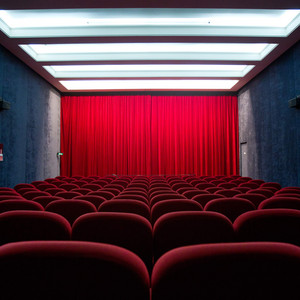
What's a movie we hated so much that we walked out on it?
We've got another question from a listener in our mailbag today.
I'm Aisha Harris.
And I'm Stephen Thompson.
We are here to talk about the things that make us give up on a movie in this bonus episode of Pop Culture Happy Hour from NPR.
All right.
Well, we are, of course, back with another episode just for you, our special plus supporters.
Thank you for being supporters.
You've been sending in all your questions for us, Core4.
And today, Stephen and I are going to tackle another one.
Are you ready, Stephen?
Aisha, I am so ready.
Yes, this is a, I think it's a fun question.
Today's question is from Kelly E. And Kelly asked, have you ever walked out on a movie?
And if so, what was it?
Okay, Steven, I need to know.
What was it?
So, Aisha, I am a dead ender.
First of all putting this out there up front I've been doing Pop Culture Happy Hour for more than 15 years and certainly have never come close to walking out of a movie that I was seeing for work.
If I'm seeing something for work, I'm a dead-ender.
Maybe once the credits start rolling, I'm like, I'm not staying to see if there's a closing scene.
That is the extent of my... It's not the extent of my spite.
Nothing can contain my spite.
But it takes an emergency for me to even get up and go to the bathroom during a movie that I'm seeing for work.
I really don't like to miss anything.
So the list of movies that I've walked out on It's extremely short and it's kind of embarrassing because the only reason that I've ever walked out or seriously considered walking out is more based on the traumatic nature of the content than the quality of the film.
I would love to... to be able to say, I walked out of Cats.
That movie stunk.
But I stayed arms folded and didn't miss a thing.
Even if I had been seeing it for pleasure, I wouldn't have walked out.
There's one movie I almost walked out on and one movie I did walk out on, and they're both classics.
Okay.
Let's hear it.
I need to hear it.
So the one I almost walked out on was Slumdog Millionaire.
Oh, interesting.
Slumdog Millionaire, Oscar winner, best picture, had been billed to the world.
I was not seeing it for work.
Had been billed to the world as a colorful, dynamic romp full of magical dance routines and bright joy.
And the first 45 minutes are children being tortured.
Right.
Okay, yes, I vaguely remember that aspect of it.
Yeah, not my favorite.
Not my favorite thing to sit through.
I was like, did I walk into the wrong movie?
What are people talking about?
And eventually it kind of pivots to the game show, and then it's fun and fine.
But, like, there is so much scene setting of children being exploited and tortured.
And the person I was with at the theater and I were like, should we leave this?
This is excruciating.
And we stuck it out, stayed, ultimately was like, okay, I see what people are talking about.
But boy, those first 45 minutes are pretty rough.
The movie I did walk out on, and I will say I was like 18 or 19 at the time.
I was on a date.
The movie I walked out on was A Clockwork Orange.
It was a campus screening of A Clockwork Orange at the University of Wisconsin-Madison in like 1990 or 91.
Like the Campus Film Society was showing it.
I'm like, oh, I've heard good things about this A Clockwork Orange.
Didn't know anything about it.
You never had to read the book in school?
No.
Oh, Aisha, if I could get out of reading a book, I will find a way.
And so I was like, well, you know, there were posters of it up in people's dorm rooms.
It was like a cool thing.
And I was like kind of trying to catch up on stuff I'd missed.
And what I didn't know and didn't realize was, of course, very early in that movie there is a giant crime spree which includes a brutal sexual assault.
Yeah.
And my date and I did not want to watch that and walked out on the movie.
And you know I feel like a very, very bad cinephile for admitting that, you know, because obviously not only is it a classic movie, but it's a.
It's an embarrassing movie to say you walked out on.
And I wouldn't admit it if I weren't specifically tasked with the assignment of telling our Pop Culture Happy Hour, Plus subscribers.
What movie I've walked out on.
But that is and remains the only movie I've ever walked out on.
This message comes from Dell Technologies.
Your new Dell PC with Intel Core Ultra helps you handle a lot when your holiday to-dos get to be a lot.
Get yours at dell.com slash deals.
This message comes from NPR sponsor, Capella University.
Sometimes it takes a different approach to pursue your goals.
Capella is an online university accredited by the Higher Learning Commission.
That means you can earn your degree from wherever you are and be confident your education is relevant, recognized and respected.
A different future is closer than you think with Capella University.
Learn more about earning a relevant degree This message comes from ServiceNow.
People should do the creative work they actually want to do, not boring busy work.
Now, with AI agents built into the ServiceNow platform, you can automate millions of repetitive tasks in every corner of your business IT, HR and more.
So your people can focus on the work that they want to do.
That's putting AI agents to work for people.
It's your turn.
Get started at servicenow.com slash AI dash agents.
This message comes from Progressive Insurance.
You chose to hit play on this podcast today.
Smart choice.
Make another smart choice with AutoQuote Explorer to compare rates from multiple car insurance companies all at once.
Try it at progressive.com.
Progressive Casualty Insurance Company and affiliates.
Not available in all states or situations.
Prices vary based on how you buy.
This message comes from Babbel.
Babbel's conversation based language technique teaches you useful words and phrases to get you speaking quickly about the things you actually talk about in the real world.
With lessons handcrafted by over 200 language experts and voiced by real native speakers.
Start speaking with Babbel today.
Get up to 55% off your Babbel subscription right now at babbel.com slash NPR.
Spelled B-A-B-B-E-L dot com slash NPR.
Rules and restrictions may apply.
Wow.
Okay.
So Slumdog Millionaire, I have not seen since it came out.
I do remember liking it, although the soundtrack slaps.
Love the soundtrack.
It's great.
Totally slaps.
Have listened to that many times.
And A Clockwork Orange, I feel like you have a good reason for that because it is a difficult watch.
I love that movie.
I actually recently rewatched it again, when I was in Amsterdam and a local theater was showing and I was like oh, I haven't seen this in forever.
I want to go see it.
And I think it still holds up.
I think you should give it another chance, Stephen.
I'm not sitting here like folding my arms like that movie's bad.
No, I know.
But like, I don't know.
It just feels very relevant.
I mean, even then it did.
But it's so good.
Anyway.
I am with you, Stephen, on the whole.
I'm a dead ender.
I'm the same exact way about bathroom breaks.
If it's the first time I'm seeing a movie, I will, no matter how bad my stomach might be kicking me, I will sit there.
The one exception I had most recently was when I saw the Mission Impossible.
Who knows?
I assume there are like 20 words and six colons.
Basically, that movie's like so, so long.
And I knew it was going to be long.
And I had to go.
And I was like, you know what?
Nothing is happening in this movie.
So I'm probably not going to miss anything by going for five seconds.
The one time I've walked out was Avatar, The Way of Water.
Wow.
Okay.
So I hated the first Avatar.
You never learned The Way of Water.
Well, no.
Hold on there.
I did.
I had to.
Okay.
Avatar The Way of Water.
And I didn't go to a press screening beforehand.
And it was Christmas Day.
My partner and I were just like, so why don't we just go to a movie?
There's not much to do.
Let's just go to the movie.
Oh, and they're showing it in 4DX near us.
I was like, if I'm going to see this movie, at least it'll be an experience.
Go there, had our drinks, sitting in the seat, and did not realize this is my first 4DX experience.
Did not think about the consequences of having a drink while sitting in seats that move.
And it was like the most miserable experience.
Plus, the movie was boring.
And about an hour in, I was like, this is not fun.
Let's go.
I want to spend my Christmas doing anything but this.
So we left.
And it was great.
We got some Indian food afterward.
It was lovely.
Of course I did wind up having to see it later because It's nominated for Best Picture and it's the Pop Culture Happy Hour law.
Yes, yes.
So our law here at Pop Culture Happy Hour is if it's nominated for Best Picture...
We do have to watch it.
And so I wound up watching it at home.
I got a press screener of it later on.
I mean it had a lot to do with not actually liking the movie, but it also had to do with all these other factors.
And I think that's like where I come down to, which is why the two that I came so close to walking out of
They really kind of prove my point of, like, I will sit through pretty much anything no matter what.
And I will also do this at home, too.
Like, once I start a movie at home, I also, for the most part, will not stop it.
Mother!
Exclamation point.
Oh, man.
I saw that in a theater.
Yes.
I saw that in 2017.
This is, of course, the Darren Aronofsky movie.
Aronofsky doing his, like, take on Rosemary's Baby with Jennifer Lawrence.
I couldn't quite spot the metaphor in that movie.
Yeah, I will never forget that.
My partner and I were visiting London at the time, staying in an Airbnb that was right across the street from this historic movie theater in Brixton.
It's called the ritzy picture house.
And I was like.
Anytime I'm traveling outside of the country, I try to go to a movie theater to to just like get that experience.
And so mother was playing.
I went into it.
You know here, having heard about it, I was, I think, 45 minutes in.
We both looked at each other and we're like, Oh my God, what are we doing?
But we stayed through the whole thing.
Um, also Terrence Malick's the tree of life.
I almost walked out of, I hate that movie.
I have such a hard time with late era Malick.
Honestly, you could replace Tree of Life with also Night of Cups, Song to Song.
Like I almost walked out of all of them in a theater.
I mean, the Tree of Life is not speed.
Well, once we got to the dinosaurs, I was like, oh my God, what is happening?
And again, it comes down to both of those movies are kind of experimental.
They're, well, in Terrence Malick's case, they're very slow.
And in Mother's case it's just like from Mother, Remember.
It's just like chaos chaos chaos violence violence, violence and just a lot of screaming and awful things happening.
And that's not a pleasant experience for me.
But at the same time I kind of want to see what's going to happen, like where this is going to lead.
And I am a completist.
And so I will finish.
I will finish those movies.
And I don't know how you feel about this Stephen, but like I'm less I'm absolutely less dogmatic about this when it comes to TV shows.
Like I will finish,
Oh, Aisha.
It's different.
I will drop out of a TV show at the slightest provocation.
Unless we're covering for work.
And never go back.
That's the exception.
Again, unless we're covering it for work.
But very often a show that I will watch super diligently right up to when we tape the episode.
The frequency with which I have never gone back is really, really high.
I do think it's interesting Aisha, that when we're talking about movies we walked out on or came very close to walking out on, We're talking about films by some enormously acclaimed and accomplished filmmakers.
I walked out on Kubrick and almost walked out on Danny Boyle.
You walked out on James Cameron and almost walked out on Darren Aronofsky and Terrence Malick.
I just think it's just interesting that it's like you sat there arms folded through the entirety of Baby Geniuses.
Well, I think I just have a lower tolerance for directors who are quote-unquote auteurs, who film bros especially love to salivate over and who, to me, make things that are either completely inscrutable and or are just really kind of boring and slow.
And I hate to be that person but also these movies, especially Avatar and, from what I remember, of Tree of Life.
They are two-plus hours long.
So it's like you are asking... Oh, yeah.
Both Avatar and Tree of Life are very long.
Right, so you're demanding a lot of my attention.
And I see them because I feel like I have to, because they are the quote-unquote archers.
But I really should have known going into Mother.
At least that was just not gonna be my joke, because I have never been an Aronofsky person.
Black Swan is fine.
That is what I do think I need to revisit, but everything else he's done has just not been for me and Terrence Malick post, I don't know.
Really post the 80s, I've just kind of struggled with.
So I'm curious if other people have the same sort of measurement or if they have standards.
Because you and I don't really have any like standards rules about how we do it.
Well, it's just like it just feels like you if you pay the money or if like.
Yeah, there's an element of sunk costs.
Absolutely, sunk cost theory.
Yeah.
Yeah, with movies where it's like if I got up and parked and cleared the time in my schedule.
I think the factors that would be the likeliest to cause me to walk out of a movie that thankfully have never happened, at least so far as of this taping are things like if I got a text with a family emergency, if I suddenly had some sort of medical crisis.
Right, right.
You know, if I somehow, very foolishly I have pretty strict rules about not going into movies having had drinks and certainly anything I'm seeing for work I'm going to go into with a clear head
Right.
But if I, yeah, if I'd had a few drinks and the seat was shaking the way that it sounds like it was for Avatar, I could see situations where I felt I had to walk out.
Yeah.
But I think I'm pretty big into the whole sunk cost thing.
And the last thing I'll say about this is is for me, can I judge something if I haven't seen the whole thing of it?
And if I want to say that this movie is bad for whatever reason, then I feel like I have to have seeing it all the way through and seeing how it ends and how the director carried it through.
Well, if it's a bad movie, I want to be able to talk smack about it.
Yeah, exactly.
I don't want somebody to be like, the last 10 minutes of Cats are amazing.
I don't want to miss a thing.
Yeah.
In the words of Aerosmith, you don't want to miss a thing.
Well, those are the movies we walked out on and almost walked out on.
And if you have any more questions for us, you can bring us your best cultural debate or ask us something you've always wanted to know about the show.
Write us at pchh at npr.org and we may answer your question in a future bonus episode.
Again, our email is pchh at npr.org.
That brings us to the end of our show.
Stephen, thanks so much for being here.
Thank you.
And thank you again for being a plus supporter.
It truly, absolutely does make a difference for us.
This episode was produced by Chow Tu and edited by our showrunner, Jessica Reedy.
Hello, Come In provides our theme music.
Thanks so much for listening to Pop Culture Happy Hour from NPR.
I'm Ayesha Harris, and we'll be back with another bonus episode next month.
This message comes from NPR sponsor Capella University.
With Capella's FlexPath learning format, you can set your own deadlines and learn on your schedule.
A different future is closer than you think with Capella University.
Learn more at capella.edu.
This message comes from Mint Mobile.
At Mint Mobile, their favorite word is no.
No contracts, no monthly bills, no hidden fees.
Plans start at $15 a month.
Make the switch at mintmobile.com slash switch.
That's mintmobile.com slash switch.
Upfront payment of $45 for 3-month 5GB plan required.
Equivalent to $15 a month.
New customer offer for first 3 months only.
Then full price plan options available.
Taxes and fees extra.
See Mint Mobile for details.
This message comes from Bombas.
Treat your feet right this season with merino wool, cashmere, long staple cotton, and more.
Premium materials, better basics.
Visit bombas.com slash NPR and use code NPR for 20% off your first order.