
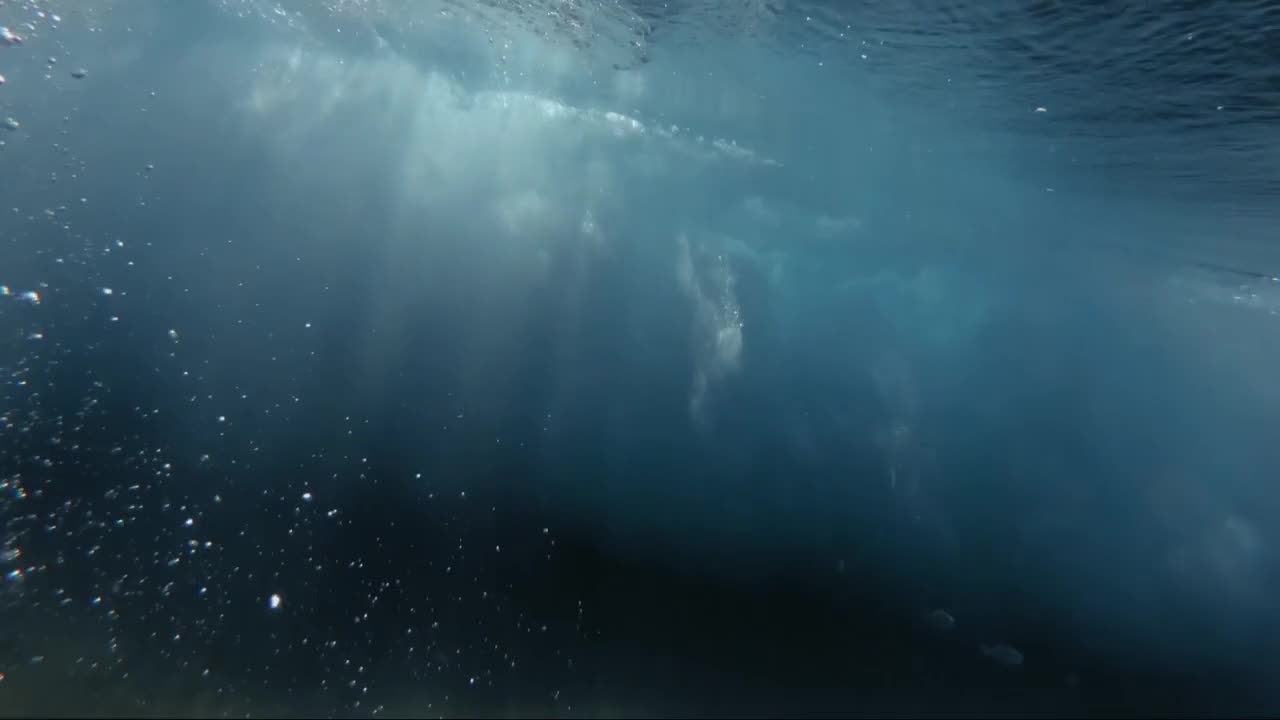
[The Silent Frontier: Finding Inner Peace in the Depths of the Ocean]-[The Most Beautiful Free Diving in the World]
📋 Summary
Embracing the Last Quiet Place
The ocean is often romanticized as the "last quiet place on Earth," a sanctuary that offers a profound stillness inaccessible in our daily lives. For the speaker, this environment is not merely a physical location but a psychological landscape where silence acts as a teacher. By learning to "slow down enough to listen," one discovers that the "space between two breaths" is where true clarity resides. This stillness serves as a necessary counterbalance to the "chaos in a very loud world," providing an antidote to the relentless noise and busyness that define modern existence.
The Alchemy of Facing Fear
Paradoxically, the journey into the deep begins with a confession of vulnerability. The speaker admits to a "deep fear of the ocean," specifically citing the "strong currents" and the "darkness of the water" as primary sources of anxiety. While the "surface is my comfort zone," the act of free diving becomes a deliberate practice of confronting these trepidations. By choosing to "sink" despite the fear, the speaker experiences a deepening of the "connection between my body and the earth." This suggests that personal growth is found precisely where one’s comfort zone ends and the unknown begins.
The Underwater Spacewalk: A Parallel to the Cosmos
There is a striking comparison drawn between the depths of the ocean and the vastness of outer space. The speaker highlights a fascination with the "striking beauty" and the "vast unknown" of the cosmos, noting that free diving evokes a similar sense of "danger and discovery." The descent is described as a "spacewalk," where the diver experiences weightlessness and a detachment from terrestrial concerns. In this realm, the diver encounters "alien creatures," framing the underwater experience as an exploration of an extraterrestrial-like frontier. This perspective transforms the act of diving into a meditative expedition, where one feels like an "astronaut" navigating the blue void.
The Rhythmic Dance of Existence
Survival underwater is governed by a delicate, internal tempo. The speaker describes the experience as a "dance between breaths," where the "tempo of my heartbeat decides how long I get to stay." This biological constraint forces a unique level of mindfulness; one cannot escape the reality of the present moment when their time is literally measured by their pulse. This rhythmic engagement with the environment is what makes the speaker "feel alive."
Solitude and Non-Verbal Connection
Finally, the underwater world redefines the nature of human interaction. The speaker notes that "friendships cultivated in the underwater world need fewer words," suggesting that the shared experience of the "unknown depths" and the "immensity of so much space" creates a bond that transcends verbal communication. In a society that relies heavily on constant chatter, the silence of the ocean acts as a medium for authentic connection. By leaving the "busyness of life" at the surface, the diver finds that the most profound human and environmental connections are those that exist in the quiet, wordless spaces.

Deep Learning with ListenLeap


