Hey Proof listeners, I want to tell you about Ooni's outdoor pizza ovens.
I'm absolutely obsessed.
I bought one last year and have been making restaurant -quality pizza in my backyard ever since.
And now I'm jealous because Ooni has introduced two bigger, better, and smarter pizza ovens.
The portable 14 -inch COD2 range from Ooni is the next generation of outdoor gas -powered home pizza ovens.
The other new arrival is the made -for -entertaining 18 -inch Coda 2 Pro.
They're both powered by innovative G2 gas technology for improved heat distribution and a consistently epic pizza every time.
There's nothing like baking in a 950 -degree Fahrenheit oven.
This temperature range lets you cook everything from burgers to a whole roast chicken, not just pizzas.
You can even get real -time temperature readings direct to your phone from the Bluetooth -enabled Ooni Connect digital temperature hub, which is sold separately.
The CODA II ranges really are bigger, better, and smarter.
Learn more at Ooni .com.
That's O -O -N -I dot com.
In case you haven't heard, it's officially an Abercrombie summer.
The A &F Vacation Shop has everything on your packing mood board. I desperately need their new one -piece, the A &F Marina.
It's strapless, so flattering, and paired with denim shorts will be my go -to beach outfit this summer.
Finally, your suitcase isn't complete without finding that dress.
You know, the one for the photo shoot.
Abercrombie's boho dresses have that perfect beachy romantic look.
Make it an Abercrombie summer.
Shop their newest arrivals in -store, online, and in the app.
Hey, business owners.
We know you know the importance of maximizing every dollar.
With the Delta SkyMiles Reserve Business American Express Card, you can make your expenses work just as hard as you.
From afternoon coffee runs to stocking office supplies and even team dinners, you can earn miles on all your business expenses.
Plus, you can earn 110 ,000 bonus miles for a limited time through July 16th.
The Delta SkyMiles Reserve Business Card. If you travel, you know.
Minimum spending requirements and terms apply.
Offer in 7 -16 -25. many of my strongest food memories date back 50 plus years to my grandmother's kitchen my nana encouraged my early love of cooking and often invited me to put my hands to work layering ingredients to make her towering lasagna shaking just fried zeppole in a brown paper bag to coat them with powdered sugar rolling sticky meatballs between my palms palms. I happily remember pressing squishy pizza dough into her beaten -up sheet pan, blackened by use over many decades.
After Nana carefully ladled tomato sauce across the dough, it was my turn to shower our creation with shredded mozzarella.
A lot of mozzarella.
This pizza is what I would come to understand as comfort food.
And I don't mean all pizza.
I mean this pizza, the one made by Nana.
Each time I stepped through the door of Nana's kitchen, little else mattered.
Making pizza together wasn't just satisfying, it was primal.
Today on Proof from America's Test Kitchen, we travel halfway across the globe to find solace in cooking together.
I'm Jack Bishop. Warning, there's some gooey, cheesy bread ahead.
At Capella University, learning online doesn't mean learning alone.
You'll get support from people who care about your success, like your enrollment counselor, who gets to know you and the goals you'd like to achieve.
You'll also get a designated academic coach who's with you throughout your entire program.
Plus, career coaches are available to help you navigate your professional goals.
A different future is closer than you think with Capella University.
Learn more at capella .edu.
This episode is brought to you by LifeLock.
Between two -factor authentication, strong passwords, and a VPN, you try to be in control of how your info is protected.
But many other places also have it, and they might not be as careful.
That's why LifeLock monitors hundreds of millions of data points a second for threats.
If your identity is stolen, they'll fix it, guaranteed, or your money back.
Save up to 40 % your first year.
Visit LifeLock .com slash podcast for 40 % off.
Terms apply. Reporter Sarah D.
Collins brings us today's story.
I tried Kachapuri for the first time in February 2020, weeks before the pandemic shut the world down.
My roommates and I, still baby New Yorkers and in the thick of our grad programs at Columbia Journalism School, decided to have a night out.
We landed on Chama Mama, a trendy Georgian restaurant in Chelsea.
By the way, that's Georgia, the country, situated at the bounds of the Middle Middle East, Europe, and Asia, not the peach state.
My roommate had been to Chama Mama before, so she took care of ordering for the table.
A few minutes later, our server dotted the tablecloth with various Georgian staples, Kinkali dumplings, lamb -stuffed grape leaves, and then a show -stopping bread dish.
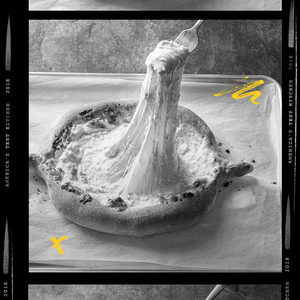
It was bowed out and hollow in the middle, with rounded points on either side, like a boat and in it sat a pool of bubbly melted cheese and a single uncooked egg yolk do you want me to mix the kachapuri our server asked slipping in a thick slice of butter we nodded mouths already salivating the server used her fork and knife to whisk the butter and yolk throughout the cheese occasionally lifting a utensil high in the air to show off long cheesy pulls as she scraped her tools clean, she instructed us to tear off pieces of the bread and dunk them into the concoction.
It was a group eating experience, meant to be shared.
I ripped off the corner closest to me, dipped it in the curdley lava, and popped in the first bite.
The briny cheese, savory egg, and doughy bread zinged through my mouth with a velvety, brackish flavor.
Oh my god, I thought, before uttering the most sacrilegious words a New Yorker could possibly say.
This stuff is better than pizza.
From that night on, Chama Mama became one of my favorite restaurants in New York.
When restaurants were doing takeout only during the pandemic, and when my friend got laid off, we went to Chama Mama.
When another friend's parents came to visit, and when I wanted to have a small birthday get -together, Chama Mama was my pick.
Regardless of my mood, the season, or the reason for dining, I always order kachapuri.
And I always go with a few close friends, the co -captains of my cheeseboat.
Fast forward. It's the end of 2024.
Nearly five years after encountering one of my favorite foods in New York, I found myself on a plane headed for Tbilisi, Georgia.
Up in the air, I daydreamed of creamy, velvety, cheesy kacha puri.
I was going We were going to Georgia for my friend Max's wedding, and I was excited to celebrate his love, but also, let's be real here, I had an ulterior motive for splurging on the destination wedding.
I was about to try my favorite dish in its land of origin, the cacha -per -real deal.
I touched down late on a rainy autumn evening.
As I deplaned, I was greeted by a sign on the floor that read, Tbilisi, the city that loves you.
I could use some extra love right now, I thought.
Lately, life had been stressful and I really needed a vacation.
I was ready to drown my anxieties in a pool of bubbly Georgian cheese.
I grabbed my luggage and ordered a taxi.
On the 30 -minute drive to the bride's apartment, I made a few observations.
The first was how many Dunkin' Donuts I saw.
Did I royally mess up and fly to Boston by mistake?
The second observation was the shocking billboards we passed.
I don't speak Georgian, but the messages conveyed themselves clearly.
One sign showed two cities, a vibrant Georgian one on the right and a devastated, heavily bombed Ukrainian one on the left. A second billboard had six men with belts around their necks, held like dogs in the grips of an unseen figure.
It was clear that these billboards were political ads.
On one side was the ultra -conservative Georgian Dream Party, which took a pro -Russian stance, it said, to avoid a similar fate to Ukraine.
On the other were more centrist parties like the Coalition for Change, which sought to buck Russia and join the European Union.
The fight was dirty.
There were already accusations of ballot stuffing and voter intimidation.
Max and his bride Keti had warned their guests to leave no more than a few days after the ceremony.
ceremony. Georgian parliamentary elections were scheduled the week after and were expected to be contentious.
If I thought I was getting away from divisive national politics on this trip, these billboards were my reality check.
I'd barely put my bags down at Ketchy's apartment when she asked if I was hungry.
If you're ever invited to a Georgian person's home, by the way, you should definitely come with an appetite.
Hospitality is a hallmark of Georgian culture, and eating their delicious offerings is pretty much a non -negotiable.
Your host will have plates of food for you and they won't stop feeding you until you're absolutely stuffed.
To decline would be, quite simply, rude.
Not that I was upset about it.
Recall aforementioned Kochapuri daydreaming.
Keti's mom offered me a glass of wine.
I nodded eagerly. Georgia, after all, is the birthplace of the libation.
The country's grape cultivation can be traced all the way back to 8000 BC.
Most Georgian houses even have their own mini vineyards for backyard winemaking.
What a country. Do you want some kachapuri, they asked next.
I haven't even been here for an hour and I'm already going to try authentic Georgian kachapuri in the country of Georgia.
I felt my salivary glands ramp up.
But then I was handed a plate full of what looked like cheese -stuffed pita bread.
I thanked my host, trying to mask my confusion.
I took my first bite and, don't get me wrong, it was tasty.
I mean, you can't really go wrong with bread and cheese.
But it wasn't anything like the kachapuri I had tried back in New York.
I'd soon learn that each region of Georgia has its own version of kachapuri.
Some are like puff pastry, some like calzone or pizza.
and all have a variety of different cheeses and cooking styles.
That boat -shaped dish I gorge on in New York I learned is called Ajaruli khachapuri, originating from the region Ajarra.
It's arguably the most popular version internationally.
Ajarri and khachapuri, it's very, very specific, you know?
This is Guram Bogdoshvili, a 2019 Go Molo Chef of the Year and a Georgian native.
He's a big deal in Georgia.
He hosts competition cooking shows and cooking travel shows, and he deeply loves his culture's food and history.
We eat every kachapuri every day, but the Ajarian kachapuri we go to visit to Ajar just for eating in Ajar, Ajarian kachapuri.
Guram says even Georgians will make the trek to Ajar to have authentic Ajaruli kachapuri.
That's how iconic it is.
Ajar borders Turkey and the Black Sea, and it's home to the nation's largest seaport.
Ajaran families have historically relied on black sea fishing for work.
It's also the food for gods because we offer for the black sea.
The story goes that centuries ago, Ajaran wives would shape the kachapuri into a boat and send it off with their husbands to eat at sea.
The egg yolk was a symbol, a sun on a clear day.
It was a way of wishing them favorable sailing weather.
Talk about love. love.
Keti may have clocked my disappointment while I ate the pita -style kachapuri, but I was reassured.
Just like me, Tbilisians love the Ajara version too, and I'd definitely be able to indulge on my trip.
And at that moment, I made myself a promise.
While in Tbilisi, I wanted to taste the very best ajaruli kachapuri I could find.
My friends and I got up early the next morning to explore the winding cobblestone roads of Tbilisi.
Our first stop was a cafe called Cheduna.
We settled by a window overlooking the street.
Next to us sat an empty wine bottle with two flags poking out.
One, the red and white Georgian flag, the other, the blue and yellow Ukrainian one.
There wasn't any kachapuri on the menu, but no matter.
I'm the kind of person that has to eat breakfast foods for my first meal of the day no matter what.
So I ordered an egg dish, a salad, and some naturally carbonated mineral water, a Georgian specialty.
They were simple recipes, but rich and delicious.
Each ingredient tasted incredibly fresh, and I'm not exaggerating when I say that the tomatoes were the best I've ever tasted.
I'm still dreaming about them.
To Guram, my reaction makes perfect sense.
Georgian food, he says, is all about showcasing the ingredients.
If you look at Georgian and all of the starters and dips, how we cook, you go to garden, you create tomato, potato, or beans, you put the walnuts, you put the coriander and a little bit salt and pepper and you create the food.
In the Georgian cuisine, you eat everything fresh.
When you talk to Georgians about their food, they all say the same thing.
It's healthy. Yes, even the cheese and bread based khachapuri.
And while I'm skeptical that eating melted cheese and bread every day is good for me, there is some merit to their thinking.
Georgian land, I found out, is abundantly fertile, allowing for agriculture to thrive.
For one, the country has a ton of different biomes, including wetlands, glaciers, volcanic areas, coastal habitats, and a ton of mountains, which lead to some seriously rich soil.
Like, really rich. Apparently, Georgia, this tiny country of less than four million people, has nearly every type of soil in the world.
And that nutrient -rich soil grows nutrient -rich crops, which is more flavorful than I'm used to.
You can really taste the difference.
And when you have livestock eating this nutrient -rich food, they produce some seriously tasty meat and dairy products, too.
And Chef Guram says that's why there isn't much need to zhuzh up Georgian dishes.
With kacha puri, for instance.
instance. It is actually it's more easy to cook.
When you look, this is just cheese in the dough, nothing more.
The difference in taste of regional cacapuris can be explained by this biodiversity.
Cows in one region produce milk that tastes totally different from cows in a different region.
But when you try to travel around of the Georgia, you feel completely different flavors because the milk gets different, the flavors is different, the techniques is different also.
also. For Ajiroli Kachapuri, sulguni or emaruli cheese is typically used.
Emaruli is a raw cow milk cheese and sulguni is a brined cow or sometimes buffalo cheese.
It's made by kneading and pulling the curd to create a shiny elastic cheese.
It's remarkably similar to mozzarella, the cheese of choice for pizza.
And as it turns out, I'm not the only one to compare hair kachapuri to pizza.
If you look at the mozzarella history and you look at the Sogoni history, Sogoni is the grandmother of the mozzarella, and the kachapuri is the grandfather of the pizza.
All of this comes from Silk Road, comes from Caucasian mountains, and Georgia was epicent.
It was the heart. Some archaeological finds suggest that stretched curd cheese -making techniques go back in Georgia at least 8 ,000 years.
In the medieval period, the Silk Road connected east to west, trading goods and sometimes culinary traditions.
Eventually in the 12th century, mozzarella pops up in Italy.
As with ingredient history, it's difficult to say what influenced something else, but it's quite possible that Chef Gouram is right.
In other words, maybe it's less that kachapuri tastes like pizza, and more that pizza tastes like kachapuri.
When we got to the wedding rehearsal dinner later that day, Georgian hospitality was on full display.
A cornucopia of local specialties awaited us.
Salads, stuffed grape leaves, dips, and kachapuri.
But sadly, no Adjiruli kachapuri in sight.
Did you guys try the kachapuri?
I feel like I noticed that it tastes a little different because of the different kinds.
I guess I'd have to wait until the next meal to have my favorite dish.
But the eats were delicious anyway.
And I loved learning about Georgian wedding customs. For one, there's a designated toastmaster who stands up several times throughout meals to raise a glass of wine.
In the age of cosmopolitanism, where everything seems to be smaller, everything is easier to do, to travel and connect with one another.
Because Tbilisi was a very international city, so you had Persians.
After the rehearsal dinner, the person who helped translate the speeches, Valerian, offered to give the out -of -towners a walking tour in the rain.
We wandered the ancient city streets with stray dogs in tow, Just some of the thousands of vaccinated and well -fed pups that call Tbilisi home.
Georgian land has been fought over for thousands of years and has been ruled at times by the Roman, Persian, Byzantine, Mongolian and Turkish empires, and later by the Soviet Union.
So bits of international influences are reflected in the architecture, the food and the cultural norms, alongside remnants of conflict.
This is a memorial to April 9th.
In 1989, there were protests in Georgia for independence.
So there was a big national independence movement wanting to separate from the Soviet Union.
Despite the various foreign takeovers, Georgians always kept their strong cultural identity.
In 1991, Georgia finally did gain its independence.
But in the time since, there have been civil civil wars, and still somewhat contested autonomous regions.
And Georgians' ideas on governing styles are also still divided.
On one side, you have the socially conservative Georgians who want to stay close to Russia, and on the other, you have the more centrist Georgians who want to stand against Russia and join the European Union.
And with their election just days away, tension was already apparent.
Political banners, graffiti, and billboards adorned most of the well -trafficked streets.
streets. This is where the parliament is.
This is where the most of the protests in Georgia are.
So after the elections, there will probably be some protests here.
They're a country and people born of seemingly endless conflict.
And yet smiling, spending time with loved ones and hosting each other for dinner parties was the default.
How did Georgians manage to stay so steadfast through it all?
At some point, I asked Valerian if he knew the best place in Tbilisi for Ajaruli Kachapuri The best Kachapuri, he told me, is the one made by your grandmother After the break, Sarah sets out in search for a Bebiah, or Georgian grandmother, and some homemade Ajaruli Kachapuri And now, back to our story With just two days left in Tbilisi, I was determined to find some bebya made kachapuri.
I typed in some keywords into my search engine and found an ad.
Learn Georgian granny's recipes, it read.
It was a two -hour class just outside of old Tbilisi, and in the description was a photo of, you guessed it, Ajaruli kachapuri.
Gamarjoba! I signed up for the next evening's class immediately.
exudatedly, cheesily bubbling with excitement.
I was finally going to try one of my favorite foods in the land where it had been consumed for nearly a thousand years.
And not only that, I was going to make it with a real Georgian bebia.
But before that, more sightseeing.
We rode up to Blisi's funicular to peer at the city from above.
It was truly beautiful.
The The metropolis sprawled out and tucked under the Caucasus Mountains, land considered a bridge between Europe and Asia, and a region so often embroiled in conflict.
To our right stood a 66 -foot statue of a woman, joyfully watching her citizens below.
She was Kartlisdetta, the mother of Georgia.
Adorned in traditional dress, she props up a bowl of wine in one hand to greet friendly visitors and brandishes a sword in the other as a warning to her enemies.
me's. Indulge in the many offerings Georgia provides you, she seems to say, but if you cross my boundaries, know you'll be ousted.
An important model for most women, I'd say.
I found myself glancing up at Cartlissetta often throughout the trip, as a reference point and source of comfort while I visited her nation.
She reminded me of a certain welcoming New Yorker I seek out back home, during my runs along the East River, or whenever I ride far enough along the G train.
For lunch, we stopped at a trendy restaurant in Tbilisi's Vake Park neighborhood that served traditional Georgian food.
I thumbed through the menu, and there it was.
The dish I'd been hankering for since I touched down in Tbilisi.
Scrumptiously satisfying, ooey gooey cheesy, briny, buttery, and delicious.
Finally, authentic ajuruli kacha puri.
The dish arrived on a wheeled cart, and just like in New York, our server made a show of mixing in the egg and butter.
Delicious aromas wafted.
Salivation ensued. One of my friends, Robyn, had never tried ajuruli khachapuri before, so I let her have the first bite.
Mmm, it's a lot saltier than I thought it was going to be.
And a little bit acidic.
kind of like olive juice almost but it's a very nice like cheesy acidic yeah i really like it yeah okay my turn so i took some of the bread i want to get a good amount of the the cheese and mix on there okay oh yeah super good The dish was as mouth -watering as I remembered.
I honestly wasn't sure how the cooking class's kachapuri was going to top this one, but I was more than willing to test it out.
A few sightseeing stops later, it was finally time to meet the bebia.
When I arrived at the apartment where the class was being taught, I found not one, but two Georgian women who did not look old enough to be grandmothers in colorful sweaters, aprons, and drop earrings.
Their names were Ella and Tamara.
Tamara, by the way, is a common name in Georgia.
It comes from Tamara the Great, the first woman to rule as king over the country.
Yes, king. She was probably the most beloved monarch in Georgian history.
This particular Tamara has been best friends with Ella for nearly 40 years.
They met in engineering school and would often eat cocha puri together on study breaks.
And they've basically done life together through going to college and working at a casino, which was all that was available to them after the Soviet economy crumbled.
They raised kids together and grandkids.
Their five -year -old granddaughters are best friends too.
And now Tamara and Ella co -teach this cooking class.
It's okay? Yes, yes.
So should I wash my hands first?
Yes. Okay. Admittedly, I was nervous.
Because, dear listener, while I absolutely adore food, you could say I don't do much cooking.
Like, basically ever.
I'm a New York girlie, okay?
I don't keep my shoes in the oven like Carrie Bradshaw.
But honestly, I might as well with the amount of action it gets.
Step one, Tamara told me.
Drink your wine. Having, um, practiced this several times on the trip already, ready, I was confident I could do that part at least. Since I don't speak Georgian, Tamara, Ella, and I did the best we could to understand one another.
She's joking, by the way.
Like most people of their generation, Tamara and Ella grew up speaking Georgian and Russian, since Georgia was a part of the Soviet Union back then.
And like most of the younger Georgians, their kids speak English as a second language.
So Tamara and Ella probably picked up some words from them.
There were two other people in the class, a Russian -American couple.
Alexandra, the Russian half of the duo, was kind enough to occasionally translate for me.
I know it's a really important part of Georgian culture, right?
Cooking and food. Yes, yes, of course.
And even though we couldn't engage in in -depth conversation, Tamara and Ella didn't have to say much to win me over with their charm.
Yeah, you can tell them that, sorry, I'm not a good cook.
We see. We see. Rose did.
They were cuttingly hilarious, and I felt their grandmotherly love already.
To save time, Tamara and Ella had already prepared the dough for us.
But the recipe called for a mix of 900 grams of flour, two teaspoons of salt, one teaspoon of sugar, and 30 grams of dry yeast. Then you add 80 milliliters of sunflower oil and 200 grams of butter, and rub the mixture with your hands until it forms crumbs.
Then crack four whole eggs into the mixture and add a full jar of Mazzoni, a kind of Georgian yogurt, or Greek yogurt is okay too.
Mix everything until it's smooth.
First, we rolled out the dough, which again proved tough for me.
More roasting followed. I'm having trouble.
It's… flyer. No problem.
No problem. Tamara told me my dough looked like a bird. Flour.
Oh, Zee. What pencil?
Pen? Rolling pen. Oh, yours is beautiful.
Beautiful. After doing some apparently unprecedented dough surgery, she finally got mine to its proper rectangle shape.
Next, we grabbed the best part, the cheese.
We take Georgian, Emeritian cheese.
But when you go at home, you can take feta and a few mozzarella.
We rolled up some of the Imaruli cheese to make what they called cheese sausages.
Then we placed them at the ends of the dough and rolled each side toward the other to look like a kind of closed medieval scroll.
Then we pinched the ends and unrolled it a bit.
It looks like a boat.
Yes, yes, yes. Just like Ajaran wives made for their fishermen husbands for centuries.
trees. Then we crumbled more cheese in the middle until it completely filled the boat opening.
After painting the dough with a bit of water, we popped our personal kachapuris into the oven at 320 degrees Fahrenheit on the high shelf.
After two minutes, we opened the oven door to let out some steam.
Then we let them cook for another eight or so minutes.
Next, we took them out to add in our egg yolk.
It's bought with sun. We popped our now sun -filled boats back into the oven for another one or two minutes, and ta -da!
We had our very own ajuruli kacha puris.
For the last step, we slipped in a slab of butter and mixed it in with the egg and cheese.
Cheese and butter. And butter.
Deliciousness. Delicious.
She said she feels so sorry that people who are listening to that, they cannot smell how good it is.
Yeah, how does it smell?
I stopped to admire my little vessel.
She was portly and more eye -like, not as picturesque as the Aja Ruli khadja puri I ate at Chama Mama in New York or at the trendy spot in Vake Park earlier that day.
But she was my boat, and I made her with my own two hands, with the help of real Georgian grandmothers.
Finally, after 5 ,500 miles of travel, some research, and cooking for the first time in probably a year, I took my first bite of the best ajaruli kacha puri in Georgia.
Really good. I think I like it better than the restaurant.
Yeah, because it was made with grandmother's love.
The class, I realized, was a kind of microcosm of Georgian politics with the East and West represented.
But while conflict loomed outside the apartment doors, here we were, new acquaintances having a marvelous time cooking, eating, and laughing like we'd known each other for ages.
Tamara and Ella did what Georgian grandmas do.
What all grandmas do, really.
They nourish so that their communities may survive.
When you work from heart, it's first. When you are fun, you like your guest, and you need to give her good food.
From Georgian people, guest is first. We take every best what we have at home.
You are my guest. The next day, Max and Keti declared their love in front of their family and friends.
People from all over the world had come to wish them well, dance the night away, and of course, join them in eating delicious Georgian food.
I flew out of Tbilisi the next morning, exhausted from partying the night before, but my cup filled to the brim from Georgian wine and community.
The Georgian parliamentary elections took place on October 26th, one week after the bride and groom tied the knot.
The conservative Georgian Dream won with 54 % of the vote, but the results were contested by the president of Georgia.
And voting observer orgs like the Organization for Security and Cooperation in Europe noted some troubling issues with the election.
Meanwhile, the head of the Georgian Dream party called the opposition enemies of the country and vowed to create one -party rule.
There could be trying times for Georgia in the days ahead, Max wrote in our wedding group chat.
Hope you all keep best wishes for the Georgian people in your hearts and share with others why they should care about this tiny country of less than 4 million people.
He sent us photos of Rustaveli Avenue, which we toured with Valerian mere days before.
The entire street centered at the parliament building was flooded with protesters.
Back in New York, I've watched video after video of Georgian protesters in awe.
In a particularly powerful clip from the AP, a woman is seen confronting a mass of riot police.
Everything that you're doing is against Georgia, she shouts at them.
Are you afraid of me?
She then steps to break through their barricade of shields.
I thought of the Kartla Steda statue in Tbilisi and the sword in her hand.
After the elections, I phoned Ella and Tamara to ask what they thought.
I know that Tamara and Ella are deeply affected by politics.
They told me they have family members they haven't been able to see in decades AIDS because they live in Russian -occupied areas of Georgia.
But every time I tried to ask about it, they directed the conversation back to Khachapuri.
Again, there was the election, I know, and the Russia, pro -Russia coalition won, but there was a lot of protests, right?
Politics is not for us.
We like cook, we like people.
The best part of their job, they told me, is meeting people from all over the world and teaching them how to make Georgian food.
We have many friends from many countries.
From Belarus, from Spain, from Canada, Singapore, India, China, from Russia, from Ukraine, a lot of countries.
A lot of countries.
Through all of Georgia's governing changes in their lifetimes, Tamara and Ella have kept working, kept raising families, and kept cooking food for their community.
And this period of turmoil wasn't going to change that.
They were like Kartla Steda's other hand, the one holding up the wine as a friendly offering.
When I think of these Georgian women, the protesters, the grandmothers, and Kartla Steda, I see how they've embraced both struggle and sustenance as equal realities of life.
They don't choose the conflicts, but they do choose how to survive them.
And after a millennia of strife, Georgians have learned that the best way to endure is by leaning on and cooking for each other.
After my trip, it wasn't long before life felt tough again.
Our own political climate was making me anxious, my partner and I broke up, and I moved apartments.
But instead of convalescing solo as I might have done before, I channeled my newly acquired Georgian grandmothers.
I decided to host a dinner party where I would serve my very own ajaruli kacha puri.
I want to say, um, all of you, I think, know that this has been a really hard week for me personally, as I deal with kind of a new unexpected chapter.
Yeah, so, ooh. Um, so yeah, it really means a lot that you're, um, that you're here.
People from all different eras of my life came to dinner.
Each one of them at times acting as my lifeboats as I've paddled through turbulent emotional seas.
And now I could reciprocate that love by making my favorite shareable food for them.
My plan was to make Aja Roli Kacha Puri using the recipe that Tamara Anela had taught me.
But since I'm still learning my way around a kitchen, I decided to order some backup kacha puris from Chama Mama in case I messed anything up.
And let's just say that decision was prudent.
Eddie just informed me that you have to wait for the dough before you can do stuff with it.
To rise. Yeah, proof, which is literally the name of the podcast that we found as well, proof.
But yeah, I didn't think about that.
so so i'm not gonna be cooking after all which uh you know that's okay because like i have some from chamamama that's already made um so we're gonna have that instead an authentic georgian restaurant's cooking over mine they did not seem to mind so yeah you just like kind of rip off a A piece of it?
Yeah, that's great.
Good stuff. Thick cheese.
Soft bread. Not too heavy.
Oh, this is very good.
This is very good. Honestly, delicious, yeah.
Yeah. No, I love it.
I don't think I've had this before.
But I'm pleasantly surprised, yeah.
Now you're ready. More cheese bowl.
More cheese bowl, please.
There you have it. A gaggle of New Yorkers clamoring for more cheese boats.
Dollar Slice, watch your back.
And yep, you don't need to speak Georgian to hear that right.
They're saying kachapuri is better than pizza.
Thanks to Sarah D. Collins for bringing us today's story.
America's Test Kitchen has our own recipe for aggirulli kachapuri inspired by the Tone Cafe, a wonderful Georgian restaurant in Brooklyn, New York.
There's a link to this recipe in the show notes.
Next time on Proof.
Got some shivers. Is it just me or did you get salty off it?
We head to Ireland, Peru and Uganda to look at some ancient brews and spirits that are making a comeback.
if you like proof be sure to subscribe wherever you listen so you can get new episodes as soon as they drop and while you're there why not leave us a rating or write us a review it really helps other people find the show this episode was hosted by me Jack Bishop and the podcast is made by the following cast of characters I'm Yumi Araki the managing I'm executive producer Caitlin Kelleher.
I'm Sarah Joyner, the story editor.
I'm senior producer Alex Kern -Cartarelli.
I'm associate producer Angelica Quintanilla.
And I'm associate producer Louise Kern -Kensler.
Audio services are provided by Ultraviolet Audio, with scoring, mixing, and sound design by Matt Boynton, Brian Campbell of Signal Sounds composed our theme music, additional music by Kyle Forrester and Jordan Pearson.
Ken Margolis is our director of post -production and our director of production is Diane Knox fact -checking and additional research by Sarah D.
Collins Special thanks to Ella, Tamara, Valerian, Gorham, Max, Ketty, Jamie, Michael, Bonnie, Eddie and Sarah's Kachapuri dinner party and travel friends.
Nina Gianelli is the senior vice president of television, video, and podcasts.
Dan Sousa is the chief content officer.
And Dan Surratt is America's Test Kitchen's CEO. Proof is a production of America's Test Kitchen.
This podcast is part of the Airwave Media Podcast Network.
Visit airwavemedia .com to listen and subscribe to their other fine shows.
An Airwave Media Podcast.