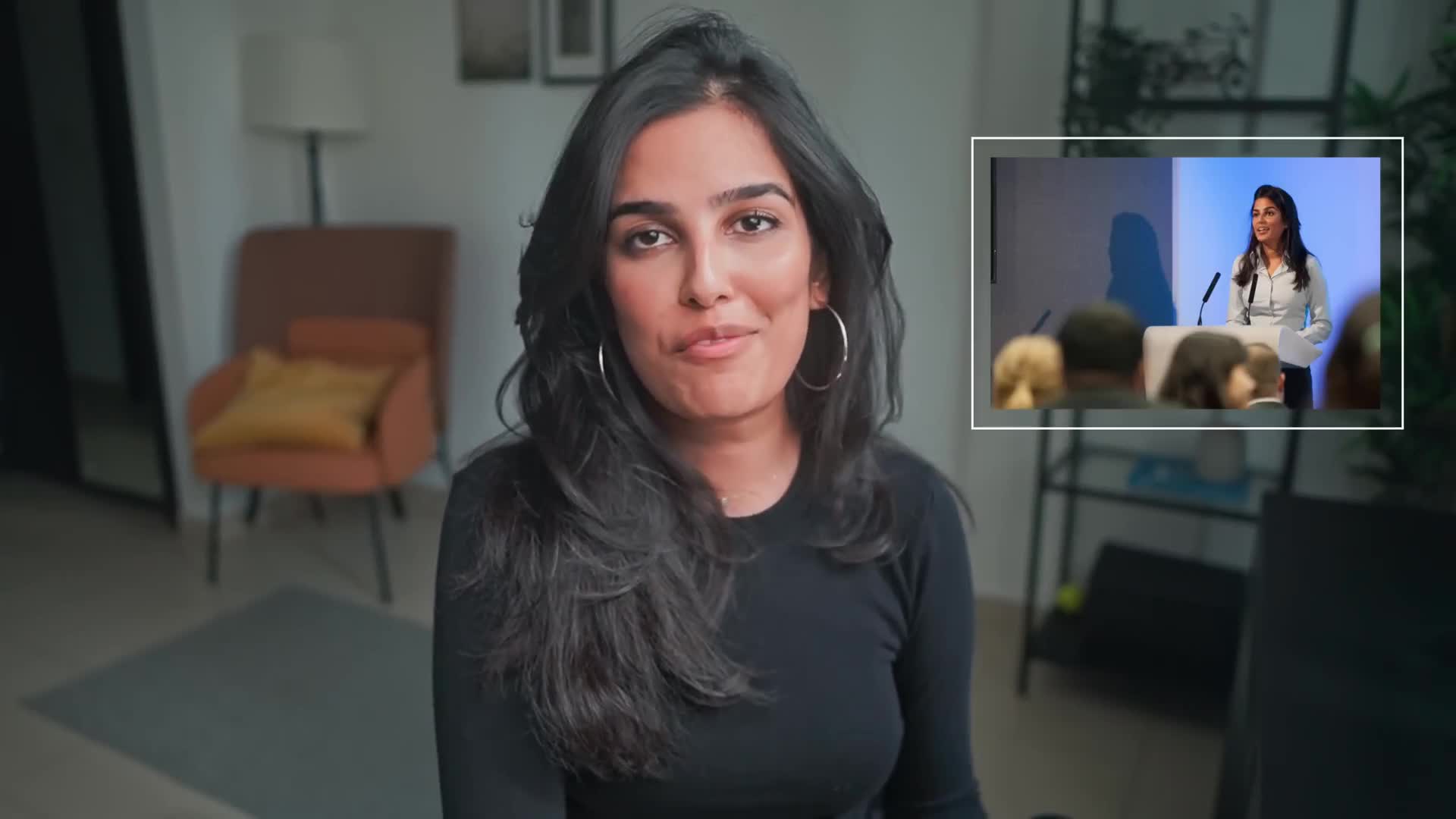
After helping thousands of people with their money, working in banking for nine years and qualifying as an accountant, I've noticed something pretty interesting.
The people who see the biggest improvements in their finances all tend to do the same things.
It's not about earning a massive salary or getting lucky with the next big investment.
It's about being strategic with the money you already have and making some key shifts that most people overlook.
So in this video, I'm sharing five things that you can start today that can dramatically improve your financial situation.
I've seen these work time and time again, both during my career and in my own finances.
Starting with number one, build systems, not discipline.
Most people think improving your finances is about being more disciplined.
But the truth is that discipline is unreliable.
Sure, you might be better with money for a week or two.
Maybe you watch some of my videos back to back and it motivates you to get on top of your finances.
And then life happens.
A few weeks later, you've forgotten that you need to be good with your finances.
You have some bad days, a few stressful weeks, and then your willpower collapses. just runs out the hack here as james clear famously says you don't rise to the level of your goals you fall to the level of your systems when it comes to finances you want to think about automatic transfers so saving happens without thinking set up a direct debit for bills so that you never miss a payment use separate accounts so you can't accidentally spend your emergency fund and delete shopping apps to make impulse purchases harder to do the goal is to make good financial decisions automatic and bad financial decisions hard to take.
When you build the right systems, good choices end up just being the path of least resistance.
And speaking of systems that save your time and make your life easier, there's one tool that I use all the time that's completely transformed how I organize my work.
One of the biggest time wasters in most businesses is just trying to find things documents emails links, meeting notes.
And the bigger the team gets, the harder it is to stay on track of everything.
That's exactly why I've been using Dropbox Dash and it's given me hours back every single week.
Dropbox Dash is AI-powered search, an organization that connects all of your work apps in one place, making it super easy to find, to organize and to securely share content with the right people.
Dash connects with all your work tools Dropbox Gmail, Google Calendar and so many more and searches everything in one place.
It learns your habits, suggests relevant content and finds whatever you need, even if you forgot where you saved it.
And the really cool part is that you can actually chat with it.
So I'll type something like, summarize our Q4 goals or where's the latest script draft?
And Dash will give me the answer, pulling from the files, the emails, meeting notes, all of it.
And it shows the source so you know exactly where the info is coming from as well.
I've also started using a feature called stacks.
Basically, you can group together related links files decks whatever, and keep it all organized around a specific project.
I use it for launches and I just send the stack to my team.
You can try Dash with your team today using the link below.
Thank you Dropbox for sponsoring today's video.
Number two, measure what matters.
For the first few years of my banking career, I thought I was doing well financially because my base salary kept going up.
I started on 35000, got a pay rise to 37500 and then to 40000 and then I got promoted and it went up after that and I felt like I was making progress.
It wasn't until years into my career that I finally sat down and tracked my finances properly, and And at that point I realized the gap between what I thought was happening and what was actually happening was completely out of sync.
I found spending that I couldn't explain, subscriptions that I wasn't even using, but they continued for months, if not years.
Impulse buys that felt reasonable at the time but absurd in hindsight.
And so overall, as my income went up, so did my spending, which meant I was saving a smaller percentage overall without even realizing it.
I was measuring success by my income, not by my progress.
And that's the reality for most of us.
We think we're in control because we sort of know what we earn.
We kind of know what the rent or mortgage we're paying is.
We know that the bills get paid.
But unless we're actually tracking our key numbers, we can't improve what we don't measure.
So here's a really simple fix that you can start today.
Set up a tracker with just three categories in it.
Your fundamentals, so these are things like your essential living costs, rent or mortgage, bills, insurance, groceries, minimum debt payments, fun, which is all your eating out, entertainment, clothes, all the things that you enjoy spending on, and then the future. future you which is investments retirement contributions everything going towards your future every month just for 20 minutes going through your bank statements and sorting every transaction out into one of these three categories if you want to use the same one that's on the screen right now it's completely free and it's linked in the description below It sounds really basic, but it is powerful.
The first time I did it, the first time I allocated my income into these three categories, I realized I was spending so much more in one area than I was in the future you area.
And that one exercise showed me what I needed to do to move forward.
You can't get to where you want to be if you don't know where you are right now.
Number three, differentiate impulse from intention.
Learning to tell the difference between what you want right now and what you actually want can have a huge impact on your money goals.
I say this because a 2023 study found that over half of impulse spenders say that it's delayed their biggest financial goals, like saving for an emergency fund, saving for retirement or paying off debt.
Impulse spending and intentional spending feel the same in the moment but that's the danger.
Impulse is that immediate I need this now.
It's urgent, it's emotional and your brain creates all these reasons why you absolutely must have it right at the second.
The thing with impulse is it fades as quickly as it appears.
An intentional spending choice, on the other hand, is a deliberate decision that you've made over time.
It's something you've planned for.
It's something that aligns with your wider life goals and your vision.
And knowing how to treat the two could be a complete game changer for your finances.
So here's the rule that I follow.
Before buying anything you don't absolutely need, wait 24 hours.
What happens during these 24 hours is it separates your impulse decisions between your intentional spending.
If it's an impulse, that feeling disappears.
You won't even think about it after 24 hours.
If it's a real intention or something that genuinely matters, that feeling sticks.
This one habit of just waiting 24 hours before I buy something that costs over a certain amount, that one habit has saved me thousands over the years.
But more importantly, it's trained my brain to be more intentional with money and moving closer towards my bigger financial goals.
Number four, double your money.
I want to show you how the decisions that you make today when it comes to where you put your money, how drastically it can impact your financial situation.
So let's say you have 10,000 and today is sitting in a regular bank account paying 0%.
After 10 years, you'll still have that $10,000.
What if, after this video, after you've watched this video, you choose to put that in an account?
That's paying a high interest, say around 3?
Assuming that 3% maintains, you've got $13,439 after 10 years.
What about if you choose to put it in an index fund that, on average, grew 7 per year for the next 10 years?
Then you have just under 20000.
That's nearly double your money, not from working more or taking big risks, but just by choosing where you put your money.
And that's if you never added any money on top of that 10,000 that you put in.
Imagine what happens if you keep investing consistently.
I've got a whole video on how this works right here, which essentially explains how this compounds.
If you're just starting out, begin with your employer sponsored account, especially if there's a match.
It's essentially free money you don't want to be leaving on the table.
Then open up an individual investment account.
Both of these come with tax advantages that make your money work even harder for you.
If you want to go deeper, I've got another video right here that walks you through exactly how much to invest based on your life plans, your long-term goals and how much you have available.
That's a good place to start if you have no idea what steps you want to take next.
And then the fifth one is focus on raising the ceiling.
You could spend hours switching bank accounts or save a few hundred dollars a month for the cheapest insurance.
And at the start, this will make a big difference, especially when you're trying to set good habits.
Then you get to a point where you reach a cap on how much you can save and invest, because you can only save and invest as much as you can earn.
But you can always earn more.
And that part has no ceiling.
Whether it's asking for a pay rise, switching jobs, starting a side business, earning more is the most powerful financial lever you have, so make sure you pull it often.
Those are five strategies that work over and over again.
It's transformed my financial life and so many others.
Thanks for watching.
If this was helpful, feel free to share it with someone else who might also be feeling stuck with their finances.
And if you haven't already, make sure you subscribe so you know when my videos come out.