Hello and welcome to Women in Retail Talks, the podcast where C-suite executive women in the retail space share their stories of professional growth leadership development, personal journeys and so much more.
I'm Melissa Campanelli, the co-founder of the Women in Retail Leadership Circle, which is a membership-based community of executive women at leading retailers and brands.
Today our podcast Women in Retail Talks is coming to you live from our On the Road event in Los Angeles.
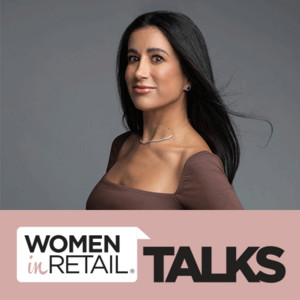
Joining us today for a live discussion and a fantastic conversation is Monica Royer, the co-founder of Monica and Andy which, if you don't know, is a company that offers organic essentials for kids and babies, along with kids classes and events, at their guide shop stores around the country.
I'm thrilled to be sharing the stage with you and let's start the conversation.
Wonderful.
Thank you so much for having me.
No, thank you so much.
I'm so excited that you're here.
So let's talk a little bit about you and your background.
So Tell us a little bit about that.
Where are you from?
I know you're from Chicago.
I am from Chicago.
And my first question, even for the people on LinkedIn in the audience is how many moms are out there?
Yay!
All right.
Love seeing all the moms.
So I started this business, basically.
Never thought that I would start a business.
So I did not have a lemonade stand.
I wasn't like the cool entrepreneurial kid.
But I had a baby.
And I thought, oh, my goodness.
There was just so many new things that happened during that time.
And so I lived a plant-based lifestyle for probably the previous 10 years to having my daughter.
Oh, wow.
At the same time, my brother had launched a men's startup in sort of the 10 of direct-to-consumer, called Bonobos.
That is the Andy in Monica and Andy.
And so by the time I had my daughter, I was shopping from my hospital bed because I already was like oh, I want to buy her some more stuff.
She was tiny when I saw her.
And so I thought there has to be a better experience for parents and for moms.
And so at that moment, I kind of decided, I don't think I'm going to go back to my day job.
I had been in the pharmaceutical industry for the previous decade.
And I said to my brother, should I start my own company?
And he said, it's a now or never moment.
And if you don't do it now, you probably never will.
And so I spent the next three years as a stay-at-home mom, just working on the bones of the business and raising my daughter.
And here I am.
That's amazing.
Congratulations.
Oh, I love it.
Somebody mentioned this earlier.
I just want to go back to it.
So you grew up in an Indian family.
And I know we talked on our previous call that there may be some trepidation about going into an entrepreneurial kind of a business.
So can you talk a little bit about that and how you decided to go ahead and do it, even though it was sort of maybe not looked upon as the best idea by your family?
Yeah, so I grew up in a multiracial family.
My dad was from here many generations, but my mom was an immigrant from India.
And so when she came here, I think that we were only a single generation.
So my grandmother was married at the age of 12 in India, which is now the age of my daughter.
Who's right here?
She had her first of nine children starting at the age of 14.
And so my mom and her sisters were very fortunate to be raised with a deep education, even though there wasn't a lot of money for them in India.
And so when they came, they had big aspirations for their children.
And the first taste that I got of it, which I remember, was that my brother graduated from Stanford Business School And my parents were so excited.
He was going to take this great job of business and he had all these financial offers.
And at his graduation dinner, he sat down with us and he said, no, I'm not going to do any of this.
I'm actually going to start my own men's pants company online.
And this is in 2007.
And so my parents were like, oh, my gosh, like he's going to be selling pants.
Nobody buys anything online.
So it was like.
It was it took some doing.
But I will say to my parents credit, they did every they gave us every support.
Yeah.
And we've been our lives have been fairly stressful, all things considered.
So they've been great.
I love it.
So, speaking of Andy Dunn, who founded Bonobos, who is Monica's brother, and Monica and Andy is is the name of the company you know.
And if you don't know what Bonobos is, they were one of the first direct-to-consumer brands.
It was purchased by Walmart.
So how did your relationship with your brother, or even just watching him in his career, affect your entrepreneurial aspirations?
I think the thing that affected me more than anything was kind of the story behind the story and what happened behind the scenes.
So my brother was bipolar, and it was something that we didn't talk about.
He was actually briefly diagnosed with that at the age of 19.
But the doctor had said at that time that if he didn't have any episodes for the next five years, then he was probably okay.
And so he had all sorts of magical thinking.
In some ways I think some of the disorder has been the best part of him and the hardest part in many ways.
So there's so much about the brilliance of his disorder that I think has built him to where he is today.
And so at the peak of his success at Bonobos, the disease surprised us and came roaring back.
And so I think it was really what brought us together was so much of what we experienced that we couldn't share at the time.
He's since written a best-selling book called Burn Rate.
That is all about coming forth with his disorder and the disease and everything that we dealt with as a family.
So I think, while I learned a lot from him in his entrepreneurial journey, I learned a lot more from him and the bravery that he faced this disease with and how hard he's worked to overcome.
Yeah, that's amazing.
I mean, it's an amazing story.
We'll talk a little bit more about that later.
I know your husband also is a D2C entrepreneur, right?
We definitely like to torture ourselves, as we turned out.
My sister-in-law as well, if I didn't mention that before.
Oh, okay.
So yes, my husband founded a business called Interior.
Defined that he actually exited at the height of the success of that business.
There's so many different things that happen behind the scenes when you have a venture-backed company.
And he's since gone on to build his second company.
But I think that we've had so much fun building.
And I think there's so much that we've learned.
And what's interesting between my brother and my husband and myself is we've all had different and dynamic experiences.
But I think the unifying factors that we could all understand what the other was going through and what was dealing with.
And I think that that, although a lot more stressful on my parents, definitely brought us together as a family.
Yeah, that's great.
That's great.
So let's go back to Monica and Andy.
I know that you started the company.
You started the company with an omnichannel focus as opposed to just as a D2C company.
So why did you decide to do that?
And tell us a little bit more about some of the omnichannel parts of your business.
We launched Monica and Andy really at the height of the success that Bonobos was having with its retail stores.
And so I remember Andy saying to me if I launched Bonobos again, I would do it, you know, from a storefront as well as having, you know, an e-commerce website, and I would have my office in the back of the store.
And so that's what we did for the first three years of Monica and Andy.
We had the Lincoln Park guide shop.
We were online and we were in the back, our office was in the back.
And it was so much fun because I feel like that first three years I had the experience every day of seeing our consumer, of building this community.
And as a new mom that had started the business too, we really believed in experiential retail.
And we just had such a great discussion in the breakout about experiential retail.
I learned a lot from the women at the table.
But we had art, music, story time, lactation classes.
I mean, I had my four-year-old, three going on four-year-old with me at the time.
And I thought, well, what is she going to do while I work?
So let's do all these classes.
But I can tell you, Four straight years of children's music classes became like the record that was always playing in my head.
And I think that we had 14 pop-ups over the lifetime of the business.
We've got three permanent locations.
So we love the ability.
We love, love, love physical retail.
But we also wanted to spend time in making sure we were a small and growing business, that we took the time to grow the real e-commerce channel as well for us.
Sure.
Where are the three stores now?
We've got Chicago, New York, and we've got a pop-up at Prentice Women's Hospital, which is in Northwestern in Chicago.
And then we've also and I think I mentioned have now launched with Walmart as well, in 1200 of their doors.
And so that's been really fun as well to be able to be... We'll get to that.
So...
Let's talk a little bit about.
I know everyone's kind of probably sick of hearing about the pandemic, but I feel like you know when the pandemic hit it did change your business quite a bit.
You made some drastic changes to the brand.
You reduced your prices, for example.
You know, the in-person classes that we talked about had to change a little bit.
So can you just walk us through your experience how the pandemic changed the business for the better?
Yeah, I think it's probably stuff that a lot of people in the room can relate to.
I think that there was nothing about the pandemic that any of us were prepared for.
And I think we all had to think on our feet, to think about like, what can we do during this time to just keep it together, to survive until the next place?
And I think for us, it was really two or three things.
One, we ended up rebuilding our entire supply chain.
I think one of the things that so many people are doing the pandemic is like don't have all of your things coming from maybe one singular factory, because if there's a problem there, then you're going to have a problem getting your products.
And so I think for almost I don't, I want to say 18 months, we got no new product whatsoever.
Wow, we became a lot more transactional with our customers, I feel like during that time, because there were sizes like whole sizes that we were sold out and usually people grow with us, they meet us during their pregnancy or their fertility journey and they they've they purchased with us through that lifetime.
And so we were just out of a lot of things.
And so I think we had to get better at connecting virtually.
So many of the things we had done had been in person.
And so we moved our classes to Zoom.
We realized parents, more than anything, and more than ever, actually needed information.
And it maybe wasn't art, music, and story time.
It was all of the different things that were happening as people were going into the hospital to have their baby during that pandemic in the early days.
And so we just decided let's pivot what our experiences look like and how we're delivering those, so that we can make sure that we continue to connect with consumers and that we continue to be able to educate and bring them information.
But it looks very different.
And I think what we learned from that is every year we kind of reevaluate.
Where are we this year?
I mean, nothing has really felt normal since the pandemic.
I feel like everything is kind of a new learning experience.
And so we try to make sure that we never think that there's a secret formula that every year we have to think about okay, where are parents today and how can we best serve parents today, and what do they need?
Yeah, I mean, it sounds like it was almost a growing opportunity for you.
Now let's talk about the Walmart.
Because I know that your brand has changed and grown since you launched.
One is the Walmart relationship.
So tell us a little bit about that, maybe how you got into the stores and sort of the arrangement you have now.
It was really interesting because my brother's company had been acquired by Walmart, so I knew all about Walmart and what an incredible place it was.
He worked there for a few years.
But I had never really thought about having any kind of a large wholesale footprint like that.
And, as the CEO, I still like to look at at least 20 or 30 customer service emails a day because I like to see what our customers are saying and just hear directly from them.
And in one of the days that I was looking at those emails, I saw an email from a buyer at Walmart.
And I knew enough about Walmart to think, oh, I probably want to get back to this person right away.
And so anyway, we were sitting in Bentonville within two weeks of that meeting.
And we loved what Walmart was doing from an organic food perspective.
As much as directed consumer brands.
We love to think that we're great at curating for our customers.
The Walmarts of the world are really good at curating for their customers too.
And it was this opportunity to come into one of these giant retailers and to be able to meet their consumers and their community in these 1200 doors.
And so it was daunting and fun to figure out, but they have a wonderful team.
And they've been incredible to work with.
So it's 1,200 stores.
Are they in a certain region or are they all over?
No, they're all over.
Oh, wow.
That's so interesting.
Did you have to change the way that you created product and stuff like that as a result?
Luckily, during COVID, we had rebuilt our entire supply chain.
So fortunately, we were poised to be able to scale and to do this.
We work only with God-certified organic factories.
And I thought a lot about as an immigrant you know the daughter of an immigrant what was not only the quality of the product, but what was the quality of the supply chain.
How are the workers in the factories treated?
And so we had moved from smaller scale of those factories to a much larger scale, just serendipitously to being able to scale.
And so we just happened to be ready to be able to do it, even though we hadn't planned to.
And they were wonderful to work with.
They gave us.
They really held our hand during the entire process because we were such a relatively small business compared to a lot of the really large businesses that worked with Walmart.
And so their team was incredible to walk us through everything.
That's amazing.
So let's talk a little bit about the product that you sell specifically.
Why don't you just tell the group a little.
I don't know if we actually explained that.
Yeah.
So we sell organic clothing and it generally starts like right in the earliest.
I mean, we've got preemie.
So we have what is called our signature cuddle box, which is basically everything you get in the hospital except in an organic form.
We also now have maternity and women's lounge.
We have robes and PJs and all sorts of stuff for mom, because that's been, you know, such a stage in which we meet our consumers.
And then, from a clothing perspective, we go all the way to the age of 10, but are really strong between pregnancy and preschool in terms of like the bulk of where we're making purchases.
Right.
In addition to that, we now have a Monica and Andy marketplace and we have cribs and strollers and all of these other products that the Monica and Andy parents love.
And it put our stamp of approval on.
And that's well beyond our the brand ourselves.
Like, we're not good at making cribs and strollers, but there's lots of other folks that are wonderful at doing it.
And so we've built this more holistic offering now that sort of spans everything people need when they're bringing baby home.
That's awesome.
But you also have some unique products, I think, for different groups, so that you're inclusive for all sort of what we were just saying in an earlier panel.
So tell us about some of those products.
Yeah.
So I think that one of the biggest learnings I've had got my daughter.
I've had three miscarriages, struggled significantly with infertility.
And so one of our biggest learnings was that you know, parent can come in all sorts of different forms.
And a lot of times the information is out there for the things that go right.
But oftentimes things go wrong.
And so making sure that you can meet people and be informative at times that things go wrong has been really important for us.
And so a lot of that has looked like focus groups and support groups and information and anything that we could put together.
Because if somebody on the Monica and Andy team is experiencing it, likely there's lots of other people that are experiencing it.
And so I think we've developed a really deep empathy for parenthood and all of the ways that people can come to be parents.
Great.
Okay, I'm going to switch gears for a minute.
Let's talk a little bit about your leadership style.
How would you describe it yourself?
And can you sort of share any key leadership tips that you use?
Yeah, I would say that my leadership style is evolving.
I think that I'm always trying to think I mean the person that I needed to be when I started the business in 2014, and the business that I was running then is very different than the business that I'm running now.
And so one of the things that I've been really focused on is executive coaching for myself.
I think my leadership style is deeply empathetic, almost to the point of ruinous empathy would be a way that one could describe.
And so I've had to work to realize okay, what are my strengths and weaknesses, and to really get to know myself.
For instance, as I did some of that leadership coaching, I learned that I'm very flexible, and flexibility can be a wonderful thing, but it can be a thing that you can be too much with as well.
And so I think, understanding how I operated, what my team thought about me, And I think a key learning was having someone from the outside that came in, that was able to evaluate me, that was able to meet with my team and that was able to coach me I think has been extremely helpful in that evolution.
So I would say I'm not to where I eventually probably want to go, but I'm a work in progress as I get there, and very open to stumbling and making mistakes along the way.
And, as I was talking about earlier, that's a coaching that we're now bringing to a lot of the rest of the women on the team as well, because we think that, as you were saying before, like sometimes you're put in a seat but it's not like just because I had, like an affinity for baby clothing or I knew certain things that were needed to start that business, doesn't mean that I have the tools to run that business eight or nine years later.
And so making sure that I'm focused on thinking about like, who do I need to be a year from now and who do I need to be three years from now and five years from now, and am I doing the work to get there?
And I will say, probably my biggest tip And I think I was able to do this for my brother and my mom and him definitely do this for me is you need people that don't have any skin in the game that can tell you what they really think.
So not only keep you grounded, but to give you the feedback that maybe your team's not going to give you.
And so I will say, like, I think my mom is like a radically candid and like the in the best way.
And I'm sure other people, moms can also relate to that.
And I think that that has been so helpful for me.
Because sometimes there's things you need to hear and people might be afraid to tell you, but I think it's important to have to hear them anyway.
So having somebody that can deliver you hard messages at times that are hard to deliver the messages, I think is a really important component.
And as a working mom, I needed that support group too.
You can't just you know without the emotional support there's so many times I can't necessarily turn to my team, right.
They're turning to me for things.
So making sure that I have people to turn to. as I need that emotional support is really helpful.
Yeah, we talk about that a lot at Women in Retail, sort of the idea of being lonely at the top.
You don't really have anyone to turn to when you're at a certain level.
And we also talk a lot about having your personal board of directors.
So it could be someone from your family, somebody from an old job, a former boss, who can sort of walk you through any kinds of challenges that you have.
But I would love to talk about the coaching thing for a second, just going back.
So how does that work?
Like when you said you were doing it for your team.
Are you, in other words, you have like a?
Do they have coaching appointments, like during the week, or how does that work?
Yeah, so it works where we started, at least with the leadership and executive team, because the idea was kind of like how do we put our own oxygen masks on first as we move down to the rest of the team?
But Maddie, my executive assistant, is here.
She did an entire, what was it, a year-long program that you did, Maddie.
And so thinking about women at all levels within the organization and the support that they might need to get to the next place, because I just didn't realize, Even when I think about the career that I had before, nobody was necessarily.
Even though people may put you in positions of managing, do you really have the tools in order to be able to do that job.
And is the company aligned with what its own values are in order to be able to impart those values on their managers, so that can be imparted on the team?
And that's just not something you stand up overnight to be able to do.
I mean, I wouldn't say we're all the way there yet, but it's something that we're really trying to be thoughtful and focused on.
Great.
And that actually brings me to my next question, which is I think your company is 95% women.
Is that correct?
And 38.
And 80% are mothers.
And I know that you care deeply about motherhood.
Obviously, you started this company, and you advocate for women in all walks of life.
So can you kind of walk us through, besides the fantastic coaching that you do, some sort of support that you do for the people at your company, some sort of unique benefits or anything that you do would be really interesting, I think, to the group.
Yeah, I think So one of the things that we've done.
So I think we've tried because we've led with a lot of flexibility.
There's a lot of flexibility in my personality, as I learned.
And we're trying to actually put that into policies.
And so one of the policies that we now have is unlimited PTO, because we realized, as moms and as parents, that if your kid's off, you may be the primary parent that's responsible.
And so we didn't want people to have to take their vacation days while they actually were just home needing to be with their child.
Um, so that was like one, one area that we dug into, and then people pick their kids up and drop them off at Monarch Mandy.
Everybody's most, everybody except the retail team was working virtually.
And so we tried to pull this much family flexibility in as possible as we got to.
Halloween is even as we were setting up with meetings we're like what's everybody's like Halloween parade schedule that might be happening, so that we're not like we never want anybody to ever miss something to be there with their family, that they want to be with their child for.
And I think that is what I would want for myself.
And so we make sure that there's nobody on the team that's ever doing something that is during a time that they need to be there for their family or their child.
Yeah, that's amazing.
I'm sure that's so appreciated.
So I wanted to go back to your brother, sort of tying this back to benefits.
Obviously he wrote the book Burn Rate, which sort of walked readers through his mental health journey.
So can you talk a little bit about what you do as a leader for your mental health and maybe what you're doing to help your team get through that?
You must have like a you definitely have a different perspective than maybe other leaders.
So I'd love to hear.
Definitely.
I think the leadership style that I've taken on just because I think I had all this stuff that was happening behind the scenes with Andy and nobody knew about it because we couldn't it was like I think Andy would say like shame is what you don't speak up.
And so there was so much shame for him associated around having this disease.
And it wasn't as much my story to tell.
And so it was.
So it was so cathartic and freeing when he finally wrote the book, because there were people that knew us really well that said, oh my goodness, like we had no idea that this, you know he was institutionalized at Bellevue and like all these other things were happening at really the height of his success.
And so every time I get in a one-on-one meeting and we try to impart this on the rest of the team you just never know what's happening on the other side and what somebody might not be telling you.
And so we try to ask first and foremost, how are you doing?
How are you feeling?
Health? mental health and always try to start our check-ins there.
And then, I mean, work can be stressful no matter what.
And so we can't shield the team from like managing some of that work stress, but we always try to check in with that mental and physical health first.
And that idea that like, if that's not there for people, then how?
What do they need and how can we be there for them in a way that we can help to serve them?
Just knowing that it's not always going to be obvious when somebody needs your help.
And we found, even in this virtual world, even less easy to understand, because somebody may only be in front of you in a one-on-one for like an hour on Zoom.
And you might see them in other meetings too, but it's not like people are necessarily in every case sitting in the next office.
And so I think it's even more important today to be doing those check-ins and make sure that people are okay.
Yeah, I love that.
I think that's such a great.
It's so simple, you know, just asking everyone how they're doing.
You know, before you launch into a meeting.
And it's true, you can't really tell how people are going through, you know, so I love that.
And we did talk about that earlier.
So I think that's a great topic.
And I think this is a good time to discuss what's next for Monica and Andy, because I know that you are doing some stuff around this.
So tell us a little bit about I think you're planning to transition into more of a lifestyle brand and provide information to parents.
So tell us a little bit about that.
Yeah, we actually just launched a whole new website that we're getting ready to like build a lot of content around to make it easier to sort of be content, community and commerce driven all at the same time.
We had like a very same Shopify website for a while and there was just limitations to what we were able to do.
And so our ability to serve customers and community more at the agent stage is So if you're the parent of a four-year-old, it might be very different from somebody that's expecting.
And how can we deliver you more personalized information and deliver you more of a personalized one-to-one experience?
And so that's sort of the goal and what we're working on for the next phase of things.
Oh, that's exciting.
So let's, I also wanted to talk about the mentor files.
I know you have a podcast.
So tell us a little bit about that.
Yeah, I think the mentor files for me started as I just felt like this, like regular person that was having these incredible outsized conversations with people.
And so I felt like there was so much of a pay it forward with how much, how supportive like my brother was for me.
And I thought, you know, my job is then to pay it forward.
But for who?
And so I wanted to democratize as much of that information as possible.
One of the things that I've become really passionate about at this stage isn't just democratizing it to other women, but thinking about hitting girls at even an earlier stage, because at our stage of things there's disparities in funding and capital that's given and all sorts of other things.
And so this ability to impart information in the future on girls at even earlier stages so that they feel, there's so much when I talk to other women about this idea of imposter syndrome.
And so I think at the beginning, I felt so much like that too.
Like oh, I'm having these conversations and And so it's like if we can impart on this next generation of women this feeling that like they never feel like an imposter, but they just feel like an insider to begin with, that's the ultimate goal.
So have you done any podcasts so far?
We actually did.
I bring my daughter, who's right here, and we'll talk about that in a little bit.
She travels almost everywhere with me.
And so we've done a few girls camps, which have been really fun, bringing in some of these speakers.
And this next season of the podcast we're going to have information that's also tailored to girls and some of what they can learn from it.
I feel like I never had a finance class.
My entire job is about finance.
And I think that business is so fun.
There's so much about business that's so fun.
And so the more women that we can get excited to go in and build businesses and to be in the venture capital community and all of these other places, I think the more empowered women will be in business in general.
Definitely.
So there's a lot of women in the audience here who may be interested in maybe starting their own entrepreneurial journey on this side, or maybe they're just interested in being entrepreneurial in their companies, in their departments.
What advice would you give to those folks?
Well, if you need to hear it, maybe I'm here to tell you it's your now or never moment.
I mean, I feel like somebody did that for me.
It doesn't mean you have to necessarily start it tomorrow, but if you're thinking about it, I think there's, It's not an easy journey to start your own business.
But if you're passionate about something, it's just such a fun life's work to be able to do it.
And I constantly have to recenter myself around, I chose to do this.
I chose to do this.
So instead of being like, oh, I have to do this.
Oh, this is so stressful because I think all of those things too.
I keep reminding myself, I chose to be here and to do this.
And so I'll handle what goes along with it.
And if you're interested in doing something like that, I will say it has been the journey of a lifetime.
I recommend it.
That's amazing.
So talking about your daughter, who's in the audience, why don't you introduce her?
What's her name?
My daughter's name is Bella.
And how old is she?
She's 12.
Although she will say, and I thought this was so cute too, young girls will say, I'm going to be 13.
And I thought it's so funny when you ask a woman, you generally don't go to the next age with what you're going to say.
So I think she's at a stage where the next stage is very exciting.
So what advice do you have for her as she grows up and, you know, sort of makes her way in the world?
Well, I think it's funny.
We've had a lot of conversations and I've said, do you want to go into business?
And she was like, no, it is like way too hard.
I think she doesn't necessarily think she wants to go into business.
But I want to impart on her that Bella, I want you to feel comfortable and like you belong in any room that you walk into.
And if you walk away from these 18 years together with that, then I will have done my job.
Aw, I think I deserve a hand.
So that was my last question, but I have some fun rapid fire ones.
So off the top of your head, what is your favorite app?
What app are you always on?
App that I'm always on?
Oh, my gosh.
Well, I guess Shopify, but does that count?
I'm checking the revenue there quite a few times a day.
That's a good one.
Have you read a book recently that has resonated with you?
Does the Reese Witherspoon book pub books?
I don't know if it's like resonated with me, but it takes my mind off stuff.
And if anything's resonated with me, atomic habits.
Oh, far and away has been one of the best.
It took me a hundred readings to actually sit down and do it, just because it's a little dry to begin with.
But there's, you get a lot out of that.
Yeah.
I've heard it's dry, but it's like, great.
It's incredible.
Yeah.
Incredible.
Um, Is there a brand that you admire?
Like is there a brand out there that you admire the way that they're doing branding or marketing?
Oh, my gosh.
I saw it on the roster here, Alo Yoga.
Oh.
I love what they do.
Incredible brand.
How about a woman that you admire?
My mom.
I knew that you were going to do that.
And then your favorite quote.
I think my favorite quote is Something my mom said to me, which was fail to prepare and prepare to fail.
Ooh, I like that.
And I keep that in my mind a lot of times because I'm not always the most prepared person.
Right.
But it gets me to remembering like, try to prepare for stuff, because then you'll set yourself up for more success.
And then the second one that my executive coach shared with me recently was and I won't get this 100 right, but this idea that you'll only rise to the level of your systems.
Hmm.
And so that's something is you have a business that's scaling, and it's like you really got to think about the systems that you put in place over time because your goals might be here, but if your infrastructure is here, it's difficult to get all the way to where you want to go.
And so that's one we're kind of living by at the company right now.
That's great.
I like that.
That's awesome.
We're actually over time, but thank you so much.
It was so nice to chat with you, Monica.
Thank you for having me.
Thanks for listening.
For more information on this podcast, please go to womeninretail.com slash podcasts for show notes.
Women in Retail Talks is available on Apple Podcasts, Google Podcasts, Stitcher, and Spotify.
Make sure to subscribe on our podcast channel page as well.
If you've enjoyed this episode, please take a few moments to rate and review our show.
Lastly, if you're a female retail leader interested in joining our community at Women in Retail Leadership Circle, visit womeninretailcom.
Slash apply.
Thanks, and until next time, this has been Women in Retail Talk.