Discussion keeps the world turning.
This is Roundtable.
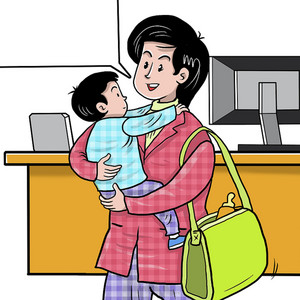
The rise of mom posts.
These job listings targeting mothers has sparked a debate.
Are these positions empowering working mothers or keeping them stuck in low -wage roles?
And China's visa waiver policy has now expanded to include 38 countries.
Is your country on the list?
Check it out after listening to today's show and get ready to enjoy a hassle -free travel experience to China.
Coming to you live from Beijing, this is Roundtable.
I'm He Young. For today's program, I'm joined by Neil Hellyn and Fei Fei in the studio.
First on today's show.
Qingdao City, in eastern China's Shendong Province, has introduced 190 job positions, specifically designed for mothers.
Most likely that they may be coming back to work after giving birth to kids or whatnot.
And these positions, offering flexible hours and less demanding roles, are aimed at supporting moms with young children.
Especially those looking to return to the work after a break.
However, are these jobs truly empowering women and creating a more fertility -friendly environment?
Or do they risk reinforcing gender expectations and pigeonholing mothers into roles with limited growth potential?
So let's take a look at these new job listings, apparently targeting moms.
And do you like them?
Well, the announcement coming from the city of Qingdao is actually one of the latest government directories that's published in the province of Shendong.
In fact, in September of this year, the Provincial Department of Human Resources and Social Security have issued a notice on promoting employment model targeting mothers.
Especially those who wish to work or return to the workplace.
And in November of this year, a district in the city of Lingyi, which is also a city within the province of Shandong, they also issued an announcement soliciting mothers' posts from the society.
And these positions require flexible working hours and are suitable for mothers who work from home.
So jobs like home customer service, e -commerce, live streaming, or handmade products making, or other positions that can help mothers who are taking care of a child inside her home.
And in the city of Qingdao this time, as Hoya mentioned, they included 190 job positions from seven employers.
And these batch of jobs involved fields such as catering, housekeeping, security services, and also mostly part -time or hourly workers.
Yes, and this is not actually the first time that something like a post designated for moms has been happening here in China.
We've seen different types.
And the process is always the local government realizing the need of moms coming back to work, yet finding it a little bit difficult to, for example, adjust to their current schedule.
Meaning that they have to take care of the kids.
Somehow they have to send the kids to kindergarten or to even primary school.
They have to pick them up a bit earlier.
For example, some schools would conclude around 3 p .m.
That is not the time we get off work.
We get off work around 5 or 6, which means it's hard for them to find a job that can, at the same time, allow them to pick up their kids.
So the general process of local government would be that the local government would ask the society whether or not you have any of such posts that would allow your employee to work on a relatively flexible schedule, whether or not you can allow your employee to, for example, work for six hours a day.
And for example, whether or not the position is okay for those who do not really necessarily have experience in that area.
However, they can understand and manage the skills of the post or required by the post by a short -term training.
And after selecting these kinds of information, they would have, for example, this here, Vivi has just said, we have 190 job positions in this particular batch.
And they've got all the positions.
And then they would start a process of giving the information of different positions, actually, to the entire society and moms, or in certain cases, dads who are actually taking care of the kids or having the responsibility would be go interview for the job and get it.
And that's basically how it works.
I have to say, I have to admit, and I'm a little bit embarrassed in saying this, but I did not expect that these 190 job postings in Shandong province is what they are, in the sense that, I'm sorry to say, being in this seat, and we've talked about this before, but I've always kind of just automatically
thought of, it's the quote unquote white collar jobs when moms return to work.
And then we talk about, oh, discrimination.
Oh, this poor lady.
Now she's assigned the seat right next to the toilet.
And, you know, and she needs to take care of the kid, the baby or whatnot.
And it's a terrible situation for her and blah, blah, blah.
I don't mean to sound callous, but I'm sorry, but my vision has been so tunnel visioned and narrow minded that I've kept on thinking about that immediately when I saw this topic.
But in fact, what I find is kind of, in a way, enlightening in a way, it comes with its own troubles, that these jobs we're talking about today are actually the quote unquote manual labor jobs.
When Fei -Fei, you mentioned catering.
So basically we're talking about somebody who works in a KFC or McDonald's or a fast food chain, and then times are flexible.
And then this lady can come in and work for a couple of hours flipping burgers, those kind of things.
So that's one kind of job.
And also the other thing you mentioned, security services.
And initially I was like, how is this conducive to a mom returning to the workforce?
And then apparently some of the jobs are she's sitting in front of a security camera and checking things.
So it doesn't require her to walk around that much or engage in any physical activity.
Unless she really wants to.
So there are different jobs, even within the security services and also housekeeping service for, let's say, a woman that is trying to return to the workforce.
Well, yeah, housekeeping, then I'm thinking like maybe going into people's homes to help clean, wash, do dishes, that kind of thing.
And yeah, like it's not what you automatically associate with so -called mom's jobs.
So why I'm a little ambivalent with this topic is, on the one hand, I think it's great to raise awareness for this slice of the workplace or the job market that moms can find jobs here and here are jobs sort of touted as, hey, ladies, you almost have a preferential kind of attention or whatnot.
I think that's great to have job opportunities like that for anybody who's having some kind of trouble to come back to the workforce.
But on the other hand, there's also something not so great about it.
And even with this title of mom's post, do you think that's a little problematic?
Should society come up with a different name that doesn't automatically kind of associate, okay, being less demanding or this person might be not as devoted as a full -time worker regardless of the sex?
So do you guys share this kind of sort of mixed feelings about this?
Well, to be frankly, I do share some sort of similar feelings Huyang just described with the name of it.
How it was branded in the media is that mothers, these jobs, looks like, appear to be created just because moms cannot devote to their work as full -time as women, females, who don't have children.
Or their male counterparts.
So that's why we are offering these flexible working hours and who allow workers to go out, pick out their kids in the afternoon.
Well, maybe the same standards cannot apply to other workers.
But then on the second thought of it, I start to think about a similar plan or program a few years back called flexible jobs that are promoting workers at all ages from all different sectors in the society who do not want to engage in full -time office work.
And they want to be able to work flexible hours.
And at that time, our topic is for these kind of workers who are working at flexible hours who are not signed a contract with one company, and how do they pay for their, for example, medical care.
And then the human resources department at different levels of the government start to have programs and policies targeting them for them to be able to also enjoy the same medical care or social security as us who signed a full -time contract with a company.
And then I think this is maybe one of the part of the, I would say, package policies that for mothers, especially I think the females who want to take up this part -time or hourly workers, jobs that are mostly they don't already had a job before they had a kid.
Or they've been staying at home for at least three years.
I know what you're saying, and I do also agree.
It is a growing or developing process.
Again, I agree with you at the very beginning.
I was like mom's position.
So the presumption is that moms are the one in the family who are responsible for taking care of the kids, whereas dads are bringing bad onto the table and supporting the entire family.
The assumption is, pre -assumption actually is dads are bad at taking care of their kids.
They do not want to do it.
They're bad at doing it.
That is why it's not their job.
It's not their responsibility.
And they do not even need the possibility of taking care of the kids and also have a flexible job.
That was my initial assumption as well.
Then I realized that in these positions, so you are a company, you see the notice from the government and you realize, huh, I have 10 positions that I am hiring right now.
I can provide these positions to some moms.
It's a wing wing and you give the information to the government and the government will tell you, well, of course you can do that and you can hire moms.
And I will give you certain subsidies as well because you're doing the not only the moms a favor, but also you're giving back to the society in a way.
But there is something you need to do.
You need to assign a room for the moms to rest a little bit for breastfeeding.
You need to create a even more a better environment for the moms because they're breastfeeding.
They need to be taken care of.
You need the working environment to be a little more comfortable.
So see, these things are definitely designated to moms, not dads.
Even the dads are taking care of the kids.
They do not really have that need.
So I guess, yes, the governments or whoever's coming up with the notice, they're being a little bit lazy in the sense that they're just naming them as moms posts.
They are definitely solidating the concept of all moms are the ones who are taking care of the kids, but it's not entirely lack of thinking.
It's not entirely without any reasons.
And we do need to talk about it.
And after talking about it, more and more people would say, oh, maybe we can just name these posts as the kind of posts that you take if you also bear a huge responsibility of taking care of the kids.
We call it, you are going in Chinese.
So that's a bit better.
And at the same time, you mentioned different positions and different actually actual work that are considered as the mom's position.
Actually, not only definitely manual labor works are relatively easier because if we think about it from the company's position, they are hiring new people.
And these people are moms who wanted to, for example, work in relatively flexible hours.
So maybe these companies are also concerning a little bit.
If you are the kind of working moms who have got the experience in this area for 10 years or 20 years, you're experienced in this skill and you can maybe compete for even a higher position in the line of the work.
In that case, they feel like I'm not really sure if that's the kind of employee I'm looking for.
So for the manual labor works, it's actually easier.
It's easier to train them.
It's easier to have them get into the environment and ease into the workplace after giving birth, after three years of taking care of the kids, something like that.
But we do see certain positions like live streamers.
In theory, that sounds quite good for moms.
In theory, yeah. But actually, I feel like for e -commerce online shop or online sellers, those kind of live streamers, it's also quite competitive and the workload is still a little bit heavy.
Anyway, what I'm saying here is that manual labor work are definitely this batch, are the main positions provided in this batch.
And it's getting more attention.
Which is interesting.
And in a way though, a lot of these part -time manual labor work, I don't see why it has to be advertised specifically for moms, because let's say this is part -time work.
Or paid by an hourly wage, then anybody who wants flexible employment, it's like, okay, today maybe I only work two hours for this platform, and this platform assigns me to, let's say, do housekeeping for three different apartments within these two hours, I do that.
Then anybody who has a flexible time scheme can apply and can do that work.
I don't know how this is particularly good for moms who are looking to earn some extra money to support the family or whatnot.
So that's how I feel what is being touted here, what's coming with these jobs this time.
I think what we need to think about is the target audience of this policy is when we talk about target audience in media.
For example, for a female CEO who decided to have one or two kids, I don't think she needs the help to find another job, even though she probably, for example, quit her job as a CEO before she gives birth.
Can I also just quickly add a footnote, though?
That is maybe true for some powerful CEOs, but there are other women, and it's just madness when I see that many times in the Silicon Valley as well as here in China, these super -brilliant, powerful businesswomen have been sort of applauded for returning to her job post after giving birth to a baby,
after a day or something.
Like she took no days off, and then men are saying, oh, look at that, a superwoman.
And women are like, stop it, woman.
You're making it impossible for everyone.
But why does she feel compelled that she can't take any days off when she's doing this mega thing, creating a human being, pushing it out of her vagina?
And why does she feel like she's compelled that she can't take any days off?
That's a bigger question.
I'm sorry for hijacking the discussion.
That's another topic, then.
But I think for the target audience of this policy, they are mainly targeted at those females who originally are not working at really high management positions, even before they give birth or get married.
That's, I think, the reason, the core reason, why they had difficulties finding a job after getting married or giving birth to a child or even multiple children.
And then so that's why.
But then I think about a lot of my female friends back in my hometown, back in Mongolia, and some of them did lose their job.
I won't say lose their job.
I quit their job before they get married.
And then when they return, want to return to the workplace, it's really hard for them to find a job of any sort.
So some of them initially went up online, tried to start up their own, for example, online stores.
But that's more difficult if you don't have any experiences.
And then I think these policies would be a great opportunities for them who want to return to the workplace because of different reasons, maybe because of financial needs, or maybe they want to find their values of themselves through professional careers.
And then right now, I think the government is sort of creating this channel for them so that they don't have to stay at home feeling frustrated, wanting to get back to work but don't know how, and also maybe feeling devalued by the day because they don't see their values outside of childcare.
And then with the government, for example, offering tax reductions or support policies or giving subsidies to companies so that companies think, you know, it's not a bad idea to hire these female workers in the first place, then why not?
Then also I can have 30 ,000 US dollars as subsidies for my companies.
This is a win -win situation we're talking about.
Then I think this is the target audience of these policies.
For other female workers who may share similar problems, I don't think these policies can work for everybody in the society.
We just need different sets of policies.
And I also agree with Huoyang, these jobs are essentially freelancing jobs, flexible positions, anyone can do it, and the only reasons that we are branded them or at least different types of media platforms are branding them as mom's position is because for any company, for example, I have a freelance
job and I ask you to do this thing and you do it every day and one other day, I have a lot of orders.
So I want you to work overtime.
I want you to be able to deliver that order by the end of this month.
And at this moment, government would swoop in and say, no, no, no, no, you cannot do that for these 10 women because these 10 positions are the designated positions for moms and you took the subsidy.
So these 10 women, they need to get off work 3pm to get their kid and you cannot do that to them.
So I think that is what is happening to these positions.
That is kind of like the government is looking at these moms who have these responsibilities and viewing them as a group of not vulnerable group, but more like the group that are having some other responsibilities aside and having this need and needing the kind of protection and they're trying to find
a way to give them the protection, give them a little bit of help.
And these so -called moms jobs aren't necessarily only for moms, right?
It's not like sometimes, well, the policies do vary, but sometimes it's not like a company has been assigned the quota, like you have to employ 10 moms.
It's not like that necessarily either all the time.
No, no, it's more like if the company say, I have 10 positions that can fit into the requirement you give me, then they are listed in this, for example, 190 positions.
And then when they hire, if for example, a dad said, I am responsible for doing that.
And if you have, you basically can justify it's reasonable, then you have the job as well.
The only thing is that these jobs are even more protected in the sense that you cannot have them, for example, working over time, you cannot have them working during weekends, even if it's you say in the future, after two months, you can take the days that you've overworked as a break in the future.
That's still not okay.
So it's more more like this.
And I do want to point out, you know, when we're talking about working moms, there are a lot of presumptions that moms can't get fully devoted to their jobs.
But I do want to point out, there are certain advantages with moms that will also be helpful in your workplace.
For example, moms are super, super patient.
And when you think about a lot of the jobs out there, a lot of the descriptions within those jobs and patients is one of the very core values if you want to deliver that job.
For example, if you work in certain public welfare positions, that you need to get to know people, get to know the family, and you need to be paid to know how to communicate, to know their difficulties.
And I think moms are the ones who can really truly understand their difficulties, you have to be there to understand those, and moms are the ones who've been through those.
But don't, don't say to a mom, you have a kid, you should be patient, you can do that.
No, don't say to a mom, don't say that.
But I think I also know what Ho Young is saying.
When it comes to, we talked about this many labor positions.
Yes, we're helping those who are in need.
But for those who are having, let's say, who have received education for more than 10 years, 15 years, who have a high position in their original workplace, who are returning to their original post, but looking at certain discriminative policies or just...
A lot of it is so subtle, though.
Exactly. So that is another problem we need to find a way to solve or to ease or to at least change people's recognition about moms.
And also stop asking everybody to praise those moms who work too hard to prove that they are as powerful and as devoted as before.
We should also stop that.
Well, there's definitely a lot of consideration if ideally we can give to every individual in their unique positions and situations in life.
With these mom posts around the world, actually, a lot of them are kind of lower wage, lower status jobs.
And I don't really have a solution to it, but I still want to highlight one thing that being a mom might be a lifetime thing, but taking care of the baby is only that few years.
And later on, you know, she'll have more time to pursue her dreams.
Get back to the role that, you know, you're a human being aside from being a mom, which is a full time job.