
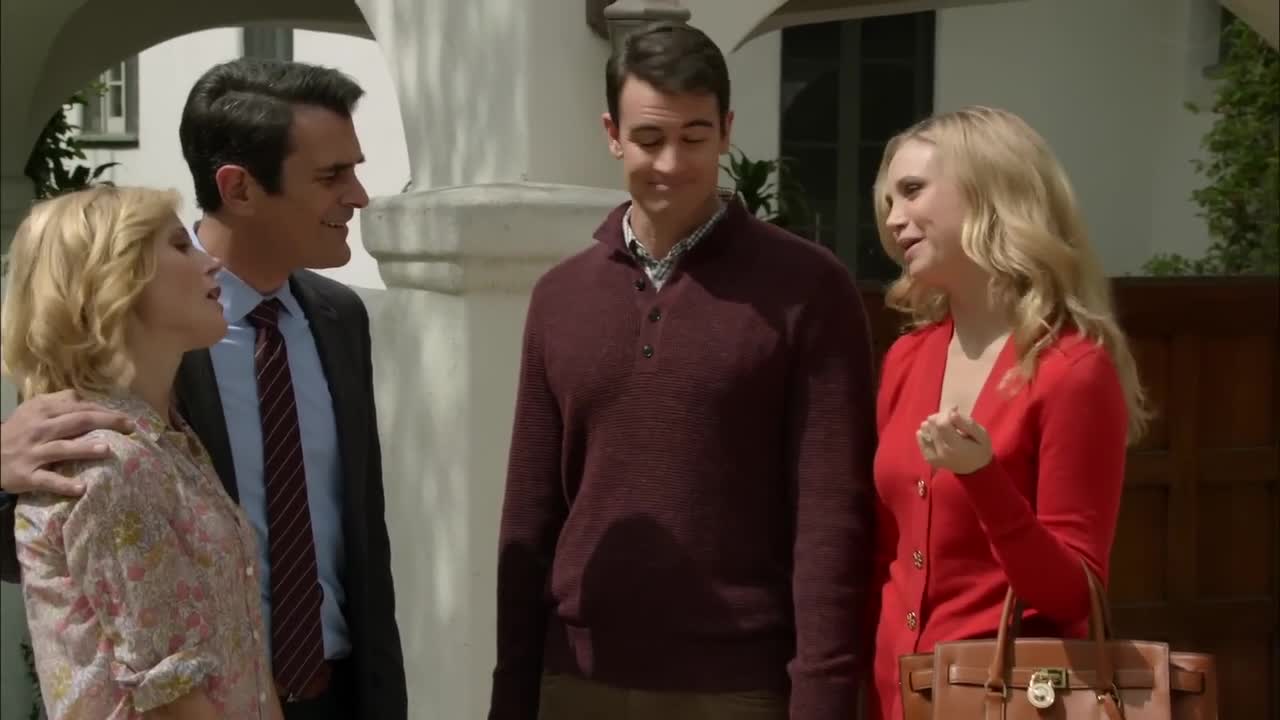
[The Illusion of the Perfect Neighborhood: A Study of Familial and Social Dynamics]-[Modern Family - Staffel 6: Clip "Won't Be Our Neighbor"]
📋 Summary
The Facade of Domestic Bliss
The narrative begins with a seemingly mundane discussion about home improvement, specifically the installation of a "tankless water heater." This technical detail serves as a metaphor for the transactional nature of the characters' relationships. The dialogue quickly shifts to the prospect of moving into a new home, characterized by an idealized vision of the future. The protagonist envisions "filling this yard with flowers," a sentiment that is immediately undercut by a self-aware admission that they are "pretending to do" so. This highlights a recurring theme: the performance of domestic contentment.
The Currency of Social Status
Materialism plays a central role in the social aspirations of the characters. George’s firm, which handles "PR for about 10 shoe brands," is presented as a gateway to an elevated lifestyle. The promise that the couple will be "swimming in shoes" acts as a lure, suggesting that their social standing is inextricably linked to consumerism. The excitement surrounding the decision to "pull the trigger" on the house purchase is fueled by this pursuit of a curated, high-status environment, where the acquisition of property is equated with personal achievement.
Generational Conflict and Dissonance
As the scene transitions from the anticipation of moving to the reality of family dynamics, the mood shifts from hopeful to discordant. The arrival of the children introduces a stark contrast to the previous adult optimism. The younger generation’s reaction—"I don't want to see a stupid house"—shatters the illusion of the perfect family unit. The ensuing verbal altercation, involving threats to "go live with your boyfriend" and the cynical admission of academic manipulation (making out with a teacher to avoid retaking a class), reveals a deep-seated dysfunction.
The Fragility of Connections
The transcript concludes with a jarring sensory experience: "What's that noise?" and an inquiry regarding "what these things made of." These final lines suggest an underlying instability in the environment they are so eager to inhabit. The contrast between the initial goal of having the "best neighbors ever" and the immediate breakdown in familial decorum serves as a poignant critique of the American Dream. The "tankless job" mentioned at the beginning proves prophetic; the labor of maintaining these relationships and the facade of the perfect home is indeed thankless and fraught with tension. The characters are essentially building their lives upon a foundation that is as questionable as the materials they are inspecting, leaving the audience to wonder if the "dream" is merely a fragile construct.
Deep Learning with ListenLeap


