Previously onserial. We're trying to get rid of cases if somebody is offered a plea to a misdemeanor you takeit.
Did you threatenthat?Wonderful.
You guys don'tworry, I'm not going to presscharges.
It doesn'tmatter. You'refine.
But I have to take it to jail because you hit a policeman.
Andyes, there's lots of people on the floor and there is another woman kickingher.
Why can't you guys fileme?
I kept trying to palehim.
There's more to thisstory.
And I don't know what you want me to tellyou, but that's the honestguy.
From this American life in WBZChicago, it'sserial.
One courthouse told week byweek, I'm SarahCanig.
A whileback, a man and I went to a meeting about community policing inCleveland.
The police department had invited people to a banquet hall for aworkshop.
Big round tables filled thespace.
Representatives from the police department were sprinkled throughout and each table had a moderator to keep thingsmoving.
The group is supposed to answer a bunch of questions about what kinds of problems they want the police to dealwith.
My table was populated with rulefollowers.
They doodifully work their way down the list ofquestions.
If kids are hanging out at an abandoned house in yourneighborhood, what should the police do aboutthat?
I guess I would hope that they would start by talking to the kids and reminding them that some people have to go to sleep and get up and work the next day and be a little more considered about thenoise.
Ohboy. Thank God for amanual.
He was sitting a few tables to the east of me and he summoned me over there because his table brasstax.
We got to address the elephant aswell.
A lot of young AfricanAmericans, males inparticular, we are afraid of the policeofficers.
I'm just going to behonest.
This guy was an attorney to civil rightscases.
A police commander sitting at thetable, lamely responded tohim.
Chris, that's a brabrush.
That's a bra brush you justpaint.
Now you're not afraid ofme.
You're not afraid ofme.
We justmet. We just met our shake of handagain.
Sir,sir,exactly. You see me here today and ustoo.
This was the struggle of thetable.
The citizens wanting to talkhistorically,culturally,structurally, the cops wanting to talkspecifically,personally,procedurally.
The table's moderator wasstalwart.
She tried her level best to keep everyone ontask.
There was just noway. We can have meetings withus.
Many of you saidearlier, we don't do a goodjob.
We're just getting people to comeout.
This is apoint. I'msorry.
How else would you go thatway?
But how else do we send out to getfeedback?
How can we engage more people in thisprocess?
I want to know what responsibility or what discipline do the police get for harassing thecommunity?
I can't enter thatquestion.
That I will make sure that it's broughtup.
Yousaid, let me just before wego.
The city of Cleveland Police Department has been corrupt for over 70years.
It'stime. You go back and ask some ofthat, tell them Miss RiceCity.
Over 70years, it has beencorrupt.
Why is it not going to white policehere?
They need to be here here andthere.
You tell them I saidthat,okay?
You tell them I saidit. This woman sayingit, MissRice, is SamariaRice.
Her son was TamirRice. You've probably heard his namebefore.
He was shot and killed by Cleveland Police a few years back when he was 12 yearsold.
He had been playing around with a fake gun in a citypark.
Someone called911. The police drove up onhim, shot him in the stomach within a couple ofseconds.
Whenever you talk about police or two police inCleveland, Tamir Rice is rightthere.
Not below thesurface, on thesurface.
His killing caused a civic spasm between police and the public that's still painful and stillunresolved.
So when Samaria Rice shows up at a meeting about the community's expectations frompolice, she speaks with dreadful moralauthority.
At first I didn't understand what Miss Rice wanted from thismeeting.
She didn't seem interested in the stated mission of theworkshop.
List ofquestions. All thesequestions, these right for thecommunity.
The question's going to be for thepublic.
They really need me after thesequestions.
The reason is not for thecommunity, but thisdoes.
I know that I'm aggravated because that's what this meeting should beabout.
But you have to understand that there's so many topics that have to beaddressed.
And so we havea... That's the maintopic.
No, that's the maintopic.
You have to understandthat.
That's the maintopic.Well, so you have to show this to us anythingelse.
You just have to not know if you'repolice.
You just have to pull this in the way theythink.
No, because all of that falls up underthere.
And that's the only thing I'msaying.
All of that other stuff falls up underthere.
One of the two police officers at the table jumpsin.
Hesays, which I completelyget.
Which I completelyget.
How can you help us dothat?
What's thesolution? How can I help you out withit?
She'slaughing. That's when I gotit.
That there's something absurdly wrong headed to her and to a lot of people inCleveland, mostly blackpeople, with this earnest soundingquestion.
How can you help us dothat?
Samaria Rice issaying, why are you turning this back onme?
Why is it my job to help you do your job the way you're supposedto?
You're the ones with the cruisers and the handcuffs and the tasers and theguns.
She'ssaying, for God'ssakes,physician, healthyself.
A persistent slogan inCleveland, even four years after hiskilling, is justice forTimmyer.
The case was investigated by three differentagencies,City, State andFederal.
The mayor appointed his own panel for a fourthinvestigation.
None found that the officers broke thelaw.
The then county prosecutor handled the case with the delicacy of alumberjack, calling ita,quote, perfect storm of humanerror, mistakes andmiscommunications.
It should have come as a surprise to no one when a grand jury declined toindict.
Technically you canargue, and many police officers and prosecutorsdo, that justice was applied in Timmyer Rice'scase.
But it doesn't feel thatway.
Instead, it feels like an open question haunting thecourthouse.
If you're harmed bypolice, what does it take to find justice in court that feels likejustice?
One way to try is by filing alawsuit, suing thepolice.
We're going toEucliddo,Ohio, a little burga on the east side of Cleveland to meet with myclient, AramusSpencer.
We're going to hisapartment.
We're going to talk to him about what happened to him a couple of weeksago.
I'm in a car with PaulKristallo, civil rightsattorney.
Ten daysearlier, he'd sent me atext.
It was photos of a guy in a hospitalbed.
His face hugely puffed up on oneside.
His skin's so taught from swelling that you could see the hospital lights reflected in hischeek.
His left eye was submerged by thedistortion.
The guy's mother said he had been beaten up by two policeofficers.
She'd found Paul'snumber, called himup,asking, is there anything we cando?
Paul talked toher, talked toAramus, who he said sounded cogent andsincere.
He had no criminal record to speakof, a few misdemeanorconvictions, but nothingviolent.
Pauldecided, this is a goodcase.
And we're going forme,right?
You actually don't have business with himtoday.
This is forme. It is foryou,Craig.
Thankyou. You'rewelcome.
Isit? Do you know a lot of people in thebuilding?
Yes. Aramus's face hadn't fullyhealed.
When I was still bloodred, he had a scab above hiseyebrow.
How long have you livedhere?
Threeyears.Three?Yeah.
Where'd you livebefore?
I was living on a hundred percentsafe.
Was that inCleveland?Yes.
Euclid issafer,cleaner, calmer than a lot of neighborhoods inCleveland.
Especially if you're from a dangerousneighborhood.
So you've got a teenager you're trying to keep out of thestreets.
You might send him to his aunt or his grandma inEuclid, put him in schoolthere.
Aramus is building his called RichmondHills.
It's an apartment complex built in the1960s.
Looks a little tired out bynow.
Aramus lives on the fifthfloor.
He walks me through his version of what happened thatday.
The police have a differentversion, which I'll get tolater.
But Aramus says he'd come downstairs to Bumma cigarette from a friend on the fourthfloor.
And a couple cops were coming down the stairwell at one end of the hallway and they saw him standing there knocking at his friend'sdoor.
So sorry they came through thatdoor?
Yeah.Oh, so they saw you through thewindow?
Yeah, they saw me through thewindow.
I was standing at thedoor, knocking at thedoor.
And they came and stopped me righthere.
Where are westanding? So did they talk to you fromthere?
Yes, they were basically telling me tostop.
Youknow, just to staystill.
And they wanted to ask me somequestions,whatever.
And there was two ofthem,like, basically how y'allstanding.
And they asked me for my ID and asked me to search me forweapons.
Aramus had seen cops around the hallwaysbefore.
So that wasn't asurprise.
They work securityhere,moonlighting.
Technically, they're offduty, but they're in uniform and they have full policepowers.
And that'snormal, by theway.
Lots of cops do this in KaiohogaCounty.
And Aramus had had run-ins with the policebefore.
And mostly they'd goneOK.
Not counting the time he says he wasJ.
Walking and he's Cleveland and a cop stopped him and he ended up getting whacked in the knee repeatedly with a Billy Club interested and put in jail for thenight.
Butmostly, he felt like he knew how to successfully navigate theseinteractions.
But the Euclid cops thatday, he figured his best strategy was to cooperate and get it overwith.
He wasn't doing anythingwrong.
He didn't want to give the cops any reason to suspectotherwise.
So he says he showed them hisID, told them he livedupstairs.
He said they asked if they could search him forweapons, which means a patdown.
They're feeling around for agun.
And Aramus allowedit. He didn't have a weapon onhim.
He wasn'tworried. What he did have on him was ablunt, a marijuana cigarette in the pocket of hisjeans, which the cops found and which I'll get back to because this measly blunt will become an outsized player in thisstory.
Anyway, next thing Aramusknew, the officers went to arresthim.
The other officer on this side asked me to put my hands behind myback.
I told them what am I under arrestfor.
I'm asked what am I under arrestfor.
And he never told me what I was under arrestfor.
At thatpoint, Aramus says he stiffened hisarm.
The arm that one of the officers was trying to put behind hisback.
So he's resistingtechnically.
And he's alsoasking, why are you arrestingme?
What did Ido? Noanswer, nodiscussion.
And then the one on yourside, he waslike, set the fuck up and need me and myboss.
And I went down or reach for my boss immediately likethis.
The other officer tried to throw me on theground.
I guess as if he was going to throwme, youknow, theprocedure, howthey, youknow, if you resist thearrest, they have a right to throw you to the ground and put your hands behind yourback, but they didn't put my hands around myback.
But they had one hand behind my back and then the other one to the kick in my face while I was on theground.
Thekicking, Aramussays, is what caused the damage to hisface.
Broke his orbitalbone.
That's a bone around youreye.
A public defender in Cleveland toldme,ah, everyone's always whining about a broken orbitalbone.
But in Aramus'scase, it was bad enough that the Euclid ER folks transferred him to a bigger hospital in Cleveland to make sure his eye would beokay.
Anyway, Aramus was down on theground.
One cop is kicking him in theface.
Another cop is holding back his rightarm.
Aramus's left arm is pinned underneathhim.
He can't get itfree. Aramus got down on the gross hallway carpet to showme.
I didn't need him to dothat, but it seemed as if he wanted to replay eachstep, which I couldunderstand.
It had only been 10 days since ithappened.
He hadn't gotten his mind aroundit.
On myhead, it's righthere.
The blood is leaking from myface, goingdown, dropping onto the ground likethis.
But what happened was he tased me righthere.
So I'm likethis. They tased me righthere.
Tased me in myneck. Tased me in the back of mythigh.
And tased me in my left chest righthere.
And then Ifinally, I toldhim,like, I'm going to let you put my hands behind myback.
You seeme? And they put my hands behind myback.
Pick meup. How am I going to set your blood rightthere?
That's myblood. There was a smear of blood with a big drip going down thewall.
And exactly the height ofHermes'eye, which isn't veryhigh, by theway.
Hermes is about5'6",5'7", I'dsay, andslight.
The police tased him about seventimes, not the full deployment eachtime, where the wires come out andeverything.
The lesser tasersetting, where it shocks andburns.
Hermes said he could feel electricity shoot down hislegs.
There's the burnmarks.
What do youmean? Hermes pointed to some spots at our feet where the carpet fibers were melted and clumpedtogether.
The taser righthere?Oh,really?
The burnmarks. Oh mygod.
I burned through my skin just like a burnt through thecarpet.
Soyeah. Hermes said while all this was goingon, the police were cursing athim.
He was cursingback. Hesaid, I just kept asking themwhy.
Why are y'all doingthis?
What did I do to deservethis?
He says they would notanswer.
When I asked Hermes if he'd been scared orenraged, the word he used wasuncultured.
He said the whole thing made him feeluncomfortable, which seemed like an oddly muted way to express being kicked in the head by acop.
He also said he was trying not to let what happened distract himmentally, not let it take him out of his everydaylife.
He said he'd just turned 30 a few daysearlier.
His family and his girlfriend had gathered around him to cheer himup.
He tried tocelebrate, hesaid.
I got the sense he wasn't ready to stare too hard at what hadhappened.
Fornow, he'd leave it atuncomfortable.
There's a security camera in the hallway right near the door he was knockingon.
But it was pointed straight down when we sawit, so it seemed quite possible that even if it were working at thetime, and apparently itwasn't, it would have produced footage of thefloor.
As the cops walked Hermes out of thebuilding, he says they were talking shit tohim.
He doesn't remember exactly what theysaid, but something like one more falsemove, I'm going to make it even worse for you the nexttime.
Then they put him in anambulance.
Back up inHermes'apartment, we talked about that marijuana cigarette he'd had in hispocket.
ToHermes'thinking, the police had no right to arrest him in the firstplace.
That's why he stiffened hisarm, because he says he genuinely did not understand what was goingon.
Because of the amount of weed that Ihad, it was not an arrestablecharge.
So I can never be resisting arrest for oneblunt.
That's not asimpossible.
If I have one blunt onme, I believeme, I had situations like thisbefore.
Our officers will take theweed, throw it in thegrass, or throw itaway, or flesh it down thetoilet, because there's no probable cause toarrest.
Sometimes officers right you would takeit.
I still couldn't bearrested, no matter what Imean.
Are you sure that's true inEuclid,though?
Maybe that's true inCleveland.
That's trueanywhere. That'strue.
It's aMr. Metreoffense, and it's notarrestable.
Is thatright?So, as the only lawyer in theroom.
Paul explained gently as he could that airmen isincorrect.
InEuclid,Ohio, any amount of weed can be charged as anM1, first degreemisdemeanor, possibility of a thousand dollarfine, six months injail.
Just over the cityline, back inCleveland, airmen would becorrect.
One blunt probably would be a ticket atmost.
But not here inEuclid. Ohio takes home rule veryseriously.
Ohio County has 59 differentmunicipalities.
Each one has its own set ofordinances.
Most of them align their city codes with Ohio statelaw, which treats less than 100 grams of marijuana as a minormisdemeanor.
But two of them treat any amount of marijuana as anM1.
BroadviewHeights, little town downsouth, andEuclid.
Euclid made its ordinance harsher in1998.
I'm not surewhy. But it's worth noting that the city's black population was growingthen.
For a fewdecades, white people had been moving out and black people had been movingin.
Now the city's about60% AfricanAmerican.
Euclid's city governmentthough, citycouncil, six out of nine members arewhite, mayor iswhite, police chief iswhite, city prosecutor iswhite, city law director iswhite, city judgeswhite.
And it's got the harsherst weed law in thecounty.
The best Paul can do forEromas, really the only thing he can do is to try to make everyone involved in sending Eromas to the hospitalpay.
On the drive back toCleveland, Paul talked about what he would donext.
He also anticipated what the city's lawyer would likely donext, which he can do withconfidence, because Paul used to be thatlawyer.
He used to work the other side of thesecases, defending the government and thecops.
He worked for the city ofCleveland, and then he was a partner at a law firm that contracted with insurance companies to defend against civil rightsclaims.
Paul was good at hisjob, and he made goodmoney.
He had to beMWs, a convertible and a hardtop.
But after awhile, he couldn't stomachit.
He says he felt like he was working for the wrong side and started to affect hishealth, so he switchedover.
He'll frequently mention that he drives a Hyundainow, and then he'llsay, and I'm fine withthat.
But he's not totally fine withthat.
Eromas's case won't be hugemoney.
Eromas wasn't permanentlyinjured, notphysically, but Paul thinks he can at least get himsomething, maybe in the tens ofthousands.
There's a complication they have to take care offirst,though, before Paul can get a lawsuitgoing, and that's the not-small matter ofEromas' criminalcharges.
The Euclid Police cited Eromas for fourcrimes, drugabuse, resistingarrest,theft, and criminaldamaging.
Paul said that list prettytypical.
So I'm hitting you with fourcharges, and so now let's negotiate down fromthere.
So I'm going to load youup.
So thisway, I'm going to overchargeyou.
So now I give the prosecutor a little somethingelse, a little bit more love to still get you to plead tosomething.
I wasconfused, as were Eromas andPaul, about what the theft and criminal damaging wereabout, until I read the policereport.
There was a page-long narrative in it that cops describe an event with roughly the same contours as what Eromas toldme, but very differentdetails.
The officers didn't talk to me for thisstory, and just tosay, neither of them has been disciplined for what happened thatnight.
Butanyway, in theirreport, they say that after they confiscated themarijuana, Eromas tried to take it out of one officer'shand.
They say Eromas was fighting withthem, pushingthem, that everyone was getting stunned by the taser in theprocess.
They say Eromas tried to take the taser away fromthem.
That's thetheft,apparently, and that the taser's cartridge got pulled off and the blast door brokenoff, that Eromas knocked one officer's glasses off hisface, breakingthem.
They never mentioned kickingEromas.
They do describe kneeing him in the crotchand,quote, closed-fisted strikes to his face andhead.
Eromas has got to get out from under these charges strategically andquietly.
Rightnow, Eromas doesn't think he should have to plead toanything, but Paul thinks it might actually be better for the civil case if he does plead to somethingminor.
And that's how Eromas is looking atit.
He'slike,look, I should walk out of this literally withnothing.
The problem with thatis, if you just take this hardline, like I'm not going to plead to even a minormisdemeanor, some one of them I'm going to pleadto, I think that's going to raise the flag that he's up to something that he's standing on principle and he's looking to sue you for theinjuries.
Last thing Paul wants at this stage is for Euclid to know it is beingsued, because if theyknow, they will dig in on the criminalcharges.
So firststep,delay. Eromas was supposed to have his initial court appearancetoday,actually, but they got it postponed by a couple of weeks to give his face time to go back tonormal.
I don't want him walking into court looking like he just got his ass beat by thepolice.
Why?Again, because peopleask, youknow, so whathappened?
And if you go in front of thejudge.
When you saypeople, you mean thosejudgements?
Yeah,maybe.Sure.Oh,yeah.
Yeah. Youngman, what happened toyou?
The prosecutor might notice you could police officers who happened to be in court thatday.
They mightnotice, start askingaround.
Paul wants Eromas to beunremarkable.
He's just there to take care of these charges and go onhome.
No bigdeal. Secondstep, hire abeard.
Paul himself has to lie low while the criminal case moves through the municipalcourt.
He will not be shepherding Eromasthrough.
Instead, he's hired a dependable local attorney who won't raise any eyebrows inEuclid.
Paul's farming itout, in part because his specialty is not criminaldefense.
But more to thepoint, if the folks in Euclid see Paul's name on thedocket, the jig is immediatelyup.
They will know they're facing a civillawsuit, possibly a big fat civillawsuit, because they will have heard of Paulalready.
Or else they'll Google him and they'llsee, ohright,pre-locase.
Also known as the 137 shotscase.
Back in2012, two people in acar, a man and awoman, bothAfrican-American, bothhomeless, were driving past the Justice Centerdowntown.
Police said the couple fired a gun out the window towardthem.
A subsequent investigation suggested the noise the officers heard might have been the carbackfiring.
They never located agun.
In anycase, the police began to chasethem, which isn't thatstrange, except for the debacle thatensued.
The chase wove through residentialneighborhoods, then onto the highway and back off thehighway, 20 miles and 62 police carslater, the chase ended in an East Cleveland parkinglot.
Where police fired a total of 137 shots at thecar, killing both peopleinside.
One officeralone, Sergeant MichaelBrillo, shot at them 49times.
He scrambled onto the hood of the car and shot down at them through thewindshield, at closerange.
Sergeant Brillo was indicted for voluntarymanslaughter.
A judge found him notguilty.
There was no proof Brillo had actually killedthem, the judge explained in hisopinion.
It's possible they were already dead by the time he got onto thehood.
The families of the two people who were killedsued.
Paul represented one ofthem.
And the city of Cleveland settled for $3million.
It was Paul's biggest mediacase.
Also his biggestpayout.
Lately he's been struggling alittle.
He's not into thehustle.
He doesn't show up at memorial gatherings lookingsolemn.
He doesn't slip a weeping relative hiscard.
He doesn't have a website or do socialmedia.
He'swhite, which isn't always helpful in thisbusiness.
Erimus's case is an order of magnitude smaller than the 137 shots case or the Tamir ricecase.
No one's going to shout his name during aprotest.
Paul told me the smallercases, they matter because theyricochet.
He's watched a lot of people go through incidents likethis.
He says this beating will knock around inside Erimus's head and then it'll rebound off of him out into thecity.
It's as much as you want to talk about how we need to come together as a society and Black Lives Matters and all-lifematters.
The police have a hard job and you've got to listen to what the police tell you to do and you've got to obey the law and don't be acriminal.
Imean, the realityis, is now you've just created somebodywho, Imean, he's this walking perpetuation of don't trust thepolice.
He now knows that that happened and all he had on him was a blunt in his own apartmentcomplex, in his own apartmentcomplex, not late atnight.
Nodrugs, noalcohol, nogun, no criminalactivity, but theblunt.
And that's what happened tohim.
This will mess withhim.
If you stick with this story and we followhim, you'llsee.
Imean, it'll fuck withhim.
He hasfamily, he hasfriends.
They're all going to know whathappened.
They're all going to see thepictures.
So it's forhim.Now, this becomes part of his lifescrap.
This has become something that is going to be retold and retold and photos are going to be shared andreshared.
On and on andon. This is oneguy.
This is one incident you could allhire.
A study published in 2016 found that reports of police brutality not only contributed to aquote, spirit of legalcynicism.
They also caused people to not call the cops when they needthem.
They make entire cities lesssafe.
The researchers looked at 911 calls before and after an infamous case inMilwaukee, the 2004 beating of a guy named FrankJude.
They found that for a yearafterwards, there were 22,000 fewer 911 calls inMilwaukee.
And that residents in black neighborhoods especially were far less likely to reportcrime.
And at the same time that people were reporting fewercrimes, murders in Milwaukee rose by32%.
The goal of Paul'slawsuit, aside from getting Air Miss some justice and somedoe, is to force police to account for theirbehavior, to answer forit.
When I askedhim, setting his own livelihoodaside, isn't it possible that his involvement could actually be hamperingprogress?
Say Air Miss went to the police department and complained to thesupervisors, or the use of force in the officer's report triggered an internalinvestigation.
And say that process were allowed to play out without the specter of alawsuit.
Isn't it possible the department would fixitself?
That isno,that's, Imean, I know you probably hate hearing people say that's a greatquestion.
I loveit. That is a greatquestion.
And it isbecause, Imean, youknow, if I could even like broaden your question a littlebit, kind of what you're askingis,well, but the way you're handlingthis,Paul, are kind of how you're triangulatingit.
Triangulatingit. Orch istrading, if youwill.
You're denying the city of Euclid and the police department the opportunity to do this right on theirown.
And you're absolutelyright.
You'reright. I am doingthat.
But that's because ofdistrust.
If I were to kind of do what you'resaying, or we were to march down there and fill out a citizen complaint and talk to them about constitutional rights and excessiveforce, I'm leaving it up to them now to kind ofsay,well, you knowwhat,yeah, this wasawful.
We better do an internalinvestigation.
We better do what'sright.
And that just hasn't been myexperience.
That just hasn't been myexperience.
I think when you dothat, they don't ownit.
They lawyerup. It's never a situation where like the city or the police arelike,wow, youknow, we really messedup.
We need to do the right thinghere.
It'salways, youknow, what are you talkingabout?
This wasjustified. Your client is aliar.
And we've got our insurance people working onit.
Like Ijust, I just have zero faith based on my experience that that wouldhappen.
That's not going tohappen.
This is what bothered Paul the most when he worked at a fenceside, hesaid, the city's disdain for theplaintiffs.
A person would file an excessive forceclaim.
And rightaway, Paul says everyone would attack the character of thecomplainer.
Not justpublicly, even amongthemselves,privately.
Thelawyers, theadjusters, the insurancecompanies, the policeofficers, the policechief, themayor.
Their attitudewas, what kind ofloser?
What kind of scumbag would sue thepolice?
That's after thebreak.
Hello, this is Yawande Kamalafah from New York Times cooking and I'm sitting on a blanket with MelissaClark.
And we're having a picnic using recipes that feature some of our favorite summerproduce.
Yawande, what do youdrink?
So this is a cucumber aguafresca.
It's made with freshcucumbers, ginger andlime.
It's really easy to put together and it's something that you can do inadvance.
Oh, it is sorefreshing.
New York Times cooking has so many easy recipes to fit your summerplans.
Find them all atnytcooking.com.
Rightnow, these past few years is an era of law enforcement soulsearching, or it's supposed tobe.
All over thecountry, police departments are meant to be considering deeply andanxiously, whether they are using forceproperly, whether they are operating withoutbias, whether they're listening to and hearing the citizens theypolice.
And Albuquerque in NewOrleans, inPortland,Oregon, inFerguson,Missouri, inBaltimore, and inCleveland.
After the 137 shotscase, the one where the couple was killed by police after thechase, first the Ohio Attorney Generalinvestigated, then the feds camein, civil rights division of the Department ofJustice.
Less than two weeks after Tamir Rice waskilled, they issued theirreport.
The Cleveland Police Department was engaging in a pattern or practice of using unlawful excessive force among many otherproblems.
The article is about the breadth and depth of the overall findings exhausted all the usualwords,scathing,embarrassing,staggering, jawdropping.
The report was not all that different from the previous DOJ investigation of the Cleveland Police a decadeearlier.
Thistime, the city promised things would bedifferent.
In2015, they entered into a consent decree with the federalgovernment.
A federal judge would oversee massive reforms in theCDP.
If citizen complaints don't bringchange, if internal investigations don't bringchange, if criminal charges against cops don't bringchange, if Paul Christallo's lawsuits don't bringchange, perhaps a federally mandated consentdecree, adecree, just one click from afiat, would persuade police that change isnigh.
Perhapsnot. Politicalnonsense.
This is Detective SteveLuma.
Untilrecently, he was the president of the Cleveland Police Patrolman'sAssociation, the police unionhere.
The calendars of a certain politicalpersuasion, including somecops, I'msure, just slapped their foreheads andgroaned.
Please,no, notSteve. Because theyknow,baldheaded, meaty-fisted SteveLuma.
The guy who dressed convincingly in a Santa hat at the department's Christmasparty, and as the dirty biker hillbillydude, when he workedundercover, will say whatever the hell hewants.
Steve Dentalback kissed my ass with hisbullshit.
Steve Dentalback was US attorney for the Northern District ofOhio, his signature is at the bottom of the DOJreport, a report which devoted several pages to the substandard way in which the Cleveland Police Department dealt with citizencomplaints.
We really don't care about civiliancomplaints, not that we don't care that we get that wedon't.
My laughter here is born ofshock, notworth.
I'm not going to say I like SteveLuma.
I can't getthere. Some of the positions he inhabits are tooawful.
President Obama has blood on his hands for the police officers killed inDallas, or racist and anti-Muslim tweets by a CDPsergeant, or the First Amendment right of everyAmerican,etc.
But I appreciate SteveLuma.
I appreciate that he's got a sense of humor abouthimself.
I appreciate that he appears to be a truebeliever, that he is sincere when he says even the loliest rookie patrolman does more to help this community than any other person ingovernment.
I appreciate that Steve Luma gave us six hours of histime.
In oneday, six hours sat there in his unionoffice, packed with Trumpparaphernalia, also one or two cartoons that I'd callracist, he'd callpolitical, explaining his world tous, arguing withus,congenially.
And aside toClevelanders, he'll complain that the media only quote Steve because he's colorful andavailable.
He'llsay, Steve doesn't representus.
Well, it'strue. So no other Cleveland officers were permitted to talk to us on therecord, and I know from off the record conversations that not all of them think likeSteve.
But thataside, Steve is the man whom the rank and file elected as their leader andspokesman.
Hedoes, ordid, officially represent thepolice.
So here weare. I know where activists stand on the question ofreform.
I know where a lot of non-activists stand on the question of policereform.
What I wanted to know is reform even possible are the policewilling.
As unionpresident, Steve Luma set on the Cleveland Community PoliceCommission, theCPC, a group mandated into existence as part of the consent toCRE.
It's supposed to make recommendations on new policies for communitypolicing, bias-freepolicing, use offorce.
And you'reparticipating.
Sure. I'mparticipating.
With a fullheart?Yeah,absolutely.
With a fullheart. The problem that we haveon.
I thought there was a time where you just literally had not shown up to a meeting for like ayear.
No,yeah, you want to believe the rhetoric outthere.
I don'tknow. It was in thenewspaper.
Is thatrhetoric?Yeah.
Infact, there's been a steady drip of articles in the local press about Steve's body attendance at meetings and the many calls for hisresignation.
In onearticle, he explained that he'd appointed himself as a commissioner because he didn't want to subject any of his patrolmen to quote that farce of acommission.
Still he insisted he is notanti-reform.
He can always improve on what wedo, he toldme, and I'm happy to take that challengeon.
But when I asked him about possible reforms inCleveland, reforms that are being discussed and implemented all over thecountry, he vigorously whacked each oneaside.
Slowing down police interactions with suspects and hopes of avoiding the need forforce.
Everybody wants to talk aboutdeescalation.
And that's just a really sexy word fortalking.
Youknow, it seems likegood.
That seems good talking seemsgood.
But guesswhat? That's what we've done since the beginning oftime.
Pious. Steve would like to see one study linking implicit bias to police actions andreactions.
Racialprofiling. I'm not going to sit here and say that that doesn't happen somewhere else in theworld.
I am going to sit here and say in a city ofCleveland, there's no way that ithappens.
It's not supported infact,right?
Our use of force policy is coming out and that thing is going to beatrocious.
More restrictions on how and when police can use a gun is going to endanger his officers hesaid.
Because they'll thinktwice.
They'll be afraid of getting in trouble for doing itwrong.
And then it'll be too late to common complain amongpolice.
Tazeringpeople. Youknow,well, you can't taze ajuvenile.
Okay. Youknow, TamirRice, nobody wants to talk aboutit, but Tamir Rice was5'7, 191pounds.
Allright? He's 12 yearsold.
ToSteve, the Tamir Rice case is the perfect example of how people misunderstand and willfully distort what the policedo, how their fixes make nosense.
Tome, the way Steve talked about the Tamir Rice case was the perfect example of why so many people in Cleveland believe the police have zero capacity forself-reflection, much lessself-correction.
The officer who shot Tamir wasnew,young, still onprobation.
I pointed out that Steve himself as an experienced officer had avoided shootings by lowering hisweapon.
He'd just given me a coupleexamples.
So why is he saying in the Tamir Rice situation any officer would have done the samething?
You wouldn't have done the samething.
You're telling me rightnow, youwouldn't.
No,no. In TamirRice, I absolutely would have done the samething.
You would not have done the samething.
Absolutely would have done the samething.
But you're telling me you wouldn't doit.
Listen, you want to get in TamirRice?
We're going to get into TamirRice.
So itbegan. Steve reiterated as he has many times that numberone, Tamir was a bigkid, as if that made him blameworthy.
A child and a man'sbody, bottomline.
There's no denyingthat.
Nobody can disputethat.
Numbertwo, Tamir Rice knew exactly why those policemen were driving that marked police car towardshim.
He is a product of thestreet.
He is not a product of lovinghome.
Oh, hangon. Hangon. I did hangon, and it gotworse, his savaging of SamariaRice, which I'm not going to dignify by repeatinghere.
Steve has said unkind things about the Rice family in thepast.
Healso, helpfully suggested they should use the money they got from a lawsuit to educate kids about the dangers ofguns.
He wasn't worried about his tone or its implicationsthen.
He's not worriednow. He believes the facts are withhim.
We disagreed about whether the police drove up too close toTamir, whether they drove up toofast, whether Tamir pulled the gun from hiswaistband, whether the shooting of Tamir Rice was a mistake atall.
Okay, we can disagree until the cows come home about what should have happened or why ithappened.
And my guess is we probablywould.
I'm not supported infact.
That'sfine. But I think we can all agree it was ahorrible, horribleoutcome,right?
I know youhave. I know youhave.
So what I'm wonderingis, do you see anyfixes?
Is there a thing where you'relike, here isn't change that I think could have avoided this that isn't only onTamir?
Theyhaven't. It's absolutely onTamir.
It's on any suspect that gets shot by thepolice.
Actions by suspects cause reactions by policeofficers, justifiedreactions.
Did police take away any lessons then from the Tamir Ricecase, I askedthem?
Sure, hesaid, we always learn alesson.
So what isit? I don'tknow, hesaid.
It was in fact the only time I stumped him in our six hourstogether.
I asked him several times and he could not come up with one thing that wasn't Tamir'sfault.
It sounds like you're saying there's nothing that needs tochange.
No, that's not what I'msaying.
What I'm saying is those changes need to be based inreality.
But what should the changesbe?
That's not wildIsland, why do we fixate and focus on Tamir andRice?
That's the bigger question to me is we want to change our entire profession based on a couple ofdifferent...
When you'resaying, why are we fixating on thesedeaths?
Because people are like enough is enough is enough isenough.
They're saying it's one is toomany.
One accident like this is toomany, let's fixit.
Tamir and Rice was not anaccident.
Tamir and Rice was pulling a gun out of hiswaistband.
But we're saying he shouldn't have died forit.
He shouldn't havedied.
So how do we fixthat? This is what I'msaying.
I think this is what we're allasking.
But what's frustratingis...
I'll tell you how we fixthat.
We don'tgo. When somebody calls us and tells us that somebody's at a rec center with agun, we don'tgo.
That's the only way to fixthat.
Right? I guess I just don't buythat.
Well,I... They're like that they'rehopped.
I think Steve might actually believe what he's sayinghere.
That police are never to blame for harming someone in the line ofduty.
If you end up dead orhurt, it's always because of something you did or didn'tdo.
It follows then that the only ones who need to reform are thecitizens.
In the name of Cleveland's 1500patrolmen, Steve Lumis is folding hisarms.
Inside his petulence is also athreat.
You know like how we dobusiness?
Fine, we'll stop arrestingpeople.
See how you like your citythen.
It's the same stance some police officers have taken inChicago, inMinneapolis, in NewYork, andBaltimore.
A copout. Steve Lumis says Cleveland's problem isn't rotten police or poorly trained police or faultypolicies.
The problem he says isunderstaffing.
And he's notwrong. Even people who can't abide Steve Lumis agree that Cleveland's police department is overburdened and under-supplied and poorlypaid.
This of course is the lament of law enforcementeverywhere.
Civilians, we need your taxdollars.
What we don't need is youroversight.
Akotahere. A few weeks after wespoke, Steve Lumis was replaced as unionpresident.
He had been voted out ofoffice.
And I'm not saying these things are necessarilyconnected, but eight monthslater, the team in charge of overseeing police reforms in Cleveland released somestats.
Showing that during the first five months of2018, police use of force in Cleveland had decreased by nearly 40 percent compared to the yearbefore.
It was too soon to claim victory the reportsaid, but it wasencouraging.
Are you asponsor?Okay, we are here on this motion tosuppress.
Five months after he'd beenarrested, Erimus went to court forhearing.
Bynow, the city of Euclid knew a civil lawsuit was probablycoming, which is why after all thistime, the four criminal charges were still hunkered in his casefile.
As Paulpredicted, the city wasunrelenting.
The prosecutor was not going to dropthem.
Definitely not the resistingarrest.
That's the Linchpincharge, theresisting.
The one that could really mess up Erimus's civilcase.
Because if Erimus gets convicted ofresisting, that could justify the officer's use offorce.
Not necessarily the excessiveness of thebeating.
It doesn't give them carteblanche.
But it does allow the officers to do what they have to do to subdue asuspect.
So if Erimus has to eat that resistingcharge, it could shrivel his civilclaim.
That's why the city won't budge on theresisting.
And why Erimus won't budgeeither.
Instead,today, Erimus is here on a motion tosuppress.
He's trying to get all the charges dropped by claiming that the police had no reasonable suspicion to stop him in thathallway.
And then after they made the faultystop, they had no probable cause to searchhim, which would make the actual blunt they found on him the fruit of a poisonoustree.
That's the legalmetaphor.
So no legalstop, no legalarrest, nocase.
When I walked into thecourtroom, MaryCase, the city prosecutor said tome, you do know this is just ahearing,right?
Ido, Isaid. Then she and the other lawyers left the room for awhile.
I sat waiting in the empty jurybox.
Erimus, the twocops, Erimus's mother all sat on thebenches.
No one saidanything. I wrote in mynotes, it's like a tomb inhere.
Then I heard a ruckus through the wall behind me where the prosecutor's officeis.
People wereshouting. After awhile, the lawyers filed back into thecourtroom, lookingpeeved.
Mary Case and a couple other lawyers sat on oneside.
On theother, Erimus and his defenseattorney.
The local guy Paul hadenlisted, Spiro'scanalkas.
Judge Deborah Labyrin announcedme.
And as I advised all theparties, I have Sarah Coney from the serial podcast who is asking to report theseproceedings.
But as acase, thankyou, YourHonor.
You're onit. At thistime, the city would request a continuance of thishearing.
We have some concerns with respect to this hearing being recorded for a publicpodcast.
It seemed I had been the cause of theruckus.
We have an interest in protecting the city ofEuclid.
Any flicker of a notion I had that the city's intentions were forthright witherednow.
Before I'd figured both sure they weretriangulating, just likePaul.
But I'd also assumed that they were at least prosecuting Erimus in goodfaith, because they believed thecops, believed he'd committed thesecrimes, and deservepunishment.
But you don't try to kick the reporter out of a public proceeding unless there's something unsavory about what's about tohappen.
Judge Labyrin denied the prosecutor's request forcontinuance.
Theybegan. The hearing would not touch on anything that came after thesearch, so nothing about the resisting or thebeating.
This was only about the validity of the stop and thesearch.
Mary Casa and Spiro's canalkas took both cops through it moment bymoment.
That's where the law tends to snap intoplace, in aninstant.
Next up was Officer ShaneRivera.
He explained that he and hispartner, Officer MichaelAmiott, had been working in off-duty detail that day at the Richmond Hills apartment complex where Erimuslived.
He said they'd been working this particular detail for twoyears.
There'd been problems in thebuilding, drugtrafficking,break-ins.
They began their usual sweep of thebuilding, starting at the fifthfloor, the topfloor, and working their waydown.
They sawErimus, hesaid, as they came down the stairs to the fourthfloor, he was knocking on adoor.
And when he was knocking on thedoor, do you recall if anyone answered thedoor?
No one answered thedoor.
At any point did the individual take keys out and open the door to theapartment?
No, he didnot. He's saying Erimus looked suspicious rightthen, reasonablyso.
Why would you keep knocking on a door if no one'sanswering?
This is what burglars do in thebuilding.
Knock. And then when no oneanswers, they kick in thedoor.
Now, as Iapproached, I asked him if he lived in the complex he said hedid.
And I asked if he knew who lived at that particularapartment.
And he said he didnot. And Erimus was squirming at the defensetable, shaking hishead,stifled.
He told me he was knocking at his friend's apartment door because he wanted acigarette.
His friend wasn'thome, but his friend's wife wasthere,asleep.
Erimus says she eventually woke up and did open thedoor.
He says she saw him being beat up and that the police told her to go backinside, and shedid.
But Erimus can't say anything about thatnow.
He's not taking thestand.
As Laura didn't want the prosecutor to get a crack at cross-examining Erimus prior totrial.
So he's got to suck itup.
Every defendant I spoke to while I was in Cleveland eventuallyasked, when do I get to say mything?
When do I get to explain to the judge whathappened?
Theanswer,often, isnever.
I see him's very anxious and nervous and kept putting his hands in his pockets as soon as he saw us and he was advised a couple of times to take his hands out of hispockets.
Did he take his hands out of hispockets?
Yes, but he kept putting them back in andsay, around three to fourtimes.
And how did you react to him putting his hands back in hispockets?
Itnervously, Imean, it makes police officernervous.
Why isthat? Because typically when people keep reaching in so they'repockets, it's an indicator that they have caught your band or possibly a weapon on theirperson.
Soon, it wasSpiros'turn.
Officer, I'm going to ask you a few questions oncross-examination.
I tend to put my hands in my pockets while I askquestions.
I don't want to make younervous.
I don't have any counterband onme.
Objection. Spiros is a spiritedattorney, an energeticperformer.
Spiros tried to show that Hermes wasn't a menacing figure in thathallway.
He was just a guy knocking on adoor.
Well, there's adifference,right?
This isknocking, it's a posetoo.
Right? He wasn't doingthat.
Washe? Knocked on thedoor.
Okay. Knocked on thedoor.
He wasn'tscreaming.No.
Right? He wasn'tyelling.
Let mein. What are youdoing?
What's goingon?Okay. Nextup, Officer MichaelAmiat.
He seemed more comfortable on the stand than OfficerRivera.
He didn't soundnervous.
He wasn'tdefensive. We approachedMr.
Spencer. He was still at thedoor.
I walked pasthim. And as I approachedhim, I could smell the odor ofmarijuana.
It gotstronger. It was clearly coming fromhim.
And Istopped. This is key to making the stopkosher, the smell of raw marijuana emanating fromHermes'person.
It's what allows them to detainHermes.
Their prosecutor cements it in therecord.
In your experience as a policeofficer, can you smell raw marijuana in a bag inside someone'spocket?
Yes. And just marijuana smell the same regardless of what amount of marijuana thereis?
Yes. Sometimes it's stronger than othertimes.
No, and I smell rightnow?
Reasonablesuspicion.
That Officer Amiat did not smell an unlit blunt wrapped in a baggy inHermes' jeanspocket.
It's notimpossible, he smelledit.
But the level of confidence he's exhibitinghere, that he can smell any amount of marijuana in a person'spocket.
In the hallway of a building where I am certain marijuana is notscarce, no one in the courtroom seems to register any skepticism aboutthat.
Apart fromSpiros. These guys are basically bloodhounds now with your ability to smellmarijuana,right?
Iwouldn't. I'm notsure.
I'm going to just think that it's unnecessaryMr.
Cannabis. Iapologize.
I'll take deathback. Officer Amiat says after he smelled themarijuana, he adds to the fact that he's notbiased,Hermes, if he had any drugs onhim.
He didn't sayanything, he'd put his hands up likethis.
Isaid, do you have any drugs onyou?
He'd put his hands up likethis.
Okay, and what did you do after he put his handsup?
I searchedthem. And did you find anything on thesearch?
Yeah, I went into hispocket.
One of the pockets he was reachinginto.
There was a small baggy inmarijuana, it was probably thatsize, it wasn't verybig.
Drafted in abaggy. Each efficient beat of thishearing, the cops are chipping away atHermes' chances forsuccess.
Criminal andcivil. Hermes is a scary doorknocker.
He smells likemarijuana.
He seemsnervous. He keeps putting his hands in hispockets.
He lets me search him fordrugs.
It's all very neat and all very different from what Hermes says actuallyhappened.
Then comes onemore, a doozy right at theend.
Mary cases squeezes it in during herclosing.
This testimony was that he patted the outside of the pocketfirst.
That he did a patdown. He felt abulge, he reached into thepocket.
Oh, ajudge? Spirits islike,whoa,whoa,whoa, abulge?
Where does bulge comefrom?
A bulge could suggest aweapon, which could give officer Amiatt reason to go intoHermes'pocket, which could make the searchlegal, which could make the chargesstick, which could hurt the civillawsuit.
Spiritssays, waitup. Amiatt himself never said anything about abulge.
That did not happentoday.
He said there was abulge.
I am in mynotes.Yes. That there was abulge.
The judgesays, I heardit.
I wrote it down righthere.
Just tellme, that's in mynotes.
So now for theirargument?
It wasover. Mary Case looked very pleased at theend, chatting animatedly with the other lawyers at hertable.
Sheknows, everyone in the courtroomknows.
In the who you're going to believecontest, the judge tends to presume the cops are telling thetruth.
So, her side virtually alwayswins.
Spirits knows ittoo. He expected the police to say most of what they saidtoday.
But the bulgething, that was a newone.
Out in thehallway, Spirits is stillarguing.
You can't just inventtestimony.
You can say it wasbald, what do you think it'ssaying?
You can say it's anythingtestify.
Say, pen themdown. Then you're inside yourpocket.
Did you hear anything about abulge?
Iswear, he did not say that he felt abulge.
Spirits isright. I have thetape.
Despite what the judge thought sheheard, Officer Amiatt did not mention abulge.
Bulge or nobulge, Spirits tries to boostHermes'spirits.
It wentwell.Right? As awoman.
Yeah? This bulge is going to be anissue.
So, how does that work withme?
He justcan't, even if he can stop you for themarijuana, does it mean he can go inside of your pockets and pull outcontraband?
Resulable suspicion means he can keep you there and figure out what's goingon.
He can patch you down for officersafety.
But that would have been a much thorough conversation on direct examination asto, I padded himdown.
Over thetop, I felt abulge.
We thought it was aweapon.
We wentin. That'sit. That's about all thebulge.
Yeah, reallybad. Let me know aboutthat.
I'm sure you can tell me this is a lot ofdough.
Hermes'mom,Callie, is the only one who laughed at myjoke.
Hermes himself is brimming withfrustration.
It's been fivemonths. He's having to fight criminalcharges.
He considersillegitimate.
Because of what happened in thehallway, the building management stuck a three-day notice as apartment door telling him he had to move out or else faceeviction.
He said they told him the incident was a violation of the building'srules.
He got anextension, butstill.
He says his girlfriend was harassed in front of thebuilding.
He thinks it was the same officers who stoppedher.
He says she told him she stayed with Hermesupstairs.
They arrested her on awarrant.
Andtoday, he's just listened to police officers tell a version of the original incident which bears little resemblance to hisown.
He said they asked him to stop from down the hall before they even got nearhim.
Theysaid,stop. Don'tmove.
He says he never told him he didn't know whose door he was knockingon.
Anyway, why would he be knocking on a door of a person he doesn'tknow?
They never asked me thatquestion.
Who's a door thisis? They never asked methat.
They stopped me and they asked me search me forweapons.
They never asked me anything about anydrugs,anything.
So the story that they were telling in theretoday?
That wasfalse. That was completelyfalse.
They lie down underoath.
I'm sitting there watching them lie underoath.
Theylie. Judge Labyrinth deniedHermes' motion tosuppress, which means that resisting charge issticking.
Notgood.Yeah, it's always something likethis.
The police always have this script with aprosecutor.
Paul Kristallo hadn't gone to the suppressionhearing.
He was still trying to remain invisible and youcould.
But Spiros had filled him in and he'd read the judge'sopinion, which amounted to thestop, thesearch, alllegal.
She didn't even get to thebulge.
She wrote that based on the suspicious door knocking and the smell of marijuana weregood.
If it's not the smell of marijuana or the smell ofalcohol, he made a fervent movement with hishands.
Or he kept moving hishands.
I wasn't sure that's the sign that maybe he's got aweapon.
He was actingnervous. I think infact, Dave andHermes' case testified that he was actingnervous.
Imean, that'sjust... I wasn'tthere.
But that's justscripted.
Everybody says ferventmovements.
Everybody smellsmarijuana.
Another phrase you hear a lot in thesecases, reaching toward hiswaistband.
That's where gunslive.
In their writtenreport, the Euclid officers wrote that Hermeswas,quote, fighting with officers and pulling both arms together toward his waistbandarea.
And a little lowerdown.
More strikes were delivered until Spencer stopped fighting and stopped reaching toward hiswaistband.
Hermes had noweapons. Had no nothing tucked in hiswaistband.
Why then in the midst of a fight would he be reaching toward hiswaistband?
It's a magicword, likefurtive, like odor of rawmarijuana.
It plants a strong seed of reasonable suspicion that blossoms into a tree of probable cause which can produce untaintedfruit, justified use of force in response to resisting a legitimatearrest.
I asked Paul back when he was working for insurance companies defendingcops, whether he'd done the same thing Euclid was doingnow, when they could see a civil lawsuit in thedistance, would he meet with city officials or cops about doubling down on the criminalcharges?
To try to stop the civil case from gainingtraction.
Uh...Yes, youknow.Yeah.
Yeah. Youknow, you meet him in city hall or you meet him over the prosecutor'soffice.
Youknow. Put that plantogether.
Wait, you're talking about this kind ofreluctantly, is thiswhy?
No,seriously, if I press some button that'slike, I shouldn'tbe...
Why areyou?Because...
Imean... Imean, youknow, I'm doing myjob.
Youknow, when I was doingthat, I was doing myjob.
Andso,uh... Youknow, I don't regret doing myjob.
Partof... I think this part of defending the police and this dynamic isto,uh...
youknow, to sit down with them and to put that as much of an airtight defense of the best defense that you can puttogether.
And I said hesitantly or reluctantlybecause, youknow, you'renot...
I don'tknow. Youknow, you're not proud ofit, youknow?
Imean, I'm not proud ofthat.
Oh, Isee.Yeah,yeah,yeah.
No, I didn't ask it as a way to belike, aren't youashamed?
I didn't mean to dothat.
Ijust... I was moreasking...
I was more askingpractically,like, are you talking from once you know or are you justlike, I suspect this is what going on or you'relike,no.
Oh,no. I know this is what's going on because I used to dothis.
Yeah,no,no, I did this for manyyears.
So,no, thisisn't... None of this issurprising,obviously.
It isn'tsurprising. What's probably surprising is how it remains a constant source of aggravation and ofset-edness.
Youknow, it's though hard to watch and is not like to see this happening in acourtroom.
People making statements on the span that aren't necessarily accurate and they knowit.
But there you haveit. Ofcourse, it's upset-edness if a police officerlies.
What's more upsetting is when a system of laws and procedures kicks in to support and sanitize thoselies, so that it looks and sounds as if justice ishappening.
I'd even wager that the officers in the prosecutor and the judge they'd all swear with conscience as clear thatairmiss' hearing was fair by thebook.
If Air Miss wants these police officers to be held accountable for beatinghim, he's now gotten themessage.
The criminal court is probably the last place he should look forhelp.
A few monthslater, I got a call from Paul on my cellphone.
Oh mygod! Iknow. I was driving in a car heading to the airport in SouthCarolina.
It wasterrible.Well, this is sohuge.
Sir,listen, this is like mana fromheaven.
This literally islike, this is that miracle because they weren't going to come off theresisting.
A video had appeared on theinternet.
Ohwow. A white police officer pummeling a black guy in the street after a trafficstop.
A woman watching from inside a building across the street had recorded in on herphone.
Her child was next toher.
What are youdoing? What the fuck is goingon?
What the fuck is goingon?
What the fuck is goingon?
Oh mygod. The officer beating themotorist?
MichaelAmiat, the Euclid WeedSmeller.
The video bounced all over theinternet, made its way into nationalnews.
What happens to a casethen, when everyone's payingattention?
That's next time oncereal.
Serials produced by JulieSnyder, a manual Jochi Ben Calhoun inme, with additional reporting by EdelieSkowski.
Editing on this episode from Ira Glass and NancyUpdike, Whitney Dangerfield is our digitaleditor, searching fact checking by BenFalen.
Sound is on and mixed by StoNelson, music clearance by AnthonyRoman.
Sutherland is our director ofoperations.
The cereal staff includes EmilyContan, JulieWhitaker, CassieHowley, FrancisSwanson, and MattTierney.
Our music is by Adam Dorne and HalWilner, with additional music from Matt McGinley and DanWrights.
Our theme song is by Nick Thorburn and Remix by AdamDorne.
Special thanks to AmandaKing, SabaudChandra, LisaNoller, MelissaGeorge's, Jonathan WhitmerRich, KyleSwenson, MatthewBarge, MikeTobin, SteveDettelbach, DavidDouton, DanielHart, Captain ScottRoller, and Tina Roder of the EucleopolisDepartment, and LynnHampton, president of the BlackShield, Cleveland's African American PoliceUnion.
Thanks also to Pandora for airing theshow.
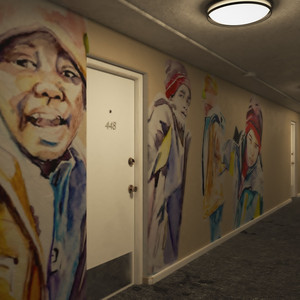
The art on our website was made by DariaStewart, a Clevelandartist.
He created the mural for thisepisode, and by MothStudio, they did theanimation.
Please check it out on ourwebsite,cerealpodcast.org.
That'scerealpodcast.org.
We'realso, ofcourse, on Facebook andTwitter.