Hey, I'm Robert Vinlow and I'm from New York Times Games and I'm here talking to people about World in the wordle archive Do you all play world?
I played everyday. All right, I have something exciting to show you.
It's the world archive So now you can play every world that has ever existed there's like a thousand puzzles Wordle archive Now you could do yesterday's world if you missed it New York Times game subscribers can now access the entire wordle archive find out more at nytimes com Subscribe by May 11 to get a special offer.
Hey everyone, it's Anna.
Before we start, the Modern Love team wants to hear from you for our Father's Day episode.
We're looking for stories about a moment your Dad opened up to you emotionally.
Where were you? What did he say?
And how did you react?
And, if you're a Dad, we're curious how you're trying to show emotion and vulnerability to your kids.
What do you do? Does it feel easy, hard?
And how did your dad shape your approach to being a father?
Record your stories as a voice memo and email them to modernlovepodcast at nytimes .com, and we may use them on the show.
Check out our show notes for tips on how to submit.
Once again, we're looking for stories about a moment your dad opened up to you, or if you're a father, how you're trying to show emotion and vulnerability to your kids.
Send us a voice memo to modernlovepodcast at nytimes .com.
We can't wait to hear from you.
All right, let's start the show.
Love, now and always...
Love was stronger than anything you've ever felt.
And I love you more than anything...
Love. Love. Love. Love.
I'm Anna Martin. This is modern love.
Each week we talk about love, sex, friends, family, all the complexity of human relationships.
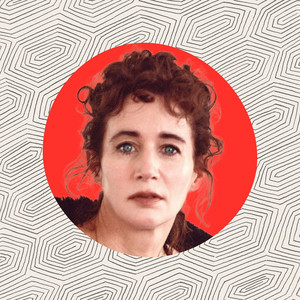
It's been almost a year since the release of Miranda July's hit novel All Fours.
The book features a woman in her mid 40s who takes off on a solo road trip across the country.
But she doesn't get far.
Instead she makes what most people would think is a very minutes from her home and rents a motel room for three weeks.
She doesn't tell her husband, doesn't tell her kid.
The point of her staying at this roadside motel becomes clear.
She needs time and space to check in with her desires and the parts of herself that had been dormant while she's been busy as a mom, a wife, and a working artist. The narrator wonders, what does she actually want her life to look like, as a middle -aged woman?
Is it okay to question the life she has maybe even try something different?
July's novel has become a touchstone for how our culture thinks and talks about women in perimenopause.
And that was intentional.
Like what does perimenopause mean is it really just the ending of something, the absence of something or is there some power to it?
A novel about a woman in the middle of her life, challenging typical structures and relationships and pushing against patterns many might just accept as a given, it clearly struck a nerve.
People were writing me.
I mean, every day, dozens of DMs that were like just bursting with their own story.
Women who didn't necessarily have a whole group of friends they could talk about this with, but wanted that.
July started a sub stack to keep the conversation going.
Readers all over the world joined discussion groups called All Fours Group Chats.
There were hats made, there were meet -ups.
It was shortlisted for the National Book Award. And recently All Fours was optioned as a mini series.
Though this book is fiction, it was born out of July asking her own big questions about what she wanted out of midlife.
And then making her own big changes.
And it was really intense when the book was coming out like it was this like bet I'd placed on like women as a whole to not distance themselves from this but in fact say like I see myself in this, you know and it was going to be very bad If I was gonna be the only one It's now very clear July is not the only one This book is sexy.
It's weird. It's funny.
It's gut -wrenching.
And it seems particularly charged in this cultural moment.
I think one has to remember that, in general, the movement has been towards silencing women for, um, forever.
Today, I talk with Miranda July about the power of all fours and how it's expanded beyond the page to a kind of movement — one that's inspiring and maybe a little threatening.
Stay with us. I gave my brother, a New York Times subscription.
She sent me a yearlong subscription so I have access to all the games.
We'll do Wordo, Minni, Spelling Bee.
It has given us a personal connection.
We exchange articles.
And having read the same article, we can discuss it.
The coverage, the options, not just news.
Such a diversified guest. I was really excited to give him a New York Times cooking subscription so that we could share recipes.
And we even just shared a recipe the other day.
The New York Times contributes to our quality time together.
You have all of that information at your fingertips.
It enriches our relationship, broadening our horizons.
It was such a cool and thoughtful gift. We're reading the same stuff.
We're making the same food.
We're on the same page.
Connect even more with someone you care about.
Learn more about giving a New York Times subscription as a gift at nytimes .com slash gift. Get a special rate if you act before May 12th.
Miranda July, welcome to Modern Love.
So glad to be here.
Miranda, one thing I know about you is you are extremely fashionable so good thing I wore my best denim shirt.
I like it. Thank you.
It's from an ex -boyfriend who I really don't think about unless I wear this shirt.
You know what, I am also wearing a shirt from an ex -boyfriend.
Are you freaking kidding me?
Let me see that. Pink Floyd?
Yeah, it was like his...
It's like a child's shirt.
This is a child's shirt too.
Yeah. I'm always, like, as I...
I'm still friends with him and as I see him have different girlfriends over time, over many years.
I'm like... I feel like I should give it back so they can have a chance at the shirt, you know?
What the heck? I've never felt that impulse.
Oh, really? But this is like a collector's item.
I'm not dissing your shirt.
Not like your ugly shirt, Anna.
No, it's not. No, it's not.
No, it's not. That's so funny.
I think you should keep it.
I mean, I am. I'm definitely not returning it.
But the thought will cross my head, like ...
Beautiful impulse. I think you should squash.
So fun. Okay. We've compared outfits.
We've compared X's as it were.
Let's talk about all fours.
Was there a question or a series of questions that you were asking yourself that spurred the writing of this novel?
yeah, I mean now actually we've made so much progress in such a short time that it's it's actually like Hard to believe how risky it seemed but it actually seemed risky just to use the word perimenopause or menopause.
And then, yeah, questions I was asking.
I guess like why doesn't this exist in the culture given that this isn't like a minority niche topic.
So that was one question, but that's just like, well, you know, we hate women, you know, and we really hate older women, and we don't want them coming into power as they become less busy with their kids or whatever traditionally was the way women's lives went.
So that seemed clear, and was just like a chip on my shoulder, but the unclear thing was the life that is expected of me as a married mom seems worse than it should be, but that seems complaining.
And if there's anything I know from being a woman, it's like to put my complaints behind all the much more important and rigorous complaints of the world, the serious things.
And, you know, they weren't really complaints, they were desires.
What were they? Ah, I mean me and my friend Isabelle, who the book is dedicated to, we would meet once a week and eat and talk about the idea that we were always changing.
That was just a biological truth that we were actually pretty different at different times of the month and that we were kind of putting on an act of sameness and, in a way, kind of boringness to basically make men feel safe and to make sure that we were trusted.
as if change is somehow the same as being deceitful or untrustworthy.
You know? As if the only way you can prove that you're like an upstanding person is by being like a rigid, solid, unchanging monument.
Which is a man, right?
That's what men are told to be who also, by the way, change.
So, you know, often we were trying to do this sort of micro rebellion, which began inside ourselves, like asking of ourselves each day to stay with where we really were, to not be swayed by all the different currents of everyone else's needs and expectations.
We were participating in something that really worked against our basic nature, and we should stop doing that.
And how could we do that without taking down our lives?
and the people we loved so dearly around us.
And then why did we think it would be in opposition to them?
Why did we even have that thought?
Wouldn't they thrive if we were, like, being honest with ourselves?
You know, like, these were the things we were kind of obsessed with.
There's so much to get into there, but I'm intrigued by your use of the word micro rebellions.
You're describing this sort of, this like flattening, this stuffing down of the dynamism of oneself to fit the mold of expectations, to not be threatening to men, and then these Microbuns you and Isabelle were sort of putting into practice in your daily life.
Can you give me an example of what that meant?
I mean, honestly, it could be as simple as you're in a meeting and you're thirsty.
and there's some part of you that just absolutely does not even, for a second, think, I'm gonna hit pause on this meeting for a sec and go get a glass of water and bring it back.
But you know what I mean?
Like, a sort of almost automatic overriding of your every impulse.
And then the weird thing is, you know, and then we would report back.
We'd be like, you know what?
I drank water or whatever the thing was.
I got up and went to the bathroom.
I mean, this really, hopefully, everyone is in this groove with me and gets that we're not pathetic people.
We're actually powerful people.
So we began with rather than like, what's wrong with our husbands or whatever, what are the ways that we are actually doing things that no one's asking.
No one's saying, don't drink water.
Get through the meeting without getting a glass of water.
So like, what are the ways we're doing it to ourselves?
And then building from there.
You've spoken about maybe this is more macro rebellion and you might chafe it at being called rebellion but, you know, it's been widely reported on.
You've spoken about taking your Wednesday nights for your own artistic practice, right?
And that feels like a real kind of puncture in the role.
At first those Wednesday nights felt like such an indulgence and everything I did, you know, hanging out with Isabel, being leisurely, like, seemed like this small part of myself that I was indulging in.
And I guess what happened was I...
at some point, I thought the thought, what if that's more me?
Yeah. Yeah. In my real life, you know?
And it seemed like trash.
It was like, what if I'm saying the real me is just that shitty?
You know, that's how it felt initially.
Like, I truly believed when I said to my husband that I needed to spend every Wednesday night alone in my studio.
I said, I'm not sure I can write this novel if I don't do that.
All fours? All fours, yeah.
Because this was the first thing I really made while having a child.
And I thought, like gosh, to have to wake up and make breakfast and then lunch and then drive the kid to school, Like, where will my head be if I had just one morning a week where I woke up and could start writing?
And that made sense to him.
He's a writer too. He was facing similar issues.
And, like, would any of us have given me that permission if it hadn't been, like, for my job, for work?
But it wasn't a big deal, by the way.
He was like, sure. And my kid was like, fun.
Do we get pizza on those nights?
But it did sort of beg the question, Well, what else are we doing just because that's what you do?" The agreement is you sleep in the same house, probably the same bed every night forever, unless there's like a work trip or a real reason.
You're articulating this...
opening up a possibility that perhaps was always there, but that you had to articulate your need for.
It's like you were saying, when you brought up spending these Wednesday nights alone in your studio working to your husband, to your child.
They were like, yeah, go for it.
But it felt so immense to even ask for because it was rupturing the expectation of what it means to be a wife, to be a partner, to be a mother.
And it's fun as a person who read All Fours to think of that novel as being sort of born of those Wednesday nights, that freedom.
And we're talking about these micro rebellions that inspired the book that are certainly a part of the book.
I would say the main character of all fours practices their own micro and macro rebellions.
Readers have reacted incredibly to this book.
They've also sort of put in place these micro rebellions in their own life.
I want to talk about the reaction to all fours.
Were you surprised by the immensity of it?
I wonder how I can say this, and have it come off right.
That was what the book was for.
That was the intended goal of the book.
To start conversations.
Sometimes, in interviews, since the books come out, I've actually seen people write things like...
Or introduced me saying, she couldn't be more surprised that her little story has, amazingly, taken the world by storm.
And it's like, is that the only space I have as a woman that like I can't have masterminded something?
You know, I couldn't have a political motive.
You know, I just have to be like, shocked and grateful.
My good fortune, I'm the one who did it.
Like, it wasn't by accident, you know, and I just want to say that not like hats off to me whatever.
But just to say, like, that would never happen.
I'm sorry to say, never happened with a man because we liked the idea that a man has planned and worked hard, and it worked according to that plan.
But we don't like to think of women as being that far thinking and that far reaching and imagining something of scope.
It has to just be my story, Like, I just wrote my story.
It was really just my diary.
We'll be right back.
Naomi Hecht, political motives for writing All Fours.
Can you talk more about that?
Oh, yeah. I mean, I was angry when I wrote this book.
Like, I know it's funny, but what else are you going to do?
Like, I mean... Like, my first notes about the book actually have to do with Trump.
You know, and then you're like, what is really the best use of my specific powers to help this goal?
I'm not saying my entire goal was political, but I did have days where I was like, well, one thing I could do is change our conception of older women and their sexuality and just their lived lives and what goes on in their heads and that actually might be important.
I mean, to not only have that intention to write this book with a main character who's middle -aged woman who is discovering her power sexually and emotionally, rearranging her life, pursuing her desires, pursuing her wants, her needs.
Like not only to flesh that out through the novel, but then to have the intentionality to start real life conversations with women about perhaps putting this into practice in their real lives.
I mean, that does feel political I mean, that feels political on the level of the work and on the level of the reception of the work.
Right, even though I had those ambitions that we talked about, I didn't actually know how it was going to play out.
Like the All -Fours Group Chat thing, like that was something that came out of the response.
It was like, and then the press sort of picked up that phrase, and then Riverhead made a few hats that said All -Fours Group Chat, and I was like, oh, that's funny.
And then people wanted to buy the hats And I was like, we can't sell this.
And there was actually like a serious meeting at Riverhead like, okay, well to produce the hats...
And Riverhead's the book publisher.
That's my publisher.
Yeah, my wonderful publisher just picture all women, my age, like just a coven.
And it was like, well, if you think we should do the hats like it would take this long to do them.
And you know, and I was like, wait, wait, wait, no this was their response.
These chats like, we can't sell that back.
This is, like, just something to support.
I mean, you're articulating something that I think is important to point out, which is, like, the experience of reading a book, at least to me is a very individual one.
It's like you, the page.
It's a solo activity.
But there's something very particular about all fours that makes people want to wear the hat, broadcast to the world that they've read it, like find other people who've also read this novel and bring them towards themselves and start a conversation.
What do you think it is about the book that makes people want to do that?
Like, what private thing is it allowing readers to make public?
I guess it's the feeling when there's something you thought was just you.
And then not only are you reading it in a book, but that's not an obscure book.
Apparently you know, this has been validated, this personal, not just personal, but like problematic thing in you.
And it could be one of many things.
I mean, actually what I love is, you know, people pull out really kind of obscure details and say, this was the thing.
Maybe the book, like if I did it right, you kind of sense that it's not just this narrator, she has friends who also are willing to talk about it, So maybe you kind of want those friends.
You feel like I'm not meant to just ponder this alone.
That's not the act that's called for here.
Find your own Isabelle, basically.
Isabelle has metonym, has metaphor, even though she's also a real person.
Yeah, the best friend in the book is called Jordi.
And I get so many messages that refer to my Jordi, you know, well, where I need as many Jordi's as possible in my life right now.
and then other people talking about their Davies.
And Davies the love interest in the book for those who haven't read, but I want to read those DMs. I mean I know that's just to you but that feels fun.
You're talking about this influx of messages from readers I can only imagine.
Does that ever get overwhelming to be the place that people are sending these stories I imagine, some of them are sexy you know the Davey, Here's My Davey young lover type story but I imagine some of them are also quite heavy.
Does it ever get to feel like a lot?
Yeah, but the truth is I've made many things over the last few decades.
And so my first kind of breakout thing was a movie, and that was such a huge shift in my whole life, and it felt much more like the focus was on me.
This is for you, me and everyone we know.
Yeah, that was a movie I starred in, wrote, directed.
Um, but part of it was just like the way we are about young women, you know, like, there she is, you know, at the gas station.
I don't know. Like there's a way in which like you just are there to be eaten or something.
And this feels so different.
It really feels like, like I threw a party and it went so well that, you know, when other people are like getting a glass down from your cupboard and helping them stop, you know, Or maybe it's gone so far that someone's actually like, do you mind if I cook this thing?
I love that metaphor.
Yeah. It feels like that.
So it doesn't feel like all the focus is on me, you know?
It really feels like people are there for themselves because they needed this night, you know?
And they're talking not just to me, but to each other, you know, that really, it's not just a metaphor.
Like I realized I had to come up with, since I only knew about hierarchical power and winning, I started to have the, like, gross feelings that I associate with that.
Like where you feel basically like a balloon filled with nothing about to pop.
And I was like, hold on.
Am I just thinking that that's what I'm feeling because that's what I've always felt?
Or is that really what I feel?
And I was like, wait, this is so different.
And, like, I'm not alone.
And I'm, if anything, I'm safer and more taken care of and such a different feeling.
So that was a good shift. That's remarkable.
The image that's coming to mind is, I'm just continuing your party metaphor because I love it.
But it's like, when you throw a great party and at some point, you look up and you're in your own home, but it looks totally different.
People are having conversations over here, sitting in ways you never thought possible on your sofa.
You know what I mean?
like and you just look, totally.
There always is. And for me it's one friend I'm thinking of who was always crying.
I really like that you look around and you're like wow yeah this is about me but it's also not about me.
I want to ask though like you're saying this felt different in the sense that it wasn't so much about you, this sort of reaction or reception to the book wasn't so much about you and I I want to poke on that a little just because I feel like this is a work of fiction, you've been really clear about it, but there are resonances between your own personal life and the narrator's, like, you have sort of represented a way of not abiding by certain norms or expectations, all these micro rebellions that you also, you know, you broadcast on Instagram, let's say, like, you're public about these ways that you're
sort of breaking the mold.
So I guess the question is, like, do you feel like you've become a sort of representation to some people about the political possibilities of like, defying norms or defying expectations?
Is that a feeling that you have?
Yeah, I guess my lived experience is that...
I'm just more comfortable because I made a whole lot of room to be myself, not just publicly in terms of my work, but also the relationship that I'm in.
No one thinks I'm any way other than I am.
and my child. I guess that's the pervasive feeling now.
What you're saying about living authentically in the way that you are, with the relationship you have, the way that you're parenting, the way you're even spending your time, there's something that I do feel could be perceived as threatening.
I wonder if you got any responses perhaps to that effect.
I mean, one thing I noticed, this was I think when the book was a finalist for the National Book Award, I, um, there's a reason I mentioned that, um, it's that I was looking at the other books and just the quickest way to look at what they were.
I mean, some of them I knew some of them I didn't, but I was going through Amazon, right?
and looking in through them.
And I realized at a certain point that I had the lowest number of stars you could get of all the finalists.
How many stars did you have?
I mean, it's plenty.
But there are so many one -star Amazon reviews, and the longer it keeps existing, that is, like, the wider the audience, the further out of my niche, the more there are one -star reviews.
And they're really angry.
They really hate the book.
And it starts to feel like it mirrors kind of the other schisms we see in the world right now.
But it's a little more heartbreaking because it's all women, you know.
Their anger is really, like, palpable.
It's like, this is despicable.
This is narcissistic.
This is... I've never hated a narrator more, you know, like.
And these are familiar things through my life.
I mean, this was sort of from whence I came, frankly.
Like, that is kind of any woman with a voice, like, doing anything at all different, um, that's kind of the standard response.
But, uh, I just keep my eye on it for a couple reasons.
One, to remind myself, like, as the book gets bigger and, like, there's the limited series of the book and stuff, to remember, like, for a lot of people, this is upsetting.
What do you think is upsetting about this book to those people?
A woman masturbating a woman writing about a woman masturbating, you know, it's like double masturbation, you know, and the non binary child gets a lot of hate.
People really right advocating for the husband the husband seems so nice.
Why doesn't she stay you know, like as if I didn't write the husband as if I'm not also the husband, you know.
Like I I just want to keep my eye on it, one, just on a sort of slightly paranoid personal safety level, to not, like, gallivant out in the world thinking, like, everyone loves me when actually, some people are, like...
specifically don't.
And I'm kind of maybe a symbol of a whole lot of things that are wrong right now.
And even within my own life, of course, like, the main reason, all these women who are relating to the book, many of whom are writers themselves, the reason you don't write a book like this is because you're protecting one man.
And you don't want to hurt his feelings.
Even if you do everything to protect him, you know that your version of, you know, a woman's story won't be his version and like at a certain point you have to do what you think is for the greater good.
Can I ask specifically, just to make sure I'm of like protecting your husband at the time?
Is that what you're saying?
Yeah, I feel like I knew it would be really uncomfortable for him and I felt horrible about that.
I spent so many therapy sessions talking this through.
I mean, just the amount of times I felt sort of stopped in my tracks, and then I had to keep just realizing like, this is your job, you're not trying to do harm.
The more honest you are, the more dangerous it feels.
like, that has to be okay.
The only reason I'm talking about it now, and I don't love to do this, but I see a lot of women on my sub stack specifically asking about this and grappling with it themselves.
The feelings of their male partner.
Yeah. Yeah. Or sometimes just their partner.
And to be honest all of my writer friends and I, we all discuss this all the time, and there's all different solutions and it's really like everyone's personal appetite for discord and risk and yeah so I guess I just wanted to put that out there because I yeah I don't want people to think that it was just easy for me.
I appreciate you sharing that it's making me think about, you're talking about going through these Amazon reviews and reading some that say the narrator is so selfish so selfish And it's kind of speaking to, I mean you didn't say selfish in what you just said, but perhaps the undercurrent of anxiety is like, in writing this book and making this work, am I being selfish?
Feels like a scary question to ask yourself.
Mm -hmm. Did you ask yourself that question and where did you land if you did?
This was the first book where I could put what I had to offer to work for other people in a more direct way.
And that was so conscious.
And, I mean, I started out the process by doing interviews with all different kinds of women from all different backgrounds about this time in their lives.
You know, both perimenopause and menopause, but also just what did it feel like, what did they long for?
And those were, for a long time, part of the book.
So, maybe that was my way of trying not to feel selfish, that I had to kind of do that whole process to prove, like, I work for the census, essentially.
I'm just... Just taking down the facts.
But then ultimately, like, that's not what I do.
I'm a fiction writer and, you know, fiction's the lie that tells the truth.
So, I realized, like, oh, there's no amount of truth, of factual women's truths that are going to be as powerful as this one lie.
Why do you think a middle -aged woman creating space to find out what she wants and needs, why do you think that feels so subversive?
Why do you think that merits the kinds of Amazon reviews you were saying where people hate this woman?
What is it about that quest that is so threatening?
It seems to call people's choices into question.
And that's gotta feel really bad and upsetting.
And also how dare someone receive accolades and such attention for doing, they call it selfish, but probably the feeling is sort of like, it seems to judge them for not doing it.
And I've even, I think we all kind of feel this, like your friend gets divorced and you're like, should I get divorced?
Like, you feel shaken by other women's choices and personally somehow implicated.
I want to end on this idea of freedom.
You've said during the course of this conversation that you really feel like, in a lot of ways, you're living in a way that feels more aligned with your true self.
Right now, in this moment, in your life, in the world.
When do you feel the most free?
LAURA KUDAKOWSKI It's funny my first thought which is a different I think my whole life, oh I'm gonna cry.
My whole life I would have said in here in my studio when I'm alone, but my first thought was actually like with my girlfriend.
Like I just, it's funny, because I'm so private.
Like no one knows who this girlfriend is.
But yeah, I just thought like, I'm laughing and I'm just totally relaxed.
And you know, in some ways more than I, like I'm learning how to be that way alone, you know?
I love that. Okay, truly last question.
A bit of a left field one.
What music are you listening to right now?
Like what's getting you going?
Is there any track we can end this episode on?
Can I take a moment with this?
Because I always balk because I can't think.
Just want to look at my actual playlist. You could put like a Tiersa song.
I love Tiersa, yeah, yeah.
And this is good because it's very lightly referenced in the book Holding On.
I love that song. Isn't that a great song?
It's a great song. Wow, imagine it playing in the background right now.
Yeah. Miranda, this was really fun.
I'm really, really grateful for your time.
Thank you so much. Yeah, thank you.
This episode of Modern Love was produced by Sarah Curtis.
It was edited by Lynn Levy and our executive producer, Jen Poyant.
Production management by Christina Josep.
The Modern Love Theme music is by Dan Powell.
Original music in this episode by Rowan Nimasto, Diane Wong, Alicia Be -Itoop, and Dan Powell.
This episode was mixed by Daniel Ramirez, with studio support from Mattie Masiello and Nick Pitman.
Our video team is Brooke Minters, Felice Leon, Michael Cordero, and Sawyer Roque.
Special thanks to Lisa Tobin, Bianca Flores, and to Larissa Anderson, Gianna Palmer, Amy Pearl, Davis Land, Jess Metzger, Mahima Chablani, Melga Lowgli, Jeffrey Miranda, and Paula Schumann.
The Modern Love column is edited by Daniel Jones.
Mia Lee is the editor of Modern Love Projects.
If you want to submit an essay or a tiny love story to the New York Times, we have the instructions in our show notes.
I'm Anna Martin. Thanks for listening.