Hello and welcome to the NVIDIA AI podcast.
I'm your host Noah Kravitz. Mumbai-based Cure.ai was founded in 2016 to address the need for affordable and accessible diagnostics using deep learning technology.
Cure.ai's algorithms help doctors and radiology centers be more efficient and more accurate with their diagnosis.
Using machines to perform basic image interpretation tasks frees doctors to spend more times with patients, and that leads to better diagnostics, faster for the patients, and at lower costs for the healthcare provider.
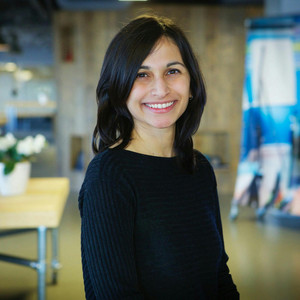
Here to talk about CURE's mission and the potential deep learning has to improve healthcare writ large, is Dr. Pooja Rao, co-founder and head of R&D for Cure.ai.
She's a doctor, she's a data scientist, she's an entrepreneur, and she's here today.
Dr. Rao, thank you so much for taking the time to join the NVIDIA AI podcast.
Thank you, Noah. It's my pleasure. So tell the audience about Cura.ai.
You know, we have an international audience, but the podcast is based and video is based in the United States.
And so folks. Listening in the U.S. or other places might not be familiar with some of the details of the Indian healthcare system, the healthcare system I move by.
So maybe you can give a little bit of background there and then kind of get into what CURE does.
Sure. Happy to do that. Cure is a five-year-old company.
We develop AI for medical images. That's technology that can read your X-rays, your CT scans, your CAT scans, and your MRIs.
When we started out about five years ago, people were just starting to get used to the idea that deep learning or computers can read images. so they can identify objects in your Google photo albums and so on.
So we thought, why not apply that to medical images?
Here's the bigger picture of what we're solving.
We all know that not everybody has equal access to high-quality diagnosis and care, But why is it really in such short supply and why is it so expensive?
It's partly because we have doctors, specialized doctors called radiologists, who train for say 10 years or even more in order to be able to read these X-rays, CTs, and MRI scans.
So that's a really high level of expertise. every time these doctors go on vacation or if they retire after they finish their careers, all of that training is lost forever.
So that's an extremely valuable resource.
Imagine if we could train AI to read these medical images. we could then deploy it at scale and it would keep getting better and better as it saw more images.
We thought we had this amazing opportunity where technology can help make diagnostics more equitable and more affordable with the power of deep learning.
That was really the audacious goal when we started out. and i think we're close to getting there today we have imaging products in two areas we have chest or pulmonary AI, and then we have brain or neurology AI.
We just received our first US FDA clearance last year, As of today, the technology is used at over 150 healthcare facilities in 27 countries.
And we've also learned a whole lot along the way.
And so to your point, the way you set this up, which is great for the uninitiated listening.
As far as the deep learning systems concern, the computers concern, there's no difference between trying to pick my younger son's face out of my Google Photos library. and looking for specific bits of imagery in a medical scan.
But I would imagine that there are some differences, some important differences, whether subtle or not. to between looking for an image in a photo library and applying deep learning-based image recognition to medical imaging.
Can you speak a little bit about, you know, whether it's how you got started or maybe some of the hurdles that you've been facing along the way applying this tech specifically to healthcare?
Yeah, absolutely. So medical imaging AI and medical images in general are actually quite different from real images as we learned when we started out.
So most deep learning or most convolutional neural net architectures are optimized for images that are 256 pixels by 256 pixels.
That's how all these architectures are designed for real images.
But medical images can be five to 10 times larger.
Not only can they be larger, they're also three-dimensional.
A CT scan or an or an MRI is a series of slices that creates a three-dimensional representation of the human body.
So there are not too many off-the-shelf architectures that tackle those sorts of problems.
Also quite frequently, some of the things that we're looking for in the images are really, really quite tiny.
Say we're trying to look for a fracture, on a CT scan of the brain.
Let's say if there's only one in every 10,000 pixels is a pixel that contains the fracture.
So that's not a challenge that people typically solve. on real images.
So those are some of the ways that the images are different, but it's also much harder to get real-world training data. when you're trying to train neural networks for medical images.
So those are the challenges on the images themselves, and those are technical challenges.
That's pretty much what we do as a business.
So these technical challenges, that's a lot of what we do. but it doesn't really stop there.
Because one of the key differences between developing AI for healthcare and developing it for consumer applications is that healthcare AI is high stakes, high risk.
Sure. It's not like recommending a music track or giving your voice assistant a request.
With healthcare AI, you really have to get it right the first time you try.
Yeah. So if you're looking for instance for a tumor on a scan, or a bleed, you really have to make sure that you pick every abnormality that is on the scan.
You also have to make sure that you don't pick abnormalities that are not on the scan.
So no false alarms, no false positives. Two questions based on what you've said so far.
One is... going back to the lack of training data.
And I'm wondering how you solve that problem if you were able to gather real world training data or create your own or how you went about that.
And then the second part of it relates to the high stakes, no room for error's.
Are there specific techniques that you used or use that weed out the false positives and heighten your accuracy that might be a little different from what's used in practice? in consumer applications of AI?
Yeah. Actually, the first point you made is great, is that it's all about the training data really.
So quite early on, we realized that if you want to develop accurate AI that works not only is very sensitive and very specific, but it's also important that the AI works on images of people from all kinds of ethnicities, say from all types of X-ray scanners, from all types of CD scanners.
You don't want it to work only on data from one institution and not from the other.
We focused quite a lot early on on gathering training data. did these research collaborations with universities, with hospitals across the world, really to be able to get data in an ethical and a de-identified manner.
We also realized that beyond the point, You can play all you like with the algorithms, you can fiddle with the algorithms, you can have the most fancy architectures, but at some point it really becomes about the quality, the quantity, and the diversity of the training data.
So we focused on that quite a lot early on.
And then we also have to really Every time we deploy, we've got to be constantly monitoring accuracy and performance for every new deployment we have.
And so you mentioned that you just received FDA authorization in the US.
Congratulations on that. and also that you're deployed currently in, I think you said, more than two dozen countries.
Did CURE start out working specifically in the Indian healthcare market?
I think some of our first deployments were India and Southeast Asia, and that's because some of the That's also where people saw the first value of AI.
Let me give you an example of some of our first deployments and how they work and how people still use it today.
Great. So let's talk about tuberculosis, TB.
So in the Western world, tuberculosis, TB, is today seen as a disease of the past.
But in many parts of the world, it's really quite highly prevalent.
In fact, TB is the largest infectious disease killer globally today. kills more people than any other infectious disease.
And it's quite a strong priority for governments, for public health organizations around the world. to be able to diagnose TB early and to treat it.
It just so happens that the areas that have a lot of TB are the same areas that don't have a lot of highly trained healthcare professionals.
And one of the reasons that we can't treat TB very well and that we can't control it is that it's frequently diagnosed too late.
So here's how it typically works is, you have an x-ray machine somewhere that's you know half a day is traveled from the people who from from somebody who might have tb and so when that person comes there to that center to get a diagnosis, to get that x-ray.
If they don't get a diagnosis that very same day, they might return and they might never come back to that center again.
So that's how the diagnosis gets delayed.
But now with AI, what we're able to do is, or what the doctors at the facility are able to do, is they have the confidence to give them a diagnosis right away.
If they see on the exterior of the AI spots, signs of TB on the X-ray, they can have a confirmatory molecular test right away and even start treatment that same day.
We've been doing this a lot across India, across some parts of Southeast Asia where TB is highly prevalent and we've been able to show with our partners over the last few years that By using AI, doctors have been able to, one, they've been able to reduce the time it takes to diagnose TB.
They've been able to diagnose more patients.
They've even been able to save costs on sort of unnecessary molecular testing.
And since after we've worked on this for a couple of years, last year in December, the WHO, the World Health Organization, put out guidelines, actually put out an official endorsement saying that you should probably use AI to help diagnose TB in areas where you don't have sufficiently trained healthcare professionals.
I believe actually that's one of the first times that AI has actually been endorsed by a clinical body or they've been assessed of regulatory guidelines to use AI for diagnosing a disease.
So that happened with TB. And quite a large part of our deployments are for infectious diseases, TB, in low- and middle-income countries like India.
Well, that's fantastic, the WHO endorsement, obviously.
No small feat. And I think we can all relate, wherever listeners are listening from, to that notion of when something's right in front of you you're you're much more motivated to deal with it and then when it fades from your immediate purview um for whatever reason.
And in this case, you know, you're at the treatment center, you don't have a diagnosis yet and you need to leave and go home.
Even for somebody who, you know, it's a 10-minute drive away, you still have that mental out-of-sight, out-of-mind thing.
Right. For someone who has to travel half a day and it's a really big disruption in your life to go to the center to get your diagnosis, I can only imagine how powerful it is to be able to get those results right away so you can begin treatment.
There's also another example. So I think this is one end of the spectrum.
There's TB in places where you have not enough access to health care.
But I can also give you an example of how we've deployed at completely the other end of the spectrum, in highly developed and very well-funded healthcare systems.
So in these kinds of settings, there is a phenomenon called teleradiology, which is picking up now and which has been around for a long time, it basically means that The highly qualified doctors that read these medical images, they don't have to be in the hospital at all.
They don't have to be in the same hospital where the patient is and where the images are taken.
So they quite frequently read these remotely in a different state, in a different part of the country.
All that makes perfect sense and it's a great use of resources, technology, it's super efficient for these healthcare systems.
But the flip side to that is that these teleradiology firms have huge volumes of CT scans, MRI scans that they need to read every night and that they need to allocate to their readers all over the country.
You have this giant server that is getting 10,000 or 20,000 scans every night and they don't know which ones to read first.
So how do you know then, how do you know which scan has a critical brain hemorrhage and needs to be read right away, like really right away?
It might be at the bottom of the list, it might be at the top of the list, That's how they use AI.
They use AI to prioritize the scan with a bleed so that that one can really be read first, and it can be used for diagnosis immediately.
The AI operates behind the scenes looking for a bleed in every scan that comes through in a real-time manner.
We've been able to show with some tele-radiology partners that we can reduce times.
Typically, Before the AI, it would take 67 minutes before a radiologist would open the scan, and now the critical scans are opened in two to three minutes before the scan is read.
That's amazing. Yeah, that's a 97% reduction in time before the patient gets treated.
And for patients with bleeds, with strokes and things like that, that time is really valuable.
Absolutely. So it's quite fascinating to me how we're able to use AI at very, very different ends of the healthcare spectrum.
So that's quite motivating for me. Have you found a difference or just anything that kind of jumps out at you that the audience might be interested in?
When, as you were talking about that, I was thinking both about, you know, you were saying working on both ends of the spectrum and developed and less developed countries and healthcare systems, but then also obviously you're working internationally.
And I'm wondering, I'm wondering if there are any interesting stories or challenges you had to face, you know, working in one system versus another and whether it's technical or kind of the – the healthcare system's willingness to engage with somebody saying, hey, I've built AI that can really help your doctors out, really help your administrative system. out and so on. a lot of different healthcare systems and we've tried out a lot of different scenarios.
There's a couple of learnings we have. One is that since we started out in India, We learned very early on that we had to build systems that maybe would work with a very patchy internet connection, would work on work quality CT scans, even if the original image wasn't that great, we'd have to make sure that the AI worked on it.
We'd have to develop AI that worked with a really small set of resources, one that wasn't too power hungry or didn't need a very expensive GPU.
So we had to do a lot of stuff like that, and that really helped us build a solid engineering team.
Then one more thing that we realized is that some of the greatest value in terms of people that are willing to pay for having AI look at their scans.
The places that we were able to add the greatest value were quite often the settings where they didn't have enough doctors, they didn't have enough healthcare professionals.
There was very little point in trying to deploy AI at a fancy academic hospital.
So we found that the places that people found value were places where they didn't have enough healthcare, where they didn't have enough trained professionals.
So that's where they were really they really welcomed the AI.
Right, which makes sense and is also great to hear because that's where they need the assistance the most. a large part of that is low- and middle-income countries, but it's not always the case.
Even within the very well-resourced healthcare systems, you always have pockets that are overburdened where they don't have enough resources, things like that.
I'm not going to name any specifics, but I can think of one very developed wealthy country that has some pockets of need in its healthcare system.
And I'll leave it at that for now. This is kind of a basic question, but I'm wondering how the system works when Let's say in the case where your technology is actually reading and interpreting the scans of On the other end, the doctor, the healthcare worker, are they receiving the full scan with a recommendation or sort of annotated notes from your system?
Or can it work in an area where there's low tech and patchy internet, like you said, Can it work where maybe the healthcare provider just gets a notification that says, hey, these are the results of this particular scan? we've had to build things that work in all these ways.
And so typically what happens is you get the X-ray or the CD scan or the MRI, you get that. the original X-ray with some labels on top of it so that you can see where the AI thought something was wrong.
That's what the healthcare worker sees. But we've also deployed in such a way that we send a notification to somebody's mobile phone through a telegram message that says, look here, there's a critical scan, you might want to prioritize that one first.
So we've had to deploy both these ways. And of course, there's regulatory considerations where different countries allow different ways of deploying.
Now, that's so important, though, to be flexible, to not only have the information and have the great analysis, but to deliver it in a way that's going to work for who's on the other end.
Our guest today is Dr. Pooja Rao. Dr. Rao is co-founder and the head of R&D at Cure.ai.
Mumbai India based company that is harnessing the power of deep learning to assist in medical diagnostics, reading scans, interpreting scans, prioritizing scans.
It's great work and it's having an impact as as Dr. Rao was discussing, in places all around the world, Pooja, I want to switch gears for a minute, if we can, and ask you about your background and how you came to co-found this company.
I think in the intro at the top, I called you a doctor, a data scientist, and an entrepreneur.
So I've got to ask, which came first? And when you were young, did you imagine that one day you would be a doctor, a data scientist and an entrepreneur?
I don't know if I had all of that. Not quite laid out like that.
Not exactly like that. But when I was training or when I was studying medicine, I've always thought really that the point of studying medicine was to be able to improve it.
So to develop new therapies, new technology that could change or improve the way that we do health care.
So new medicine, new diagnostics, new technology.
So after I graduated, I only practiced for a couple of months before I started a neuroscience PhD.
Okay. This was about maybe 10 or so years ago in a time where there were just starting to be large amounts of data available for research.
In my case, this was genomics data. During the PhD, it dawned on me that there's no way to do research at scale if you don't know how to code and automate things.
Or even better, once you've automated things, you can allow machines to discover patterns in your data and do your research for you.
That's otherwise known as machine learning.
Then I learned to code mostly from online courses, self-taught, things like that.
Then I started applying these machine learning algorithms to healthcare data.
My PhD ended up being about how to use genomic data to predict the onset of Alzheimer's disease or dementia.
It just escalated from there. I worked in bioinformatics, healthcare machine learning, and so on. until about five years ago when I had the opportunity to move back to India to Mumbai where Cure is based. to help start up this venture that would use deep learning for medical imaging.
Where did you do your studying? Because you mentioned moving back to India.
Oh, I did a neuroscience PhD at the Max Planck Institute in Göttingen, Germany.
And then I worked for a couple of years at startup small companies in the Netherlands.
And then other ones. Okay. When I moved back to Mumbai, Cure was exciting to start up because it felt like something that wasn't solving a first world problem.
Right. Healthcare AI is quite common. It's all the rage today.
A lot of people do it, but back then when we started out, I think we were one of the first sets of people to systematically apply deep learning algorithms to large amounts of medical data. things like that.
So that's really how the cure story started out.
And you said that was about five years ago in 2016?
2016 is when we started. have funding were you starting from scratch building things you know on a shoestring budget as they say how did the company kind of get itself established and start growing?
And how big is the team now? So when we started out, we were funded.
We were lucky enough to be funded within a larger company. company called Fractal Analytics.
The founder of that company put aside some money to say, look, let's incubate something, let's do something nice with healthcare.
It was In Bootstrap, the first couple of years, we had a lot of freedom to do all the R&D we wanted.
That's great. For the first couple of years, we had KPIs or OKRs around publishing research papers, really taking the time to do our research.
Later in 2020, we raised more funding from Sequoia Capital, a couple of other investors, things like that and so when we started out we were maybe a team of two we were about two four five people then we so the first set of people were all data science and then we gradually grew to engineering, marketing, regulatory, and so on.
So today we're about 60%. And not that the work that you're doing right now, as you've described, that certainly is.
Plenty, I would imagine, from a challenge standpoint and certainly from an impact standpoint, plenty to sustain a company for the foreseeable future.
Are there new things that CURE is working on either now or in the near-term horizon?
Absolutely. The obvious one is that we want to do more modalities, more parts of the body, more ultrasound, things like that.
But I think even more interesting, what we want to do and what we're working towards now is bringing AI really to be on the medical device itself, to be on the X-ray, the CT scanner, the ultrasound or the MRI.
It's a bit like this trend we have about getting AI on the edge, but here we want to get it on the medical device.
What that means with that, what we'll be able to do is not only process the image after it's been taken, but also potentially allow the person who's acquiring the image, potentially guide them to acquire a better image. think about a CT scanner or an MRI that is so smart that it's able to, while it's taking the MRI notice that, okay, look, this is an area that might need more interest.
This is probably where there's something that's abnormal.
Let's zoom in here. Let's focus here. Let's take a couple of extra shots.
Right. That only really will happen when the AI melds with the scanner with the medical device itself.
That's something that we are currently working on and quite excited about.
Is that a hardware problem? Yes, exactly.
It's quite a different problem from the one that we've been solving.
It takes a lot of cooperation and partnerships to do it, but I think it would be exciting when it's solved.
That's fantastic. And so putting you on the spot here for a minute and asking you to predict the future, we're not going to hold you to it, but Where do you see this headed?
You mentioned being able to embed the AI on the medical imaging device itself to guide the physician, the practitioner. as they're doing the scans.
Where else do you see this all headed over the next, whether it's two years, three years, five years, 10 years?
As you were talking, I was imagining a smartphone where I could point the camera at myself and scan my body, and that's probably a little bit far-flung.
But this idea of AI in healthcare broadly, or even specifically to imaging and being able to diagnose and catch diseases and ailments while there's still time to treat them.
Where do you see this headed in the near term?
So the way I think about it is like how we have today Google Maps or navigation systems for your car.
Nobody would ever really think of driving without that assistance today.
It works well. It's easily available. It's affordable to anybody who's driving.
And it also takes a lot of cognitive load off the person driving the car, right?
Sometimes too much so in my own case, but that's another story.
Yes. So I think we're going to see something like that happening for medical images.
Right. that all the collective know-how that we have at diagnosing medical images is easily accessible to anybody who wants to use it and that it automatically applied to all medical images as soon as they come out of their x-ray scanners, their machines, their MRI scanners, that the image is of perfect quality and it comes pre-labeled.
I really look forward to a scenario where nobody dreams of diagnosing medical images without AI assistance and that it really becomes the standard of care. and that in the future doctors, you know, they would be thinking to themselves, I can't believe we used to spend all that time in dark rooms analyzing these little dots scale images.
And I'm so glad that somebody automated that part of my job.
It feels like a time to say this. We've done a few podcasts in the past few years with different companies or health organizations using AI.
One that jumps to mind was a palliative care team at Stanford, I believe it was, who Similar to how you were talking about using AI to kind of surface the scans that need prioritized attention.
They were talking about using algorithms to help them triage and prioritize which patients, which cases. need more immediate attention than others.
And it seems like it's a good time to mention that it doesn't sound like you're talking about replacing doctors, replacing humans.
But rather, this is another example of AI, the technology partnering with the human And in this case, it's guiding them to do better diagnostics but also, as you just mentioned, freeing up time that they could better spend on other important parts of their jobs.
Yeah, that is certainly how we see it for now, but only time will tell.
Fair enough. For folks who want to find out more about what you're doing, obviously, the name of the company alludes to a website.
Pure.ai. Is that the best place to go? And are there other places online where folks can learn more?
Yeah, that's cure.ai or we have a blog which is at blog.cure.ai.
Perfect. Well, Dr. Rao, thank you so much.
This is incredible work you and your team are doing.
And your passion for it comes through in your voice.
And I think what you said about wanting to go into medicine so that you can improve the state of the art is something that Frankly, I wasn't expecting you to say, people would just say, oh, I went into medicine because I wanted to help people, which clearly you do.
But that additional layer of wanting to improve the way we help people, I think really speaks to, you know, why you've had the success you had so far and no doubt. are headed to do more things to change the industry for the better.
So thank you to you and your team for all you're doing.
Thank you, Noah. And thanks for inviting me.
It was great speaking with you. Thank you.
Thank you. Thank you. Thank you.