I used to work in banking.
Good salary, long hours and a flat full of things I bought to reward myself for all the time I was putting in.
But here's what took me years to figure out.
The stuff was the reason I needed the salary in the first place.
I was earning good money, spending good money and somehow still feeling like I was barely keeping up.
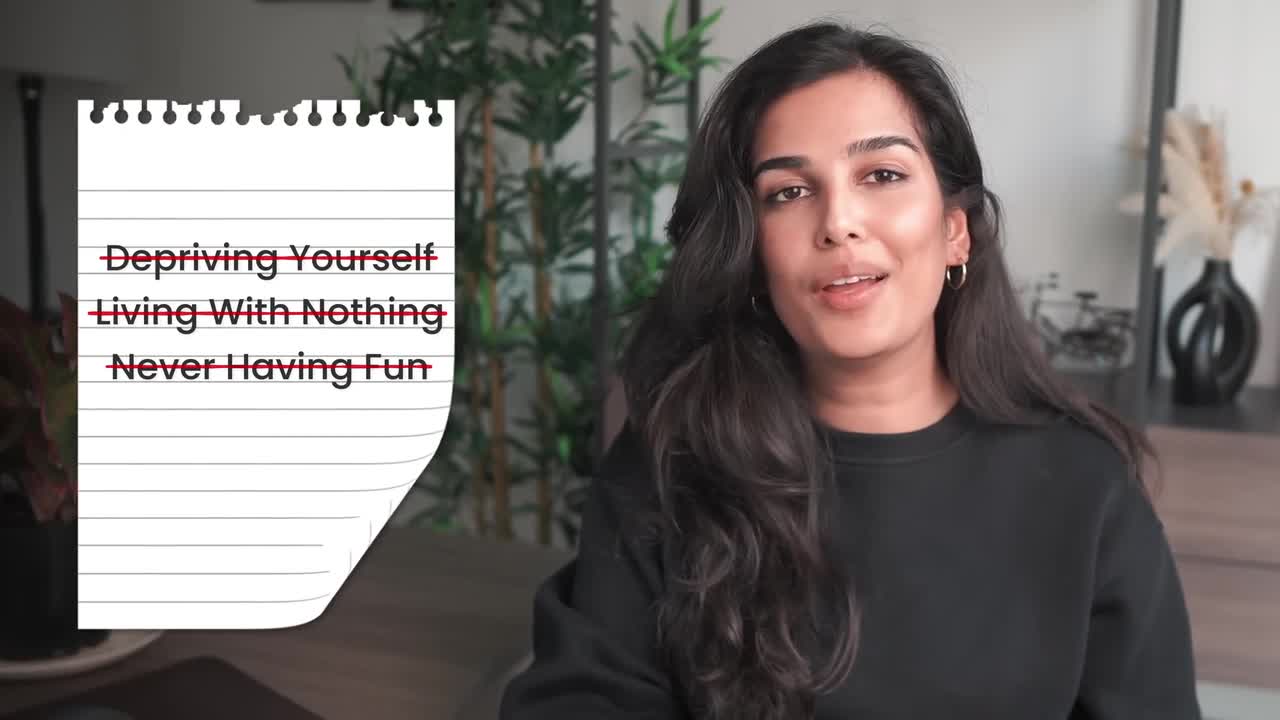
And it wasn't until I read a book about minimalism that things clicked. i'd always thought minimalism meant depriving yourself living with nothing never having fun i couldn't have been more wrong so in this video i'm sharing nine minimalist habits that made me richer not by earning more but by needing less so let's start with number one give every account one job at one point i had about eight different bank accounts a couple of current accounts for the switching bonuses a few savings accounts chasing the best interest rates a credit card for the rewards it felt like i was being smart with my money honestly i lost track of what was there and here's the thing a lot of these accounts came with rules minimum balances a set number of direct debits each month miss them and you lose the very rates that made the account worth opening in the first place I was spending more time managing my money than actually growing it.
So I then simplified.
One account for spending, one for investing, one for my emergency fund.
That is it.
Fewer accounts mean a very clear picture of my finances, less mental overhead and more time building wealth rather than juggling how to build wealth.
Having multiple accounts can work, but only if you're actually staying on top of them.
If you're not, the minimalist approach might be worth a try.
Number two, wear the same thing.
I used to have a wardrobe full of clothes and nothing to wear.
Every morning I'd stand there for 10 minutes trying to put an outfit together, and I'd usually just end up picking the same three or four things anyway.
The rest just sat there making me feel guilty for wasting money on stuff I never even used.
Every decision uses a bit of mental energy, And the more of those decisions that you have to make throughout the day, the less capacity you have left for the things that actually matter.
Psychologists call this decision fatigue.
Your brain gets worn down by too many small choices.
And the more of those you make, the less energy you have left for the things that actually matter.
It's why Steve Jobs wore the same black turtleneck every day.
By removing the trivial decision of what to wear, he freed up mental space for everything else.
So I did a version of this myself.
I cut my wardrobe down to pieces I genuinely like, wearing mostly neutrals that mix and match easily.
I stopped browsing for new clothes and, because I'm not constantly adding things, the pieces I do own actually last long.
Your version doesn't have to look like mine.
The point isn't a specific aesthetic and your style might be nothing like mine.
It's just about being deliberate about what you own and buying less of it.
A smaller, better wardrobe almost always costs less over time than a large, constantly rotating one.
Number three, ignore 99% of investment opportunities.
One of the biggest mistakes new investors make and I see this time and time again is doing too much.
I know that sounds backwards, so let me explain.
They join a dozen trading groups, buy whatever their friends are buying and pick up any stock someone on the internet has predicted is the next best thing.
Before long.
They're checking the portfolio every single day, they're losing sleep every time it dips, probably times like now and making emotional decisions that cost them far more than they actually realize.
And here's the thing a long running study has consistently found the average investor dramatically underperforms the stock market, not because they picked bad stocks, but because they kept buying and selling at the wrong times.
Frequent trading racks up fees, emotional decisions lead to buying high and selling low.
And when things inevitably go wrong, A lot of new investors give up entirely, which is easily the most expensive outcome of all.
The minimalist approach to investing is the same as the minimalist approach to everything else.
Cut the noise, keep it simple.
Now, if you're sitting there thinking, okay, I get that.
Simple is better, but I still don't know actually where to start.
I've got a completely free workshop coming up.
Every time i run it, people who came in feeling completely lost about investing left having actually taken their first step.
So i'm running it again this month on sunday, and it is completely free.
In this workshop, i'll walk you through exactly what to invest in and how to choose, how to accelerate your returns over time, the single biggest mistake new investors make and how to avoid it and work out what you'd actually need to eventually live off your investments entirely.
It's completely free, practical and designed specifically for people who are starting from scratch or feel like they've just been putting this whole investing thing off for too long.
Doors are closing soon, so if you want to sign up, go to nishame forward slash invest.
The link is also in the description.
I'd love to see you there.
That's nishame forward slash invest, Moving on to the next one on this list, and that is buy the best version once.
One of the most common money mistakes I see is buying cheap versions of things that you use every day, replacing them constantly and never stopping to add up what that actually costs over time.
A cheap version of something you use regularly a bag, a pair of shoes, a kitchen knife might seem like the sensible choice in the moment.
If you're replacing that thing three or four times in the time, a better version would have lasted.
You've probably spent more in total and generated more waste along the way.
So for things that I use regularly, I try to buy the best version that I can reasonably afford and then use it for as long as possible.
In the long run, the more cost-effective habit is usually the one that actually seems more expensive initially.
It means I own fewer things, better things rather than lots of things I'm vaguely dissatisfied with.
Next, we have unfollow the life you're not living anymore.
When I was planning my wedding, I followed florists, dress designers, venue accounts, all of it.
It was exciting at the time, but months after the wedding, I was still following all of them.
And I'd catch myself scrolling through content that no longer had anything to do with my life.
In fact, worse.
It made me feel like I was missing out on things I didn't even want anymore.
We hear a lot about how bad social media is for us, but researchers at oxford found it can actually have a positive effect on our well-being when we're using it to connect with friends and family.
So instead of giving up social media entirely, maybe the answer is being more intentional about what we consume.
So Think about how much you've changed in the past five years, 10 years, and how different your habits and interests are.
The seasons you've been through, cooking, crafting, interior design, Pilates.
You've probably followed dozens of accounts during each era.
How many have you unfollowed since now?
Every few months i do a really quick order of who i follow and i'll ask does this reflect the life i'm actually living today?
Doesn't take long and i bet it'll have a noticeable effect on both your mood and your spending, as long as you'll no longer feel like you're missing something.
Every entrepreneur knows the holidays are make or break season.
Product drops, gift bundles, last minute launches.
It's exciting and a bit chaotic.
That's why so many people, myself included, turned to today's sponsor Shopify, to keep things running as smoothly.
Shopify powers 10 of all US e-commerce and millions of businesses worldwide, and it's the best place to start and grow your business, whether you are selling locally or globally.
Instead of juggling multiple platforms for payments shipping design marketing, Shopify lets you handle everything in one place.
It basically operates as your back office, replacing the need for a full staff to oversee your operations, so that you can focus on the things that matter.
I launched my very first online business on Shopify and went from idea to life store in a minute.
By day one I had a professional shop ready to take payments and run itself, with 24-7 support backing me up.
Whether you're just wanting to test an idea out or you're getting serious about launching your own brand, it's never been easier to get started on Shopifycom.
Forward slash Nisha.
That is Shopify.com forward slash Nisha.
Invest before you feel it.
A 2025 Goldman Sachs survey found that 41 of households earning 300 to 500k say that they're living paycheck to paycheck.
They're not struggling households, they're high-earning ones.
And I used to think this was ridiculous.
How can someone earning that much have nothing left at the end of the month?
Then I got my first pay rise in banking.
And within about six months, I had absorbed the whole thing.
Better flat, nicer dinners, a gym membership that I barely used.
I wasn't being reckless.
It just happened.
And that is lifestyle creep. our spending has a natural tendency to rise with our income.
And our brains tend to trick us into thinking that those upgrades that we're purchasing are necessities.
So once we get paid and these big expenses are taken care of, it can very easily still feel like there's not much money left over and that you're no further ahead than you were before.
Here's one way to break that cycle and something that I did.
When your income increases, commit to investing the majority of that increase before you ever get used to having it maybe somewhere between 50 to 80 percent of that pay rise.
Your lifestyle barely changes because you are living fine on your old salary, but the gap between what you earn and what you spend starts compounding quietly in the background.
If And if you want to take this even further, try delaying any lifestyle upgrade by five years.
So someone earning 80,000 who still lives like they're earning 50,000 has a 30,000 annual gap.
I can go straight to work in investments.
When you do eventually upgrade your lifestyle, then you could potentially make even bigger changes, assuming you've kept your investments long enough for them to have performed well.
Saying no like it's money, from spending 20 minutes comparing prices online to save 10, to driving to a different petrol station to say two cents per liter.
There are a lot of small things we can do to save money, but how far would you go to save time?
I used to say yes to basically everything.
Coffee catch-ups.
I didn't have time for meetings that could have been emails.
Favors I agreed to because it felt awkward to say no.
My calendar was full, but I wasn't actually in control of any of it.
Other people were, and here's what i had to learn time is far more precious of a resource than money.
You could earn more, spend less.
Rebuild your savings sure, but you cannot get back a wasted afternoon.
Every hour that passes is gone forever, which makes how you spend your time arguably the most important financial decision that you make.
So now I click my calendar the way I treat my money.
Before I say yes to anything, I ask, is this something I choose to spend on?
Because every yes to something that doesn't matter is a no to something that does.
Number eight, clutter every season, not just spring.
You've probably heard of Marie Kondo, the tidying expert, who's convinced millions of people to get rid of anything that doesn't spark joy and promised that they would never deal with that clutter again.
So a journalist at The Atlantic decided to check in with the people who actually tried it years later and found that many people's clutter had reappeared.
One interviewee actually even said that the house is probably no better than it was before.
And I can relate.
I did a massive clear out a few years ago.
Bin bags, charity shops, the whole thing.
It felt amazing.
And then, about eight months later, I looked around and realized I basically refilled all the space that I'd created.
That's the problem with treating... decluttering as a one-off event.
But clear out, it feels amazing, it feels great.
Then life resumes and slowly everything just fills back up.
You're not just spending money on the things you don't use again.
You're also buying organizers cupboards shelves, to store it all.
So now, instead of a one-off spring clean or an annual spring clean, I do the same process every season every summer autumn, winter clean too.
It forces me to confront what I actually own and what I'm actually using.
And it changes how I shop because, after spending an afternoon sorting through things that I wasted money on, the last thing I want to do is replace that empty stuff with more stuff.
And number nine, make buying annoying.
I used to have Asos Zara Amazon, all on my home screen and I'd find myself opening them without even thinking, whilst I'm waiting for the kettle to boil, or once I'm sitting on the tube.
If I'm lying in bed at midnight.
I wasn't looking for anything specific, but I'd find myself just browsing.
And then something would end up in my basket.
And because my card details were already saved, I'd bought it before I'd really decided I even wanted it.
This isn't a willpower problem.
Tech companies spend billions figuring out how to keep you on their platform longer and make you spend more.
Signing up for something that is always quick and easy, canceling is always harder.
They're designing the friction to work in their favor, not yours.
So I flipped it.
I deleted the shopping apps, removed my saved payment details and made it harder to buy things on impulse.
So now if i want to purchase something, i actually have to open up a browser, find their site, log in, enter my card details manually, and that extra 30 seconds, one minute of effort, is enough to kill a surprising number of purchases.
That would have happened on autopilot, and it turns out the best way to stop spending money on things you don't need is to make it slightly annoying to buy them in the first place.
None of these habits require you to sell anything you own or move to a tiny house.
Real minimalism, at least the financial kind, isn't actually about deprivation, as we've seen in this video.
It's about being intentional, knowing what you actually need and then cutting what's just noise and making sure your money is working as hard as you are.
And here's what i found after doing this for years the less you owe, the less you owe and the less you're trying to keep up with, the more clearly you can see what you actually want your life to look like, and that clarity that's worth more than almost anything that money can buy.
If one of these habits resonated with you, let me know in the comments which one, and if you found this useful, make sure you're subscribed.
I'll see you next week.