
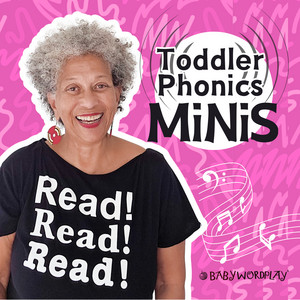
[Interactive Musical Learning: A Journey Through Transportation Songs]-[*MiNi Transport 🚌 train 🚊 Toddler Phonics]
📋 Summary
Interactive Musical Learning: A Journey Through Transportation Songs
Introduction to Sensory Play
This episode of Baby Wordplay, hosted by Miss Pam, serves as an engaging, interactive session designed for caregivers and their babies. The podcast utilizes the power of music and repetitive movement to facilitate early language development and sensory engagement. By centering the episode on the theme of transportation—specifically buses and trains—Miss Pam encourages listeners to participate in "show me your wheels" activities, which combine auditory learning with motor skill development.
The Bus Ride: Establishing Rhythm and Mimicry
The session begins with a classic nursery rhyme structure. Miss Pam guides the audience to "roll your hands over each other" to simulate the motion of wheels, reinforcing the lyrics: "The wheels on the bus go round and round." This pedagogical approach helps children associate physical actions with descriptive language. The transition to "the horn on the bus goes beep, beep, beep" introduces auditory imitation, encouraging the child to replicate specific sounds in time with the song, effectively teaching rhythm and sound-to-action mapping.
The Train Ride: Expanding Vocabulary and Soundscapes
Moving from the bus to the train, the podcast demonstrates how to adapt familiar melodies to new contexts. Miss Pam introduces the phrase "same tune, different words," a vital concept for language acquisition. The soundscape shifts from the smooth "round and round" of the bus to the rhythmic "clackety-clack" of the train. By explicitly instructing the listener to "pull that whistle down" to mimic the train's sound ("toot, toot, toot"), the host creates a multi-sensory experience that goes beyond simple listening, requiring physical participation to complete the narrative of the song.
Encouraging Creative Participation
A significant portion of the episode is dedicated to co-creation. Miss Pam challenges the listener: "Can you make up a verse?" She models this by introducing the concept of the people on the train being "fast asleep." This section is crucial for developmental growth, as it invites the caregiver and child to move from passive listening to active participation. By using the "Shh, fast asleep" motif, the host introduces dynamics—volume control and emotional expression—which are essential elements in early childhood communication.
Expanding the Narrative: Crossing Gates and Rhythmic Movement
The episode further expands the train theme by incorporating the "gates at the crossing" that go "ding, ding, ding." Miss Pam instructs the listener to "make your arms go ding, ding, ding," ensuring that the child is not only hearing the sound but visualizing the mechanical action through arm movements. This sequence reinforces the concept of "town after town," providing a sense of continuity and journey throughout the podcast.
Conclusion: The Importance of Shared Interaction
In the final moments, Miss Pam reinforces the core objective of the session: the bond between the caregiver and the baby. By repeatedly asking the listener to "show me your wheels" and "show me your whistle," she ensures that the learning is iterative. The podcast concludes by validating the listener's efforts, stating, "Me hear you," which serves as a powerful affirmation of the interactive nature of the broadcast. Through this episode, Miss Pam successfully utilizes music as a scaffold for language learning, ensuring that every "clackety-clack" and "toot, toot, toot" serves a purpose in the child's developmental journey.
Deep Learning with ListenLeap


