Discussion keeps the world turning.
This is Roundtable.
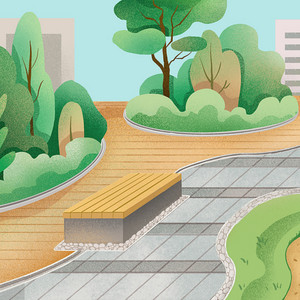
China's cities are engineering intimacy with nature through pocket parks, hyper -local green interventions that recalibrate how urban spaces function.
But their real potential lies not in isolation, but in connection.
Can these discrete getaways coalesce into transformative infrastructure?
infrastructure. Coming to you live from Beijing, this is Roundtable.
I'm Steve. Thanks for being with us.
And for today's show, I'm joined by Niu Honglin and Yushan.
First on the program.
China's pocket parks are quietly rewriting urban life.
These clever little green interventions tucked between high rises, beneath overpasses, even on reclaimed parking spots, aren't just aesthetic upgrades.
Their social infrastructure at its most nimble, if you will, places where where grandparents gather in the morning to do tai chi at dawn.
Office workers, you'll see them there eating lunch under a tree.
People get together to play basketball in the evening.
And then those same grandparents will gather again at night for some organized dancing sessions, and that is something that you need to see.
But here's the real test. Can these hyper -local parks, when kind of stitched together, become something even greater?
A really, truly connected, equitable green web for everyone?
that is the experiment unfolding right now one pocket park at a time yohong lin and yushan good afternoon to you both thank you for being here did you spend do you spend a lot of time in parks or did you when you were growing up when i was younger i used to go to a nearby park with my grandma all the time and she is one of those grandparents that you just mentioned who will just do tai chi or do you know that kind of sword dance that old people do that's kind of similar to tai chi and very aesthetic tai chi sword yes yeah so she she used to practice that a lot and i'll be like grabbing whatever
stick i can and just following kind of like mocking them but but seriously trying to follow yeah does grandma still gather in the morning for for that or or in the evening for the organized dance sessions which are amazing by the way she's not a dancing person but yeah for her niece um surgery lately she's not really going down that often but yeah we love that that park.
And when it comes to parks, I didn't used to like them.
I find staying at home, staying with my couch was the favorite thing I would like to do during weekends.
Yet, when I have kid, I started to go to parks a lot.
And there are so many different parks that amazed me.
And I'll explain later.
But the thing is, of course, you want major large parks and gardens, well, parks in the city but these little pocket parks serve different functions and they meet your other needs as well you're absolutely right let's dig in a little bit so how many put this to a scale if you could how many parks roughly are we talking about here 48 ,000 so that's by the end of 2024 china already built over 48 ,000 pocket parks and 128 ,000 kilometers of greenways And that's around the length that can surround the planet Earth for over three times, if you like to measure it like that.
And greenways, you know greenways, you usually see them in the form of, say, footpaths or bikeways within a linear park where people can just walk by in the center of a green area.
So there are some around our office as well, I think.
In the northern side within the park, once you get off the sidewalk, there's such a huge park where you can just walk in and there's just the greenways everywhere.
Well, that's the thing about Beijing, I think, and I'm sure this is true of other cities as well, is that you don't need to go very far to find a park.
Just by walking around and bicycling around the city recently, you just stumble upon them.
And some of them are these smaller parks and then some of them are really big, beautiful parks with a giant lake inside.
It's not hard to find here in Beijing, that is for sure.
Sure. And you talked about it, 48 ,000 as of the end of 2024.
It's not just Beijing.
It's not just the big cities.
We're talking multiple cities here, right?
Yes, we're talking about more than 360 cities here in China that are opening up more accessible green spaces and parks to attract the public or say the local residents to just walk in and enjoy some time inside the greenways or in the parks.
And these initiatives among these cities, they include sharing access to a total of over 1 ,800 hectares of grassy areas.
They're like lawns that's adding up together can be roughly as big as 53 times the size of New York Central Park, if you know where that is.
And then in these areas, they've added over 180 ,000 fitness facilities.
Lots of places to exercise, too.
18 ,000 hectares and 180 ,000 fitness facilities over 360 -plus cities.
But they're not done there, right?
It's going to get bigger?
Yeah, I mean, the Ministry of Housing and Urban Rural Development, they plan to expand open sharing green spaces and upon what's already here, keep on increasing accessible activity venues.
And that includes designating lawns, under -tree areas.
I've always felt kind of doubtful about under -tree areas.
I know they're beautiful, but personally, I worry about bugs falling off.
I don't know if that's a shared worry or...
But if you're driving with the right species of trees, you can have the beautiful shade and you can enjoy your driveway as well.
Yes. And when we talk about green lands or green areas, there are so many different initiatives here.
We see Sponge City Initiative trying to make sure the city can, you know, like a sponge, absorb water and have the water that you can use, provide the water people need to use.
And we also talk about vertical forestry kind of cities, meaning that not only are people planting trees on the ground, they're also inserting certain kind of plants, for example, on a highway or on a bridge in the city or even on the side of buildings.
But pocket city or pocket parks are definitely another initiative that China has been focusing on and have a lot of achievements at. Well, I apologize.
Maybe we should have started with what exactly a pocket park is.
Can we find out? It's it sounds like it's a lot smaller than the giant parks.
How small are we talking here?
So a pocket park, sometimes referred to as mini parks, is really just a small urban outdoor space that's typically under one square acre.
So that's approximately a thousand square meters around the size of two basketball courts.
Really small. Yeah, this idea originated in the 1960s, I think.
And nowadays, this concept really attracts people from all over the world.
And people just simply love having these small parks, pocket parks inside urban areas.
You know why? Because we have enough big parks already and there's no space for big parks.
So we stop building parks?
No way! We build, you know, small parks tucked in areas like corners of the street or something.
thing. Yeah. Or yeah.
Corners of the street under bridges.
You'll find again, they're not very, very big, right.
The size of a couple of basketball courts.
But the great thing about them is that it's not a reap.
Maybe it is in some cases, a repurposing of the land where it was an empty space that wasn't being used before.
And they've just created a space where people can do some of the activities that we've listed before, which is a really wonderful thing.
And like you said, yeah, this isn't brand, brand new.
The concept originated decades and decades ago, but still making more and more use of it now.
Can we get some examples maybe from around here in China, some cities, you mentioned 360 plus that are doing it.
So maybe a couple of examples.
Yeah, one example that I think is very interesting is definitely Shenzhen in Guangdong province in southern China, where there is one park named Meifeng Community Park.
So what they did was that they transformed a neglected, broken concrete area into an open and ecologically diverse community space.
And now it has gardens and also play spaces for kids.
So imagine how devastated that area was.
And nowadays, it's all transformed to a new human interactable space, green space, plus a sponge city water management.
And that's using low -cost indigenous plants as well.
You mentioned the term of sponge city earlier, Honglin.
So for our listeners who are not familiar with this term, the sponge city is an urban environment with abundant natural areas such as trees, lakes, and parks, or other good design that's intended to absorb rain and prevent flooding.
We see a lot of in southern China a lot of provinces have such a phenomenon of having a lot of rain, especially at this time of the year in summer.
So a sponge city has this power of harnessing the rain and the humidity in the air and try to balance the ecosystem.
So they're doing that within a small, it's like a mini sponge city within a micropark.
Yes. Micro within micro.
Yes. And Steve mentioned about transforming the area under a bridge into a park.
That happened also in a lot of places, including eastern China's Zhejiang province in Quanzhou.
There's a 10 -mile sports and leisure corridor and it was transformed from a bridge under space.
It is now a vibrant area with 11 professional sports venues, including basketball, basketball, football, badminton, different venues.
And this also happened in Shanghai.
In Shanghai, there is also a park that is designed at the place under the bridge, and they're transforming it into a recreational fitness area that they featuring walking paths, fitness equipment, children's playground, and making it into a warm community public space for daily relaxation.
When it comes to changing or building different pocket parks, people are getting more and more creative.
They're up -leveling their games.
Previously, building some trees, inviting a little bit of flower area would make it a park already.
But now people are getting really creative.
For instance, there is a park in Guangzhou, Guangdong province, that's in the southern part of China.
They built a park that is known for year -round flora displays, place combining seasonal and local flowers for a vibrant and fragrant experience and also in I think also in China there is a pocket park with the theme of vegetable so in the park there are different types of vegetables you can even harness a little bit so you know learn about the plant learn about the vegetable and the fruit and see pocket parks are getting more and more professional Yeah, and they're kind of artistic in that sense, aren't they?
Because there's no standardized design for these things.
You might see one that has a basketball court, and then the next one will have the dancing space, and then the next one will have the vegetables, and then it's just kind of up to the community.
There's another one in Hubei province here, and this one's pretty big.
It's 7 ,000 square meters.
They built this back in 2019, and the theme for that one was about urban memory.
So they've got red brick architecture there.
They've got some really cool greenery, and then they've got some cultural symbols and historical narratives on the walls, on those red brick walls.
And it just adds to the flavor of the community, right?
Making it feel more like home.
It's not just China.
You know, they do it in other places around the world, too.
Copenhagen in Denmark, they did a park with a social within a social housing complex. And what they did there was they linked areas with an activity path so that people could walk.
And as they go, they could learn about climate adaptation and biodiversity.
That was a cool idea.
New York City, of course, everybody knows the big famous park in New York City, but there's also Pele Park that's been around since 1967.
and that's famous yeah yes and another park that is very famous in new york city is the highline park it's also a pocket park and the idea is that they transform abandoned alleviated railways into aerial gardens yeah it's very famous so you can make a park out of anything if you want to and when i was in university i learned park designing like i was able to design parks for cities, I was not good.
But the thing is, the larger the park is, you have to think about more factors and ideas about different plantations.
So you have to think about biodiversity, you have to think about the scenery, like if you are a little kid, you're seeing the park from a one meter tall angle.
Or if you're an adult, you're looking at the park from a different angle the the factor is too much yet if it's a pocket park you effectively make it easier to design a pocket park making it possible for you to find a different theme for the park that is why we're looking at so many different very creative little pocket parks and you have to be a little bit creative because you know they might be under a bridge they might be at a street corner, right?
So you've got limited space.
So being creative is a plus when it comes to the design.
Why though, what do you think is the reason that we need to have these?
Why do you think they're so important?
Well, first is that I think it enhanced the quality of the local people's life for sure.
Because when, I mean, upon designing a lot of these parks, they have the aim of trying trying to make itself as accessible as possible to the local people.
So how to like open more, say, exits to that's facing closer to the entrances of the local communities is one consideration that they're making upon designing this park in the first place.
And also, these parks, they are tailored to local interests.
Some parks are themed with local history or the local culture of sort that demonstrates their own proud culture and something that people can deeply relate to.
So that's something that can really meet the inner city residents and urban youth's physical and recreational needs.
So, of course, their leisure life of going down there and just get in a park within a few, say, maybe less than a few kilometers, meters, maybe just a few meters away and just enjoy some leisure time in those green areas can be one option nowadays.
And from a mom's point of view, do you know how hard it is to transport your kid to a major beautiful park that takes around 10 minutes of driving?
if you need to drive it's a whole different story but if you can walk there ah mommy's happy yeah family's happy you said maybe a few kilometers it's definitely not a few kilometers these may be a kilometer apart spaced out from what i've seen just going around where we uh work which is really convenient i didn't think about it from a mom's point of view but it does make total sense and the thing that i the reason i think these are important is because Because it provides people a place to go.
It's very simple, right?
A place to go and do something.
In any big city around the world, Paris or New York or Tokyo or wherever, and of course here in Beijing, there is a concrete jungle aspect to a big city, right?
So how do you make use of that in a cultural way where people could have fun hanging out?
I heard about the dance, I'm mentioning it for the third time now because I love it so much. I heard about the dancing grandmas and grandpas in the park, and I thought, oh, okay, maybe that was like a 19, you know, whatever, like late 80s thing.
No, no, it's everywhere.
And it's very easy to see.
And when I said organized dancing sessions, these are like ballroom dancing.
Yes. Right? I cannot keep up with them.
They're really good.
And there are so many different types of dancing out there.
You have the exercising type, which is the only type I can play along a little bit, dance along with.
There are the ones that are kind of like an ethnical kind of dancing that all of the ladies are wearing beautiful and colorful dresses.
And there is the one that you can dance with your partner and so many and so professional.
And some of them are even wearing blue tooth headsets so they don't bother other people.
Yeah, I mean, it's incredible.
uh I've seen a guy dancing with a guy brought a Bluetooth speaker he didn't he wasn't wearing headphones he was he was playing the music through the speaker sure and he had his dog on his leash and I guess he had trained his dog to kind of dance with him really it was wonderful to see it was this cool artistic performance and I thought this is wonderful people are not shy about this whatsoever no I've not seen this anywhere and that's what these small parks provide is a space for people to take advantage.
So yeah, enhanced quality of life, taking advantage of the urban space, health and well -being, and all those things, and the environmental benefits, too.
You know, you've got the plants growing there and the vegetables growing in other parks.
It's really cool. So if we look at pocket park economy, there's an economy for almost everything here in china and there's even the park plus uh innovative practices so please tell us what those are i think that's really cool isn't it because cities nowadays they're pursuing a park plus initiatives that's blending green spaces with just any urban functions and creating this whole new economic growth points just within these little park mini parks and the initiative it can be in my terms it It can be just fun.
So park plus fun and the urban functions can go with anything, including sports.
We mentioned a lot already.
So for park plus sports, it integrates fitness facilities into the park and also invite people to just relax in whichever way they prefer and also for park style shopping malls.
These commercial spaces, they integrate natural landscape with commercial facilities and cultural experiences all together in one park.
And that offers new lifestyle concepts to the local people.
I don't think I've seen the shopping plus parks or the park plus shopping yet.
We've actually talked about it on Roundtable previously.
Yeah, perhaps you were not on that show.
But the idea is that instead of moving some green into malls, we're moving the mall into the park.
So the area or the proportion of green you get to see in the shopping malls is is exponentially increased.
And for instance, there is a green park mall thing in Guangzhou.
It's called Freeman's Garden, and it's comprising four separate commercial buildings.
Each has been greened on five sides, meaning the four walls as well as the rooftop.
And it's a total green area of 15 ,000 square meters using 58 different plant species and 450 ,000 pots and designed as a mountain terrace.
It used carved spatial modeling to blend plants and architecture, mimicking mountain terrains and highlighting dragon -shaped curves.
How beautiful is that?
And I don't know about you, but when I'm in a pleasant area, my desire of purchasing has increased.
So these days, yes, it's just making you relaxed and happy and feel like i want to buy something to make me happier the thing is when i'm in different parks for instance well this is not example of the commercial parks uh example yet it's about my feeling of buying more stuff in greener areas because in a park near where i live i used to take my kid to the park all the time and when the kid plays i play with the kid but oh one day in in that beautiful day, a coffee shop opened in that park.
And that was the moment of me sitting down looking at my kid with a cup of coffee in my hand instead of running around sweating with my kids.
So that was a beautiful day.
Plus coffee economy.
For me, I tend to shop a bit more when I see there are market stalls, wherever they are.
And nowadays, there are park plus cultural creative sectors you've seen those right there cannot say no to those I don't exactly that's like market stalls selling I don't know souvenirs magnets or just local tourism designs of whatever that you know we really like some sometimes stationery my favorites and yeah they set up those little stalls inside the parks and forming this whole say park economy that's using immersive this tangible consumption experience to just simply enrich the visitor's enjoyment while they are in the park.
It's a great idea, right?
If you use that type of space for local artists to come out and sell whatever it is that they've created, it's a wonderful idea because it gives those artists a place to be seen, right?
And it gives a fun activity for people to do, too, in that kind of environment.
Yes, there is a park near where we work and near where I live.
In the park, they have different activities every other week or every other month.
Some of the activities would even invite little kids to be the owner of the booth.
They can take their used toys, and they can take the artsy things that they make, and they sell the things to other kids or to visitors in the park.
It's lovely. And I think a proportion of the money is also donated to a charity group.
So serving so many functions.
That's wonderful. Building the next generation of entrepreneurs in the park.
Lots of great ideas and lots of great initiatives, but they do come with some challenges, right?
One of them is parking or even the sidewalks in the areas right around the parks.
let's not even say parking because that's not even really a thing i don't think it's just where the bicycles and scooters will stop and leave them for a while and those can get pretty those areas can get pretty crowded yeah as someone who drives quite often i would say i will definitely expect to have a ticket if i try to park nearby those just sidewalks or places that But, you know, it's next to a public space, but there's no matching facilities for you to park whatever you arrive at the location with.
And bikes, scooters, all included.
Sorry to interrupt.
I don't think people are driving their cars.
I don't think they should.
Especially when you're traveling with family, a lot of people do drive.
Yeah, I guess so. But I think I agree with Steve because the whole point of having pocket parks is to serve the needs of people nearby.
Yeah, right. right you're walking there so yeah it's walking distance for cars no but for bicycles and scooters absolutely 100 true and you could argue i think that the bicycles and scooters created an even bigger problem because they're not actually parked illegally i don't think for the bicycles on on a side how can i explain this on a side section of the very wide sidewalk there are designated spaces to leave your shared bicycles and park your scooters so they're not doing the wrong they're not doing anything wrong the problem is is that there's so many shared bicycles and so many scooters
that they can't help but take up too much space so it it does take away from the environment a little bit I mean we're nitpicking here right but that's one area of improvement I guess they could try maybe yeah and maybe the way to improve it is to build more pocket parks you can go to the one that you buy so and a lot of the times that we see this happen is because Because these parks, they are absolutely free.
So they attract freely accessible, just visitor flow of a time that's in lack of management so far.
But yeah, we can expect a bit more changes.
I mean, we don't want to be paying for these parks, though, if we can avoid it, right?
So I don't know if we can avoid that problem or not.
But yeah, I guess if you're looking to play basketball, then it might be challenging to get on the court.
You'd probably just have to go there a little bit earlier.
But I think for the dancing sessions, I know I'm kind of obsessed.
I was wondering if I could join one.
You can. Oh, really?
Go join a dancing session and come back and tell us what you encountered.
Have someone take a video of you joining, please.
That's worth appreciating for the group.
I might actually do that.
Okay, just very quickly, how can we improve?
We talked about the parking potential problems there.
What about from a park management side of things?
Any recommendations for what we can do better?
I think first up, clarifying the jurisdiction of which local authority is responsible for which parks is very important.
This way we define and publicize a management entity and just to try to share responsibilities so that it can be easier to manage and the local authorities they can know or at least add these parks into their consideration to have better options for people to just have a visit in the future.
Nowadays, we've mentioned so many details that could be encouraged, and once the management system is clarified and all refined, I think it's going to elevate people's experience in these parks.
Yeah, I think that makes sense, right?
Make it clear who's in charge and then have that group that is in charge listen to feedback from the people that are using it and make a space that everybody loves.
But this we know for sure.
In Beijing and in many other cities around China, 360 plus, these pocket parks are making their presence known and people are loving them.