This message comes from U.S.
Bank.
Simplify how you do business with Business.
Essentials a powerful combination of no monthly maintenance fee checking and card payment processing.
Deposit products are offered by U.S.
Bank National Association, member FDIC.
Hey, short wavers, Emily Kwong here.
If you want to support our show, one thing you can do that is free, easy and only takes a few minutes is to leave us a rating or a review.
Like MF Ruthie, who wrote last week.
Your pod has the most relevant and creative material.
You are a daily experience in Ruthie's life.
Keep it up for us nerds out there.
Ruthie, thank you from one nerd to another.
And thank you all for listening, for taking a sec to let us know what you think of our show and sharing it with those you love.
Okay.
On to the episode.
You're listening to Shortwave from NPR.
Hey, short wavers, it's Emily Kwong here, and it is that time of year again.
Can you feel the crispness in the air?
Can you hear the crunch of dry leaves?
Smell the haunting presence of pumpkin spice?
Oh, God, pumpkin spice.
That is NPR science correspondent Nell Greenfield-Boyce.
Hey, Nell.
Hey, you don't want to talk about pumpkin spice today?
I mean it's fine in moderation, you know.
But like, when I think about autumn I think about real pumpkins and you know the leaves and whatever.
But mainly, actually, I think about birds.
The birds, yes, this is their time to migrate, right?
There's a lot going south for the winter right now.
Yeah, a lot.
Like every night, hundreds of millions of them are taking to the air.
And like we don't really notice because this is happening in the dark at night while we're sleeping.
But like huge numbers of birds are flying overhead.
I hear them in the morning when they're on trees, but why do they fly at night?
Well, I mean, what I've been told is that there's fewer predators and that the air is cooler, it's more stable.
And plus, you know, when they navigate, they use the moon and the stars.
Oh, yeah.
But that's actually kind of a problem in some ways, because it turns out that means they can be drawn to artificial lights, like the kind humans put around buildings.
And so when they come down to rest and refuel in the morning, they can encounter something that they have not been prepared for by evolution.
And that is glass.
Have you ever heard a bird hit a window?
I have.
And my heart drops every time I hear it.
It's horrible, right?
It's like a sickening thunk.
And it turns out glass is one of the biggest dangers for migrating birds.
Researchers estimate that every year in the US collisions with windows take out at least a billion birds.
A billion?
That's a lot of birds.
Right?
And migration season is when the numbers of collisions tend to spike.
I mean, during this time of year, there are actually whole teams of people across the country that are waking up early every morning and going out and looking for for collision victims that have been injured or are dead.
I'm glad someone is looking out for these birds in this way.
Where are volunteers doing that?
So we're talking places like Dallas, Chicago, Philadelphia.
San Diego, and then in the nation's capital, Washington, DC, where I live.
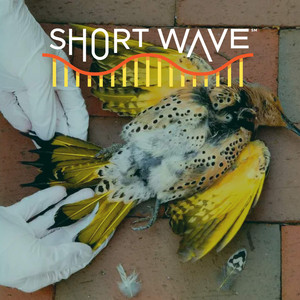
I mean, that's where a volunteer named Stephanie Haley found this poor little guy huddled on the sidewalk next to an office building.
That's an Acadian flycatcher, this little olive green bird that migrates to Central and South America.
I mean, she picked it up and they put it in like this brown paper bag.
This is a good sign.
The fluttering, which means that Hopefully you know, he's just stunned and I'll take him to City Wildlife and the doctors will check him out.
So, you know, the vets tried to treat him.
They even put him in an oxygen chamber.
How'd he do?
Well, I'm sorry to tell you, but he did not make it.
I mean, most collision victims do not survive.
They can be going 30 miles per hour when they hit a window.
And so that means even if they initially fly away, they can have like concussions and broken bones.
But the thing is, there has been a lot of scientific research. into how to stop this from happening.
And there are examples like there's a building in Chicago that show that there are solutions that can make a huge difference.
Bird strikes, a problem we created that we can fix.
It's true.
So today on the show, migrating birds and window collisions.
We'll look at a problem that's often invisible until it is suddenly not.
You're listening to Shortwave, the science podcast from NPR.
Every day, millions of cyber threats compete for attention, but only a few truly matter to your business.
As a leading threat intelligence company Recorded.
Future cuts through the noise with precision intelligence.
That's why top banks and governments trust them.
Because security leaders don't just react.
They foresee, spotting the signals that others miss and acting before threats become setbacks.
Recorded future.
Know what matters.
Act first.
This message comes from BetterHelp.
To mark World Mental Health Day, BetterHelp is thanking the therapists who change people's lives all around the world by providing accessible mental health support.
With over 12 years of experience matching clients with therapists, and one of the world's largest online therapist networks, BetterHelp can help you find the right therapist.
Visit BetterHelp.com for 10% off your first month.
Okay Nell, so for this story you went out with some bird-loving volunteers who every morning circle city sidewalks and collect window strike victims.
These are birds that have hit windows.
Is this mostly a problem in urban places with a lot of buildings?
No.
I mean, it's just that cities are where people tend to look, right?
The thing is, most collisions are not happening like way up in the sky.
So it's not like it's just a skyscraper issue.
Most collisions are happening down low.
Oh, really?
Like below the tree line when they come down to rest.
Oh.
One to three story buildings like homes.
Yeah.
That accounts for a lot of the bird deaths just because there's so many of those buildings.
OK.
But you know, in cities there are lots of buildings close together so people can like walk a set route every morning.
And in these cities it's become clear that a small number of buildings are seem to account for a lot of the deaths.
They have architectural features that are just like death traps.
We call this the walkway of death.
So this is a very Dudley spot.
So that's another volunteer in DC I walk with, Stephanie Dahlke.
She showed me this skyway between two buildings.
It's made of mirrored glass.
And right near it, we found a dead, ruby-throated hummingbird.
That's a little iridescent green bird.
It's like no bigger than your thumb.
It boggles the mind to think that these little guys can fly over the Gulf of Mexico.
How do they manage that?
It's amazing.
But then we take them out with some glass.
You mentioned that glass has a kind of mirrored effect.
So do the birds just think the certain buildings are more sky?
Yeah.
So, like if the glass is reflective, you know the birds will see sky and trees and that's attractive to them.
And if the glass is transparent, they think they can go like right through it.
So I walked with this other volunteer, Elizabeth Fuse.
She showed me this building that kind of wraps around a plaza.
It has two sections that converge on this big glass atrium.
And she was saying like this basically funnels birds towards this multi-story wall of glass.
But you can see it converges and you see how the reflection works.
It looks like you could keep going.
There we found like this dead common yellow throat.
So that's a songbird with this lemon colored chest and like this little.
This is ridiculous.
That bird deserved to make the journey to Mexico.
It is really sad, right?
Like there's so many deaths.
They're just like finding these bird corpses all the time.
So they record all these deaths.
They have this database, years of data.
And it's this group called Lights Out DC that's been doing this.
And, you know, basically they want people to turn off artificial lights that attract the birds.
But their numbers are used for other stuff too, right?
They're part of what's helped researchers make estimates of the total number of the dead.
And they also use that data to get people to make changes, like to convince building managers to do stuff.
That's powerful.
I mean, that's the way to change something, right, is to gather information, to gather data.
This is important work they're doing.
So what kind of changes do they want to see from cities and building managers?
Well, one thing, like I said, is turning off nighttime lights, or you could add new kinds of window treatments.
OK, so I was talking to Brian Lenz.
He's with the American Bird Conservancy.
And he told me, like, you know, in the past, not too long ago, it wasn't clear how to fix windows.
People used to say put a hawk decal on your window and it's good, because the birds will be scared of that.
The only thing that does is keep the birds from hitting the hawk decal.
Oh, no, this is taking me right back to childhood.
My mom slapped a bunch of hawk decals on our kitchen window in the hope that birds would be spared.
Sounds like there are better solutions out there.
What are they?
So there's been a lot of studies, okay?
There's been years of research.
There's new kinds of glass.
And now they know that if you've got existing windows you want to treat you need like a pattern of dots or lines that's a certain size basically, so the birds won't think they can fly through.
And this is effective.
Like to see that, all you need to do is look at this convention center in Chicago.
It's called McCormick Place.
Oh, I've gone to conferences at McCormick Place.
That's the one.
It's right on Lake Michigan.
Right.
And it's really big.
Yeah, and a couple years ago, they had a big mass collision.
It made the news nationwide.
An unusual situation at McCormick Place today.
Nearly a thousand birds found dead.
I was talking to Tina Phillips.
She's with the Cornell Lab of Ornithology.
She told me this was kind of a watershed moment.
People who never even thought about birds were suddenly like wait a minute.
A thousand birds died in one night, crashing into one building.
So after that high-profile event, the convention center's managers decided to put on these decals that are just like a pattern of dots all over the windows.
And they had a lot of windows.
Okay, because they've got enough glass there to cover like two football fields.
But data taken before and after shows that this actually reduced bird collisions there by 95%.
Wow, that is a really big effect.
It made that much of a difference to have the windows, the full window, not just a small part of it, but the full window covered in these dots.
Yeah.
I mean, you can still see through it.
Right.
But I mean, to the birds, they see that and they're like, oh, I can't fly through there.
That's a no go zone.
Nice.
There was another thing that happened after that event there in Chicago.
OK, so after that mass bird death. the U.S.
Fish and Wildlife Service actually decided to host this big summit.
So they invited all these people like bird groups and architecture firms and dark sky groups and university researchers.
Tina Phillips told me they'd all been working on this problem, but like separately.
And so, coming out of that meeting, We knew we needed to keep working together to really try to make this impact meaningful.
So they formed this new group called the Bird Collision Prevention Alliance.
And so it's now got this website and over 100 members, all kinds of organizations.
They're meeting frequently.
And they're putting together like these toolkits for different scenarios.
Like, say you're a cruise ship.
What can you do to minimize birds being drawn to the illuminated ship out at sea and hitting the windows?
I've never thought about that.
That makes so much sense that cruise ships could be a part of the problem.
What are the goals of this group overall?
Is it to create some kind of bird protection law or policy?
Well, I mean, they told me they're not really a politics group.
I mean, some of their members are federal agencies like the U.S.
Geological Survey.
Brian Lenz says, like, it's not about pushing policy at the national level.
We're just focusing on the science and we're focusing on What's the best way to save birds at scale without getting bogged down in political conversations.
He told me that most building codes are actually local.
So anything that's a solution is probably going to mostly be at the local level.
So are there places that have adopted new building codes locally?
Yeah.
I mean, D.C. is one of them.
So it passed this law recently saying you have to have bird friendly construction for like the bottom hundred feet of buildings like office complexes or apartments.
Nice.
And there's similar laws in New York City and San Francisco.
People are trying to get similar legislation passed in Chicago.
Oh, no, this is so hopeful.
I mean, this has been a Kwong family problem since the 90s for our house.
But cool that it's, I don't know, starting to catch on in different cities.
And even without building codes.
You said that people have been able to put pressure on certain buildings, particularly problematic places.
Yeah, like that convention center in Chicago made changes.
And then Dallas is about to make major renovations to its convention center.
And activists there have been saying, hey, look, this is an opportunity.
You know like we've gathered data around the existing convention center showing it's a place where lots of birds die.
Let's make the new one bird friendly.
And you know Tina Phillips told me because of that big collision in Chicago at McCormick Place, it's highly improbable that architects you know building in major cities with lots of glass are not aware now that this is an issue.
You can't say people don't know.
Yeah, it's just a matter of like, is there enough public pressure?
I mean, there are costs to doing this, right?
But The costs are minimized if the planning to make things bird friendly is there from the start, rather than just trying to like build something and then deal with it after the fact.
Sure.
And so there are actually places like universities that are really clued into this and are pushing it forward.
I mean, I was just visiting Missouri State University the other week.
And they had a new building there.
And they were showing me their bird safe windows.
You know, they had no idea I was thinking about this.
But I was in the conference room and they were like, look at our windows.
Like, see the pattern?
And they were so proud of it.
They were showing visitors.
So...
That is so heartening.
Okay.
Well, what about individual houses and smaller buildings?
You said they were a big part of this.
Is there anything our listeners can do at home?
So Brian Lenz told me any window where you've ever heard that thunk, that needs to get treated.
So... you might think of it as a one-off, but that window has been proven to be a problem.
And you may not be aware of everything that's happening there, right?
You're not at home 24-7.
And then think about windows that are near things that birds, like bird feeders or bird baths or fruit trees and then you know you've got like things that could be big and reflective, like sliding glass doors or big picture windows.
If you take those windows and put a bird friendly solution on the outside and those are we've got a list on our website um, You probably will never hear another collision at your house again.
I have a friend who recently went through this, who just built a cabin on some water and like, had this horrific experience over three or four days.
Three different birds hit the window.
Oh, no.
And so after that, he was just like enough.
And he went out and got one of these products and put it up.
And since then, no problem.
There is everything from do it yourself options like just painting a window to fancier products you can buy.
Thank you for drawing our attention to these birds.
At night, I'm going to be thinking about them making this journey.
Yeah.
I mean, it's amazing how far they go.
The least we can do is to make their journey a little easier.
Nell, Greenfield Boys, thank you so much for coming on Shortwave.
Thank you.
This episode was produced by Hannah Chin, and it was edited by our showrunner, Rebecca Ramirez.
It was fact-checked by Tyler Jones.
Jimmy Keeley was the audio engineer.
Beth Donovan is our senior vice president of podcasting strategy.
I'm Emily Kwong.
Thank you for listening to Shortwave from NPR.
This message comes from Capital One.
The Capital One VentureX Business Card earns unlimited double miles on every purchase.
Capital One.
What's in your wallet?
Terms and conditions apply.
Find out more at CapitalOnecom VentureX Business.
This message comes from Capital One with the VentureX card.
Earn unlimited double miles, a $300 annual Capital One travel credit, and access to airport lounges.
Capital One.
What's in your wallet?
Terms apply.
Details at CapitalOne.com.
Thriving in the face of adversity.
That's something the incredible species of our world do every day.
I'm Chris Morgan.
Join me on The Wild as we explore stories of hope and resilience in nature and what they can teach us about ourselves and each other.
Listen to The Wild from KUOW in Seattle, part of the NPR Network.