Hello and Happy New Year.
It's Michelle Martin from Morning Edition.
Thank you to everyone who donated during our end of year fundraising campaign.
2025 dealt a big blow to NPR and local stations with the loss of federal funding for public media.
But we are so heartened by the outpouring of support and we will get through this together.
Thank you for keeping NPR strong moving into 2026 and beyond.
You're listening to Shortwave.
From NPR.
Hey, short wavers, Emily Kwong here.
And today I have a treat for you.
We are going to a micro forest.
If you've never heard of one.
They are small, they are lush and, unlike natural forests, microforests are designed entirely by humans for urban environments.
And producer Rachel Carlson went to visit one in Los Angeles recently.
Hey, Rachel.
I did.
Hey, it was amazing.
I had the most fun day ever.
I hung out with two scientists who've dedicated themselves to planting these tiny forests to cool down cities and make them more resilient to climate change.
OK, where did you go to see a microforest?
Ascot Hills Park, which is a park in northeast Los Angeles.
It's surrounded by freeways and interstates.
It's not too far from the heart of downtown L.A.
So it's not really an area that I typically associate with lots of green space.
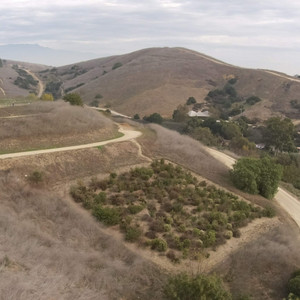
But you pull off the freeway and drive this way and you see a green stamp of 10,000 square feet.
And that's exactly what it looked like, a green stamp.
That's Damien Ouellette, an associate professor of biology at Loyola Marymount University.
He's one of the scientists I met with who's worked on planting and maintaining this microforest for the last two years.
Okay, but what makes a microforest a forest?
In a forest, the canopies of the trees touch one another.
When you plant one tree, that's just a tree.
But once you start having the canopy connect, that starts to be what we imagine as a forest.
We have this kind of blockage of the sunlight, but also a forest has layers.
Canopies of trees with layers of plants beneath them.
So in that way, a microforest does simulate a natural forest.
Okay.
But what makes a microforest micro?
It's smaller.
Oh, so this is not like a fairy forest with tiny plants or something.
This is just a forest that's got a small footprint.
Yeah.
Microforests can be anywhere from around 200 square feet to an acre.
And the one I visited is about a quarter acre or 10,000 square feet.
But it's the largest microforest in California.
Wow.
So today on the show, a trip to a small forest with big dreams and real life contributions to local biodiversity that are making it easier to live with climate change.
You're listening to Shortwave, the science podcast from NPR.
This week on Up First, the Trump administration and Venezuela.
Can the U.S. run a foreign government, as the president says?
They simply may not adopt the policies that Trump would like to see.
It's a complex, fast-moving story.
As always, we're working overnight and every night, so you can start each morning knowing what matters.
Listen to Up First on the NPR app or wherever you get podcasts.
Netflix's Stranger Things has reached its end and we're unpacking the biggest moments in the final season.
We'll talk about what we thought of the finale, what happened to our heroes when they set out to battle the forces of evil one last time and, of course, the terrible wigs.
Listen to Pop Culture Happy Hour in the NPR app or wherever you get your podcasts.
What's in store for the music, TV, and film industries for 2026?
We don't know.
But we're making some fun bold predictions for the new year, plus setting some personal pop culture resolutions.
Listen to Pop Culture Happy Hour in the NPR app or wherever you get your podcasts.
Okay, Rachel.
So today we are talking about microforests, which are supposed to mimic natural forests, but on a smaller scale and in more urban environments, and people plant them.
Yeah, ecologists use local plants to help restore biodiversity to the area.
So, for example, Los Angeles is prone to drought, so there's lots of drought-tolerant native plants in the microforest.
I went to like Southern California black walnut and blue elderberry plants.
But in other places, ecologists would use different types of plants.
Cool.
So do microforests exist in other parts of the world?
Yeah, there are others in the U.S.
And Damien, our biologist from earlier, told me they're also popular in Europe.
The original idea goes back over 50 years to Japan to an ecologist named Dr. Akira Miyawaki.
And he developed the idea of this kind of tiny forest approach to restoring degraded land.
Interesting.
Well, how do you even go about planting a micro forest?
Like what is involved?
Well, a forest isn't just trees.
It's a bunch of different species with different roles, from roots and soil to shrubs, to those tall canopy trees that you might think of when you think of a forest.
So that's how micro forests are planted, too, with dense layers of different kinds of plants.
So you're kind of planting a whole ecosystem at one time instead of waiting for nature to kind of go through succession, step by step, to get eventually to a forest.
It's planting the whole forest at one moment.
Interesting.
So why is it strategic to have plants at different heights and different layers of the forest?
The lowest layers help keep the soil healthy, which ultimately keeps those upper layers growing.
And planting a lot of plants all at once contributes to the microforest growth and they mature faster than a traditional forest.
It might be a couple decades for a microforest instead of something like a century for a bigger forest.
Very cool.
Okay, so let's go back to the microforest you visited in L.A.
Tell me about your field trip.
My field trip, yeah.
I went on a weekday at the end of November.
It was warm, like 75 degrees outside.
Just a brisk fall day in Los Angeles.
Yeah, really fun.
But I pulled up to the park and met Damien, and he introduced me to someone else.
There's Catherine right there.
Oh, great.
Hey!
Catherine Pacarduni is a horticulturist who helps plant and develop microforests like this one.
We walked up a very steep hill to meet her.
I was on a hike.
If you can't talk at this point because you're breathing too heavily, that's totally fine.
I know my mic's going to catch me like out of breath.
Wow, this is like meeting some master gardeners or something, but of the forest.
It was.
And you said that Damien and Catherine have been working on this particular microforest since 2024, so it's two years old.
Yeah, they just celebrated its second birthday.
And another amazing thing about a microforest compared to a much larger forest is the size allows researchers like Damien and Catherine to use it as a science experiment.
Yeah.
You said the microforest is like a quarter of an acre?
10,000 square feet.
And right next to it, there's another plot of land exactly the same size, except it's brown.
It's filled with invasive weeds.
Catherine and Damien aren't planting anything there.
So they can directly compare the plots and see what kinds of insects and birds and other critters show up to each one.
Oh, and study the biodiversity when you create a forest with native plants.
Yeah.
Every two weeks, going back and forth between the two of them, counting how many insects we're finding.
What birds are there, what lizards are moving through there?
We find some cool field mice, some spiders, all sorts of neat things that we find here in the microforest that aren't over there in the control plot, all frolicking in the midst of hundreds of trees, shrubs and other native plants they've cultivated.
And Catherine and Damien have seen around 100 different animal species in all just in the microforest.
Which, prior to this microforest being planted, we had an idea that there were only 100 species being documented in the whole park.
It's the place to be, this microforest.
It is.
It's bringing the party.
How are these scientists tracking the biodiversity, though?
Are they walking around and counting everything?
Partially, yes.
They're using a few different methods, though.
Damien's lab has mapped out the entire microforest and given each plant a GPS coordinate.
And they use drones to measure plant growth, plant volume and see which species are doing well together and which ones aren't.
They also use spider webs to track different animals moving through the microforest.
Wait, why spider webs?
Apparently they're like nature's DNA swabs.
Spider webs are kind of a filter for the air.
And as animals move through their environment, they're shedding skin cells and metabolic waste that floats in the air that sticks to the spider web.
So then we came out here, we collected spider webs and washed the DNA off those spider webs and then got an idea of what are all the animals moving through here within the last 24 48 hours using genetic tools.
That's so useful.
Are researchers planting the spiders too to swap their webs?
No, it's just the spiders that naturally show up, and the researchers don't interfere, aside from studying the webs.
Damien says one of his students came up with the idea.
I always knew spiders would make good scientists.
Okay.
Agree.
And what have they found out?
They've been able to use those webs to figure out what other kinds of animals are hanging out in the micro forest, which is especially helpful for ones that are nocturnal or just harder to spot on their walkthroughs.
We had a barn owl that I've never seen in there and it's definitely flying through the area at night and we're picking up a signature of that being here.
Bats, too.
So it just gives us a more full picture of how is this really behaving like a forest.
It's not just when we're conveniently here.
It's all hours of the day and night.
And they also use human community scientists in addition to their spider scientists.
Damien's lab developed an app where park visitors can help collect data.
And they've had over 150 or so.
People use their phones to scan QR codes attached to the plants to help measure their growth.
We don't use tape measures.
We just say, well, how tall are you?
And they kind of estimate the height.
We look for signs of flowers or seeds or herbivory.
And also, is it alive?
Damien stood next to a Southern California black walnut tree to show me.
Stand next to it.
It's a few of them and you can see they're taller than me.
How tall are you?
So I'm just under six foot.
So that's a little bit higher.
Yeah.
Some of the elderberries down there are over 10 foot, which is incredibly fast when you think about how long it takes for a plant in Southern California to grow.
In comparison.
He told me he has a black walnut tree in his backyard that's nearly a decade old, but it's not as tall as this one.
He sounds like a proud parent.
He kind of was.
He's like, look how tall my tree grew.
He actually hugged the tree at one point, which was maybe my favorite part of the whole day.
So, at the risk of not seeing the forest for the trees, how would you say overall is the health of the totality?
It's pretty good.
And they've measured it in a few different ways.
One way is to look at how many plants have survived since they were first planted and, And Damien and Catherine say there's an average of over 89 survivorship for the plants now, which is pretty good.
And that's one big measure of success.
Another is the plant's ability to exclude weeds without humans like Damien and Catherine having to intervene.
Oh, how is the forest keeping weeds at bay on its own?
So the control plot is filled with weeds everywhere.
But in the microforest, it's a different story.
We're crowding out the space with the plants that we do want, so that the plants we don't want really don't have much of a foothold.
And that's something that we're already observing.
Between year one and year two it's probably been like an 80, if not more, reduction of weeds inside this space.
So that microforest density...
Helps keep weeds at bay.
And we know that because scientists are comparing it to the control plot.
Got it.
Got it.
Got it.
Is the micro forest also contributing to, like carbon sequestration, you know, removing carbon dioxide from the air?
Yeah.
And that leads to improved air quality and soil health.
And for this microforest, Damien says it's pulling out one metric ton of carbon per year.
Dang!
His lab expects that to increase to over 50 metric tons of carbon dioxide per year in the next two decades.
And that's more than the emissions of 10 SUVs.
Okay, this microforest is doing its part.
Plus... It's cooling the neighborhood.
It's providing food.
Again, the insects, the wildlife that's here.
It also helps bring people into nature.
Even in the short time I was with Catherine and Damien, a few people walked by and asked questions about the micro forest.
They said they love seeing the new plants in the park, or asked us what kinds of trees we were looking at and even if they could help.
For the love of micro forest, Rachel Carlson, thank you for bringing this to the show.
Yeah, thanks, Emily.
If you liked this episode, follow us on the NPR app or your podcasting platform of choice.
And check out our Nature Quest series, which is inspired by listener questions about the environment and how the planet is changing.
If you have a question, send it to us.
We'll investigate.
Email shortwave at npr.org your question and a voice memo and your name and location.
This episode was produced by Hannah Chin and edited by our showrunner, Rebecca Ramirez.
Tyler Jones, check the facts.
Jimmy Keeley was the audio engineer.
Beth Donovan is our vice president of podcasting strategy.
I'm Emily Kwong.
Thank you for listening to Shortwave from NPR.
Up first is a Golden Globe nominee because of you.
Your support makes it possible for public media reporters around the world to bring you three essential stories every morning.
Up first, now a Golden Globe nominee for best podcast.
NPR's podcast Trump's Terms is your source for same-day updates on big news about the Trump administration.
Short, focused episodes, one topic at a time, about five minutes or so.
We carry out reporting from across all of NPR's coverage, so you are always getting the biggest, most urgent stories.
Listen to Trump's Terms on the NPR app or wherever you get your podcasts.