For meeting someone in the bathroom, it wasn't that awkward.
I'm not saying I was late to set.
Punctual, this guy here.
You know, I'm not a journalist, but I'm trying here, Mike.
Doing a great job, sir.
Thanks, you too.
What's up, man?
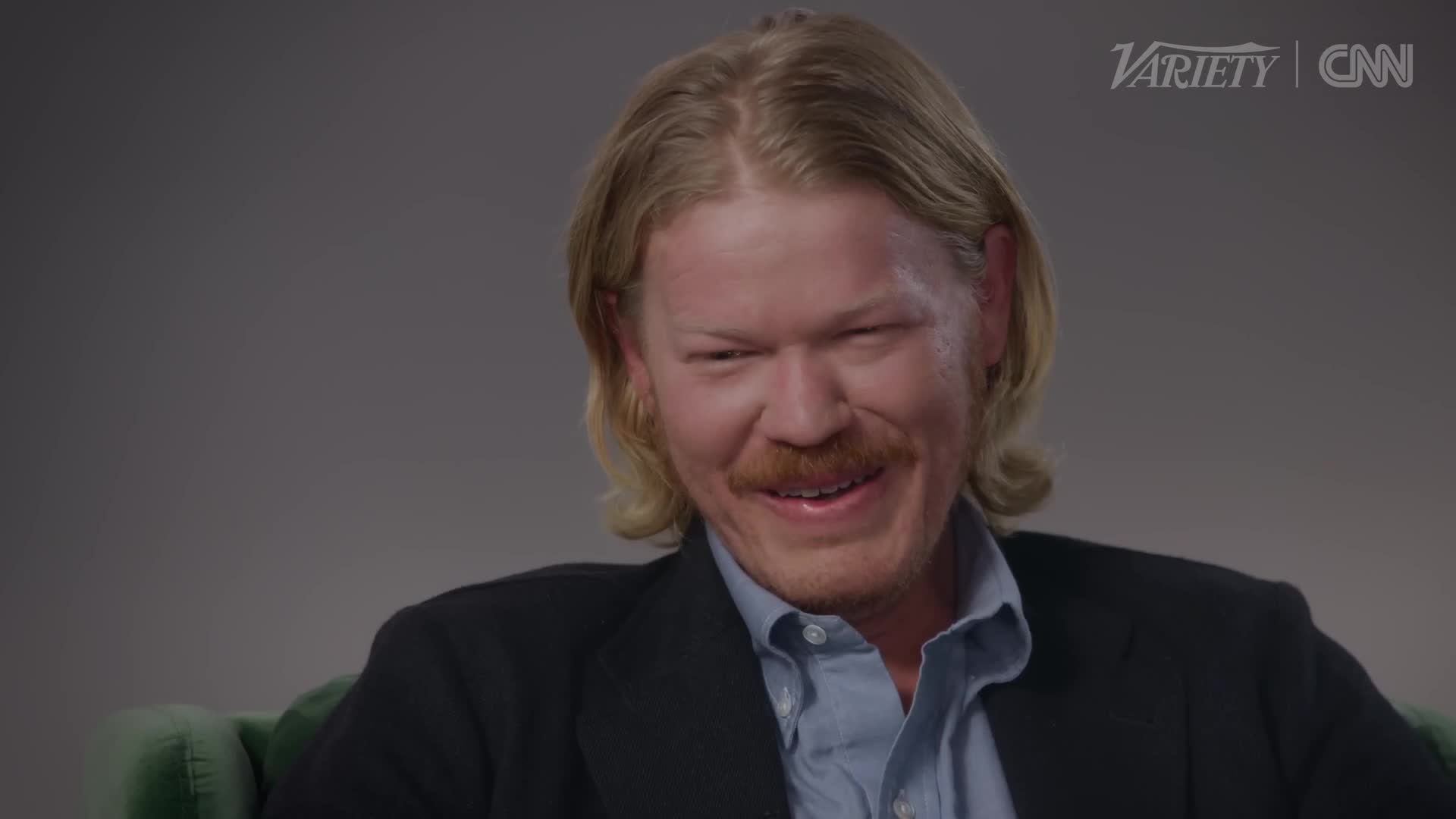
Mike, here we are, actors on actors.
You know, decades later, what's up, man?
This is wild, man.
It's crazy that this is what it took to see you again, but I'm glad nonetheless.
The universe brought us together once again, man.
I know.
All these years later.
I feel like the last time I saw you was probably for about two minutes at one of these industry parties.
It would have to be.
In my mind, I'm going back to Austin, Texas.
I know.
That's the last time that we really like, you know, I had a real combo, you know what I'm saying?
Without all the bells and whistles.
I know, in these last few days, so many memories have been flooding back.
It was a good time.
We were kids.
We did not know that.
We thought we were grown.
Definitely thought I was grown.
I'm speaking for myself.
No, no, no.
Very accurate.
Very accurate.
Friday Night Live days.
Friday Night Live days.
You're like the original, the OG cast.
I'm like the new addition that popped in.
Yeah, but we needed it.
We needed it at that point.
After season two, we needed some new blood.
Some new blood, I know.
Yeah, just these last few days, knowing I was going to see you, I've just been thinking about all the good times.
I've been thinking about 24-hour fitness basketball game.
24-hour fitness basketball game.
You're a sleeper.
People don't understand it.
You're very athletic, and you got a shot, bro.
You hoop.
You can definitely play ball.
I don't know about that, but I'm the guy that you just suspect you don't need to worry about.
And if I have a very open shot.
Nah, come on, man.
I can't let you do that.
I can't let you do that.
It's more like, you know, white man can't jump.
You know what I'm saying?
Woody Harrelson.
Or run.
No, no, no, no, man.
But definitely a baller.
Well, man.
I would like to kick it off, going back to Friday Night Lights days and working with you and just knowing what a formative experience that was For me.
It kind of changed my relationship to acting.
That show changed the way I thought about acting, in the sense that Peter Berg, he really put all the responsibility on us to make these characters our own.
Definitely.
Yeah, I'm just.
I'm curious what aspects of working on that show do you feel like you've taken with you?
Things that you've learned on that show, what has sort of stayed with you?
That's a great question.
I think first of all I was so anxious and nervous joining the show because you know you guys were already established, everybody knew one another, had such a great relationship and you know, like the new, the new kid, you know, going into a new school you felt like the outsider.
But at that first cast dinner where everybody kind of stood up and kind of introduced themselves and kind of welcomed us into the, to the team, you know all that kind of washed away
You know you got somebody like Kyle Chandler standing up there and talking through the experience and yourself like talking through the experience of what it's like to work on the show.
And you don't quite get it until you show up day one.
And you got somebody like Peter Berg, you know, yelling at the camera, all right, the turn left.
Okay, okay, okay.
And he's talking to the camera guy.
You know what I'm saying to find certain shots while we're in the middle of a take.
So like the idea of like always being on and prepared to adapt, you know, and improv.
And, like you said, taking ownership of the characters and expected to bring something every day that wasn't on the page was an expectation and responsibility that you had on that show.
So I think I definitely take that with me.
I mean, that show almost felt like uh, anarchy to to a degree, especially for a network television show.
Um yeah, i just remember the, the sort of uh trepidation like, do we really have this, this space and this freedom?
And then slowly it just becomes a, a game.
And you know all of what you said, that that freedom and with that the responsibility correct, you know that comes with that.
But i think you know, not that acting can always be fun, but that that show taught me that it that really good work can come out of that sense of play and exploration.
And you know, so many times it was just like trying to break the other actor, you know, trying to throw something, that it's just a game, you know.
Um, all right well next, What the hell, Mike?
What happened?
We grew up.
Look at you, man.
I was telling you before, you're a whole father of two and a husband and a phenomenal actor.
Bro, man, I'm so proud of you, man.
It's been amazing to watch, man.
If its hair is still attached, it can track us remotely, so we want to go as quick as we can.
Okay.
Is it working?
Not much is coming off.
Every time I see you take on these new characters and a lot of them sometimes feel like outsiders of these groups, of these pockets.
How do you find the challenges, relatability or not to some of these characters that have been so memorable over the years?
You know it's hard to say if I'm seeking them out or if it's just that's.
That's how directors see me fitting in, and I don't think too often about through lines between characters.
But I suppose, stepping outside of and looking at it, there have been a string of characters that are maybe slightly more difficult to classify, you know, in terms of good and bad um, in terms of motivations, and i think i've just been, i i have enjoyed and been drawn to characters that you know take some, take some time to kind of figure out and they're not easily pegged and understood.
Because you know that's my uh experience with most people you know is is you know that there are plenty of people that forthcoming and tell you exactly how, how they're feeling, but a lot of people you know uh could be going through a whole world inside that you have no idea about.
I don't know it's yeah uh get that.
You know.
It's just one of those things where you know, Like you said, you don't know if it's whether you know the characters are drawn to you or are you to them, or you know, or the director's, you know aspect of it all.
Like the connection that you have between your Ghost Lanthimos, and yourself.
How did that kind of manifest itself when it when it came to Begonia and this project?
We'll go back a little bit further.
Received a call from my agent and friend, Brandy, who's just right over there.
What's up, Brandy?
How you doing?
Out of the blue.
She told me that Yorgos Lanthimos has a script that he wants you to read and he wants to meet you.
And I was very shocked that he had any idea who I was or had seen my work.
And I read the script for Kinds of Kindness and was highly perplexed but also felt like I had been through kind of an emotional roller coaster.
I mean, that was one of the wildest scripts I've ever read.
And then cut to, there I am.
And I don't know if you've heard any about his rehearsal process.
Not too much.
Well, so he comes from avant-Greek theater background.
And so I had heard a little bit before I showed up.
But he sort of makes up these games for actors to participate in.
And it's all very silly kind of helps to build trust.
Um okay, the first few days just left me feeling extremely lost, a little vulnerable.
Yeah okay, i guess the the the result of that.
Um, it just sort of takes some of the reverence off of the material, off the lines, and immediately tunes you into the other actors, and so i was really thankful that i had that as a way into you know these worlds that he creates.
And so then, starting begonia, as you know, working with ryan coogler, you feel like you have a head start.
When you've worked with someone, you know their sensibilities, you don't have to over talk or explain anything and there's that, that trust that allows you to take the leap, which is where the good stuff usually comes from.
I watched Sinners on the plane ride from Venice to Telluride.
Was blown away.
Loved it.
And that next day, I was in a restroom at this Mexican food restaurant.
And I hear this, Plemons.
And it was Ryan Coogler.
So I was like, what?
That's what's up, man.
And for, for meeting, uh, someone in the bathroom, it wasn't that awkward.
He's such a great guy.
And I just have to say, congratulations, man.
We spoke a little bit before.
That movie, on a box office level and on an artistic level, truly gave the entire industry a sense of hope.
Yeah.
So thanks.
Thanks for that.
Yeah.
I'm curious.
You know, reading that script, obviously you probably follow Ryan Coogler almost anywhere that he would lead you.
Yeah, I guess just what were you feeling approaching playing these two parts?
And, you know, I'm not a journalist, but I'm trying here, Mike.
Doing a great job, sir.
Thanks, you too.
Thank you.
Here's my real question, because I'm always...
I've been asked, you know, like, what was the preparation process like?
But to me, I just think back to, like, you read the script, you know you're going to do it.
Okay, now it's time to start.
Like, where do you start when you're about to dive into preparing to play these two characters?
The starting place was, you know, walking right up to the cliff.
You know what I'm saying?
Because this was something that I you know was was uh, was anxious about.
You know, i i was a bit nervous.
I was like okay, are these characters that are going to get the better of me in, in a sense of it could be done in a way that just doesn't work?
You know the ambition of you know uh, you know an actor playing two, two characters, identical twins at that, and you know there was a lot of just nerves around around, know what the, what the process was going to be like.
And then, i think, wiping all that away, it was like okay, let me just focus on where did it start for these two characters, like building out from their childhood trauma forward?
Um, and how did that kind of manifest in each brother differently?
One's a bit more internal with his pain.
Doesn't say a lot, you know, kind of keeps things to himself.
And the other one, he masks his pain and his charisma and his charm and the smiles.
He smiles through it.
And, you know, understanding that those are two sides of me also.
So I think, tapping into the intrusive thoughts that we all have and figuring out how to place those into these two characters and, you know, because identical twins are its own special thing,
You know, it's a dynamic that they're their own celebrities and any set of twins in any neighborhood around the world, they are the local celebrities.
They're them, you know, you can take them anywhere and people are going to stare.
They're going to ask questions that are probably inappropriate or wild like the craziest kind of question.
So Ryan had some childhood friends that were twins as well.
Same with me.
And, I think, diving into their psyche also and their experience and things that are tangible and real that I needed to kind of get into.
And then it's all the things that we need, right?
It's the wardrobe.
What are the things that allows you to completely be one person or the other?
You know I wore shoes that were too small for Stack because I liked him antsy and not really being able to sit still like smoke a size too big.
You know, like those you know basic kind of things that kind of helped me feel planted and rooted in smoke.
Cause he didn't move around a lot, you know, he didn't, he didn't need to move as much.
And so once I got the childhood trauma and started to layer it with that and the music and it just all kind of started to take shape.
And Brian being the perfect North star to kind of keep you on track, for you know where the story's going and where these brothers are going.
You just had to jump off the cliff, man.
You know, I think the first time that I had to go to set and transfer over from one brother to the next and come back, it was like that moment of like.
Can anybody tell the difference?
It makes me nervous just thinking about stepping on to set the first time.
It's like, well, here we go.
Here we go.
Acting with myself.
Hope I don't suck two times.
After day one, I think it was just, you know, it was a train left the station.
But seeing how everybody responded to each brother I thought was really reassuring that they felt something different and that presence was different really was really encouraging as we continued to shoot the film.
Well, you just, you managed to find this balance with both of them that they both felt so lived in.
Pablo here.
In Kinds of Kindness.
I was playing three different characters in one film and Yorgos was adamant about it not becoming some actor trick of caricatures.
And look how much I can change.
And so the fact that you managed to differentiate them in the way that you did, through your characterization, in a way that was just enough, without it turning into some actor show.
It's like a true internal difference in both of them.
Appreciate that, man.
Thank you, man.
Thank you.
Your hair has been destroyed.
You shaved off my hair?
Yes, we've shaved off your hair.
Why have you shaved off my hair?
Prevent you from contacting your ship with teddy and you might have a call teddy, teddy bear, teddy bear, you know?
Um bro like there's so many times watching the film and mouth is like just jaw dropped because you think you know where it's going.
But you just you, just you don't you know.
And, and with him, The first time you're watching it you're like oh, this guy really believes in something that's not real.
But to him, it's clearly real.
So, no matter how absurd the reality is for a character you know, you did such a seamless job in being honest and truthful, you know, to what he thought was real which ends up.
It ends up being how it ends up.
So was there ever moments of like where you felt, I don't know, especially challenged to believe what Teddy believed, or like what he was trying to sell, you know, in a way?
I knew going into it.
I mean, one factor was just that there's a lot of dialogue, you know, and a lot of very specific dialogue based on all of Teddy's research and obsession.
And so I knew nothing about works in the movie, if i don't believe these words as they're coming out of my mouth, and so i think that's kind of why i was uh asking like i'm always curious, because there's a period of time when you get a job that you're excited about.
That's the best feeling in the world, yeah.
And then when it's time to start, for me it's always like this almost sinking feeling.
It's like now i have to do this.
And i remember that with with teddy and i was working on something else um, at the time, and i wasn't going to have time to wait until i finished that to start prepping, and so i started dipping my toe in and reading the script, sort of wandering around various places looking for inspiration and and all that.
Yeah, it's something that There was, for whatever reason, probably how brilliantly I found the script to be written, that for some reason I felt like I understood his core.
One thing that I really love about him, as sort of twisted as his methods are that you discover in the film, there's this feeling, i think, in in modern times where the world seems to be, you know, a scary place and there are a lot of amazing people out there that want them, that want to help.
They've got, they've got something inside them that's just like this energy to like do something and You know, even personally, it's like where do you direct this energy?
And I think for Teddy, he had that to an overwhelming degree.
The other aspect of him that I really loved was most people as well, sort of can't help but deal with people and niceties and social norms.
And Teddy was a character that, if you asked him how he was doing, was going to tell you exactly how he was doing.
So there was a real liberating aspect to that of just being this kind of open nerve.
And yeah, I think in his mind, in the story that he was telling himself he's the hero in this scenario big time.
And you know, we all have this version of ourselves, how we see ourselves.
And then there's this objective reality.
But for me, as an actor, that objective reality didn't matter.
It was, it was all how he saw himself, you know, and there was humanity there man, it was really a sense of um, you know, as you peel back those layers and exposed a bit of the why He is the way he is, you know, which was really beautifully done.
And those surreal kind of flashes that you guys have it was really nice to see, because his why was he should be like this right now.
You know, like... It tracks.
It tracks.
And you understand, like, he'll go to any lengths to... right and injustice that he feels is there.
So there is this bit of this heroic spirit to him that you brought to the forefront in a way Yeah, because there's this feeling, there's this pace, there's this tone of like, there's something else going on here.
You know what I'm saying?
And why is he the only one that's so bought into this?
You know, so there's that bit of it, man.
It was a fun ride, man.
It was a fun ride.
There's something that we did touch on a little bit over there, but the you know the physicality of you know, from roll to roll.
We want to look different.
We want to feel different, right?
There's this you know ability to transform, not just with our you know, our mental and our you know and our emotions, but physically it helps as well.
That was like the slimmest and like cutest you've seen.
Yeah, he rode a bike.
So like he got his miles in, you know what I'm saying, daily.
Was there anything to that physique that made Teddy feel like very like specific for you? in my head i just imagined him as this sort of like wiry kind of creature of the forest you know or something that was just like hungry and scraping by with his cousin and so it was just of i don't know something that that we're just constantly discovering like you said through wardrobe find one little piece that does something for you that's funny you talked about your uh your boots being too small yeah and that being a choice mine work too and they really oh wow okay okay okay but it's funny how those little things uh can really lock you in right they seem so small or insignificant i never saw no roots no demons no ghosts no magic just power and playing smoke and stack aside from aside from these wardrobe uh pieces that helped you with the physicality Was there any other sort of technique or thought or line or some other aspect that helped you differentiate them?
Because I struggle preparing for two things at once.
I struggle multitasking, so to me it's just that seems like chaos in my head and, like i said it was, it was so seamless.
So, thank you, bro.
It's kind of talked about it, but no, there's more.
It's kind of like an organized chaos a little bit.
You know.
There's, like you know, in these days where you have like limited amount of time and you know we're shooting on film four minute mags, you know When you got to reload that's another 12, 15 minutes, breaking the pace of a scene.
So wanting to be on and prepared and ready to go as much as possible was super important.
For me, I would have to do scenes like four or five passes at it.
A few as one brother and then a few as the other.
So the time that I would have to go to my trailer and change would be my time to kind of unravel one and then build the other one up.
So it would literally be a lot of music.
Yeah.
Music was really, really helpful to listen to.
And as I took off a piece of clothing and I put another one on and I took off my, my gold caps, which naturally holds my mouth differently, you know, and how I speak, and I'm going through key phrases and running myself through that brother's perspective of what got them to that day.
Mm-hmm.
That was kind of the process.
And were you working with?
You must have been working with an actor that was standing in for whatever brother you were playing.
Yeah, a twin double.
A twin double.
Yeah, we had a twin double.
And was it the same throughout?
Same person.
Yeah, same person throughout.
I mean, that's kind of, you know, MVP of the, that's an important position.
Unsung hero bro, because it's one of those things where technicality of what we were trying to do, so say like a typical scene, i would, i would show up and i would run it as the other brother first to to let him know exactly where i would be.
So i had to predetermine my choices as the other brother first and then i would do a second rehearsal as as the character that i would start out with.
As the brother, i would start out with the constant direction that I would have to give my twin double in the ballpark of where I needed my other brother to be for continuity.
Eye lines, other actors, other characters that are in the scene.
And then imagine what I would do on the other side first.
That was probably the most chaotic part of it.
And then when I would flip to the other side then.
So what we found out was that whatever brother went first set the rules.
You know, we couldn't occupy the same space.
So if I decided to, like you know, get up and you know, walk down that way at a certain point, you know I would tell them I would do something like this and I would end up somewhere over there.
And so then, when I played the other brother, I would know that I couldn't walk in that space and I couldn't land where he landed, but I could counter that.
So that was a fun game to figure out day to day.
So things like that.
Like you said, like the wardrobe, the music was really helpful, because music is so ingrained in this movie.
You know the blues music.
Did you have the score before you were shooting or did that all come after?
We had a lot of the music from the musical sequences already done.
So that was actually the first time that I'd ever had it.
Ludwig Gorsson, who's our longtime collaborator and composer, since Fruitvale went to film school with Ryan.
And he's phenomenal.
The scenes where song was there and the music was there.
That's what we listened to while we were filming.
And that's a luxury that we usually don't have.
It's usually some random off-brand song that you're listening to and you're kind of trying to get the rhythm and you hopefully it lines up in post in the edit.
But no, we had the music, which was extremely helpful.
Yeah, extremely helpful.
Character-wise for you, do you listen to a lot of music preparing for roles or?
I do.
I mean, I listen to a lot of music just in general.
And...
Yeah, I would say the last maybe three or four years, pretty much every project I do.
And now Kirsten asks me to make a playlist for her.
I think it helps immensely and I like to make very long playlists.
Put it on shuffle and just sort of see where it takes me.
And I don't know, I think anything that can get you out of here, because it's a fine line between preparation, asking all the questions, making sure no stone is left unturned, and then okay, that's enough thinking, now it's just time to jump in.
And uh yeah, see what happens.
But yeah, music always plays a big part and for this we were.
We were fortunate as well in that jersken fendrix, our composer okay, i'd written the entire score before we started nice, and yorgos lanthimos has worked with him on Three.
Two previously, but he made the decision with this film again going back to these kind of games that he likes to play.
Give me an example of one of these games.
I will.
Okay, okay, okay.
Well, this is a kind of example.
He decided with this movie.
He didn't want the composer to read the script and he didn't want him to visit set.
He decided to give him five words and to see what he came up with.
And he gave him bees okay, basement okay spaceship, emma stone yeah, bald okay.
And said, all right, go on your way, come back with the score.
And it was brilliant.
Yeah man, it's really strange how, you know, jerskins created this score off of those five words.
I think Yorgos told me that he did really dive deep into research on bees and spaceships.
There's not much research you can do for a basement or Emily Bowles.
It's a feeling.
It's a feeling.
But he came back with this brilliant score that we then listened to before we were shooting.
So it's this weird kind of circle of inspiration that played out from this weird little game that Yorgos decided to play.
Okay.
Yeah.
The tension was definitely there.
Yeah.
And he told him to go big as well, which you definitely hear in this book.
Big time.
He left a lot of room and spaces to let things breathe.
And then when it was time to get into it yeah yeah, it was, it was there.
We were talking a little bit beforehand just about the double duty aspect that you've now done twice with acting and directing.
I'm curious what you, what you, learned as an actor from directing, or if there, if there was anything, because that sounds like my worst nightmare uh, directing something that I'm in and being forced to watch dailies that I would imagine it's very helpful.
Watching dailies is extremely, extremely helpful.
Yeah.
It's extremely helpful as a, as a director for sure.
And and an actor, I would imagine it's like you.
You you're forced to see the sort of evolution of take one to uh, you know, take whatever.
It really depends on the type of actor you are.
This response is very specific to me and how I like to work.
I would say after directing.
I understand a director's wants, needs and priorities from a day-to-day perspective.
Not saying I was late to set before, you know.
Punctual, this guy here.
Responsible.
Yeah, of course, all the time.
But just understanding how important it is to get the first shot off in the day.
And as an actor, just being like, okay, cool.
It's extremely important to get that first shot off.
So we have a, We have the best chance at making our day.
How can I move things along in a way to make sure that happens?
You know, I think for me was understanding the role that you play, not just the character form in front of the camera, but what, that piece of the puzzle, how that can slow down, how that can speed up, how that, could you know you can affect a lot on a day-to-day basis.
So I think after directing, You know, as an actor, that's something that really I pay more attention to in a big time way.
But you know, performance wise, I think that stays the same in projects that I'm directing, that I'm acting in.
There is a ability to direct while you act, which is a new tool to have, you know, without breaking momentum or or or um keeping, keeping us in the flow, in the flow state as much as possible, you know, keeping that chemistry, keeping that, protecting that that, that artistic integrity, but that bubble, that magic, that's whatever happening.
I can keep things moving in that space for as long as possible.
Are you saying, um, as you're in a scene, keeping it rolling, resetting.
One of the biggest takeaways, I think, from talking to actor directors is washing away the guilt of watching while you're in the scene, of doing both.
Yeah.
Yeah.
You know, at first you feel a bit guilty because, you know, I know the frame.
I know where we're at.
I know what I'm looking at.
I know what the cameras are seeing, you know, and I know what I kind of want.
And, at the same time, being present, You know, having takes having an open dialogue and communication with your cast and actors so they understand that there's going to be a moment where this is on you, this is about you.
So I'm feeding you in a way, you know, that's giving me what I need.
Or if I need you, man, it'll be a beautiful shot if you're looking that way.
Right.
But, you know, I'm just going to step that way.
You know I'm going to move the whole company, everything that I got to do while we're in the middle of a take.
I'm going to move it that way to make sure that you're looking the way that I think I need you to look in that moment.
You know.
So there's little things like that that, I think, gave me an advantage to um, you know, getting getting as close to you know what I was trying to achieve from that moment as possible.
So just just the duality of doing both, I think was um is uh, is beneficial at times and, you know, has its downsides too.
Yeah, so yeah, it's a bit hectic.
I've got a question for you.
It's just, you know, we've known each other for a long time and I wonder for you, Friday Night, Lights days, or even before then, who were your sort of heroes?
Someone that you looked up to that acted as kind of a north star for the potential of what can be done, or maybe what you would like to do one day in which you're now doing.
Yeah that's, that's that's for.
Uh yeah, i would say, someone you looked at from afar yeah just, and then maybe any uh any, that you knew on a more personal level.
I guess I always feel bad because I didn't look up to a lot of people as a kid.
You know, I think my parents was my example of like most parents are of my bar of how to do things and and, and you know, guidelines of hard work and all the foundation right.
Then I think having a name, Michael Jordan, growing up as a kid affected things in a way that in hindsight I can talk about it, but in the moment didn't really understand what was this thing going on just throughout life, right?
Like your name is, is important.
You know, it's how you introduce yourself, what you're called upon in school and how the world you know responds to you.
But when there's another guy out there who's you know the guy, I think it kind of created like a healthy chip.
So, like you know of wanting to be competitive at whatever it was, or a sense of wanting your own identity, you know, in a way,
So I think there was that that kind of you know.
You know, of course you looked up to him.
You know what I'm saying.
Like, how could you not, you know what I'm saying?
So there's a bit of that, that was, that was there that existed.
Did you ever, Ask your parents, like, why?
Yeah.
What did they say?
Well, my dad's name is Michael Jordan.
Okay.
I'm named after my dad.
Yeah, no, I know.
And so he was probably around the same age.
My dad's older than Mike.
He's older than Mike.
Yeah, yeah.
So, look, no, I had no shot.
It was what it was going to be.
I had no shot.
So it's not their fault.
At all.
It's just the way the stars aligned.
You know, it was all meant to be.
Real talk.
And it's funny that you're talking about this chip.
You know, the other Michael Jordan is notorious for using that chip as well, you know?
That's true.
So it's working for both of y'all.
It's working for both of us.
That's funny.
Yeah.
So he's Michael A. I'm Michael B. So, yeah.
But I would say what I looked up to was I wanted to be good.
I wanted to be great at something.
And I didn't know what it was going to be.
I didn't know what it was.
I don't care what it was.
I just wanted to be great at it.
I think that was something that kicked in early.
And I think partially because of my parents and then the name and your path being your path.
Like I firmly believe like what's for you is for you.
You know, you're doing exactly what you're supposed to be doing.
And, This isn't it, though.
This is the right now.
This is the chapter that we're currently in.
And through this experience you're going to evolve and grow into whatever the next version of yourself is and whatever purpose that may be.
And whatever inspirations and mentors or whatever comes along the way they're shepherding you along that path.
Look, man, it's been, we can't wait another two decades.
I know, I know.
To do this again.
Maybe something outside of a scenario like this, as nice as it has been.
Yeah, man.
But man, again, congratulations on everything.
You as well, man.
Feels like, you know, someone from my high school is out there doing amazing things.
And, like I've said before, I mean the fact that not only you're doing the kind of work you're doing, but But when good people do great things, it feels like a win for everyone man.
So happy for you.
So proud of you.
Keep at it.
Can't wait to see what's next.
Likewise, bro.
Come here, bro.
Big time.
Thank you.