Discussion keeps the world turning.
This is Roundtable.
You're listening to Roundtable with myself, He Young.
I'm joined by Steve Hatherly and Fei Fei in the studio.
Coming up, what if series of three -minute short microdramas could boost an entire industry?
China's Microdrama Plus plan aims to do just that.
but can ultra short content actually drive real change?
We explore the future of this explosive media trend.
Relive that moment, if I may ask you to do that, when your phone lights up with just a hay.
The dread sets in. What's coming next?
A request? A complaint?
Silence? Let's dig into why this innocent text is really not good for office communication.
And this is mainly a North American story, but we found that maybe there's a Chinese equivalent that enrages so many of us as well.
You there? I can feel the tension in the air.
Can't wait to get to that part of the discussion.
You just heard Steve and Fei -Fei joining the discussion.
And for our podcast listeners, you can find us at Roundtable China on Apple Podcasts.
Also, if you'd like to talk to us, suggest a topic, or, you know, just have some thoughts you'd like to share with us, please send us a voice memo or an email to roundtablepodcastatqq .com.
And we'd love to hear your voice and also share it with the world on this show.
Now let's move on to the next topic discussion today.
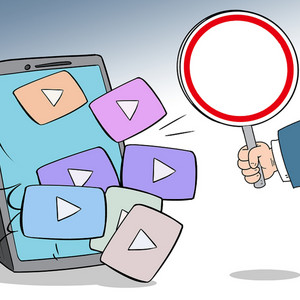
In a world where attention spans are shorter than ever, micro or ultra short dramas are swooping in to fill the gap.
And China's micro drama plus action plan aims to do just that.
From promoting tourism to teaching law, these quick hit stories could unlock new opportunities across industries.
So do tell what's going on with this action plan.
Well, according to a recent Xinhua report, the China's National Radio and Television Administration launched a macro drama plus action plan aiming to integrate macro dramas into various industries to foster culture, innovation and economic growth.
So that the initiative, the micro dramas really refer to the format blending in TV dramas and short video characteristics, which is known for their very fast paced storytelling, diverse themes and also cost effective production.
And they have emerged as a vital new art form here in China, especially, I think, among young people.
Yeah, the micro drama industry in China has exploded in popularity in recent years.
And it's become a significant cultural and really economic phenomenon too.
Micro dramas, they're about, I don't know, about one minute to 10 minutes.
Is that fair to say, roughly?
They're not all exactly the same length, just like with your average TV show.
But they are designed for quick consumption.
They're designed to be consumed on mobile devices comfortably.
They really cater to people's fast -paced lifestyles.
They cater to modern audiences.
And it's a really popular industry here.
And we're seeing more evidence of its popularity now as we discuss it today.
Yeah. And I think the action plan really has its reason because even though this form of dramas have been proven really popular on the market, I do see there are a lot of disadvantages in such form of production.
For example, in order to, the main aim of this production is, of course, profits.
And that means a lot of the a lot of the storytelling really covers the themes like family conflicts, revenge, romance, workplace revenge.
Falling in love with the wrong man or the wrong woman.
But I love them anyway.
And I'll give you some examples that's been really popular not only here in Chernobyl.
So overseas is like they're titled My Wife and My Boss.
I got married without you, the double life of my billionaire husband.
And you can really see, you know, the type of dramas and stories they're putting out here.
And I think these action plans trying to sort of incorporate some of the higher quality production on the market so that they can also promote, for example, tourism, culture landmarks, natural landscapes or urban attractions so that other industry like tourism can take advantage of such productions.
Yes. This initiative, the Micro Drama Plus Initiative, it looks to kind of leverage this format to enhance various sectors and stimulate creativity and enrich the cultural lives of people living here in the public or for anyone who wants to enjoy the dramas.
And according to officials, the plan aims to deliver about 300 innovative micro dramas this year.
And this was the news from Xinhua on February 5th.
They reported that China's national radio and TV administration, the NRTA, they officially issued a notice to further coordinate development and security while also promoting the healthy growth of online micro drama, the micro online drama industry.
And the notice implements quite a categorized and tiered review system that classifies microdramas into three different regulatory tiers based on production scale and social impact.
So it's a very, very detailed plan.
Oh yes, this tiered approach aims to optimize regulatory efficiency through differentiated management while maintaining content oversight.
And apparently for the really small budget micro drama series and videos, the streaming platforms distributing or promoting these micro dramas will bear the primary responsibility for vetting smaller scale productions.
And this only, this reflects the popularity of it.
And then I'm just wondering, if you were someone who's watching the few examples of micro dramas that Fei -Fei just gave us, or there was this other really cheesy but popular hit about some time -traveling stepmother into the 1980s.
And then she has the memory of today's world and that kind of story.
Anyway, it was all categorized as shuangwen, sort of the literary property that gives you, that prioritizes dopamine hits, that makes sure that you're like, oh satisfactory and cliffhanger and I have to click into the next episode to see it for the next two minutes or whatever it is but for those audiences
to be okay now I'm into watching the videos of teaching me law or tourism like promoting intangible cultural heritage sites or maybe they're aiming at different audiences but just with this like new tool this new marketing tool that truly can grab eyeballs well i think i mean think about it as as a viewer
yourself if you are um going to be viewing a a video on chinese law for example and that's not your number one interest in the world well you're more likely to consume it if it's in the form of a micro drama that's easily consumable while you're on your phone on the subway on the way to work or something
like that. It's not a two hour documentary, right?
Yeah, that you're never going to watch probably at home on a Friday night, you know, when you're hanging out with a bucket of ice cream or whatever.
So I would say this is a smart move to use this type of platform or this type of industry to promote these types of things, because it's going to open up.
And I think that's probably the goal.
In fact, it is the goal.
An internet analyst, excuse me, was talking to China Business Herald Newsweekly, and they said that the plan provides a breakthrough direction to promote more related cultural and tourism industries to participate in this innovation.
So they do have a clear plan.
And I think reaching an audience this way is quite a smart way to go about it.
Yes. And I think also it sort of will promote more cooperation across industries that so that the micro dramas will not be only trapped among revenge, cliffhangers, romance and, you know, time traveling, middle aged mom found her new life through in the past 20, 50 years.
But now they can actually maybe inspire new stories when they are cooperating with tourism industry, or especially, I think, culture industry, who have a very profound base of resources when it comes to intangible cultural heritages or traditional cultures or classics.
Like we have a lot of very popular and profound classic stories that we can retell in today's world.
And I think one of the Hong Kong star, Zhou Xinch, he actually participated.
Steven Chow. Yeah, Steven Chow.
He participated in the production of microdramas himself as well.
I think at least his company, they produced a production based on a Chinese odyssey which i think is based on the journey um journey to the west and i think so from here is more of a starting point and we can see more different diverse stories among these micro dramas that will eventually i think challenges
other traditional tv dramas or even film industry Going back to December of last year, the plan published 162 micro dramas.
So 18 will be on rural revitalization, 20 on history and culture, 38 on intangible cultural heritages, 9 on cultural relics, 5 on national cultural parks, 7 on industrial development, and 29 on urban civilization and 36 on scenic spots and also ecological civilization.
It's a very well planned out and detailed endeavor that they're beginning here.
And who knows, you know, maybe they'll get creative with these videos and incorporate some, I don't know, we fell in love in front of the temple of heaven, which has been around for this many years from this time.
You put one and one together and two birds with one stone, so to speak.
Are you this optimistic about it?
I think as a content creator ourselves, we can – well, I like to believe that content is still king.
The length of the video is important, but it's secondary.
It's what story can you tell?
How can you sort of stimulate people's – I wouldn't say intellectual side of things.
Well, at least entertainment, you know, or something like that, you know.
And so, I mean, the plan is, it sounds fantastic, but can you make law or what temple of heaven sexy in two minutes?
That sounds really difficult to me.
I mean, people are positive about it.
They did a survey by the Social Survey Center of China Youth Daily in November of last year, And they found that over 63 percent of respondents have a deep impression of micro drama plus culture events or events, the wrong word.
Fifty nine percent, almost 60 percent, believe that micro drama plus red positive energy.
Those works have gained popularity.
Almost 60 percent believe that micro drama plus tourism works can stimulate the vitality of local tourism industry.
So they had the same questions that you have, Huyang, like, oh, OK, on paper, this looks like a good idea.
But is this going to be popular?
They asked people and seems like they're into it.
And also, I think it reminds me of the time of Wang Wen, you know, the Internet literature, where I think back that time, a lot of people also complained how these kind of really long novels only feed into people's emotions instead of really, doesn't really have a high quality in terms of literature.
But then in the end, we are seeing a lot of gems emerging from the flaws of Sean Wen out there on the internet.
And I think probably similar things will happen with the macro dramas as well.
We will see floods of low or medium quality productions out there that only focuses on romance that you'll probably see it once and then never go back and probably won't remember it after a year.
But eventually I think one or two really good ones will stand out and really will stay with us for a really long time.
And probably will feed back into the purpose here of promoting cultures, promoting tourism, promoting a city, promoting a town, promoting a traditional culture tip that we didn't know before.
Yeah, and if we think about who will be watching these, if we think about, well, if we talk about the job of the tourism industry, what's their job?
Their job is to promote the country.
So how can they do this effectively?
How can they reach their audience?
And I'm thinking from an expat's point of view, if I'm coming in or a tourist point of view, if I'm coming into China and I'm coming into Beijing and I'm looking for some local tourist spots to go to and I'm curious about the history of the city or the history of the country and I have this two minute
video at my disposal that I can view on my phone when I'm actually on the way to the site, I'm going to watch that.
Why would I not? That would be a tremendous benefit, I would think, to tourists.
So this could really, I mean, talking specifically about the tourism industry, this could be a big help.
I think so, too. And actually, out of the many areas that they're trying to hit, tourism is actually maybe the best suited and most easy to execute aspect of essentially we're talking about marketing, isn't it?
um because with tourism like actually you know the sceneries and a lot of the stuff you can quickly um capture via the camera and now actually this goes a little bit back to the uh original concept or the popularity of these micro dramas i still am sometimes baffled by how do they manage to packed all
these twists and turns of a plot into like two to three minutes and actually make it this multiple episode series that people can't get enough of.
And then actually, you know, maybe the first five episodes are free, but then you need to pay for every episode.
So and people really fell for it.
Even though you know, when we talked about Oh, what the plots are Like it's kind of like embarrassing to say this out loud, but actually, you know, if you're in the subway, a lot of people are quietly consuming this and really enjoying it and clicking on campaign for the next episode immediately because I
really need to know if she has time traveled back into the future or whatever it is.
So this is a really interesting take on now promotion, I suppose, and using some of these new media methods and being quite innovative.
Yeah. So do you guys see as, you know, more moves to promote this development?
And are you optimistic about this micro drama future?
I don't think we need to be optimistic.
It's already massive.
And it's expected that by 2027, the micro drama market here in China will exceed 100 billion yuan.
That's about 13 .8, almost 14 billion dollars.
and the the paper that was released um it shows that 70 percent of users have developed the habit of watching these micro dramas so will it be popular it's mega popular now the market may be reaching saturation there's a lot of these things that are produced right um so it might be hard to keep up and it
might be even harder to be successful um but that could be that could be a very good thing because that might drive as we were talking before about deep seek that might drive innovation it might drive creativity and it might um increase the overall quality of these things and and overseas the popularity
could grow too yeah and i think the reason that we are seeing micro dramas right now is because people the habit of viewing for the majority of the population is very fragmented and that's the name probably that's the the nature of the future entertainment is just fragmented not only we are seeing fragmented
news we're seeing fragmented videos and now tv dramas and the stories are chopped into small pieces and maybe that's the future way of entertainment and um i know nobody needs me to worry about this But at the back of your mind, don't you feel there's maybe something missing when we've all said that,
oh, it's not really particularly high quality stuff?
Nobody's like expecting, you know, art coming from out of it.
But, you know, there's just so much stuff out there that's like borderlining garbage.
But as long as they're making some money for the production team, and actually a lot of these production teams, they're not looking for making high quality stuff.
As long as they can make it like a clickbait and have some money coming in and then their business is running fine afloat and everything, then that's all they care about.
But maybe this is me being a little bit idealistic, but what about content, the pursuit of good content?
Oh, come on. Not everything needs to be some award -winning piece of art that will go down as the greatest in history.
I, if I were to produce a micro -drama with the saturation of the market, I'd go in the opposite direction.
I'd promote it as, this acting is actually not very good at all, but our story's interesting.
So if you want to watch some bad acting but a good story, give this one a watch.
I mean, there's just so much content out there.
it's impossible for everything to be super good but i don't necessarily see that as a as a terrible thing you look at the movies coming out of hollywood not everything is nominated for awards but still fun for a watch okay i i am partially convinced but also it's just like when you look at the land it's
mediocrity and then somehow you know i i really i pay for really good content But sometimes it's almost like, gosh, my hard -earned yuan can be a little bit difficult to spend in this aspect.
That's true. And we ultimately, I think we all want something that's better.
But how can we get there?
Coming up, the hay that drives us mad.
We'll get into it right after this short break.
Looking for passion?
How about fiery debate?
Want to hear about current events in China from different perspectives?
Then tune in to Roundtable, where East meets West and understanding is the goal.
You're listening to Roundtable with me, He Yang.
I'm joined by Steve Hatherly and Fei -Fei in the studio.
Picture this. You're deep into your work, focused, productive, and then your smartphone buzzes.
You pick it up, expecting something urgent, and there it is.
Hey! The dread fills your chest.
Why do they just leave it at that?
What do they want? And if this scenario sounds like a scene from your office life, welcome to the world of hay hanging.
It's the worst office behavior no one talks about, at least in the U .S., until now.
So, Steve, tell us what this is about.
Yeah, so hay hanging is the term that's used to describe exactly what you just described.
You're at work, you're at the office, and you get a text from a colleague or a manager or whoever, and all the message says is hey.
And you expect there to be a follow -up message within two seconds or three seconds, but there's not.
It's simply hey. It's called hey -hanging.
And this is being written about now on various sources of the internet because they're saying it's really rude office behavior.
Patti Asai is a senior vice president of mergers and acquisitions at a major bank.
And she teaches financial literacy and workplace decorum.
And she says this is really bad behavior because, though, of course it depends on your work culture, right?
If you're all really good, close friends, then, of course, this is going to be OK.
But for people that don't really know each other that well, it's called asynchronous communication.
The sender sends their piece, and then there's a lag time before the recipient replies.
That's generally how things go in the office.
It's the opposite of asynchronous communication, where, just like us talking here, I say something to you, you respond immediately.
So when you only say, hey, then they're thinking you're not providing enough information.
And that's why it's considered rude.
And that reminds me of the Chinese equivalent.
Are you there? 在吗 I hate it I know something's happening you can just say it you know if you want something from me if you want me to do anything you can just say it but without just greeting one person with are you there在吗 what am I supposed to answer no I'm not here would you prefer a hey and also a hey
immediately followed by oh you're pretty and smart and I think you're the most amazing human being in the world.
OK. And then the third message.
Oh, can you please help me to maybe polish the script or help me do this and that?
But I think that's also that's polite that you are following up very quickly with what you really want, because I think the goal of communication is just to tell the other person what you want, especially in a workplace.
You definitely want something from that person.
That's the reason you are talking with him or her.
But only with a hey, it's sort of it sounds like a trap yeah and it goes back to that asynchronous communication because it's the office everybody's busy everybody's doing something there's usually not an immediate response like there is in a conversation so instead of they're saying it's rude because instead
of just saying hey and then waiting for the other person to respond like yes hi hey what's up then just say hey or hello and then what you want from that person all within the same message Right.
Or, oh, and actually this apparently is a generational gap thing.
Like with the younger, okay, let's just say Gen Z people, like they would shoot you a message like with every half of a sentence.
So you'll see a whole sequence of messages.
And then the millennials and Gen X people, okay, older co -workers, they would...
You get a novel. block yes a whole chunk of text in one bubble and that's how we communicate so what do you think do you think there's a fix to this uh i don't necessarily have too much of a problem with it you know another one that people have a problem with is okay does okay bother you as a response
like if you say something if i say hey hyang the meeting's gonna be at four o 'clock and you just reply okay is it okay a y or is it just the two letters oh fair point yeah right one gives them more effort and one's a little cuter yeah what about the okay emoji that's also a little bit cuter and that's
what the quote -unquote experts say is that if you're going to reply with just okay make it a little bit softer like okay sounds good or okay got it thanks for the info or or That's a lot of words.
OK, smiley face. I'm a big fan of the emoticon on WeChat.
It's the little happy face with the kind of thumbs up symbol saying, OK.
I use that one. OK, which one that enrages maybe Gen Z?
OK, two letters, with a period.
Oh, yeah. Oh, yeah.
Period means you're angry.
OK in capital letters.
You may as well be screaming at me.
Period. OK. But do we have this in Chinese?
Yeah, we did. Like, um.
Yeah, but it's different, though, right?
It's not the exact OK etiquette.
But if you're replying with only one character, um, that means you're impatient.
You're supposed to be answering with, um, um, or multiple ums.
Same thing then. Yeah.
Just soften the tones.
Yeah. But actually, the, um, um, kind of, I don't, I'm not a fan of it either.
Gosh, you're so picky.
Anyway, there you go.
There's your info on Western office culture.
So, if you happen to be working in one, then try to avoid OK and hey all by themselves.
Yeah. No hey hanging in that sense.
And with that, we're signing off.
Thank you so much, Steve Hatherley and Fei Fei, for joining today's discussion.
And you can always find us on Apple Podcasts at Roundtable China.
I'm He Young, and I'll never leave you hanging.
So, we'll see you next time.