Hello, and welcome to the Nvidia AI Podcast.
I'm your host, Noah Kravitz. this year, a robot named the Wormhole made a splash at the CES show in Las Vegas, catching showgoers' attention with its edgy humor and alien likeness right out of the Men in Black movies.
Wormhole was created in part to show off Monks Flow, an AI-powered platform for marketers created by an agency called MediaMonks.
And both Wormhole and some of the humans at MediaMonks are here at GTC talking about the power of generative AI in media, marketing, and beyond.
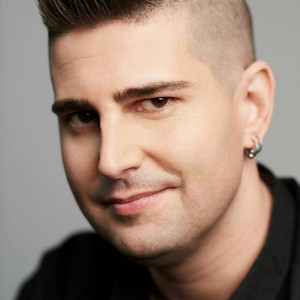
Here to break it all down for us is Lewis Smithingham, SVP of Innovation and Special Ops at MediaMonks.
Lewis is presenting a session here at GTC entitled Revolutionizing Fan Engagement, Unleashing the Power of AI in Software-Defined Production.
And he's been kind enough to stop by the podcast as well.
So let's get right to it. Lewis, welcome to the NVIDIA AI podcast.
Thanks so much for stopping by. Hey, Noah.
Thank you so much for having me. I'm really excited to be here.
One thing I will caveat, so... While you know how crabs evolved convergently five separate times, like crustaceans evolved that way.
All right. Worm-like characters can evolve separately outside of properties that may or may not be owned by Universal Pictures as well.
I was, I had full faith that it was going somewhere, but I didn't, when you said crabs, I was like, I'm in a current, like my current meme collection is exclusively crab memes. about the fact that crabs evolve separately five different times, which says like, I don't know what that says about my algorithm,
I want to ask you about that, but I'm going to do that when we're done talking about wormhole.
How about that? Yeah, absolutely. Excellent.
So... First off, Media Monks. What is Media Monks?
Somebody asked me that a second ago, and I said, what isn't Media Monks?
MediaMonks are a 7,700 person company. That's a global company that solves, creates solutions for media, for entertainment, for advertising, for large-scale tech companies.
We're a combination of advertising, we're a combination of technical services, data services, heavy-duty technical solutions.
We're a use case engine founded in 2001 by Wesley Tahar and Victor Knopp. in a basement in Hilversum, Radio City Hilversum.
Where's Hilversum? Hilversum is like southeast of Amsterdam.
It's an industrial town that like was where during the Second World War, like radio signal towers came out of.
And so all radios in the UK, my parents are British and all.
Radios in the UK have the word Hilversum on them as like a place where antennas were.
Right. Anyway, so later on in 2018, Sir Martin Sorrell acquired us.
And we've since then merged with, I think upwards of 26 other different businesses to create one holistic group.
One of the things that's really exciting about the presence we have here at GTC is I think there's no more than like two people from any one of the original merge companies.
I was in a meeting earlier today and like, They were like, well, who do you guys work for?
And all of us were from different mergers.
But we're all working together on one team to create one thing over one P&L.
It creates really cool opportunities where I can go talk to a team that does massive scaled campaigns for cars or for shoes, and then walk over to a team that builds heavy-duty CDNs for video production systems.
And so, yeah, the answer to MediaMonks, MediaMonks are a massive global, or not massive, we're a global company. that works to create solutions for our clients across a wide range of services, whether it is marketing, technical services, or innovation spaces as well.
Very cool. And so I assume a lot of the work you do is in the digital realm, but also you at least build one alien robot, right?
That is one differentiating thing. I think a lot of the other folks in our industry are focused on... at physical services or services that aren't digital, we're digital focused.
And so as a part of that, We build things all with the purpose of driving more digital innovation, digital content.
And we do have a robotics team down in Latin America that do some – in Brazil – that you go down there and it's like, it's wild.
They had flying cars at one point. Like, I mean, it's, we did a show, my first job or third job with Media Monks I used to direct for them and we were doing this Old Spice commercial.
I don't know if commercial is the right word for it.
It actually did turn into a commercial that was aired during the Super Bowl.
Yeah. It's for Old Spice Foam Zone. It's Wes's favorite project.
And like, it was insane. It was a 16 hour, like, Game show that they built these and I made these crazy.
The thing that's great about media monks as a director is you could pair up with them and. the dumbest, craziest ideas you pitched would actually happen.
And you're like, dude, is that safe? Are we sure we want to do that?
And like... Yeah, we did. And like, we built this like 26, I think it's 36 foot tall, like stairs that you climb and when trip down and, So the team in Latin America and Brazil has, it's called the shop.monk shop.monks and they have a robotics team.
And they're an in-house robotics team. And Wormhole came out of a project that the robotics team, because they're all geniuses, geniuses get bored really quickly.
Sure. spinning out tooling and they started figuring out how they could experiment more with animatronics and like I think one of the dreams of that team are to start building things for parks.
And so we're like, well, let's just build something and see what happens with it.
And the guys down there sent me a text with it.
And we're like, yeah, do you think we could like, could you show this to people?
Like, are you kidding? And like it's a great thing because it's like no context.
And we went – we showed up at reInvent with it.
This is the first time it was in public.
And we didn't have a space for it. So we just like – wielded into a hallway, And we're like, yeah, you want to talk to this robot.
You know, it's funny you say that because earlier, not to interrupt you, but I was walking to get lunch or something.
And one of the Boston Dynamics robots was just kind of scoobying it up down the hall.
That's the way to get attention is you run it in a hall.
And so then, again, what's great about Monks is there was another team in the experience.monks group.
And they were experimenting with conversational systems and they're like, well, why don't we run bedrock on this?
Why don't we figure out a way where we can use this to like actually talk to you?
Yeah. So let's break it down. Describe for the listener, we're old school, it's audio only, no visuals.
Describe Wormhole. I'm not going to do this ASMR, but I will lean into what he looks like.
So Wormhole... looks like somebody that got kicked out of a casting session for a late 90s Jim Henson picture.
So he's like three feet tall. He sits on this crate.
He would be great to have at your theme park talking to guests as they walk through the lines perhaps.
And he is a worm. He's like pinkish blue.
He likes, really likes coffee and, and he uses conversational AI to have conversations with you running on Bedrock and a number of other large language models.
He also runs on some EC2 instances as well.
And what I think is really exciting about him is his small footprint.
He sits on a crate and we use cloud-based systems and we use GPU to really empower how he talks to folks.
Which is fun, and just looking at part of what I get excited about Wormhole as well is, you know, I have... a lot of thoughts about the Uncanny Valley and I think humanoid systems and metahumans Absolutely outstanding.
We have one on the floor right now that has conversationally is absolutely incredible.
But I because of the deeply ingrained evolutionary systems we have around. the Uncanny Valley, there's still stuff that feels off when you talk to a humanoid character.
I even think like... humanoid robots are still a little bit off but when you have a cartoonish looking worm thing like it's not weird yeah at all and you're like cool i'll talk to this worm whatever like that's that's cool and it means that you get past so many of the barriers that you would in an AI piece when you're working with something that's non-humanoid.
Right. And is that kind of the reaction that you observe from folks when they encounter Wormhole at reInvent?
Yeah, absolutely. I mean, the thing that's funny about this wormhole, the original wormhole had a cup of coffee and the engineers had the amazing idea to put actual coffee in it at one point.
And so original wormhole is just like flinging coffee around the room.
And we have changed that so it's not ruining people's shirts anymore.
Yeah. Yeah, I was in a meeting with that guy about six years ago.
Yeah, he's just like this. Why are you doing that?
But he's – the reaction tends to be like people want to interact.
People want to talk to him. It's – weird, it's cool, it's fun, it's whimsical.
And then like you start thinking immediately about use cases.
And you start getting into these systems where, and I think a lot of what MediaMonks does is as a case study engine, we use the fact that we have thousands of clients across different sectors where we produce. thousands of projects a year where and literally some teams produce millions of assets a year that means you can try out a lot of stuff right And then you start getting to a point where does wormhole actually function well as somebody in a medical setting that talks to people?
Right. Have you tried that? I mean, I saw somebody in the keynote yesterday who were doing that, and I think I'd much rather get my diagnosis is from a wormhole than somebody else.
Than from like a just like, Yeah, I'd much rather have them be like, well, you know, you do actually need to get a colonoscopy this year. versus some like humanoid robot thing.
Like, I think that's more fun. And I think that that's entertaining and that feels oddly more personal, but that's important because- of sort of the kawaiification of the way we engage with stuff.
Has MediaMonks built robots for clients, conversational robots, I should say?
We have, we have absolutely built them. We've built several pretty large scale conversational robots for movie properties.
And there's a couple of TV shows down in Latin America we have built those characters for.
There's like Wormhole 2.0 is coming up soon.
I think we'll be walking and talking. Right, right. terrifies me to a certain degree yeah and I'm concerned about like how they're gonna do the walking physics with him but it should be fun right Right.
It might be too early for this, but are there learnings you've taken away?
I mean, other than... rather hear about my colonoscopy from an alien worm than an uncanny humanoid.
Yeah, I mean, that is a I think the other learnings that we've had are around latency, around how he speaks.
I'd love to look at like using directional audio with him.
I'd love to look at like other languages as well.
Yeah. Is he English only? Oh, I think he actually speaks Portuguese.
Oh, Portuguese. Yeah. Nice. Yeah. He does know my name.
Yeah. Which was weird. Is that terrifying?
Yeah, it was like, oh, what's up, dude? Like...
I think somebody, there's another project going on.
I saw one of my team members who was annoyed I wasn't joining calls this week had sent in a request this morning saying, to synthesize my voice.
And apparently it got approved, which was like...
Got this like docusign from legal being like, hey, MediaMonks now reserves the right to clone your voice.
And I was like, oh. Okay, sounds great.
Does that mean I don't have to go to that meeting?
But I think the other learnings we've learned about it is A, it works.
It's fun. And that leans into... I have a life philosophy around whimsy and the idea that most things... you need to ask yourself when you create things like, would I like this?
Does this suck? And then also like, is this something we want to bring into the world?
And I think Wormhole and things like Wormhole is.
And we're... I get really excited is the idea of as you get to spaces where connectivity does get better over time and we start looking at some of the advances that were even made. overnight the idea of having these conversational robots is really exciting yeah and fascinating and particularly if they look like wormhole right it's going to be even more fun cool So let's talk about Monk's Flow.
I'm going to read from your website here because that's what I put in my notes.
It's an AI-centric managed service that streamlines how humans and machines work together.
What does that mean? Yeah. Is it a platform?
Well, so what Monks Flow does, Monks Flow is a node-based pipeline system I sort of think of it, I come from VFX originally, so I think about it a lot like Nuke or like where we're looking at different nodes.
Right. And when you look at – and this was great.
In the keynote yesterday, they talked. I was sitting next to our founder and Jensen goes into like this microservices portion.
Yeah, yeah. And I'm like hitting him with my elbow being like, see, see, see, this is what's going on.
And so... What it does is it takes all the services we provide and it breaks them down into microservice-based systems. and individualized nodes flow together completely as a flow, as a pipeline within that space.
And so it does function as a managed service, but it also functions with a level of automation, and it runs on its own levels of learning.
And so whether it has your transcreation transcription, background generation, foreground generation, texture generation.
And then what's really exciting about Monks And what we've been doing at Monks is the fact that we have teams, we're a glass to glass organization.
So we have teams, we have on staff camera operators, And literally people... Oh, glass to glass, camera to screen?
Camera to screen, yeah. And so we have people who... shoot film with cameras.
And then we have people who design the systems and design the performance systems that those run on.
Right. And so we have the opportunity to take performance data for our clients, feed that back in all the way back to the origin.
That's part of the stuff we're working on with Holoscan for Media as well, With the idea that, you know, and I come from TV and films, and in that space, you never knew what your audience were thinking. being able to figure out how you create that content because, you know, there's so much – such an opportunity to really personalize with that.
And that's where – what Monks Flow does is it just –
It takes that opportunity, effectively marketing and content creation services, technical services, builds them into an entire pipeline, breaks them out into microservices, with the idea that we think our industry's model historically has been around selling hours. human being hours.
So this human being can sit at the desk for 40 hours a week legally.
And, you know, That's it. Right. And we think that we should be selling based on outputs and the quality of those outputs and also on the quantity of those outputs.
And so it gives us the opportunity and we see AI as this massive opportunity to just scale output of individual creators and to really lean into that.
And so Flow enables that from end to end.
And so, I mean, you asked if it was a platform.
It is a platform. I think it's less a platform and more a pipeline.
Right, right. No, that makes sense. And so the outputs from Flow are...
Video? Wide, wide, wide ranging outputs.
So it could be everything from a data set, so individual text-based data sets.
It could be my voice being synthesized. It could be video assets.
It could be real-time assets. It could be stills.
We've worked on a pipeline to build all of that.
I mean, arguably, not arguably, wormhole. is a portion of flow as well.
It's a conversational system within flow.
And so you're using that performance system, the learnings across those systems, to be able to use it for a use case like an avatar that talks to you an avatar that does translation all those different opportunities come together and we think of them as part of an overall ecosystem.
And we work with partners like Nvidia, like Adobe, like AWS, like all sorts of different spaces where, I mean, I tend to think that And I've made my career off of building pipelines using the tools that people offer in the sense that I would imagine... that NVIDIA's R&D budget is probably the size of our overall company.
And so why not let them do the R&D and then use that to run our own pipelines where we can empower our creatives, which are some of the absolute best in the world, to better use those tools to scale that information.
So how do the creatives, and I don't know how long, you know, folks have been monks, been at monks, with monks.
Yeah. I've been a monk for five years, depending upon how you do the math, five years officially, eight years unofficially.
Mm-hmm. I was waiting for a third tier, like 12 years metaphysically.
Yeah, I mean, probably psychologically at least 12 years.
People aren't in the room with me, but I can see that.
I've been a Westside for that long for sure.
So I would imagine you've got folks who, you know, are younger and have been, you know, maybe more tech adventurous and been trying out tools and then maybe folks who are a little older. older, been in the business longer, and are used to doing things a different way.
What's the response been like with the creatives? trying out, adapting to, maybe you're rejecting, maybe being coerced into using AI.
What's the vibe around that? We do not coerce anybody to do anything.
Certainly do not use robots to do that coercion.
With that said... With our creatives, and I will very specifically caveat that with our creatives, the response has been overwhelmingly positive.
Why? So, I mean, media monks think differently.
And I know that that's a very like cliched thing for any company to say, but-
Part of what our founder, Wesley Tarr, came out right at the gates in this wave, and we were like, I remember the first meetings around this during the beginnings of the wave, but we were working with ChatGPT as far back.
I mean, I remember projects going on with GPT-1.
But we've been building in these spaces for a very long time.
And as a part of that, Wes had this slide early on where it's about Kasparov being beaten by Deep Blue.
And if you think that your job is smarter than a robot that can do chess, Your creative idea.
Like, that's pretty cool, dude. Yeah. But like, maybe check yourself a little bit there.
Right. And so... We think, and this is a bad metaphor that I came up with when I had a fever at another conference, but we sort of think about it like...
And on Creatives, there's a great movie, Pacific Rim.
Check it out if you haven't seen it. Excellent film.
Oh, yeah, yeah. Sure. excellent film and it's about people that sink their minds with gigantic robots to fight monsters right right And we use AI, it's cliched to think of it that way, but we use AI as a way to empower our creatives and a way to scale our creatives.
And, you know, it's, I think... I'm not worried at all about jobs going away for that sort of stuff.
I'm worried about... I think... the big idea, which is a thing that is banded about in advertising and in films for a long time, I don't think that is a thing that's going to last very long.
I don't think it has. And I think it's arguably dead already in the sense that like, in the way that singular commercials on television used to create a monoculture moment across our systems.
We don't have monoculture anymore. But also like we don't have a singular zeitgeist moment with the level of frequency that we used to other than perhaps like literally Taylor Swift.
But with that said, like, our belief is that This will come with great scale.
And great scale will require curation. Great scale will require usage.
Great scale will require tooling. And all those sort of things are where human beings will be involved.
And somebody else has said this, but like there's advertising around like Microsoft Excel coming out and, uh, I think it was in the nineties.
And like, it's all these ads about like, fire your accountant.
Accountants are all gonna die. And the growth of the accounting business sector has been exponential since then.
So if we think that this is going to come and destroy anything, If we can learn absolutely anything from history, with proliferation becomes a need for more.
And so you're gonna go from doing six things a year to 600,000 to 6 million and being able to manage and operate those systems and engage.
And then, honestly, interact with that data is where our creatives see this as a massive opportunity to do more.
It's really exciting for us across the company.
And we have, I think our AI Slack channel, AI Collective is the name of the channel. is like nearly the whole company at this point.
Right, sure. And like... It's not censored.
There's nobody having that negativity that I would expect and I have seen.
It's more just like, hey, this is a tool.
Let's use this tool. Let's do stuff that's really exciting.
And I think if anything, we're excited about the fact that You know, it democratizes access to tooling in the same way I think about MiniDV in the 90s and 2000s.
I haven't thought about MiniDV in a while.
I think about it far too frequently. I'm sure you do.
My second mini-DV conversation of the day, for the record.
Nice. That's why you come to a tech conference in 2024.
100%. Yeah. You know, I've done work with marketing departments at different types of companies and agencies and such.
And recently, so I feel like I know enough to be worried I'm going to say something that's incredibly wrong, but I'm saying it anyway.
Say it. I keep hearing that. One of the holy grails with AI and marketing and advertising is being able to deliver hyper-personalized content.
And I see you nodding. Is that where we think things are headed?
I've heard things about, well, the web is going to look totally different because of generative AI and other things that are popping up around it.
And we'll go from me actively searching for something to a hyper-personalized version of a webpage being delivered to me de facto.
Is that something you see happening? Is that something that advertisers and marketers are sort of pining for?
Is that kind of the model that floats around in your head when you think about the future of things like the internet?
Are we there already? I don't know. What are the top three meme types that you get on your reels?
Mine is lots of scuba diving stuff, a lot of stuff about fossils. jokes about battleships, and right now it's a lot of memes about crabs converging, evolving convergently.
So, so we're there, we're there already.
And like, I think the thing is, is that.
We're all individuals. And this isn't me trying to make some Joe Strummer paraphrase sort of thing, but we are unique people.
We're intersectional people. We have our own identities. and marketers, advertisers, brands, leagues, sports, IP holders need to start realizing that we are that and we expect that.
And we want that differently. And so when you start looking at the fact that we get into spaces where we have – not we, media monks, but – a platform may have upwards of 3,500 individual data points on you.
There's a thing, and this is part of that uncanny valley moment where when you get out of being, it stops being creepy when it starts being meaningful and it starts being something you want.
Right. Yeah, I don't want to give away my data until you give me something back.
Yeah, and if you're giving me something back, like memes about crabs convergently of all things, then like...
Or Taylor Swift being a World War II battleship that just happens to be my favorite type of camouflage, dazzle camo, because I was searching for dazzle camo socks.
Like... That gets really meaningful and that's exciting.
And that's where you get out of creepiness and you get into utility and you get into meaning.
And so like... I think the problem with the advertising industry, and I'll clarify, we're not an agency, we're a services firm.
We work with agencies, but we also work with brands directly.
We work with IP holders as well. We need to start thinking about people as those intersectional identities and serving those systems, because if we don't.
And I'm talking about sports highlights here as well.
And I'm a massive NHL fan. Go Canes. And part of that is like.
When I watch a broadcast right now, I have a choice that's home fans and away fans.
What? What else? What other identity is that binary?
We have to start realizing that there's all sorts of different systems that we can build.
And because we're living in this space where tools are digitized, or at least most industries are moving into that space, the opportunity to personalize is massive.
And so we do have teams that produce 1.5 million assets a year for a single piece of IP. with the idea that as you get into that, you can get more and more performant, you can get more and more personalized, and you produce meaningful content.
Let me go back for a second and ask you to break it down.
Home fans, away fans... What's the in-between?
What are some of the things you're talking about that exist in between that?
Okay. My identity, like you just heard, I'm a scuba diver.
I'm super into punk music and heavy metal.
I think that's probably a cornerstone of my identity.
I like things that are move fast and are exciting.
And so the idea of watching a broadcast that's tailored to that viewership base and is engaging with that.
Because when you think about what other media today do you watch that isn't personalized?
You know, and so looking at how like a sports broadcast, for example, could start using a system.
I think one of the things that if anybody took anything away from this conference other than the fact that Jensen may be coming out with the Jacuzzi product, which I will be buying if that is available.
Nvidia branded jacuzzis sound amazing. And there are data centers, by the way, like he made a joke about that.
I'm sorry for those that missed this joke.
The new giant processors take in, they're liquid cooled and they take in.
I believe it was at room temperature and they output at about 45, the temperature of a jacuzzi, two liters.
I believe it was two liters per second or per minute. and a jacuzzi.
He made a joke that, yeah, we're going to have a jacuzzi peripheral.
Buy a data center and get a jacuzzi. What's amazing, though, is there are data centers in the U.K., where they're built next door to council estate pools and they heat swimming pools.
And they heat them, yeah. But before I tangent on more things, like what RAG is a system, retrieval augmented generation system.
And so that's where you take multiple disparate data sets, you query that, and you start to take those systems together and combine them to figure out a result.
And so for example, in sports, If you're a sport on a digital platform, and if you look at the way sports are right now, the rights are being bought by digital platforms almost exclusively. and they're being brought into these digital spaces.
And when you take tooling like Holoscan for media, for example, now at literal camera level, you're able to get immediately into a database space and a space where analysis can be run.
And so, okay, so you have the fact that sports in general Since like people like through rocks have been gambled upon.
And so there's data sets around the sport and most sports right now, particularly professional sports have like accelerons.
Right, right. All kinds of data, yeah. So we have that data set.
You have the fact that the platforms have their own algorithms already. and you start thinking about the sort of algorithms that are on those platforms as well, then you have the fact that individual personas, individuals, and we have a tool called Persona Flow that I'll dig into in a second. have their own discrete datasets, that 3,500 sets of data that we talked about a second ago,
And then you have the fact that the images themselves can now be broken down with things like segment anything.
I just saw the team. I really love meta segmentation tools, segment anything.
Really powerful open source tool. Works really well and is a really fun tool to play with to learn a bit about segmentation.
And it's also an extremely powerful tool.
So we have these four datasets that we can take and we can say, hey, okay, Let's literally ask, yo, what would Lewis like to watch if he's watching a basketball game?
And so I like heavy metal. I like intensity.
I like combat sports. And I like sneakers.
So it's going to spit out a highlight reel that's like whenever people are yelling at each other, set to heavy metal, probably with a bunch of shots of sneakers in there.
Right. And all of a sudden I'm like, yo, do I like basketball now?
Like what's going on? If you're listening, I love basketball.
But to that same extent, the opportunity is to really create that personalization and create access points in the same sense we saw Super Bowl this year, which was.
And if you look at the stats on the Super Bowl, they haven't been great lately.
Yeah. But we had the single most watched telecast since the moon landing.
Yeah. Oh, was this year's? Yeah, it was since the moon landing.
And it's not because like the game was particularly great.
Don't say Taylor Swift. It was, but here's the thing.
No, no, no, but hold on. I don't like Taylor Swift either.
No, I don't dislike her. but it's not my vibe at all.
It's not my thing. I think she's a perfectly fine professional, but like, dude, like I like Slayer.
Yeah. Like it's not my vibe. Yeah. With that said, though, it's perfectly okay to be into the Super Bowl because of Taylor Swift.
And so here's the thing. We live in rich media to the same point that my phone is full of crab memes and yours isn't, and Sarah's certainly is not.
Right. Why should I have to even know Taylor Swift exists within that universe?
Why can't I just have it tailored to me?
Does that create, is there a downside, though, that it puts us all in our own little information bubble?
I mean, I think it probably does, but I'm not a philosopher and I'm a person who leans into fun and excitement and enjoyment and so on.
I'm a person that tends to just think that if your core motivation is not to hurt people and is just to make people happy and have fun.
Right. then it's probably fine. I'm sure there are silos and stuff like that.
But I mean, I live in the silo where I've listened to the same music since I was 14.
And like, I'm perfectly happy with that and it's great.
And leaning into that is where there's massive opportunities because you create more joy for people.
And you create these spaces where we take ourselves a little bit less seriously and we realize that sports, like music, is a culture vehicle.
And you have the opportunity to engage with culture.
And so to that end, one of the tools that I'm most excited about right now is our persona flow tool.
Yes. Which he announced it. I think it was this week.
I'm looking over at Sarah just to confirm that we had our formal launch of it.
And it does. We can launch it right now.
Oh, it's launched right now, yeah. Perfect, great.
Sorry about that, Henry. Persona Flow, brand new.
Tell us about it. So what it does is it takes the idea of... of a conversational system with the idea that you can build that 3,500 data point system and then talk to it. as an advertiser, as a broadcaster, as an IP holder, and basically say like, you can make a Lewis bot and be like, Lewis, what would you want to watch?
Well, and it would respond accordingly and you can have those conversations.
It's a way to focus group without having a focus group.
It's a way to create deeply personalized content.
I'm really excited based on some of the announcements yesterday where we could start actually screening video for it.
And so it could be like, yo, Lewis, do you like this clip?
Do you think it's exciting? Then use that data to feed it back and create more generated clips and roll and roll and roll until you get to something that I would like. eventually.
And so it's a form of the AI universe where my agent or my team of agents are running around out there doing all the stuff for me so that when they come back, when I actually log on, so to speak, and engage...
I'm only getting the good stuff because they've already done all of that.
Yeah, it functions like a chatbot in the sense that, and I think you get into really interesting insights as well.
Sarah says it wouldn't be an interview without me, without me bringing this up.
But like, I think back and I think the best marketing activation of all time ever was a video game called Chex Quest that came out in the 90s.
Checks Quest. Checks Quest. Greatest thing ever.
What is it? Was it? So Checks Quest, John Oliver stole this bit for me, but Checks Quest is a, no, Stephen Colbert stole it, right?
I think it was Stephen Colbert. Anyway, so it was a video game that in the 90s, General Mills was not trending well with kids.
Oh, Chex. Because it was Chex. cereal. And Chex cereal is great.
My view of Chex is permanently tainted by this video game.
Tainted in a positive manner. And... I was 12 years old.
I really wanted to play Doom. It was too violent.
I wasn't allowed to play Doom. Right. I watched all my friends' older brothers and sisters play Doom.
I wanted to do it. And checks went to John Carmack.
And Joe Romero and said, Hey, can we license your game?
And they're like, this is a weird idea, but whatever.
Cool. I don't care. And I don't know if you've seen pictures of John Carmack and Joe Romero at that period of time, but you can totally see how they would respond.
It's mostly them with like, flame backdrops and swords and like clearly listening to Manowar.
Yeah, yeah. And they... So they sent like...
Czech serial licensed Doom, and it's literally Doom. with like a Czech serial character, like running around shooting boogers at other boogers or shooting milk at boogers.
For real? Yeah, dude. That's legit the plot.
Nice. As a 12-year-old who couldn't play Doom, I could now play Doom.
And it was amazing. And I played that to death.
I'm sure, yeah. Like I bought... And like, what's interesting is it corresponded to a 300% increase in the sale of cereals.
Yeah. Wow. And to this day, if I see Czechs anywhere, I'm like, yo, Czechs West.
Czechs West. And so what that does and what a persona flow will probably do is you get to this point where you start thinking about wants and needs and what people are interested in.
And if you start asking like, hey, what are 12-year-olds wanting to do right now?
Well, they want to try to play Fortnite, but they're not allowed to for whatever reason. how would we do it?
You start creating that sort of stuff. We, I mean, that's what we, I was trying to think of the name and I couldn't, but the, uh, The Fortnite stand-in that we tried to pass off with my younger son before we gave in and said, yeah, you can just play Fortnite.
Yeah, you should just play Fortnite. I played Fortnite. far too much fortnight as well but it is it's my generation's form of golf totally totally We always like to end these conversations by asking the guests like you, what's next?
I feel like we've been talking about what's next for the past half an hour.
But is there... whether it's a technical problem, cultural problem, and problem, I'm using that word loosely, right?
Something that a solution could help with.
Technical, cultural, communicative, something in the media pipeline itself.
I don't know. Is there something that you are... grappling with, excited to overcome, kind of seeing the future?
I mean... Yeah, so I think, and I'll hit like a philosophical beat and then I'll go into something more technical.
I think we're about to enter the age of the subculture.
And we're entering an age where within those subcultures you start to have – because again we have the death of monoculture has basically occurred at this point.
Right. It hasn't hit big media yet. But what you're going to start to get, and this is really exciting, is...
I missed the early 2000s and 90s where there was this massive swath of $2 million budget movies that were really meaningful and really interesting.
And I think as you get to these spaces where these layers of personalization and these subcultures and these audience segments are more and more defined, you start getting to the space where you can make a $2 million movie and make revenue off of that.
And you can make these smaller pieces of content that are more tailored, and more personalized individuals and therefore make people happier and make people excited about those pieces of content.
And I think... You know, you mentioned earlier, like, there's a lot of talk of, like, oh, isn't this going to break people up?
It'll be the exact opposite. Like subcultures is a community.
And as we build that, we'll be really more exciting.
So it wouldn't be that you and I would see slightly different versions of the same movie tailored to each of our tastes, but it would be more like... you and I might find each other in the audience of a heavy metal movie about hockey in North Carolina.
100%. Like you got to think like, and I know that, We all want to think we're very individual, and we are.
Every individual matters. I used to now that I'm getting older.
But when you do the math of like... if there's 3,500 data points and there's 8 billion people, like there's going to be more than a few that have more than...
70% of those data points aligned. And so you do.
You start getting into these points where, like, you just literally described a violent gentleman, which is a hockey... streetwear brand that was founded by the guys in Every Time I Die. started making movies, that's what you would get.
There you go. And so I think you get into those spaces where we create community through that and we have the opportunity to create like these infinite culture reels and these infinite storytelling pieces.
And I really love that as a part of AI and I think as artists start to grapple with it more and start to engage with storytelling around it, you get to something really meaningful and that's really exciting.
I think we are in an, a member of the World Economic Forum.
And I think this beat is overhyped, but it's very, very true.
And sitting... Yesterday in the keynote in SAP Arena, which had more seats filled than the average Sharks game, you...
That was me just being a mean... Is that a shark?
That was me being a mean Canes fan. I'm sorry, sharks.
We took Brent Burns from you. But the...
I don't know what that means, but I've been to some Oakland A's games.
Oakland A's are great. So here's the thing.
You start getting into this space where we are in the midst of a fourth industrial revolution.
And in my personal life, I'm reading – I committed myself to reading a lot about Ludditism and the meaning of Ludditism and why Luddites – which it was like a legit cultural movement.
Yeah. And people died and they smashed typewriters and stuff.
Right. But what we are in is this, as the shift occurs, I think we have the opportunity to create more. and make more.
And as we use systems like RAG where you start to unearth these intersectional systems It gets really, really cool when you start having more things like wormhole or like highlights that are focused directly at you.
And I think things get less lame as well. in the sense that we have the opportunity to deliver things to people that they want.
I think we talk a lot about waste But I don't think people think enough about how much time is wasted watching shit we don't want to watch.
And like, that sucks, man. Like how much of my life was spent watching toilet paper commercials after not being convinced to buy toilet paper by that toilet paper commercial.
What you get to is the opportunity to reduce waste.
And that is something like there's a lot of stuff around sustainability and AI.
And I think we have to realize that most of the cloud and the data center systems that we have in this country and globally are in sustainable facilities.
And so the opportunity to get to a more sustainable future through that is really exciting.
I'm also like, this is my last beat on that.
I'm also really excited about what's going on with transmission technology and particularly mobile for societies.
And you look at places like Sao Paulo, Brazil, or places like Mumbai, India.
Mm-hmm. where it's a society that mostly grew up on phones rather than necessarily on PCs.
And the way in which culture is consumed at this like rapid fire level and the way in which content is consumed in an innately social manner is so exciting and so interesting.
And you look at the way like, WhatsApp is used and how those systems work together.
It's so interesting to see And I do fundamentally believe that access to internet is a basic human right.
And as you see these groups more groups get access to internet and get access to a voice.
Storytelling is so fascinating. So yeah, that's, I mean, I'm very optimistic about things.
The keynote yesterday was mind boggling and really, really fun and exciting.
And I think it's really cool to see NVIDIA on the stage that they're at right now.
It's a company I believed in. like most of my adult life, to be honest.
I fired my first financial advisor ever for not letting me invest in Nvidia.
Yeah. back in 2015. And I think that...
You know, it's interesting seeing this. I was talking to our founder, and he sees this as becoming like a traditional marketing beat of our year.
Right. Where this is going to be like the CES part two.
Yeah, yeah, yeah. You know, you see this, this was, this used to have the vibe of SIGGRAPH.
Yeah. And now you see these people who are like legit business people standing next to people like Joelle Pigneux.
And people like Rev, where you're like, whoa, that's that person, oh my goodness. nerd superheroes.
And it's exciting to see that culture grow and to see the way the company's been built.
And I'm really excited. I think the culture is amazing and it's been really fun.
Excellent. We're going to leave it there.
Lewis Smithingham, Media Monks, people who want to learn more about Media Monks, about any of the stuff we've been talking about.
Where would you direct them to go online?
Probably our website, probably MediaMonks.com.
But you can also like hit us up on any different platform anywhere.
LinkedIn, Instagram, wherever you want to hit us up.
We're very easy to find. My last name is, I have the SEO on lock, so I'm pretty easy to find.
Good enough. And wormholes, wormhole making more appearances?
Wormhole will appear all over the world and there may or may not be more than one wormhole. love it teaser at the end lewis thank you so much for joining the pod enjoy the rest of your time good luck with your session thank you Thank you.