
[Mastering Hardware Store Vocabulary: A Comprehensive Guide to Essential Tools]-[Let's measure your English with these tools]
📋 Summary
Mastering Hardware Store Vocabulary: A Comprehensive Guide to Essential Tools
Navigating a hardware store can be a daunting task if you aren't familiar with the specific terminology used to describe common household implements. This guide breaks down essential tools into categories based on their function, helping you improve your English vocabulary while gaining practical knowledge of home maintenance equipment.
Impact and Striking Tools
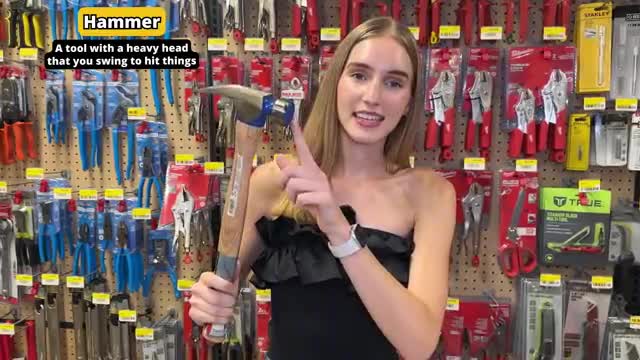
At the core of any toolbox are tools designed for force. A hammer is the most fundamental, consisting of a handle and a heavy head used to drive nails into wood or break objects. For more delicate work, a mallet—often made of rubber or wood—provides a softer impact, allowing you to pound surfaces without causing damage or excessive noise.
For heavier tasks, the axe is essential, featuring a sharp, heavy blade attached to a handle. The user employs a chopping motion to cut through wood. A variation, the pickaxe, features a dual-purpose design: a pointy side for breaking rocks and a flat, wedge-shaped blade for chipping away smaller pieces.
Fastening and Assembly Tools
When it comes to assembly, screwdrivers are indispensable. A screwdriver is used to twist and turn screws. The Phillips screwdriver is identified by its cross-shaped tip, perfect for furniture assembly, while the flathead screwdriver features a single-slotted tip.
For more advanced assembly, a drill is used to create holes in various materials using a spinning bit. Key features of a drill include the trigger for control, the battery for power, and a forward and reverse switch, which allows the user to either drill into a surface or remove a screw.
Cutting and Adjusting Tools
For cutting materials, a saw is the standard instrument. While a general saw cuts wood, a hacksaw is specifically designed for cutting through plastic or metal.
Adjusting hardware requires a different set of tools. A wrench consists of a handle and a shaped head that fits onto a nut or a bolt. An adjustable wrench allows the user to modify the head size to fit different fasteners, whereas an open-ended wrench is limited to a specific size. For continuous fastening in one direction, a ratchet is the preferred tool, as it prevents the user from fastening in the opposite direction.
Maintenance, Measurement, and Safety
Household maintenance often requires specialized equipment. A plunger (or toilet plunger) uses a rubber cup to create suction to unclog drains. For reaching high places, a ladder serves as a set of steps.
Accuracy is maintained through specific measurement tools. A leveler—a device containing bubbles—is used to determine if a surface is even and straight; if the bubble is in the middle, the surface is level. A tape measure is utilized for measuring long distances, featuring a retractable tape that is far more practical for large objects than a standard ruler.
Essential Hardware Components
Finally, the video highlights common hardware items that are vital for construction and repair projects:
- Fasteners: Nails, screws, nuts, and bolts are the small but critical components used to hold materials together.
- Safety and Utility: A hard hat and gloves provide protection, while a safety cone warns of hazards. Items like rope, tape, and power strips round out the essential inventory of any well-equipped workshop.
By familiarizing yourself with these terms, you not only improve your English proficiency but also become better equipped to handle the various challenges of home improvement.

Deep Learning with ListenLeap


