
[The Puppet Gambit: Analyzing the Comedic Collision of Darius the Hilarious and Justin Beaver]-[Max and Caroline Save a Failing Comedian | 2 Broke Girls]
📋 Summary
The Puppet Gambit: Analyzing the Comedic Collision of Darius the Hilarious and Justin Beaver
Introduction: The Tension of Creative Interference
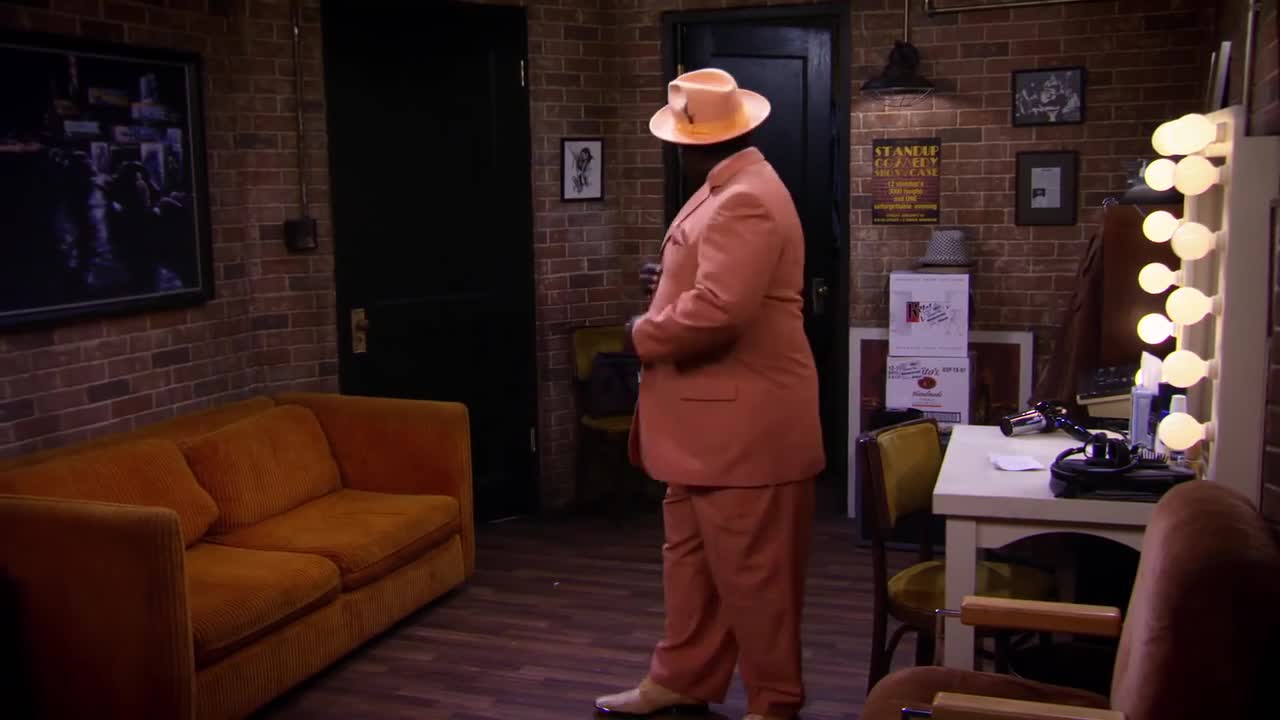
In this segment, the narrative centers on a tense professional intervention between two fans/producers and a stand-up comedian known as "Darius the Hilarious." The core conflict arises when the producers attempt to impose a creative pivot on Darius’s established act. Despite Darius being "pumped" and feeling like he is "totally in my zone," the producers feel compelled to introduce an external element: a puppet named "Justin Beaver."
The Puppet Intervention: A Forced Evolution
The producers argue that the puppet is a necessary evolution for his performance. Their logic is rooted in the belief that "you don't even have to be funny because Justin Beaver does the work for you." This suggestion highlights a fundamental disconnect between the performer’s identity and the producers' desire for a gimmick. Darius, understandably confused, retorts, "But I don't use a puppet," to which the producers dismissively respond, "Until you do." This interaction serves as a critique of how external commercial pressures can undermine artistic integrity, even when those pressures are born from a place of fandom.
The Performance: Smart Cars and Defensive Comedy
When Darius finally takes the stage, the impact of the producers' interference becomes apparent. His initial set, which focuses on his trademark "smart car stuff," is immediately undermined by the puppet’s interjections. Darius attempts to maintain his rhythm, asking the audience, "Who out there has a smart car?" and delivering his observational humor: "I don't think it's smart to drive a half a car."
However, the puppet (controlled by the producers) disrupts his flow, forcing a meta-commentary on the quality of his jokes. When the puppet demands, "You got to laugh," it highlights the vulnerability of a comedian when their control over the room is compromised. Darius attempts to regain his footing by pivoting to crowd work, but the puppet relentlessly heckles him, pointing out his physical stature: "It's the only car your feet can reach the pedals in." This shift from observational humor to personal insult illustrates how the introduction of the puppet transforms a standard stand-up set into a hostile, confrontational environment.
The Breakdown: When the Act Unravels
The segment concludes with the total collapse of the performance. The puppet’s presence forces Darius to abandon his prepared material to engage in a back-and-forth that feels increasingly desperate. By the time the puppet targets a member of the audience—mocking a "gray-haired scrub" and referencing "Don King"—the distinction between a professional act and a chaotic, improvised disaster has vanished.
Ultimately, the experiment ends in failure, punctuated by the mundane reality of a "declined" credit card. This ending serves as a biting irony: the producers tried to "fix" a comedian with a puppet, yet the result was not only a failed performance but a complete disintegration of the professional relationship. The text captures the friction between creative autonomy and the intrusive, often misguided, attempts of others to "improve" a performance, ultimately proving that true comedic resonance cannot be manufactured through gimmicks like Justin Beaver.
Deep Learning with ListenLeap


