At Sierra, discover top workout gear at incredible prices, which might lead to another discovery.
Your headphones haven't been connected this whole time.
Awkward.
Discover top brands at unexpectedly low prices.
Sierra, let's get moving.
Hi, listeners.
I'm Jeff DelVecchio, the chief multimedia editor and executive producer here at Scientific American.
I work every day alongside Rachel and Fonda and the rest of our crew here at Cyan to bring you science quickly.
But before we dive into today's episode, I want to share something very personal and important.
I spent the last 25 years of my life telling stories about science.
I've written, filmed, recorded, and animated the discoveries that shape our world.
Whether it's exploring science inside of biosafety labs or out on ice sheets, I've witnessed the power of science journalism.
But here's the hard truth.
Journalism like ours is getting harder to do.
Newsrooms are shrinking.
Misinformation is growing.
And responsible reporting, real, verified human reporting, takes time, care, and support.
Subscribing to Scientific American is the best way to keep science journalism alive.
By subscribing to SIAM, you're supporting the work we do to bring you science quickly.
Please consider getting a subscription today at scientificamericancom.
Slash getsiam, slash science quickly.
As Thomas Jefferson once said, if a nation expects to be ignorant and free in a state of civilization, it expects what never was, never will be.
I know we all want to live free.
So let's keep learning together.
Happy Monday, listeners.
For Scientific American Science Quickly, I'm Rachel Feltman.
Let's kick off the week with a quick roundup of some of the latest news.
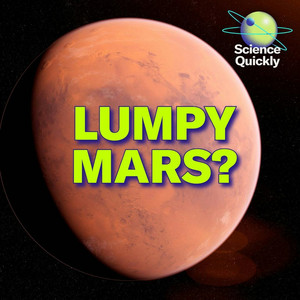
First, let's talk about Mars and its surprisingly lumpy interior.
Late last month, NASA shared what its now-defunct InSight lander found out about the red planet's insides.
In a study published in Science, researchers reported on data from the seismometer that InSight placed on Mars' surface in 2018.
By 2022, when the mission ended, the seismometer had recorded more than 1,300 Mars quakes.
Because a quake's seismic waves behave differently based on what kinds of material they're passing through.
The shakeups allowed scientists to study the planet's core, mantle and crust.
According to the new study, the Martian mantle is full of large lumps, some as big as 25 miles across.
The researchers think they're seeing the rocky remains of ancient collisions between Mars and errant space objects.
They say, some of those impacts generated enough energy to melt huge spans of the planet's surface and mantle into oceans of magma, providing an opportunity for chunks of rock to push deep inside the Martian planet.
Now for some health news.
According to a study published last Tuesday in JAMA Internal Medicine, a common nasal spray could provide some protection against COVID.
In a study of 450 adults who used either a nasal spray containing the antihistamine azelastine or a placebo three times a day for 56 days, the over-the-counter medication was associated with a 67 lower risk of catching COVID.
And the five folks who did catch COVID while using the allergy spray tested positive for less time on average.
In general, azelastine users had fewer confirmed respiratory infections during the course of the study.
Now, this study was fairly small, and it's also important to note that the research was funded by a German pharmaceutical company that made the azelastine spray used in the study.
So for now, the best way to prevent a COVID infection is still vaccination, including getting an annual booster to maintain your protection.
Unfortunately, there's currently a lot of mixed messaging about who's eligible to receive a fresh COVID shot in the US.
While Health and Human Services Secretary Robert F Kennedy Jr and his FDA commissioner have stated that anyone who wants a shot will be able to get one, many Americans might now only be able to access COVID boosters as an off-label medication, which would likely mean insurance wouldn't cover the vaccination.
And potential confusion over who's paying for the jab and how would surely make it harder to just stroll into a pharmacy for one.
Speaking of vaccines, here's Florida State Surgeon General Joseph Ladapo speaking at a news conference last Wednesday.
The Florida Department of Health, in partnership with the governor, is going to be working to end all vaccine mandates in Florida.
All of them.
All of them.
That means children in Florida would be able to attend public school without receiving any immunizations.
While all states currently allow exemptions from school vaccine mandates for medical reasons and most offer religious or personal exemptions if not both Florida would be the first state to do away with mandates entirely.
Meanwhile, the governors of Oregon, Washington and California have announced a joint partnership between the three states called the Western Health Alliance.
In a press release published last Wednesday, the trio cited concerns that the CDC now quote peddles ideology instead of science, and they pledged to work together to develop immunization guidelines based on the advice of medical experts.
We'll be talking more about fall vaccinations and how to get them in a future episode.
So let us know if you have any questions.
You can email us about COVID vaccines or anything else at sciencequicklyatsiam.com.
And if you're looking for more information on the recent shakeups in public health leadership in the US, check out last Friday's episode.
In other, perhaps more personal health news.
Your phone habits could turn into a literal pain in the butt.
A study published last Wednesday found that people who used smartphones while on the toilet had a 46 higher risk of hemorrhoids.
That's after the study authors controlled for other possible risk factors like age and fiber intake.
And you didn't have to dig too deep into the study to find a pretty plausible explanation.
37 of the bathroom phone users studied spent more than five minutes on the toilet at a time on average, while just 71 of the no-phone group reported the same length of stay.
According to the Mayo Clinic, sitting for prolonged periods of time, and especially doing so on the toilet, is associated with developing hemorrhoids.
The new study only surveyed 125 adults, but this isn't the first research that's come out linking doomscrolling with anal and rectal ailments.
A study published in the Turkish Journal of Colorectal Disease back in 2021 looked at 882 people admitted to an outpatient clinic with hemorrhoids and compared them with a control group of 802, asking both to report on their bathroom and cell phone habits.
The researchers found that every additional minute spent scrolling on the toilet made a study subject more likely to fall into the hemorrhoid category.
Other studies have found that cell phones are often bacterial hotbeds, at least in part because of our tendency to surf the web while pooping.
So if you're looking to do something simple to improve your health, consider going screen free the next time you've got to.
You know go.
Speaking of bacteria, a study published last week in Cell sheds new light on mammoth microbiomes.
Researchers analyzed microbial DNA found on the bones and teeth of 483 specimens.
The studied mammoth remains come from various parts of the world and range in age from more than 1 million years ago to just a few thousand.
Once the researchers filtered out microbial species that would plausibly move in on the tooth and bone samples after an animal's death, They identified six microbial groups that likely paired up with mammoths in life.
The researchers say, some bacterial lineages seem to have coexisted with the animals for hundreds of thousands of years.
One genus they found is closely related to a pathogen that recently plagued African elephants.
Another strain was reportedly determined to be a distant relative of a microbe that causes tooth decay in humans.
We'll wrap things up with one more animal story.
Have you ever noticed that squirrels have thumbnails?
Me neither, but apparently it's very important.
A study published last Thursday in Science investigates how having thumbnails as opposed to claws or hands with no thumbs at all gives some rodents an evolutionary advantage when it comes to acquiring food.
That could help explain how these mammals spread all over the world in so many different varieties.
Thumbs that feature short nails instead of claws simplify the process of handling and eating nuts.
Most primates and some rodents are the only mammals to have gone the thumbnail route, and the two lineages seem to have developed this trait independently.
By studying 433 rodent genus groups using specimens from Chicago's Field Museum, the researchers found that modern rodents can likely trace their short nut-friendly thumbnails to a single common ancestor.
That's all for this week's Science News Roundup.
We'll be back on Wednesday to talk about the infamous red meat allergy that's spreading via tick bite.
Science Quickly is produced by me, Rachel Feltman, along with Fonda Mwangi, Kelso Harper and Jeff DelVecchio.
This episode was edited by Alex Sagiura.
Shana Poses and Aaron Shattuck fact-check our show.
Our theme music was composed by Dominic Smith.
Subscribe to Scientific American for more up-to-date and in-depth science news.
For Scientific American, this is Rachel Feltman.
Have a great week.
The best way to scale your ads isn't with bigger budgets.
It's with better creative.
But briefing creative partners takes time, slows campaigns and becomes the bottleneck.
That's why Cybernetic Creative built the Briefless model, a nonstop stream of brand-ready ads.
Cost savings from AI are passed directly to you and every asset is perfected by world-class art directors.
Cybernetic Creative is only taking six more clients this year.
Use code SPOTIFY for $150 off your first month at cyberneticcreative.com.