I look at business as a sport, and I just love to compete.
I just like to be intellectually challenged.
I'm an independent.
I don't care about parties.
I care less.
I want to be where different viewpoints are in intellectual response, rather than just a you suck response that you get on social media.
What happens when AI collides with salesmanship, streaming era sports and America's most broken industry healthcare?
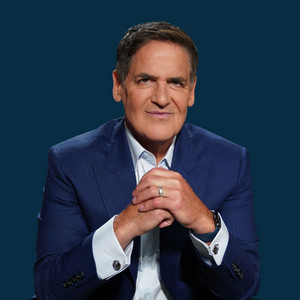
On today's episode, I'm joined by Mark Cuban entrepreneur, Dallas Mavericks, co-owner and founder of Cost Plus Drugs.
We get into why he likes fiery group chats, the sales playbook behind modern politics, how algorithms and AI are reshaping media, what he fixed first in US healthcare, and discuss the hard-won lessons from owning an NBA team in the streaming era.
Let's get into it.
Mark, thanks for coming to the podcast.
Thanks for having me on.
Excited to be here.
So we've spent a lot of time last couple of years or so, but most of that time digitally and on group chats.
And one question that often I get in the group chat sphere is how do these billionaires have so much time to be on group chats?
To which I say, oh, that's actually the highest form, you know, Maslow's hierarchy of needs.
Once you really make it, then you want to argue with your friends and have interesting conversations.
What's your reflection on what you get out of these or what you spend time on?
You want to learn.
You want to challenge yourself.
You want to see what other people think and why.
Because, you know, in a world that's changing the way it is, I want to be where different viewpoints are and have it be an intellectual response rather than just a you suck response that you get on social media.
Yeah.
And one of the things I appreciate most about one of our group chats is that you're one of the lone dissenter.
Originally, it was on the election.
Right.
And it had more of a right-leaning crowd.
And you were one of the most prominent Democrats.
I was a dissenter.
I'm not even a Democrat.
I was just a dissenter.
Yes, exactly.
Yeah.
And willing to sort of be independent and go, what did you get out of that?
Did you get sharper?
Did you get argument smarter?
It wasn't so much that.
It's just, to me, there was a lot of things that didn't make sense.
Yeah.
And to them, it didn't make sense where I stood.
And I wanted to get to the root of why people came to those conclusions.
Yeah.
And typically, it just came down to trust.
Yeah.
But you don't know that that's going to be the underpinning logic until you ask the questions.
And so I think a lot of people presume in any type of group chat right, that you know where everybody stands and you think you understand why.
But it's until you start kind of challenging them.
And then on top of it, it makes me reconfirm why I feel how I feel.
And that's a win for me as well.
Totally.
I'm an independent.
I don't care about parties.
I could care less.
Have you ever supported a Republican?
Have I?
Oh, yeah.
Yeah.
I don't care.
I voted for Republicans.
I just don't care.
Yeah.
Right.
I tried to look at each individual issue.
I actually voted for George Bush.
Okay.
We can argue about the quality, but it's about the alternatives.
Right.
Right.
And then like the first time I ever, well, I don't go back that far.
Yeah.
But in terms of the comparisons to Trump, we're both salespeople.
And I think that is a strength for me to understand him.
Because at his heart, he...
Just knows how to do PR and sales.
That's who he is.
And that's how I've grown my businesses.
People always hear me talk about sales cures all and you have to understand your market and context.
And he's brilliant at it.
He understands how to sell.
He understands how to use PR.
He understands where leverage comes and when it doesn't exist, and how to zig and zag when it doesn't work.
And I think those are actually skills of people who have built businesses.
Those are entrepreneurs. for your skills.
Now, when you actually run the business, you have to do all the work behind it.
And as a politician, that's not always the case.
And when did you realize that business people would have platforms that would give them kind of distribution advantages in reaching customers?
Just when social media came out?
Yeah.
Because you were early to this.
Yeah.
You were very early.
Like you and Trump, like one of the early people.
Yeah.
I mean right when Twitter started not 2006 but 2009 at South by Southwest, when they were all pumping it up, when it was all about just where's the party at.
Yeah, yeah.
But, Yeah, I mean, social media, obviously, it's like, why are people following me?
And it's just, it's aspirational at some levels.
And I own the MAV, so it was informational.
And then just with the technology background, it was informational there as well.
So I could reach into different domains.
Yeah.
And interact with people.
And that creates a platform.
And each platform has its own look and feel.
And you just learn how to deal with it accordingly.
It's going to be really interesting because of AI.
Right.
AI has... multidimensional impact and how you create content, how that content is absorbed.
Effectively, we all have our own feed.
No two people have the exact same feed.
And what Trump has done well is learn how to flood the zone so that, no matter what that algorithm finds for you, He's going to find a way to you, whether it's a positive or negative.
And then you look at Kamala and Brat Summer and fell off a coconut tree.
Brilliant.
She had everything going for her.
But the Democrats didn't have anybody who knew how to sell.
Right.
It's people who know how to use algorithms and understand how they work.
And now as AI is evolving very quickly, knowing how to use AI and what's the impact on social media.
Because if it takes two seconds to generate on Veo, and then pretty soon that becomes a gen tick and pretty soon it's okay everything, just videotape everything that I do and everything and just create videos and just flood every single account that we create.
Yeah.
And then, all of a sudden, do people find themselves saying I'm going to use social media less because it's all AI generated and I don't know what's real.
There's nothing social about it.
Right.
Or do they think talking babies and gorillas as videos is the way to communicate?
Yeah.
And so it's going to be fascinating over the next three years because we don't know that part.
And so we may find ourselves in a scenario where we diverge from the traditional sales person, putting it out there like Trump and find our way to.
Okay, let's understand how we do this.
It's just like polling.
Polling is useless now.
You're always behind.
Right.
And any one social media comment can change how everybody feels in a nanosecond.
And so how do people start integrating surveys?
Yeah.
You know I'm just continuously surveying with all those questions we get online and what direction does that take us?
How do I integrate that into video creation, right?
And how do I, I mean, what's the limit?
Yeah.
So you experimented with the social network a few years ago, the dust it was called.
When you look out five years from now, 10 years from now, do you think there's a new platform that emerges?
Or do you think it's kind of this like fragmented ecosystem that we have now?
What is your prediction for the future of social?
Well, I mean, look at Blue Sky.
Yeah.
They, you know, have been around for a little while, but then, all of a sudden, when Trump got elected, their usage just boomed.
I call it the fragmentation of like people didn't like Elon.
Right.
It's not just that, but.
But yeah, so they moved, right?
But now it became its own silo.
Yeah.
And so I think it won't be social media.
Right.
But there'll be media.
Yeah.
Because the...
Depends on how much you believe in AI and where you think it'll go.
I always look at it as creative people.
They'll be able to amplify their creativity and iterate incessantly.
Right.
And that will create some amazing, incredible things.
Are you just going to put it on X?
Are you going to put it on LinkedIn?
Are you going to put it on Blue Sky?
Are you going to put it on TikTok? you don't have control of the algorithm.
And so I think there'll be something new.
And I think how people connect to that content will be the foundation of it.
Because I think we're tired of rage bait.
Yeah.
And we're tired of the fact that the algorithm presents what you seek effectively.
I think instead we are going to get unique offerings that don't seem to make sense right now.
And I think part two to that is like if you go on X and you use Grok, it almost always, unless it's something that Elon is individually interested in, it comes up with a legitimate answer.
Wow.
And you get people who say well hey Grok, tell me which, and it doesn't give them what they expect.
And I think that's a huge positive.
And it's the same on other platforms as well, where you can just go to ChatGPT Perplexity, whatever you use, or all of them, and ask questions.
So you'll see a reduction of misinformation, I hope.
And with the reduction of misinformation, you're going to have less rage bait.
And with less rage bait, what's the connection?
And hopefully it's better quality content.
Hopefully it's, I don't know.
It's just like if we were sitting here just going to brainstorm and just say can we create our own new network right?
Yeah. what would it include and what would the parameters be?
And when you did it maybe five years ago, maybe more, was that like a Snap competitor?
I'm trying to remember.
Yeah, no, it was 10 years ago.
10 years ago.
Yeah, 12 years ago.
Yeah.
And it was more because of what happened with the SEC, where I got charged by the SEC for insider trading and they basically just took anything and everything I said out of context.
Right.
Right.
So I gave them everything I had and I got cleared in like 15 minutes.
Yeah.
But the point was I wanted something that was truly private.
Yeah.
And it still exists today, but I just use it for mostly internal communications with our employees.
Yeah, that makes sense.
Let's go back to the messaging on Democrats, Republicans.
If you were in charge of the DNC the Democratic Party and controlled both the platform and the messaging, what would you advise?
What would the...
Well, first, you got to have people that know how to sell.
Yeah.
You know, and second, you have to know what people want to buy.
Yeah.
And people want to buy, quote unquote, just a better life.
Yeah.
You know, what the Democrats do is they project.
They extrapolate.
Trump did this.
Yeah.
So it's the end of the world.
The Republicans are just like, what's the price of tea in China, right?
Because I drink tea from China.
And they deal directly with what's happening with you today.
And 99% of people in this country, that's what they care about first.
And so I would go to the Democrats and say, look at the price of beef.
And I think that's what the Democrats miss.
They're so intent on the T word, right?
Everything is just a trigger word because they want people yelling and screaming at rallies.
And that's great.
Just like Trump did.
If you have 10 15000 people with Bernie and AOC and you want to get them all riled up, it's a pep rally.
Right.
Say what you got to say for the pep rally.
But if you want to get people to pay attention, I'll give you an example.
I was in Indiana.
I have a company, Shark Tank Company, Guardian Bikes, and we move 80 of their manufacturing to Seymour Indiana.
And so they invited me in and we celebrated.
And they've grown from $200,000 at Shark Tank, they'll do $120 million now.
And so we got into a little bit, and then we had a question and answer.
And somebody stood up.
I saw on the news and they started getting the question and I just blurted out I don't watch the news.
And the place went nuts.
It just erupted, right?
Like, of all the things we talked about for an hour and a half, that by far got a 10x response.
That said volumes to me, right, in terms of where people's heads are at.
They don't want to deal with all that shit anymore.
They don't want to hear about the end of democracy.
They don't want to hear that Trump is an ultimate cancer.
Put aside whether or not you believe it's true.
Right.
That's not the goal.
Yeah.
The Democrats always lose track of the goal.
They lose sight of what the end game is.
If you want to replace Trump, if you want to win the midterms, it's not about ripping on Trump.
That's been said for the last 10 years.
But how are you changing people's lives?
And then I got into it with somebody else on the Democrat side via email.
And it was about oligarchs and billionaires.
Go get them.
I'm like, fine, I'll pay more taxes.
I don't care.
Right.
But do you think other than the 942 billionaires in this country, right other than getting people riled up?
Yeah.
How are you changing anybody's life?
Yeah.
Right?
People want to know that you're impacting their life.
They want to know that things are going to be better.
We hear about housing.
We hear about should they go to college or not, the threat of AI in their mind, right?
All these different things that they truly worry about and talk about at the dinner table.
How often do the Democrats talk about it?
And then it's like, well, let's go get the billionaires.
And I'm like, okay, if you want, what's the goal?
Do you want to reduce income inequality?
Think, go to the billionaires and give them incentives, which really made them mad, right?
Companies incentives, not the individual.
942 to you know your taxes will go.
Instead of 27, let's say you'll stay at 21 if everybody gets equity benefits.
And it's on a peripursuit is not the right word, but it's on an equal percentage of take-home pay that you get relative to the CEO, down to whoever right.
Now, you know, you have appreciable assets.
Upside, yeah.
Yeah.
And when people have appreciable assets, you know, beyond just a home A, if it appreciates they can buy a home.
And B, the wealth gap doesn't increase.
Yeah.
You know, and it gets closed down.
You know if you do go, if you do a little research, and because I was just curious about all this and I went to perplexity and I'm like what's the earnings of people who are in ESOPs employee stock ownership plans versus everybody else, it's dramatically higher.
It's not even close.
They make more than union employees, you know, because, and there's less turnover.
And so there's a lot of good reasons, and you don't have to be in power as a Democrat to do those things, to go to the local employer and say we're going to protest you unless you create an ESOP plan that everybody gets to participate in at the same level as a percentage of earnings as the CEO.
I think that's the best form of UBI, which is, instead of free money, just upside in our SP 500, upside in the economy.
Yeah, and there's places for UBI too, right?
So if you're a caretaker, you're taking care of your parents.
I got no problem with that, because you're paying for it one way or the other.
You know, through Medicare, through Medicaid, some way.
But to your point, right, appreciable assets change your life.
Yeah.
And if you don't have any, there's no way you can keep up.
Yeah.
You know, because the stock market's going up.
Yeah.
Do we think that, I guess...
You know, it seems like the Mamdani sort of like socially progressive, economically populist sort of you know combination AOC in a different way.
You know, Bernie without sort of, you know, he was the supportive version.
Is that the future of Democratic Party?
He learned from Trump.
He's the progressive Trump.
Yeah, yeah.
Just lie.
Yeah.
You know, day one, groceries are going to be cheaper.
I'll just open the grocery store because I'll sound more progressive that way, right?
Day one, buses are free.
And then everything else.
He kind of mealy-mouths back to the middle, you know, and kind of gives a little bit on the edge for the progressives to be happy.
But he's smart.
Starts saying, I'm reducing grocery prices.
Trump is increasing.
I'm reducing them day one, right?
When we have the House back, we are going to reduce grocery prices.
How are you going to do it?
We're going to do it.
Trust me.
Because that's the bifurcation between Trump fans and Trump haters.
But in terms of substance, do you think the future Democrat Party is more like a Bernie Sanders economic populism, or do you think it's more?
I don't know.
Yeah, I think...
I think whatever gets results.
Yeah.
You know, I give Bernie credit because he was the first to talk about a living wage.
Yeah.
And it took him decades.
Right.
But we've gotten there and he kept on pushing through, so he deserves a lot of credit.
But it more plays to his base.
Yeah.
Than anything else.
And...
You know, Elizabeth Warren had the CFPB, right?
That's okay, right?
You can argue both sides.
But she got something done.
Um...
I don't know what the Democrats are doing that's getting shit done.
Yeah.
You know, and that's the change in their focus.
And that's what's going to guide what type of candidate.
Right.
Because it's got to be able to sell.
Yeah.
Got to understand technology and got to be able to implement technologies.
And I said this to Jason Calacanis.
15 years ago, maybe.
I'm like look, if we can improve efficiency and reduce the cost of government, you can increase the money you give to people.
Yeah.
Take half the savings.
Here's a bigger check.
Wow.
Right?
That's what the Democrats could be doing.
We want to give you more money.
That's what the Republicans do great.
We're making a promise.
Democrats, we're going to use AI and if we need to give it, UBI.
If we need to tax robotics, We're going to tax robots.
You know the whole Bill Gates thing a quarter hour dollar, an hour, whatever.
And then we're going to take the benefit of that and write you a check.
That's going to be your UBI or your tax credit or whatever.
They just don't think like that.
They don't think, where is the solution?
How do I get there?
How do I sell it in a form that's easy to digest so people understand it?
They don't get AI is like going to change everything.
You know, how can we not use this in government to be more effective?
Yeah.
I mean, that's the whole point, isn't it?
Right.
Let's go deep there, because I know AI is one of the things you wanted to chat about, something you spend a lot of time thinking about.
When you look out at the next few years, what do you think is underappreciated or underrealized about how AI is going to change a specific category or a specific way of life?
I think it democratizes a lot of things.
Yeah.
You know, particularly education.
Well, I understand the fear and the first pass is never the way it ends up.
Yeah.
You know, I got two kids in college now and one in high school.
Hell yeah, they cheat with it.
Yeah.
You know, they do.
But then I started talking to this teacher from...
Pennsylvania, I forget what's the town in Pennsylvania.
She just emailed me and she was like what can I do to integrate AI into my classroom, where it's not just them giving me answers to questions?
I said, well, you know, make it more like Jeopardy.
Right.
And she's like, well, OK, here are the four causes.
Use ChatGPT to find the four causes of the American Revolution and write up what it says.
And then we're going to discuss in class and you pick which one do you think is the most impactful.
And then we'll discuss that in class, just changing the paradigm of how they would do things.
And so, but back to your question.
I think democratization of education is key because a kid with a cell phone can an internet access, can go to you, know any large language model and ask anything.
Yeah, And ask it to you know.
Hey, I'm eight years old and I want to learn to speak Polish because my grandmother's from Poland.
Right.
Would you put together a class for me and give me, you know, and teach me how to speak Polish?
Yeah.
It will.
Right.
How else are they going to do that?
You know, sign up for Duolingo, right?
You know, I'm really curious about baseball, right?
Who are the best baseball players and why?
And, you know, teach me about the statistics behind it.
Yeah.
And always on Twitter.
Yeah, absolutely.
How about in healthcare?
It's an area you've spent a ton of time in with cost plus drugs.
Right now, you know, healthcare is like 20% or something of the economy.
In the future, is that number going higher?
Is that number going lower?
Talk about what's going to happen there.
It'll go higher, but because we're going to get some amazing treatments.
Oh, interesting.
So the product will get better, the service will get better.
Right, because now you get, you know, single treatment cures that might cost $3 million.
Yeah.
That, you know, that jacks up the total cost.
Right.
But in terms of how we do healthcare...
Everything I do, I put into chat GPT project first, you know, and share it with the doctor.
And then I ask my doctor, do you use this stuff or open evidence?
Like, hell yeah, we do it.
So I think healthcare will get better qualitatively.
I think we'll benchmark ourselves a lot more and that'll make us healthier.
Yeah. in a lot of ways.
I think where the challenge and the hard part is other than the obvious optimization and processes and hospitals and all that.
The challenge is how we value IP.
Yeah.
Because if I'm MD Anderson, if I'm Stanford, any research hospital, any scientist in healthcare, you're an idiot if you publish it.
Right.
You're an idiot if you patent it because it's immediately going to get absorbed into a large language model.
Yeah.
And you've lost control of it and you've lost ownership of it.
And I think what's going to happen is, you know, and I've said this as I've talked to CEOs of research hospitals, et cetera you need to silo your stuff.
And you need to take what you siloed and either do your own model or put it out to bid.
Right.
And let the foundational models compete because they're in a death war.
Yeah.
You know.
And they need specialized data.
They need all the data they can get, specialized or general.
Yeah.
Right?
Because everything that's accessible on the internet.
Yeah. they're getting or got.
And so the people who are creating new things, whether healthcare or anything for that matter, are going to start siloing it and putting it out to bid.
And I think even within the government, right?
So we see all these research grants getting pulled.
I told somebody I know, you know in the administration I'm like No, keep on doing it, but put it out to bid for people for the models to get access to it.
Back to your question again.
It will change because there'll be millions of models as opposed to just singular foundational models.
And I think I've talked to folks at Microsoft, Meta, and other places.
I think they disagree with that.
You know that they think there's just all this information is going to be available so that the hospital system or the university, whatever it is, or the grantors will just say, go ahead and take it.
Yeah.
Hell no.
So you think there'll be a flourishing of startups that will have kind of access to specialized data and either put it to bid or Or, just like MD Anderson, will have their own launch model.
You know, and you'll just have to know where to go.
Yeah.
And just like right now, you know chat, GPT is not going to give you the same answers perplexity as cloud, et cetera.
You're going to go and use multiple of them and you'll say here's the input, the output I got here here, here.
And you'll put it in somewhere else to have them assemble it.
But I think there'll be millions of models and there'll be front ends for those models that can't go out and do a million of them but that help curate what's best for what you're trying to accomplish.
If you could wave a wand and change anything about how we do healthcare in this country or where we can learn from other countries, what would you change?
You'd get rid of the insurance companies and the PBMs because they do all they can to not take risk.
Yeah.
And they do all they can to introduce opacity to the system.
And if you look at you know, particularly on the drug side, if you look at all the other countries, we're trying to do MFNs to match their pricing.
Yeah.
They don't have PBMs.
Yeah.
You know, when you look at the internals, the biggest PBMs cause all the problems.
Like, literally, we get emails all the time, people who are on Medicare...
Part D for drugs come to Cost Plus Drugs because we're cheaper than their co-pays.
That makes no sense.
But it's the federal government that approves those plans and those plans in Medicare Part D are run by individual insurance companies.
Then if you look on a bigger platform just for healthcare in general, you know, think about how healthcare works here 80 to 60.
You have an insurance company?
Do you guys self-insure?
Do you know?
I just joined something.
Okay.
So, you know, let's just pretend you self-insure.
You're one of the bigger companies.
So an insurance company comes to you knowing you self-insure.
Yeah.
Right?
And they put together a list of plans.
Yeah.
And then those plans, no one ever asked why were those plans defined the way they were.
Yeah.
They just assume we just get our choice of plans and we pick them.
Right.
Well...
There's an inverse relationship between premium and deductible, right?
They never do credit checks on the deductibles, do they?
And younger people.
They're taking the higher deductibles because they presume they're going to be healthier.
But the people who are making the determination that they're using the higher deductible plan – half of them don't have enough money for the deductible right.
So we've got an insurance system driven by these insurance companies, even if the risk is absorbed by companies or partially by the taxpayers right that are designing plans that they know the people who are buying the plans can't afford to utilize.
And what happens then?
That turns the hospital into a subprime lender.
Right.
Because now they go in either through the emergency room or they show up not knowing what their deductible is.
And then the hospital will loan them money because they want them to be able to pay the deductible.
So then they can then charge the insurance company.
Yeah.
Or the employer if they're self-insured.
But wait, there's more, right?
So then let's just say someone went in, gets a hip replacement, pays their 5000 deductible and they own 10000, right?
The insurance company.
Even though they have a contract that says it's 15000 between the provider and the payer, the insurance company, they don't just write the check for 10000.
Hmm. they say, we'll give you 7,000.
If you don't like it, come and get us.
And so when you talk to a hospital CFO, they're like, we lose 3% to 5%.
We can lose as much as 50% on the subprime lending.
And so they have to event all these costs to compensate for what's happening on the other side on the payment process.
Then, of course, you have the pre-authorizations.
And most of the pre-authorizations get approved after everything is said and done.
But they get the time value of the money of the premium and not having to pay it, and they've eaten up all these doctors' time.
And the doctors are the ones getting underpaid.
So you're going in for a heart transplant and you know the doctor might make 10000, unless it's a big name, you know, surgeon.
I want my doctor making a shit ton of money, right, to make sure that, you know.
So you have this connectivity between all the pieces that really hasn't been thought out.
Right.
And those insurance companies either own the PBMs or are owned by the PBMs.
And what they do, because they're together and they also are vertically integrated to own clinics and hospital not necessarily hospital, but clinics and other providers right.
So they have all these intercompany transfers that allow them to gain the system.
So with the ACA, depending on the circumstances, the insurer has to pay out 80% to 85%.
It's called the medical loss ratio.
And so you would think that's just straightforward.
But if you're vertically integrated, you can put some over here.
Put all the profits into your PBM.
Right.
And show that you spent all this money because you wrote that check to the PBM.
Yeah.
And so that's what happens.
One of the biggest insurance companies had $161 billion of intercompany transfers.
Oh, my God.
Intercompany transfers.
That's 0.3% of our GDP.
Wow.
Just moving money around to make more money.
Just moving money around to make more money.
So if you'd get rid of them, who should take the risk?
Would you replace anything?
So yeah, so it's a great question, right?
So healthcare is easy right, presuming you know if you get the right doctor and everything.
You go to the doctor and they tell you what's right or wrong, right.
Go home.
Wrong?
Okay, what do I need?
How much does it cost and how do you pay for it?
Yeah.
Costplusdrugs.com is still the only pharmacy company that publishes an entire price list.
The only one, and we've been in business three and a half years.
That in and of itself is crazy.
But then once you get into the system right and you don't know what anything costs, then they can charge you whatever.
And then in terms of how do you pay for it, that's who takes the risk.
And so deductibles are going up, no matter whether it's Medicare Part D, even Medicare Part A and B have higher deductibles.
Medicare Advantage, they shrink the network and create networks.
So out-of-pockets going up.
So patients are the first line of defense that the insurance companies are trying to push the risk on.
But better in my mind is to combine kind of a market where you get rid of the insurance companies, there's no premiums.
Get rid of the big PBMs.
There's no manipulation, if you will, of the funds with intercompany transfers.
And you say to...
You create tools that allow patients or their employers working with them to go out there and find the best solution for them and to shop.
And hopefully you've saved a lot of money from your not paying premiums and you can pay for what you need.
But what you can't pay.
The government will loan you that money if it stays within the price parameters that have been set.
So it's negotiating without negotiating, right?
And they've done that to a certain extent reference-based pricing with Medicare, you know, for Medicaid patients.
And so now if you or I can pay for it, we just pay for it.
But we've saved all that money in not paying premiums.
And slowly but surely, we're getting more and more reinsurance options for individuals.
So for catastrophic insurance.
So you know, in case, God forbid, the worst thing happens, you have an option.
So that's one place of risk.
But if you're not paying premiums to an insurance company, you can pay for your reinsurance.
And then if your hip replacement is 15000 and you have 3000, you can use financing, but it's guaranteed by the government.
Yeah.
Kind of like we do with college.
You know, you can use the financing the school has, right?
But it's guaranteed by the government.
Kind of like we do with houses.
You can use the mortgage plan, but it's guaranteed by the government.
The most important thing that we have available to us our health care.
The government's like, whatever.
So if you take the risk and allocate it within a price control – price control is the wrong word.
But if you want – if you're a patient, you're shopping for care and it stays within the benchmarks that are set, then go for it.
If you want to spend more –
Right?
You think the doctor doesn't participate and you want to get better?
Go for it.
But then all of a sudden, you've got all this money that's not being paid in premiums, that's available to people to use, to save whatever.
That's how I would look at it.
Yeah.
So you've built cost of drugs partially because you have this.
Well, you care about it.
Obviously you have this distribution advantage.
You have the capital advantage to get it started.
Let's imagine if you were a young entrepreneur, you know, a mid 20 something, Mark Cuban in 2025, and trying to, you know, be as successful like you've been.
How would you think about that?
Or what would you pursue?
For cost plus drugs or just in general?
No, no, no, just you as entrepreneur.
Like if I was just getting out of college right now, oh, I'd be all AI every day, right?
Because I think the disconnect, I think employment for computer science graduates, and I said this 10 years ago.
I got crushed.
2017.
Actually, I said you know AI is going to put programmers out of business at the beginning stage programmers.
And people said, oh, you're an idiot.
But...
Now, big companies are going to find ways to use AI.
They're going to reduce use of Salesforce or whatever laid off people.
Small companies have no clue.
You know, and there are only 22,000 companies.
I remember this from the Kamala campaign.
22,000 companies with 500 more employees.
Hmm.
30 million, right?
Now, a lot of them are single entrepreneurs, but 5 million have 500 or less.
That's where you want to go, try to get a job, because if you're AI native, because you've been using it through your four years of college, or two years, you know, or you know two years from now, having had four years experience they need you.
Yeah.
Maybe they have one person who's picked it up, two people.
But if you have a business background, which you can learn in school, and you become an AI native, you can walk into a small company and say I can help you.
I can create agents for you that'll go out and look for things.
One of my Shark Tank companies is Rebel Cheese, and they added a direct-to-consumer business.
And they created an agent that compares the weight that comes off a scale for what they're saying or the box type and what they were invoiced by UPS or FedEx and compared to the price list. always got overcharged, always.
This little company is saving, you know, thousands of dollars a week just by using an agent, you know, and it's not anything difficult, or you know advanced.
So being able to walk into a company and say, I can do this, I can do this, I can do this.
Yeah.
It's no different than what systems integrators have done for decades.
You know, that's what I did in my first company, Micro Solutions.
You don't understand PCs.
You're a small company.
I do.
I know networks.
I can program.
I'm going to write you an application that emulates what you're doing, but faster.
Now it's no longer about emulation.
Those days are gone.
It's about how do we change the process by removing pieces to make you more efficient, more productive, more profitable.
Yeah.
So you wrote the PC wave, then you wrote the internet wave with broadband, had a big outcome there.
If you were starting a company today, would you try to build a foundation model company or vertical application, or?
No, neither.
Yeah.
Because they're all going to be customized.
Yeah.
I literally would hone my business skills as much as possible.
Right.
Domain knowledge will be more of that.
Domain knowledge combined with understanding of AI is the win.
Yeah.
Right.
So you would go with some sector that hasn't yet been decided by AI.
Or just small companies.
Yeah.
You know, regardless of sector.
Yeah, but if you wanted to start something that could be big one day.
Right, because if I work with one shoe company and I analyze what they do, then I say okay, I'm going to charge you X per transaction.
Yeah. and I'm going to do the agent for you, and I'm going to monitor the agents.
It's SAS at one level, but it's customized SAS where and as AI advances, the model advances and the agent advances.
And so factories, talking now, like at Cost Plus Drugs, we have a robotics factory.
And we use AI agents to monitor everything.
You know, and our cost to run the factory is a fraction of pretty much everybody other than India and China, and we'll catch up to them.
You know and so understanding how business works, having that domain knowledge and then being able to apply it, and then being able to scale it by taking it to all those companies in similar circumstances or creating agents that modify the agents based off of the information you're getting from all your customer companies.
Yeah.
That's the new SaaS potentially.
Yeah, totally.
I want to zoom out and talk just general business success and advice.
The internet lists your net worth, I believe, at over $8 billion or something to the effect.
I don't know.
But one thing that you know typically, when people become super wealthy, it's because of like, one big thing.
But it seems like you've sort of compounded wealth in decades.
And I think the biggest liquidity events though I don't mean if I'm wrong are the company you sold and the stock market.
And the maps, yeah.
And so – and then there have been other efforts.
What do you think is the thread, the through line, when you look at your career and the ways in which you've made money that others can learn from?
I look at business as a sport.
Yeah.
Right?
And I just love to compete.
Yeah.
You know, and that keeps me going just –
You know, there's always something new and always something changing.
And it's almost like the forums, right?
I just like to be intellectually challenged.
When I first started, I was always the youngest guy walking in the room.
Now I'm the oldest guy walking in the room.
And I like kicking everybody's ass where I can, right?
You know, you went, you got your CS degree from Harvard.
Fuck you.
I don't care, right?
Sounds like Clingeric and Ross.
You know, but I like that challenge.
And I understand patterns and I understand being able to create new things.
And I think that's served me really well.
It's like cost plus drugs.
Yeah.
You know, we launched in January of 2022.
We're serving millions of customers.
We're changing people's lives.
And everybody thought I was an idiot.
You know, and we're working outside the system.
Right.
You know Amazon, everybody else.
Okay, we're going to work with the big PBMs, because that's where the money is.
And I'm like, no, they're the problem.
You don't work with the problem.
You know, it's the innovator's dilemma.
You know, we're going to take what they can't do.
And, you know, when you run with the elephants, there's the quick and the dead.
We got to be quick and aggressive.
And so I think that's a big part of my skill set.
You know whether it's starting AudioNet, which is the first streaming company HDNet, the first all high def network.
You know cost plus drugs.
What I do with the Mavs in terms of bringing in technology.
It was always about, you know, Steve Jobs said it best, everything's a remix.
You know, it's about taking what I know and just learning whatever's coming up and what new technologies, and remixing it to apply to something different.
When you bought the Mavs, did you have a sense that 20 years later it could be, you know, worth an order of magnitude more?
No.
It wasn't a business.
No, no, no.
In fact, like I paid $285 million for the Mavs in 2000.
In 2010, the NBA couldn't even sell the New Orleans franchise.
Really?
There were no buyers.
And the valuation had gone down.
Wow.
Not up.
It wasn't until... So you thought it was a bad purchase from a financial perspective?
From a financial perspective, it was awful, right?
Plus, I was losing money every year, so it had nothing to do with money.
But I loved it, right?
That was the key part.
And I think it elevated your profile in a way that probably helped your other- Oh, yeah, for sure.
Yeah.
And then Shark, that got me to Shark Tank and the rest is history.
But, you know, I just, the way I looked at it back then is I'm having fun.
I'm blessed, right?
I'm going to make the use of my time so I enjoy every minute of it.
But what changed the economics of the NBA was, you know, linear media being competitive.
Yeah.
You know, and that goes back, you know, things I look for.
I always look for death wars.
Yeah.
Right?
Where you've got competitors that one's going to win and one's going to lose.
Right.
And they have to go all in.
Yeah.
Just like with AI right now.
Right.
They all – they're spending tens of billions of dollars a year.
Yeah.
They're making obscene amounts of cash flow and they're spending it all.
Yeah.
Right?
They're paying a billion dollars to people to come over.
Yeah.
Right?
What does that tell you?
Yeah.
That anything you can sell to them – that really differentiates them, they're going to buy.
And so.
But you know, with the Mavs it was, I didn't see it as an investment, but it wasn't until the death wars hit linear television.
Right.
And then all the TV deals went skyrocket.
So that's what made it.
You know the difference between 2025 and 2020 and 2010 in terms of why the NBA teams have gotten so much more valuable is TV.
100%.
Yeah, a little bit of real estate so you can build around.
Right.
But it's 100% streaming slash TV.
The question becomes what, you know, how long does this sustain?
Right.
You know, if you look at... So...
Like Major League Baseball didn't get a deal done with ESPN and saw their rights start to decline.
Yeah.
But it was right around the time, I think it was Peacock who bought just one NFL playoff game.
Yeah.
You know, and got like 100,000 new subscribers or a million, 100 million new subscribers.
Something ridiculous, right?
Yeah.
That all of a sudden set a benchmark.
So this season, right starting with the NBA season, how well that does in terms of driving subscriptions and reducing churn.
That's going to make or break everything that comes forward for all sports.
Yeah.
I also wonder if you know.
One thesis I have is that you know value capture will reflect value creation.
It's just when the market gets more efficient.
And so and NBA players, it seems like don't have equity in the league.
And I wonder if in the future they're going to band together and just say.
I don't think you can, right?
Because Father Time's undefeated.
You know, so at what point do you stop?
Right.
And the price of the franchises now are so high.
I mean, how much can you give them, right?
And I'm not going to say it's never going to happen, but, you know, I think it could be a question.
But the other point is that there's only like two players that fill an arena.
Yeah.
Steph and LeBron.
Right, right.
Like when Luka played for the Mavs and I had nothing to do with the trade.
When Luka played for the Mavs, we didn't play to sold out buildings.
He would draw fans, don't get me wrong.
But not every building was sold out.
When Giannis would come to Dallas, didn't necessarily mean we were going to sell out.
But the whole concept of what drives attendance has changed dramatically and what drives viewership on television in particular, because now fans are fans of the players.
Yeah.
More than the other teams.
Right.
Like when we grew up, it was like you were, I grew up in Pittsburgh.
So you're a Steelers fan.
You're a Pirates fan.
That's why I wonder if they're going to team up and say hey, you know the new generation, you know we could start a new league.
Cooper flags.
Yeah.
Exactly.
It's expensive.
Right.
To start a new league.
Yeah.
There's a lot of infrastructure.
Yeah.
The NBA is its own.
And even with Caitlin Clark.
I don't know all the WNBA numbers now, but most of them aren't making money.
Even in the NBA, most teams aren't making money before revenue share.
I know that you were dismayed at the Luca trade.
We were sort of in the group chat when it happened, but I just want to reflect.
Yeah, I was so devastated by it that it seemed so unfair for the Mavs not to get picks back, or Austin Reeves or whatever.
I don't really, I was complaining to my girlfriend at the time, you know, like many people were.
And I even remember reading this conspiracy theory that it was on purpose to take the value of the franchise to then move to, you know, Las Vegas.
And I was like, oh, this is the only way it can make sense.
How do we not get more for Luca in this trade?
I wish I knew.
I wish I knew.
But then the Cooper flag, I mean, it's the world works in mysterious ways.
So I have a dream to be a part owner someday as well.
And I've wondered if the strategy is either to compete for a championship or do the Oklahoma City Thunder, where you trade for picks.
So what do you think?
I think the Thunder methodology is better now with the new CBA.
Right.
Every new CBA creates transitional issues where your decisions were made in a legacy environment and they just changed all the rules.
Yeah.
And now it's even more difficult with the second apron because the –
The problems of being over the second apron are far more draconian than anything we've ever seen.
Right.
And so I think the patience approach that San Antonio and OKC have taken is going to lead the way.
Yeah.
Whereas with me, I was never patient.
And that worked against me a lot, too.
You know, I wanted to win now, win now.
We have Dirk, let's get there, win now.
What's something you would have done differently?
We kept Steve Nash.
Drafted Giannis.
Drafted Giannis, yeah.
I think I just would have been more patient and waited guys out to see how they turn out, rather than okay, I'm going to throw in a draft.
Because at the time you could say, if you didn't have a pick from below 15 the odds of them being a player – was minimal.
Right, and so if i was getting somebody that i could already evaluate, that worked in my favor.
Yeah, but now draft picks have become so much more valuable yeah, and so that's changed the um valuation approach, right.
I heard one argument that was somewhat sympathetic too, which is hey, the argument for how you can understand the Luka trade is, you know, obviously legendary, iconic player, but so expensive.
And with the way that the contracts were structured is, if you gave you know, kept giving him the super max, how much room do you have to build it?
It's kind of like the Trae Young, like some of these players are so expensive.
Yeah, it's like, can you have two max players?
Yeah.
And that's the challenge.
Right.
You know, in the past you could reward somebody with a max contract, knowing you had some wiggle room.
Right.
And more importantly, you can always find a way to get off that contract.
Yeah.
Not anymore.
If you have your one generational player, you pay them whatever it takes.
Because of the max contracts, they, by definition, are undervalued.
So the generational player, you always pay whatever it takes.
It's the next person.
If they're not a generational player, how do you deal with that?
That's the hard part.
And when you see, like you saw with certain players, that teams couldn't get off of them either because of age or, you know, they were max player by the rules of the game eight years ago, four years ago, but they're not any longer.
That's where the challenges happen.
Right.
If you were making decisions for the Mavs now, given where everything is, what would you be thinking about?
What are the big questions?
Develop Cooper, first and foremost.
You know, we've got AD, we've got Anthony Davis, we've got Kyrie, who will be coming back.
But just in clay, just having those Hall of Famers there.
Yeah.
You couldn't ask for anything better in terms of development support.
And so I think we have to focus on staying healthy.
Yeah.
Getting Kyrie back.
It's interesting with two timelines.
You know, Warriors tried to do it, but they couldn't exactly pull it off.
Although they've done great.
But these sort of, you know, older players and then, you know.
It's hard, like where the Warriors are now.
Yeah.
You know father time is undefeated and you're trying to stay committed to the guy who's got you there.
Yeah.
You know, and the players aren't dumb.
Right.
You know, so they know they only have, you know, a finite number of years left.
Yeah.
And so they're trying to maximize their earnings in that point during that period.
It's just hard.
And so, you know, the whole second apron restrictions really just kicked in last year.
Yeah.
And so now teams are having to deal with it.
And so you're seeing players get stretched, you know, not just weighed, but stretched.
Right.
And I think the strategy is changing right in front of our eyes.
I think there will be fewer max players coming up.
Interesting.
And it used to be this thing where, in order to win a championship, you had to have one of the best players in the league.
You know, the Pistons were an exception to that.
You know, I'm a Knicks fan.
I wonder if the Knicks have a possibility to question that.
But If you're playing for a championship, do you think that you have to have, you know, one of the five best players in the league?
Sure helps.
Yeah.
It depends on the skill set.
So what's changed?
A lot in just six years, seven years certainly, you know, last 10 years is there used to always be one guy on the court who couldn't shoot.
Yeah.
That couldn't get a bucket.
They were there for defensive purposes or they protected the rim.
Yeah.
Now they all can score offensively at some level.
And so you know whether it's the Knicks or anybody else, if you have enough guys who can put pressure on the defense, and that's why you know the Knicks made the deals that they did.
Right.
But if there's one guy that you're playing against that's always the best player on the floor.
Yeah. and you don't have that player, it's going to be tough.
Totally.
Well, I think what the Knicks are asking, as Boston's asking too, is like can offense win championships?
Like, if you just stack the... Yeah, I mean, the Knicks have got some defenders.
Yeah.
You know?
But Brunson and Katt are weak defenders.
It's going to be tough.
Yeah.
Yeah, it makes it tough.
Because...
You know, once you get to, like, even against Indiana.
Yeah.
You know, Indiana didn't have, you know, Hallie, we tried to get Hallie so hard, right?
Yeah.
Hallie is not a top five NBA player.
He's good.
Yeah.
Maybe top 15.
Yeah.
But he was better.
Right.
In that moment.
Because.
Because you can do matchups over and, over and over again, of course, across up to seven games.
You can play certain players off the court.
Yeah.
So you saw Cat not even being out there at certain times.
Totally.
You know, if Pacers won the championship, that would have really questioned, you know.
And they took them to seven games.
I know.
And their best player gets hurt, you know.
And we, the Mavs, injured and all without Luka beat OKC three out of four games.
Yeah.
Well, Dallas is one of the deepest teams right now, too.
Oh, really deep.
Stay healthy.
Yeah, yeah.
But yeah, there's so many teams like the Raptors, the Bulls, the Kings, kind of like in perpetual what I would call mediocrity.
And they're expensive and they're old.
And I'm like, you just got to rebuild.
Just admit they're rebuilding.
And there's a number of teams like that.
Yeah, and part of the problem is, That there's a salary cap floor, right?
You have to spend up to a certain amount.
Because they're trying to keep it competitive, I guess.
Right.
Well, it's just that's the deal we do with the players.
They want more money spent.
And so 90% of the salary cap is a lot of money, right?
So it's like $153 million, right?
Yeah.
Yeah, 170, give or take, times nine.
And so spending up to $153 million, that's 10 million average.
So that means you're overpaying a lot of people.
Yeah.
You know, and so I might have the cap number wrong, but in any event you're paying a lot of people, a lot of money, but if you keep them short contracts, you'll get guys wanting to come, just to get overpaid.
I have a theory that there's these guys like you know maybe I'm being unfair, but Kuzma RJ Barrett, Brandon Ingram who are sort of like built for losing, for getting a lot of money and a lot of points on a losing team.
Yeah, I mean... And we're seeing more of that.
Yeah, they're freer on a losing team.
Yeah.
And they do it to get paid more money.
Yeah.
Right?
But...
Teams are smarter than that.
But at the same time, there are teams that need scoring.
Right.
And you know, if you fall into that category you're going to go after those guys if you have the space for it.
But I think what's happening actually now we're seeing all the salaries kind of – revolving around the mid-level exception, which is 14 million.
Give or take right.
And so that, if your guys now realize with the second apron, things have changed.
Yeah.
So if you get paid more than a mid-level, Right. you're a good player.
If you get paid at the mid-level, you're a decent player.
If you get paid below, you're a roster piece, unless you're young and you're on your way up for advice.
For me, as a future owner, what are the biggest ways an owner can influence winning?
Is it sort of personnel selection on coaching GM?
Like, are you... Always looking for an edge.
Yeah.
Always looking for the edge.
Um...
You know, personnel selection is hard.
It's more art than science.
Right.
You don't, you know, like I told Jason when I did it, Jalen Brush when I did his podcast, he was just some chubby guy, right?
You know?
I'm sorry that we took it from you.
No.
You gave him away.
Yeah, I was not happy about that.
Yeah.
But, you know, we picked him 33rd.
32, you know, chances to draft him and they didn't.
And we liked just his pedigree of winning at Villanova.
But it's his effort.
Like when he was with us, his go-to move was either a spin or a move to the left and he'd fall away doing a layup.
And he never got the foul because he was always falling away.
Now his mid-range jumper is money.
But he worked on that.
Totally.
And that's what you don't know when you draft somebody.
What mental capacity do they have?
You know their athletic ability.
But will they work hard to improve their skills?
Will they work hard to improve their basketball IQ?
If the answer is yes and they have the athletic side of it, you've got a chance.
But you don't really know that to you because no one comes in and works out and says okay, I'm an idiot, I suck right.
And shows you they suck.
You know, they've all been trained on how to work out.
You know, and they're in college, maybe one year.
Yeah.
So And then if you're going to a college and they're getting paid now right, it may be that they're just doing what the coach needs them to do there, which may not match what they need to do in the NBA.
You've got.
The hardest part for players that aren't superstars coming right in is you've got to learn how to fit in.
Even with Luca, we didn't know he was gonna be a superstar.
We thought he was gonna be really, really good, right?
And we thought he had superstar mentality.
But I was terrified because I made a trade, right?
I gave up a pick to Atlanta.
And I remember we played in China the first game of the preseason.
And I had Sean Marion that was an ambassador of the NBA.
I'm like, Trix, what do you think?
Trix, what do you think?
What do you think?
Like, I'm terrified.
I'm terrified.
You know, but...
We know how that turned out.
Yeah.
And by the way, so funny, just the basketball gods.
Lakers made all the wrong moves for so many years and we're in such a tough spot.
You talk about Warriors.
They're in a tougher spot going forward, trading all their picks, being so old.
And then Luka falls into the lap just to keep it interesting.
I think we've done enough of this.
Yeah.
Yeah, exactly.
Matt has got Coop and don't trade him and you'll be good.
Zooming out, Gertrude's closing here.
How have you thought about How you want to spend time like you, for example, have your own agency, big venture firm, doing all these investments, all this stuff?
You seem to run kind of a lean operation or flexible.
How have you thought about the efforts that you want to get involved with, not want to get involved with?
How thin to spread yourself, so to speak?
Well, I mean, I got out of Shark Tank.
Yeah.
I got out of the Mavs so I could spend more time with my kids.
Yeah.
You know, that's number one because they're 16, 19, and about to turn 22.
Yeah.
They're heading out on their own.
Yeah.
So I just want to spend that time that I can with them.
But I think the difference is for me versus everybody.
I'm not looking.
My goal is not to make as much money as I can.
Yeah.
Like I do investing.
Yeah.
But honestly, it's just people email me.
Yeah.
I mean, like I saw a list of who has the most unicorns and I was like I had like 11 and all of them were just from email.
Somebody emailed me saying, check this out, check this out, check this out.
Like Synthesia.
You know I was their first investor.
You know gave them a million dollars and now you know So I can get 20, 25 of a company, sometimes more, and then help them grow.
That's what I like.
Yeah.
Right?
Taking, you know, long shot tries as opposed to, okay, let's raise a fund.
Let's get a team together.
We'll put in 10 to 25 million.
Yeah.
And then, you know, if they're doing well, we'll put in more and do follow-ups.
And, you know, we'll... have these big scores.
Yeah.
I like it better when, you know, it's dude wipes.
Yeah.
Right.
Comes on Shark Tank.
I give them 200 grand for 15%.
Now they're worth a billion dollars easy.
You know, they're a primary brand and they never had to raise another cent.
Yeah.
You know, helping a company never have to raise more money and making them profitable so that they're insanely profitable.
I had this company, Alyssa's Cookies.
Guy Doug was living in his car with his family and he sent me these cookies.
Wow.
They were this big.
They were the best cookies I've ever, because I always do like the nutrition thing first.
What's on the back?
No added sugar, lots of fiber, et cetera, low net carbs.
But when I took it out of the plastic, it all fell apart.
So I said, I'm going to give you money, right?
And I got like a third of the company, but I'm going to guide you through what it takes.
So we changed it and I told them to make them into bites instead of cookies and put them in a plastic container and go to stores and we'll sell them.
I'll do a tasting, you know, where...
I'll go to a grocery store one time and hand out.
Now, No more money in, right?
We'll do $25 million this year.
Wow.
But that's not the important number because we don't spend money on advertising or anything.
Right.
Makes $12 to $14 million a year.
And we just added Whole Foods.
We just added Costco.
We're adding more and more, you know, outlets.
He can... get to 100 million and make 50 million a year.
Wow.
That stuff's fun.
Yeah.
Right?
So if you could clone yourself a few times?
Or when you look into the future, are there other businesses like Cost Plus Drugs that you want to start or incubate?
Yeah, education.
If I can do what I want to do with healthcare, which is saying a lot, right?
Yeah.
Totally, that's a big effort.
Yeah, but it would be education just because...
Like AI first, K through 12 or what kind of?
Yeah, I mean, more secondary education, right?
Simply because the cost structure is all fucked up, right?
And it's all built on accreditation.
Yeah.
And that's kind of a mafia.
And when I see a mafia like that, I just ignore the accreditation and just go do it anyways.
And if you get the results or guarantee your results.
Yeah.
You'll get plenty of... We talked about your healthcare platform.
We talked about your messaging.
Are there any other policies that, if you could, you know, be in charge of the Democrat Party or sort of running America, that you would be most excited about in terms of its transformative potential?
Yeah, you know what I would say?
I would say a focus on entrepreneurship.
Yeah.
You know, that...
Right now.
Whoever the candidate is, particularly if it's for president, takes credit for everything.
Yeah.
And that's ridiculous.
They do less to impact the startups and the building of businesses than anybody, you know.
And so I think what's missing definitely missing with Biden, is Maybe less so with Obama than definitely missing with Trump.
Like when you hear Trump talk about tariffs, he never talks about small businesses.
It's always hey, I've got this company investing 500 billion, 600 billion, when you know you've got all these shark tank companies that are getting crushed.
You know, you increase, you know, from a 2.5% average tariff to a 15% tariff.
That's their profit margin and it's gone.
So I would put a focus on recognizing and encouraging and rewarding people starting businesses.
And using AI, you know, kind of as government, as a service, where you simplify all the friction that's involved in starting a business.
You know from the paperwork, to get all the requirements, the incorporation, et cetera, to a bank account.
All of it just simplify.
All of it, so entrepreneurs can be entrepreneurs, because I think that is what – Joe Biden told this to me of all people.
When, during the Obama administration, they invited us from Shark Tank to go do a thing for entrepreneurship at the White House.
And he gave a little speech and what he said was you know, I've traveled around the world and there's no Chinese dream.
There's no French dream.
There's no UK dream.
There's only the American dream.
And people come here to live it and experience it.
That's what makes us unique.
Yeah.
And, on that note, what advice in closing, what advice do you have for us in Silicon Valley, or just tech more broadly, who are building with AI, on how to make it more popular, so that we don't have this big backlash?
You have to get with either party and communicate to people directly.
The upside yeah, because they see that.
They see hey, maybe my job is being taken away.
Yeah, and they, and that's, that's you know.
Going back to what i said earlier, there will be disintermediation, but i don't think the net number of jobs is going to decrease.
I think everything gets reinvented, because ai, right now, is not smart.
Right, you know, it's statistical in a lot of respects.
Robotics, on the other hand, is getting smart.
You know robotics.
If you, you know, clean my bedroom, it has to know you know to pick up the sheets and all this stuff.
But I think the combination of the two will create unique opportunities for jobs.
I think...
Domain expertise is always going to be necessary to train models.
But I think bigger picture, when like we look at a house, Everything is designed for the human form.
And right now, robotics is trying to emulate the human form, because that's what we've always done with software.
We just emulated what we already did and tried to optimize it.
If you can create devices robots, that can look like anything and you want them to be domestic in some way, you don't build houses the way we do now.
And I think there's gonna be a lot of jobs that go in different directions.
And I think Silicon Valley has got to do a much better job demonstrating those jobs, hiring people for those jobs, supporting people that are concerned about their jobs, even teachers.
You know, now when we look at AI tools, you can read papers faster.
That's not going to change anything.
You're just doing it the same way, you know.
But if a teacher can use AI to customize responses to kids to help them learn, like you said, AI tutors right, but in a classroom you're going to keep your job longer.
Yeah.
We need more teachers, not fewer teachers.
But AI doesn't, I mean, Silicon Valley doesn't communicate that at all.
Because when you're raising money, it's about what you're going to change, not what you're going to sustain.
But there's so many unique opportunities.
I mean, I'm old enough like I would walk in selling PCs and I saw you're out of work, you're out of work, you're out of work.
But as it's all turned out, the economy just keeps on growing.
And I think the same thing is going to happen here.
And I think the other side of it is going to inner cities, Like I have this thing called the Mark Cuban AI Bootcamp.
And all we do is go into, you know, underprivileged schools, you know and encourage kids to sign up for the bootcamp.
And it used to be just machine learning, right?
Where we taught you that.
Now it's, you know, learning how to use AI
AI the way with models and everything and agents for 15, 16, 17-year-old kids.
And it's great, right?
Because they're going back and they're coming up with new ideas.
The Valley needs to go out there and engage more in middle America so people see where the upside is.
Yeah. you're getting this rejuvenation of San Francisco and all the spending is pointing there.
How is anybody else gonna understand that or see that?
They don't at all.
When, in reality, if it's open to them and that's why I did the bootcamp more things are going to happen.
People don't realize, like when the internet first hit, we used to think kids who can do HTML coding were geniuses, right.
And when they moved up to JavaScript, they were even smarter, right?
Because they were building all these websites that were getting ready to go public.
And AI is kind of the same thing.
It's not hard to build agents.
And it's getting easier.
But knowing an application that you can use to start something, improve something.
Everybody can do that.
Every kid, every mom, every dad.
But Silicon Valley is making it sound like, you know, this is the Jetsons and we have no chance.
And I think that has to change.
That's a great note of advice and optimism to end.
Mark Heumann, thanks so much for coming to the podcast.
It was a lot of fun.
Thank you.
Appreciate it.
Thanks for listening to the A16Z podcast.
If you enjoyed the episode, let us know by leaving a review at ratethispodcast.com slash A16Z.
We've got more great conversations coming your way.
See you next time.
Please note that A16Z and its affiliates may also maintain investments in the companies discussed in this podcast.
For more details, including a link to our investments, please see a16zcom forward slash disclosures.