This video was made possible by Brilliant, a math and science problem solving website that makes learning fun and rewarding.
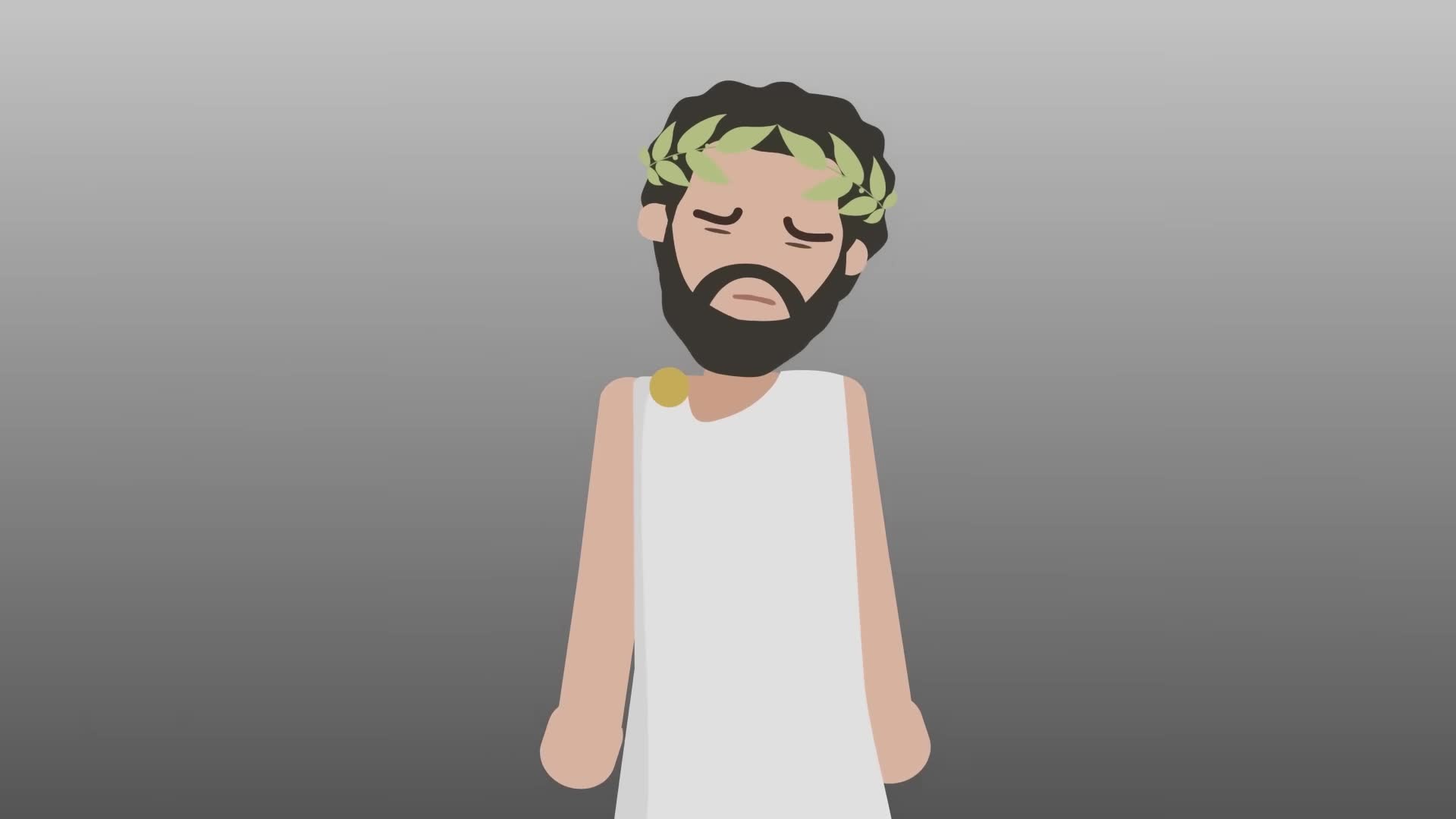
During his reign as the Emperor of Rome, Marcus Aurelius faced immense uncertainties that would strike fear into the hearts of most people, such as times of war plague, internal conspiracies, the death of some of his children and the death of his wife.
And yet, he faced all of these problems with an unshakable courage.
And the secret to his unshakable courage lies within a collection of notes he wrote to himself roughly 2000 years ago, many of them written in the midst of war, with the gravity of imminent death on his mind.
Today, this collection of notes is referred to as meditations and, based on my reading of these notes, I've determined five principles that we can use, like Marcus, to overcome our inner cowards and become courageous.
And along the way you will hear many other stories and ideas that are not from Marcus, and they will help illuminate the Emperor's words in greater depth.
So without further ado, let's begin our journey through the five principles.
Principle 1.
Look for solutions, not people to blame.
Our inner cowards love to look for people to blame rather than solutions, because it passes off the difficult burden of making real change to someone else.
And for many people, asking them not to blame others seems like too high of a demand.
Sometimes other people are responsible for the negative circumstances in our lives, they say.
And to that I would agree.
But looking for people to blame will often be counterproductive to finding a solution to your problems.
Because, instead of arguing over the correct way to solve the problem at hand, you will begin arguing about who's really to blame for the situation.
You will blame someone and they in turn will blame someone else, and then that person will blame someone else, and so on.
Back to the beginning of time.
As Marcus Aurelius said, blame no one.
Set people straight if you can.
If not, just repair the damage.
And suppose you can't do that either.
Then where does blaming people get you?
A courageous person, on the other hand, looks for solutions, not people to blame.
When trying to solve the problem of segregation and racial inequality in the United States of America, Martin Luther King Jr did not blame all white people.
He even said that we must realize so many people are taught to hate us that they are not totally responsible for their hate.
He demonstrated incredible empathy in a situation where blame would have been so easy.
He didn't view the struggle in America as being between blacks and whites, but rather, as he said in his own words, a conflict between justice and injustice.
Rather than looking for people to point the finger at or waiting for someone else to come fix his problem, he took responsibility for the situation at hand and helped develop a proactive movement around the tenets of non-violence, non-cooperation with evil, unity and love.
And, along with the other citizens of Montgomery, he set a revolution in motion, not through blame, but by setting an example and by becoming the change he wanted to see in the world.
Principle two, don't second guess yourself.
Today, when we say don't second guess yourself, it doesn't mean to act without thinking deeply about the consequences of your actions.
But rather, once you have made a decision, act with conviction and strength.
Don't let doubt, hyperplanning, and overthinking turn you into a passive coward.
There's a short poem called The Centipede's Dilemma, often attributed to Catherine Craster, that shows the relationship between overthinking and cowardice.
In the poem, a centipede is walking along without problems until suddenly a toad asks it how it coordinates all 100 of its legs to move forward.
The centipede thinks about it and realizes that it has no idea.
And now the centipede is no longer able to walk, confused about how to coordinate its legs.
Another phrase for this condition is paralysis by analysis.
When we overthink our actions, we become paralyzed by confusion and are no longer able to act courageously like we once did.
While we've obviously been gifted with mental faculties that allow us to reflect and plan, these faculties only exist to enhance how we act in the present.
We were made to act, not just reflect and plan.
Spending too much time in the past or future eventually makes cowards of us all, because it is thinking that gives rise to fear.
But when our attention is brought fully to the present moment, courage is inevitable, because there's no longer time to dwell on all of the things that could go wrong.
In meditations, Marcus Aurelius wrote concentrate every minute on doing what's in front of you with precise and genuine seriousness.
Free yourself from all other distractions.
Stop letting your emotions override what your mind tells you.
Principle three, find the beauty in your mistakes.
Making mistakes in life is inevitable.
So if you fear making one, you will inevitably become a coward afraid to act, for fear of doing things the wrong way.
The way to overcome your inner coward is by finding the beauty in making mistakes.
The Japanese art of kintsugi allows you to transform a broken item into something beautiful by repairing the cracks in it with a gold, silver or platinum lacquer.
The cracks in the item are not meant to be ignored or covered up, but rather they become the central focus and the most beautiful parts of the item.
The art of Kintsugi teaches us that every mistake contains a greater beauty in it, but you have to be willing to look for it.
Every mistake is a lesson waiting to be discovered, and every lesson you learn only makes your soul more beautiful.
In Meditations, Marcus Aurelius said, Principle 4.
Humble Yourself Although it may seem odd at first, humility and courage are intimately connected.
In the story of The Emperor's New Clothes, two scammers visit an emperor and attempt to sell him a suit.
They tell him that the suit is a special one and that it's invisible to those who are foolish or incompetent.
Intrigued, the emperor, who enjoys spending his kingdom's money on luxuries for himself, puts an order in for the suit.
Upon completion, the scammers show the emperor his suit, which is actually non-existent.
But the emperor, who is incredibly vain and prideful, does not want to be thought of as foolish or incompetent.
So he says that he is happy with his suit and will wear it at the next parade.
And so the emperor, strutting his new suit in front of his subjects, gets called out by little boy.
The emperor has no clothes on, says the boy, pointing and laughing.
This little story illustrates the connection between pride and cowardice.
When you are too prideful, you also become cowardly and avoid anything that might bruise your ego, like the emperor who would not admit that he could not see the non-existent suit for fear of looking foolish and incompetent.
So humble yourself and you will become more courageous because you will not fear making mistakes, being wrong or bruising your ego.
Or, as Marcus Aurelius said, remember, matter, how tiny your share of it.
Time, how brief and fleeting your allotment of it.
Fate.
How small a role you play in it.
Principle 5.
Do your best and trust that things will work out the way they're meant to.
Sometimes the strongest courage comes out of the deepest faith.
In 2008, in the midst of the global financial crisis, Starbucks faced the potential of complete collapse.
They had scaled their business too quickly, lost the quality cafe experience that customers had come to love and were facing formidable competition, such as McDonald's new McCafe offerings.
Their future was incredibly uncertain, and so their former CEO, Howard Schultz, decided to step up once more as head of the company.
And in his book Onward, when speaking about what it took to bring the company back from the dead, Schultz said there are moments in our lives when we summon the courage to make choices that go against reason, against common sense and the wise counsel of people we trust.
But we lean forward nonetheless because, despite all risks and rational argument, we believe that the path we are choosing is the right and the best thing to do.
We refuse to be bystanders, even if we do not know exactly where our actions will lead.
In other words, he acknowledged the connection between faith and courage.
Before he could have the courage to act, He needed to have faith that things would work out the way they were meant to.
While Schultz did have somewhat of a strategy of how he would try and resurrect Starbucks, it was his faith that things would work out the way they were meant to that allowed him to have the courage to put together and implement his strategy in the first place.
Sometimes you just have to do your best and have faith that things will work out the way they are meant to, even if that means things don't go the way you expect.
Or as marcus aurelius wrote about the true stoic he does only what is his to do and considers constantly what the world has in store for him.
Doing his best and trusting that all is for the best, for we carry our fate with us and it carries us.
So these are the five principles we went over today, based on meditations by Marcus Aurelius.
1.
Look for solutions. not people to blame.
2.
Don't second guess yourself.
3.
Find the beauty in your mistakes.
4.
Humble yourself.
5.
Do your best and trust that things will work out the way they're meant to.
And by following these five principles you can overcome your inner coward and become more courageous.
This was just my interpretation of Marcus Aurelius' work, and if you're interested in hearing more of my interpretations on his work, check out my last video called Marcus Aurelius How to Become Who You Are.
And if you're looking for a free and easy way to cultivate your skills in science and math, I recommend checking out this week's sponsor, Brilliantorg.
Through their logic course, Brilliant actually helped me become a better thinker.
And by becoming a better thinker, they helped me become a better writer.
In their logic course, you'll learn to solve problems by taking factual statements and using logic to make them coherent, and you'll get to do it through Brilliant's signature, fun and interactive style.
But if logic isn't your thing, Brilliant has thousands of other lessons with new exclusive content added each month for different areas of study, such as math, logic or computer science.
To try everything Brilliant has to offer for free for a full 30 days.
Visit brilliantorg slash freedom in thought or click on the link in the description below.
The first 200 of you will get 20% off Brilliant's annual premium subscription.
As always, thanks for watching and I'll see you next time.