Hey everyone, it's Anna.
Look, Thanksgiving is coming up already.
I can hardly believe it, you can hardly believe it, but it's around the corner.
And for a lot of people, Thanksgiving means seeing your family, which can be wonderful, but it can also be tricky.
So if you're going to see your family this holiday season, we want to help.
Is there anything you could use some advice on?
Like for example, is there always a fight that comes up and you want to avoid it this year?
Or maybe someone's passed away and it's going to be tough without them and you'd like tips on how to navigate that.
Or maybe you're bringing home a new partner and you're afraid it's going to be awkward.
If you're looking for advice on any of these questions or other questions about dealing with your family, send us a voice memo explaining your situation and asking your question.
You can send it to modernlovepodcast at nytimes.com.
That's modernlovepodcast at nytimes.com.
We look forward to hearing from you.
From The New York Times, I'm Anna Martin.
This is Modern Love.
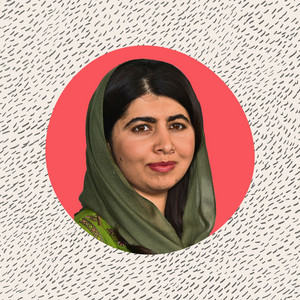
Today I'm talking to Malala Yousafzai.
Malala became a feminist and political icon at 15 years old after a member of the Taliban tried to assassinate her while she was riding the school bus.
She was targeted for saying that girls should have the right to go to school.
At 16, she wrote a memoir about the experience.
And at 17, she became the youngest person to ever win the Nobel Peace Prize.
For years, the world has known her as this extraordinary young activist.
But now she has a new memoir out.
It's called Finding My Way.
And in it she talks about learning to do ordinary things make friends, find her personal style, study for exams, go to parties, even fall in love.
Malala, welcome to Modern Love.
Thank you.
We are so happy that you're in the studio with us.
Congratulations on your new memoir, Finding My Way.
Thank you so much.
I'm so excited.
You are now a double memoirist.
Yes.
Will you make it a third, a triple memoir in a couple years, or is this enough for you?
Oh, I just want to focus on this one for now.
That makes sense.
How many memoirs can one person write?
Do you think there's a limit?
I think people know when it's time to write one.
I actually waited for this one.
I was asked by so many people, why don't you write another book?
And I was like, about what?
Who wants to write if there's nothing meaningful?
But the timing of finding my way, my new memoir just felt right.
And I knew there was something to share that is meaningful to people.
Tell me more about how you knew the moment was right to begin writing.
I love that you waited, even though people were clamoring, it sounds like.
How did you know the time was right?
I was reflecting on how I had become a young woman.
I was known in the public eye as a girl who was shot by the Taliban at age 15.
And I was still meeting people who would see me as that girl.
And I wanted to reintroduce myself beyond those titles, beyond those headlines.
And I wanted to show that now I have experienced much more.
I had this incredible time at college.
I made incredible friends.
I had my first love.
I am married.
I have been married, going through other challenges and difficulties, from like mental health to even coming to a decision about marriage itself.
But this is all a part of me.
And activism is, of course, the mission of my life.
But, you know, I...
I'm more than that as well.
And I wanted to share the personal story.
So these are, you know, these are the true reflections of me.
This is, I think, very important.
And part of the reason I loved this book so much is you know, you are so immediately recognizable, right.
Your name, your face, your work.
And I loved how this book.
It talks about big things certainly, but at the same time there were all of these small ordinary, everyday details about your life that I thought just added such dimension.
I felt very grateful that you were sharing those things with us.
I think we see this perfect image of everybody on social media, or the way people usually tell their story is like you know, they somehow knew how to figure it all out.
But I had to be very honest that I was actually very shy at school.
I was so scared that I will never be able to make any friends.
So in college, of course I was, you know, there because I wanted to study at Oxford, but more than anything, i just wanted to make friends.
I did not want to feel alone anymore.
Before you went to college, when you were a teenager, it seemed to me reading this book that you had quite a serious life right.
You're flying to speak with world leaders and and be on panels.
You're doing public activism work.
What was it like for you to be doing all of this stuff so young and so close to the attack?
What was that like?
When I look back, I feel very different, because now I see how I had somehow accepted the global recognition I was given.
And I felt like people were defining me when I was still in a coma.
They were calling me brave, courageous, an activist, speaks truth to power, all of that.
And I was like, wow, I'm 15.
I have to start my school again and figure out my life in a new country in the UK.
So much to process, yet this is now the mission of my life.
Somehow I was forcing myself to accept that.
In school, I had literally no friends.
I only made one best friend by the end of my school time.
I would still talk to my old friends from Pakistan, have those long calls with them.
And the rest of my time I was either with the family at home or I would be traveling doing speeches and conferences.
So my exposure was very limited.
I actually had not seen boys my age before.
Because you went to an all-girls school?
I went to an all-girls school and it was like just older people.
They weren't so amazing at age 15.
I'll just share that as someone who was around.
I found out when I went to university.
You found out you were like, okay, I wasn't missing anything.
No, I was like, oh, I'm glad I saw it.
And now I know.
They smell kind of weird, don't you think?
A lot of things.
I think that could be a different podcast for us.
But it was just this feeling that you know I was not living the life a child should be living at age 15.
So at college, like much later, when I was not being watched by my parents, when I felt I could be myself.
And there are not these work people after me asking me to do this and that.
And I thought I had just more control over like my life.
That's when I was like okay, I'm going to, like you know, just hang out, do these crazy things.
Somebody wants me to climb the rooftop.
I will.
Late night parties.
We're going to get to that.
I will.
Yeah, I think it's.
I thought that college would be just this limited time of my life where I get to do anything I want.
And then after that, maybe I'll just go back to the old, you know, serious life.
But I was like this is that time, the three years when I'm studying at Oxford, maybe I can be more adventurous.
Right before you go to Oxford, this moment in the book tickled me so much.
You're trying to figure out what to pack, what to wear.
Yes.
Because your mom had chosen your outfits, right?
Yes.
Do you remember?
I mean, of course it's your life, but why don't you share what you did in order to figure out?
You know what to pack.
I loved this detail.
I know.
I love my mom, but she's a very strict mom.
And she was always deciding what I should be wearing.
Same for university.
She said, let me pack everything for you.
So it was, you know, traditional dresses, shalwar kameez.
And my mom always got me a size bigger than mine somehow.
And it is just no sense of fashion.
None of that for me.
Much love, mom, though.
I know, I know, but...
And for me at university, it was about me feeling like every other student.
And I did not want to stand out because, of course, when I wear my shalwar kameez, the traditional Pakistani dress, I do stand out.
And people have seen me in the public eye in those outfits.
So I wanted to just wear a jumper, just jeans.
That's a sweater.
Again, I'm decoding.
Okay.
Trousers, a hoodie, pants.
Oh my goodness.
I'm joking.
Now it's become kind of a bit.
Sorry, America.
No, it's totally fine.
I'm translating for them.
Casual.
Very, very casual clothes that you just assimilate and you're like any other student.
That's what I wanted.
I was like, I just want to be a normal student.
So, yeah, my mom would put a Pakistani dress.
I would remove it and put in a jumper.
And somehow I found a way out through that.
And I took these, you know, more casual clothes.
And my search on Google at the time was Selena Gomez 2017 casual outfits.
Wow.
Was it like a lot of infinity scarves?
Do you remember those things?
Yes.
And just like those long sort of gemstone kind of necklaces.
We were so, it looked like chandeliers.
Yeah.
Why?
And too many scarves around their neck.
So many infinity scarves.
When it wasn't even cold, I will say.
But I want to forget all of those outfits that I wore once.
I was like, okay.
We should move on.
We should move on.
So you get to Oxford with a suitcase full of Selena Gomez casual.
Yes.
Who were the people you were drawn to as friends?
Wow.
I was exploring the whole university.
I was saying hello to almost everybody because...
There was no criteria for me.
I wanted to meet as many people.
There were incredible people in my subject group.
Every friend was unique in their own way.
And we had a lot in common but also very different experiences in terms of our background, where we had come from.
There was always something to talk about and always something to learn when you were with friends.
They made Oxford life more fun for me, because this was a time when I was not being asked about what was it like meeting that president?
And so what do you do through Malala Fund?
It was about how was your essay last week?
Wasn't that question so hard?
Did you figure it out?
This tutor is like so annoying.
Can we skip this lecture, please?
Yeah, yeah.
These were the conversations.
And that's exactly what I wanted.
I wanted to be a student.
I wanted to be treated as a friend.
And all of these people, the incredible friends I made at Oxford, made me feel like I was their friend.
And I felt so secure with them not being judged.
And yeah, this was the most precious thing from college.
You are making friends.
You're doing all these, you know, totally normal college activities.
Yes.
And yet you do have a security detail that follows you on campus.
Are they quite literally everywhere with you, just a few steps behind?
Or how was that?
Yeah, they're following you.
They are non-uniform and they want to keep it as normal for you as they can.
Sure.
But there is a point where your friends are like, we see these strangers behind you every day.
Are you okay?
Are they following you?
And I'm like, no, no, they're just taking care of me.
Don't worry.
They would come to like parties and stuff?
Yeah.
Okay, that's fine.
Yeah, I mean.
Some older guys at the parties.
Yeah, quite older.
Yes, quite older.
They could blend in.
You also got up to some mischief in college in the dead of night.
Tell me about that.
Yeah.
So in college, I found out about rooftop climbing.
And this is some like a secret thing that these students do where they're like we want to get in trouble.
So in our college at Oxford, there is the bell tower and it's not easy to get up there.
So you have to go up to the top of the tower.
Describe it for me in case I want to ever go to Oxford and sort of climb this.
I think you should not do that.
You're right.
I think it's not allowed anymore.
Copy that.
So you go up to the top floor of the main Talbot Hall.
Okay.
And you get into this small room there.
And there is a small window.
And you open that window.
You sneak out through the window and there is this narrow roof path, but it's very narrow.
I'm getting so anxious, but keep going.
You could put like one foot at a time, basically.
Like show me with your hands.
How narrow is it?
Don't you even say that.
It's very narrow.
It's basically like the roof, sort of the edge, you know, the side.
You're clinging on.
And there's like another part where you sort of have to like jump to now this next part of the roof.
It's very scary.
So I had, like I had that mysterious friend who took me there and they're like you know, were helping me.
And so they jumped before and then I jumped after them.
It's night, right?
It's midnight.
It's very late at night.
Are there lights around?
Describe it.
And put me in that moment with you the first time.
So it's dark outside, you're looking out, right about to take that jump.
What's going through your mind?
It's very dark in the college.
It's quiet.
And I felt like it was just me who was in control of what was happening.
And we were about to... climb the rooftop.
It was a very risky journey because you're walking on this very narrow path of the roof.
And one misstep, you will fall from the fourth floor of the building.
I don't think you will survive.
And you go up to the bell tower and you sort of sit in there and you could see, you know, the bell above you.
And it's just so beautiful.
You look down, you could see the whole college.
You're wondering who's doing what in their room.
Some have their lights on and some might be sleeping right now.
You look at the library, who's still studying?
Yeah.
At midnight, and you look down and you're like, are these the college security?
I hope they're not looking for you.
And I had just told my security that night that I was, you know, done with everything.
You guys can go to bed.
So I was just looking at sort of their room as well.
You're really alone.
And hoping that they do not suddenly wake up and look for me.
It was a moment where I felt so close to nature, so close to myself.
I could hear my My heart.
And it was just a magical, beautiful moment.
And there I was sitting with a stranger just doing something that I should not have been doing.
But I was okay to get in trouble.
I wanted to try things without feeling like anybody was watching me, anybody was judging me or commenting about me.
It sounds too dramatic when I talk about it, but it was truly a moment when I felt that I am living the true college experience.
It is, to me, a really profound moment of like reckoning and introspection for you, right?
And you spoke about how you'd accepted this role other people had put you into and certainly that you'd also stepped into on your own with your work and your fund.
But this is a thing and I say this with utmost you know care, and It's a stupid thing to do because it's so far up.
But it's like you're doing it because you want to, right?
You're doing it because you're like, let's do it.
Yeah.
And that was my first time, but not my last time.
And why did you keep doing it?
It's really hard to explain.
Trying climbing to the rooftop made me connect to a part of me that I thought had gone missing.
Hmm.
I was a very adventurous person growing up in Pakistan.
I loved to try new things.
I was adventurous.
And when my life took a sharp turn and I started a new life in a new country, I just thought I could never connect back to that old self, or I would just never know what I would have been like if none of these things had happened.
If I hadn't been attacked, if I hadn't started this activist life in a new place.
That when I was in college and when I was climbing rooftops, I felt like I was connecting with that old part of me.
With time, I have become that person that I try new things.
I don't care if I do it wrong or if I get judged for it or what people think about it.
With time you just realize you have to live your life and you can't just dictate yourself or do the self-sabotage on yourself where you feel like you are expected to live your life a certain way.
And if you do it otherwise, then somehow you are not satisfying the expectations.
So college was a time when I was slowly testing it.
I mean, what you're saying is really important, I think.
It wasn't so much a discovery of a part of yourself.
It was rediscovery.
Yes.
Yes.
Now, this is a cheesy question, but bear with me.
I wonder, and you can feel free to say no, but when you were up there, did you picture younger you, the one who had that adventurous spark?
Yes.
I could see the younger Malala.
I am not a person who thinks too much about the past, because my life has changed so much that if I put myself in that place where I'm thinking what it could have been like, you can never be satisfied imagining your life differently.
And it felt like that.
And I'm not saying that...
You know, people are actually watching you and people are actually commenting about you.
Sometimes they do.
That's sometimes how the social media world appears.
You have a level of scrutiny on you.
But it's also how you feel because it affects you so much.
I, you know, I usually say it doesn't affect me or it shouldn't.
I agree with that.
I don't let it affect my work, but...
In the end, the truth is, yes, it does.
Even if you are trying to fight it back or try to not let it distract you, but it is somehow influencing you.
You mean this sort of people watching you?
Yes.
This feeling?
Yes.
Yes.
So in college, I felt like the eyes were not on me.
And I was in my own secret world.
And I thought...
I don't know how I'm supposed to be, but I'm going to experience these things, these emotions.
And that will tell me something about myself.
I'm going to jump.
I'm going to jump.
I'm going to climb.
I'm going to swim.
No, I can't swim.
No swimming.
Stay with us.
Thank you.
I appreciate that your book doesn't paint too rosy a picture of college, right?
You were having this freedom and you were going to parties and you had these friends and you're pulling all-nighters, but you also dealt with some quite difficult stuff.
Can you describe you do this so vividly in the book?
Can you describe the first time you had what you later found out was a panic attack?
Yes, this panic attack was a life-changing moment because I was attacked at age 15.
I healed from a bullet and I thought the recovery is done.
But many years later, when I had the first panic attack or the trauma or the flashbacks of what had happened, it made me feel like everything was coming back, as if it had never gone.
I felt like I was reliving those moments.
So it happened, you know, this one night where initially it felt like a normal night because I was working on my essay and I had, you know, an essay crisis.
I was struggling.
So this friend called me to the college gardens and she said, yeah, let's hang out.
Some friends are here.
I was like, maybe she might just give me her notes.
So let's go and see her.
I go there, we are chatting, and I see this thing for the first time, and it's called bong.
It's a bong, right.
It's a bong, and it's, you know, basically weed, but, you know, it's a different way of inhaling it.
It is tricky, I will also say.
It is tricky, and I had no idea how to take it and what it was and how quickly it affects you.
But my friends seemed fine, and on the first attempt, I coughed.
And then on the second attempt, I felt...
I inhaled it and it went all in.
And I don't know where time went, but that was the turning point.
It felt like a sharp turn where immediately, like my body froze.
I could not understand time or the surrounding anymore.
And I thought I was reliving the attack, that I could see the gunman, that I was experiencing that near-death experience, experience where I felt like you know, maybe I am dead.
Maybe this is afterlife.
Am I alive or not?
I just lost sense of reality.
I had many panic attacks after that.
My body would be sweating.
I would be shaking.
My heart would be throbbing.
I could not sleep.
As soon as I would try to close my eyes, I felt like it was a nightmare again and I would die.
It was so scary.
I thought nobody would understand it.
I could not even talk to anybody about this, because how do you explain to somebody that I'm experiencing all of this?
And yeah, like an attack happened many years ago and I was completely normal yesterday.
Like I never thought this would happen.
It was so unexpected.
Yeah.
I'm so glad my friends were there for me.
They helped me in this time.
They could not explain it to me.
They were not like my therapists.
But they did small things like sharing meals with me or doing a sleepover.
Their sleepover was everything.
That was the first time I could actually fall asleep for the first time.
They have no idea, but I'll always remember that.
And then in the end, it was another friend of mine who told me that I should see a therapist.
I was so skeptical.
Had you seen a therapist up to that point?
No.
The first time I had seen a therapist briefly was at the hospital in Birmingham when I was recovering from the bullet injury.
Immediately after?
Yes.
At the time, I had to go through so many other surgeries for...
The physical body recovery that I thought, what is this person asking me?
How do I feel?
Like, come on, like, look at look at me.
I'm recovering.
What has feelings got to do with any of that?
I felt work kept me busy and distracted.
And I just had no idea that something like this bong experience could trigger and bring back the trauma.
And PTSD, all of these things I had heard of, but I just never understood what that actually means when you experience it.
When I had my first therapy session.
It was a crazy experience because I was telling everything to the therapist and I was hoping that she would give me the medication or whatever cure they have.
And soon I realized that that's not how it works.
You have to accept and embrace it.
That now this is a part of you.
You cannot banish it magically.
With time, it can get smaller and smaller and it will affect you less and less.
But you have to be willing to accept and live with it.
I no longer see it as, yeah, like four sessions or 10 sessions.
Am I fixed yet?
I think the problem will be fixed by then.
Totally.
I mean, I really appreciate you sharing it.
It is so, it was terrifying even reading about it.
I mean, it really was.
And you know, it strikes me, just as you're talking like we spoke about this roof experience experiences as this moment of discovering that your past was still with you.
Yeah.
And I'm realizing that this panic attack was also the sort of, like, the shadow side of that, right?
With the past, with the sort of more full embrace of the past, is not just you know the adventures and the you know that spirit.
It's also the attack.
Yes, and I think that's the part maybe that frustrated me the most.
Huh.
Because...
When you are labeled as a brave girl who has overcome an attack and is not afraid of the Taliban and suddenly this moment where you're witnessing that moment of fear again and you feel the gunmen are right in front of you again or you feel you have lost your life again.
It's scary, but it's also embarrassing.
Like I was feeling embarrassed a bit that somehow I had failed in meeting that label of being brave and courageous.
I was in South Africa for this campaign that we're doing for Afghan women.
I was giving the Nelson Mandela lecture and we were, you know, bringing attention to what's happening in Afghanistan under the Taliban since they took power four years ago.
Is a gender apartheid, like it is systemic oppression?
Anyway, that was, you know, a visit there.
I gave a speech and there I also had a panic attack.
Oh, my gosh.
Like on stage or off?
No, it was like after I had done all the events, the press, the speeches, everything.
There was like nothing triggering.
And just all of a sudden, when I went to bed in the middle of the night, I just felt like I was.
I felt I could not breathe anymore.
And my husband was with me.
He helped me through the whole night, but I was shaking.
I was shivering.
This is more recently.
Yeah, just like a few years ago.
And then I go, you know, back to my room.
And that night, like, I'm shaking, I'm shivering because I'm having a panic attack.
And I don't understand because yet, like inside me, I know I can continue this fight and I will keep on doing it.
But physically and mentally, my body is responding in a way that I have no control on.
But that doesn't stop me from doing what I want to do.
I will advocate for the rights of Afghan women and girls.
We will stand up to all extremists, including the Taliban.
We will have a better future for women and girls when they can just choose their own future like whatever they want, just having more freedom and liberation.
But it's not an easy journey.
And we have to be honest about it, how it can overwhelm us, how it can affect our own mental health.
And so I'm sharing just a part of that in my book.
It's powerful.
And I appreciate you sharing it with me here.
And I think of this word you used, embarrassing.
Yeah.
Can you tell me more about that word?
Because it, I think I understand, but it's a harsh word to sort of turn on yourself.
And I wonder about that.
Why did it feel embarrassing to have a panic attack?
It felt embarrassing because I thought I had failed in meeting up the expectation of being brave and strong.
When people tell you that you stood up to the Taliban, how did you do that?
How could you be so brave?
I did not even have an answer to that.
I would just simply say, education is my right.
Why should anyone take it away from me?
And now, like many years later, when I had these panic attacks and I was just like suddenly scared it's not that the Taliban were standing right in front of me, but I felt it.
Yeah.
It's something I wish like I can just make disappear.
But that is to say that it is still brave when you are embarrassed, when you are scared, when you are afraid, but you still get up and do what you believe in.
I think that is true bravery.
We'll be right back you.
I want to get us into this zone of talking about romance and dating and love, because it's a beautiful part of your book as well.
You mentioned that you just weren't around guys so much before you went to college, and then you were around them.
But, like, where was your confidence in terms of dating, boys, romance, romance?
I was more of a coach at the beginning.
Yeah.
When it came to love life conversations, I was giving advice to my friends.
You know, like if a guy is not replying to your text for three days, it means Not that that's happening to me, but what do you think it means?
He doesn't want to talk like, you know, and I don't think he deserves you.
Like it's... Hear that?
Yeah.
You know, like anyway, that's...
And my friends were just so shocked that I knew so much about guys and dating.
And I told them I have never dated a guy.
I don't even know what that is.
But I would sometimes just joke with them that I'm more of a coach than a player.
And the coaches know more than the players.
You're observing.
You're observing, yeah.
And really, that actually is the language I use.
You've taken yourself sort of out of the game.
Can you describe why?
Why was dating not so much on your radar?
There were two reasons for that.
One was more my personal decision and the second one was cultural.
Yeah.
When I was attacked by the Taliban.
The bullet caused injuries, including my hearing loss and also my facial symmetry.
So I had become very insecure.
I thought like my smile was never the same and, you know, like the facial symmetry wasn't there anymore.
I received so many surgeries to work on repairing the facial nerve even my last surgery was to do that and I thought like oh, you know, like to grapple with it, the best way is to just say never date a guy.
Or, And if I'm honest, I just thought like nobody would like me and all of that.
But it was just a whole different thinking.
Yeah.
And then on the other hand, it was also the cultural pressure, because in our culture in Pakistan.
Girls are not allowed to date.
It's different in the cities, but in a lot of the villages in most of Pakistan, girls are even punished for it.
If they're found dating or texting a guy.
And, you know, there's like crazy things like honor killings.
And so I thought, OK, like that's supposed to be a bad thing.
And why put my family in trouble?
Why make my mom and dad angry, even though I knew we were now in a different country and slightly different culture.
But that is sort of still there in the back of your mind.
So in college, I thought, yeah, like these two things, I should just stay away from boys.
I mean, you're mentioning the insecurity and you share a bit about that in the book.
And there is one quote that really struck me.
You were talking about sort of grappling with self-image and you said my face and body were now meant for service, not romance.
You don't need to be attractive to be an activist, I told myself.
I was struck by that.
I mean...
Unpack that quote for me.
What did that mean?
You didn't have to be attractive to be an activist.
So it wasn't on your mind?
I thought that activism was now the mission of my life.
And I did not have to think about looking pretty for that.
On the other hand, I thought that to have love in your life, you needed to be looking all perfect and needed the facial symmetry.
And So yeah, I thought okay, like I can't have all of that, but at least I can do my activism.
Did you think you'd ever be in a relationship?
Like, was that something?
No.
No, really?
I never thought that, no.
And how did that make you feel when you were to contemplate a life?
And truly I say with like out any kind of valence, positive or negative, like how did that make you feel to contemplate a life without a romantic relationship?
My life changed completely when I was in love with a person.
I could not fix my thinking.
Before that, I was...
The strong advocate against marriages.
I had told all of my college friends that do not get married, or like at least I'm not getting married.
These boys are just a waste of time.
I was so against the institution of marriage in itself.
I was questioning it because growing up I had seen how girls were forced into marriage or they were married off when they were still children.
And that is still a reality for many girls.
So I thought, why would even I consider it?
I'm an advocate for girls' rights.
You know, this is the last thing I'll think about.
And here I was in love with a guy and I knew that culturally for me to be with this guy, I need to be married to him because in our culture, like I, cannot just live with a guy.
My parents would never allow that.
It's hard to explain the cultural part because you know it becomes a controversy and there's a lot of backlash if you do not follow the traditions.
And the tradition is that you have to like marry and it's usually your parents agreeing and all of that.
You cannot technically be dating or be in love.
I was, you know, happy that my parents sort of were okay with me like seeing the guy.
But my mom put so many restrictions.
She told me and this is before COVID that you have to be six feet apart from.
So she kind of started that trend.
It sounds like.
She started that before we had those jumps.
Looking at a future without a romantic relationship, did it make you feel... I don't know.
It made life easier for me.
Huh, that's okay.
I thought life would be so easy if there were...
No relationships, no love life to think about and no marriage and all of that and kids and like family stuff.
I said, stay away from all of that.
Work, work and work.
So in my head, like I thought, like Martin Luther King Jr or Mother Teresa or Delilah, my Nelson Mandela, all had these lives which were all about work, even though they had, like wives and, like you know, kids and all of that.
There's this like perception that you have that life all has to be about work.
It can never be about you, about your love.
And these are all sacrifices and compromises you have to make.
Mm-hmm.
But when I fell in love, now let's bring this man on stage.
Tell me about the guy you fell in love with.
So I met Asar at university.
He was visiting a friend who was studying there.
And the moment I saw him, I knew that he was my type.
He was tall, handsome, with trimmed beard, handsome.
And just wide shoulders.
And I thought oh my God, like I had pictured this guy in my imagination and somehow I see him in reality.
There is this 3D print of him.
You are making me jealous, girl.
Yeah, with a cute smile.
And he was just laughing the whole time.
And he was funny.
And he was cracking jokes and laughing at my jokes.
And I was like, wow, he is the one.
Well, that's the dream, isn't it?
Yeah.
But if you ask him, like, the story that he has starts at like a different point.
And I'm like, ugh, let's not even talk about it.
Let's not even talk about it.
Let's just say you had wide shoulders and you were tall.
I was like...
Can you just simply say, yeah, like, I fell in love with you the moment I saw you.
He's like, no, I have to be truthful.
No, not all the time.
But then he reminds me, he says, you have to remember that, like, you were Malala to me.
And sometimes he says this joke that...
My right shoulder was telling me that there's one person in the world that you don't want to offend or break the heart of.
It's Malala.
And then my left shoulder was telling me that if you break Malala's heart, you are going to be her enemy number one, and you do not want that life.
So basically both angels and devils were telling him, like, do not F this up, basically.
He was like, I was just so scared.
He said like do you think like somebody meets Malala and immediately would say yeah, I want her to be my girlfriend, or like I want to marry her?
He said like, no, he's like, of course, like you were so fun.
And like, I was so happy that we were becoming friends, but I could not imagine it.
And I was like, okay, fine, fine.
You can get away with it.
One story I remember, which is really funny.
When we were still like getting to know each other.
I took him to see this movie, and Which was Toy Story 4.
Okay.
Yeah.
And I was like, you know, flirty and all of that.
And I was like, why is this guy like so nervous and like sort of like tight and just like... Yeah.
Why can't he just relax?
And I asked him and he's like, you know, you have like security.
And they're standing right behind me.
He's like, oh, maybe those two massive guys.
And you want me to be like relaxed and all of that.
So...
Later on, I understood.
I was like, oh, yeah, poor thing.
I never thought about it from his perspective.
You're like, loosen up.
He's like, I'm on either side.
You know, just watching a movie.
Enjoy.
Have fun.
Be yourself.
I didn't even know they had Toy Story 4.
Yeah.
How did he make you feel?
Like, as you hung out with him more and more, as you talked, as you got to know him as a person, not just a hottie.
Like, how did, yeah, how did he make you feel?
Whenever I was with him, I felt that I was loved.
And he made me feel like the present me.
You know, like when you meet people, they have this fixed image of you.
And they feel like they know who you are.
Well, I will say you more so than someone else.
Of course.
Absolutely.
But with him, I felt like I could grow as a person.
I like what you're saying.
Like, as opposed to...
Like a fixed idea of who you were, this vaunted, brave, you know, active.
It was like things felt like they could change, like they could mold, like they could grow, like they were flexible, almost.
Yes.
And when I think about a life partner, this is the person you want with whom you can grow.
Right.
You will never be the same person as you are in this moment.
He will also not be the same person as he is in that moment.
And when you start your life together, you can grow together.
I immediately felt that with Asad that he is so adventurous.
He likes trying new things.
He's funny.
Life just looks more fun with him.
And I was imagining a life with him and I thought, wow, like it just looks so good.
So I was very happy like that I was, you know, technically dating him and that I was seeing him.
Sure.
But at the same time, I was reminding myself that no, I'm supposed to be an activist and I can't get married, and this is all a distraction.
Right.
And you were so staunchly opposed.
You know, you're right.
You were so opposed to marriage as an institution.
Yes.
Because of what it represented, you know, the patriarchy.
You didn't want to be controlled.
Right.
Yeah, how did you reckon with those things?
What a bummer to really like this guy and be like, this could be serious.
But also, I'm staunchly opposed to marriage.
I will be honest that I liked Asar and everything was going well.
I was also scared if Asar would be the same person as he is now.
And I had heard so many stories of girls who...
Find out that the husband is not the guy who they thought would be.
You mean after they get married.
Change her career path and all of that.
And I knew like this was never going to happen.
I knew that I knew about my rights and like I'm an activist for girls everywhere.
I can fight for myself.
But it was it just felt like I, you know, I could not I just did not want it to be.
A situation where now suddenly, I was getting married and this guy was like you know, I was like I have to fix another guy and I have to fix another problem, while I'm advocating for so many other things.
I did not want it to be like another journey of activism for me.
I was like, if marriage makes life easier and happier, then I should consider it.
Yeah.
In the end, we spent some time together in Lake Placid in the US.
And this was the first time when it was just the two of us.
And we had the best time together.
And I had prepared a whole list of questions because I thought I'll ask him everything and figure out who he truly is.
And, you know, like, I was like, I just want to know everything about this guy.
What is inside his mind?
Like, what he's showing, what I see right now is all good.
It's like 10 out of 10.
But Is there something mysterious in his mind that I need to know?
You know, it's like red flag of law.
You're an investigative journalist.
I know, seriously.
I should change my job.
And I realized that He was this person the whole time that I saw him.
It's like you keep looking, you keep peeling it off and it's like a layer after a layer, but it's still the same thing.
Yeah.
Was there a moment where you realized that like, yeah, that he was who he said he was?
Was there, I don't know.
You look at him at breakfast and like the lights hitting him and you're like that's it.
You know, that's him.
I still feel that.
When he is kind to somebody, when he cares about...
He has family members and friends.
He shows up.
He checks on people.
He looks after me.
He's just so nice to me.
I can't tell you.
He can listen to me rambling at midnight when he's so tired and exhausted.
The yap does turn on at midnight, huh?
And yeah, that's the thing.
And he...
You know he cares about like what I eat and if I'm busy with my work he makes sure that I have some fun time.
So he would arrange sports in the middle of it to say you need to relax, you need to take some time off.
So like my life is sort of still the same, but I feel happier that he's with me now.
In this moment in Lake Placid, which is fun that it was there.
It's such a, that's cool.
Yeah.
You realize that you're ready to marry.
In fact, the chapter ends with you saying, like, I'm ready to do this.
What was it about that trip that changed your mind?
Was it your mind changed about him or your mind changed about the institution of marriage?
Or both or neither.
Like, what shifted?
Oh, definitely not about the institution of marriage at all.
That is easy to answer.
We have to question marriage.
We have to make this an open conversation because it is still affecting the lives of tens of millions of girls every year.
And even in places where women have more equal rights and even in developed countries, marriage still means more compromises for women.
Hmm.
So I think that's a whole separate conversation and I don't have all the answers, but I think it's important for us to doubt it, to question it.
In Lake Placid, I was sure about getting married to Assar was because I knew he was the right guy.
He seemed to be this kind, sweet and the best guy I had ever seen.
I had the best time with him ever.
And I loved him for sure.
But I started loving myself as well.
And that's the difference he made in my life.
That I felt that I should love myself and I should be okay accepting that he loves me too.
And I realized I don't have to ask him every question about.
So what do you think about?
You know four marriages in Islam.
Or what do you think about a woman... earning more than the man.
And he was like, yeah, if she earns more, that's fine.
He's like, I'll be a heavier man.
I was like, oh, you just get it right every time.
It is so interesting.
It's like this list of you tried to sort of itemize all of the things that could go wrong, right?
And it's very beautiful to me that at the end of this trip, you realized you didn't have to do that.
Yes.
He was quite surprised.
He was like, so where are the questions?
Like, when are you going to ask me?
I was like, you know, I know.
Because you knew the answer was, was what?
It's not even, it's not even about the answers to those questions.
The answer is, he loves you, right?
Yeah.
And I love myself.
Yes.
You know, we talked about how your feelings about marriage as an institution haven't changed.
You're still committed to doing, to advocating for women's independence and right to choose decide whether they want to get married.
And I guess I wondered now you are a wife, right?
Like has that changed?
What does that mean to you?
Like how are you able to, yeah, what does that mean to you?
You know, those words still sound quite heavy.
Wife and husband.
Do you use different words?
Yeah.
Bestie.
You use bestie?
Oh, I love that.
Yeah.
It's we don't call each other husband and wife.
It's when people ask us or when people bring it up.
That's when we're like, oh, so we are husband and wife.
Yeah.
Yeah.
Does it feel so that doesn't that word doesn't feel like it fits?
So much.
I have a very stereotypical idea of what a wife means.
And I hated the word.
Yeah.
Genuinely hated the word.
Growing up, I thought like, oh, you want to be a wife?
Come on.
And husband I was like you know, just because you grew up with it, you cannot suddenly take it away from yourself.
And You know, I just thought that was not a cool thing to be a wife.
Do you feel married?
I guess that's really the question I want to ask.
Like, do you feel married?
Yeah.
It's about redefining what marriage is.
I know that a lot of people will be already embracing it in this new way where it means equal partnership between two people where they respect each other and they love each other and they make lives easier for each other.
They make lives more fun for each other.
But where I come from and what I have experienced seeing things like child marriages and just how women's futures change completely with marriage I cannot fully take it away from me that I still have that traditional idea of it.
And that just causes that trigger for me.
And I sometimes think that, am I giving up to the old systems?
But I know it is different.
It is different when you are in a new country.
It's different when you are redefining it.
It's you know, good values and has, you know, a common understanding of respect and respects you and and he's like yeah marriage whatever, i just want to be with you, like that's the most important thing for him.
So that changes everything.
I'm like yeah sure, let's call it marriage, let's call it whatever we want to call it.
Uh, it's about us sharing this journey of life ahead together.
I want to turn back to your book.
You know, I'm struck that the title Finding My Way is, it's an active title.
It's not, I found my way.
No.
It's finding, right?
You're in the process of.
I wonder, like, what do you feel like you're still figuring out about yourself?
I actually wanted a title like Finding My Way, because I do not feel comfortable with books that feel like they have cracked the code and figured it all out.
That if you read this book, you have no worries in life anymore.
That's just not the reality.
Finding My Way is a true reflection of what the journey is actually like, where things are happening for the first time.
You may not have even planned them to be a part of your life.
You are having these experiences in college like bong, you are climbing rooftops like that was never part of my plan.
Getting ghosted by my crush that was never part of my plan.
Nearly failing my exams that wasn't part of my plan.
These things happen.
You meet the love of your life at a time when you were like, wait a second, I'm sort of still in university.
I wish this.
Like I wish I was not thinking about marriage and all of these things right now.
Or like you're recovering from the bullet of the Taliban and having your last surgery and The Taliban take control of Afghanistan and you have to think about evacuating the people who you are supporting and, at the same time, thinking about the future of women and girls and what does that mean for you.
Like all of these things is about finding your way.
You do not have the answer immediately, but it is embracing those moments and accepting the emotions and the feelings you're going through.
You cannot make them disappear.
Asking for help when you need to, talking to your friends and family, your colleagues, and knowing that together you will be able to make a way through it.
You will find your way through it.
You're 28 right now?
Yes.
What would you say to 15-year-old Malala?
I might give her my book.
Girl, read this book.
There's so much ahead of you.
There's so much ahead of you.
Do not get distracted by what people around you are telling you, who you are supposed to be, what media outlet wants to speak to you and how you need to go and give a speech at this conference and that event.
Follow your heart.
Make friends.
Be cheeky sometimes.
It's okay if you don't know all the answers.
It's okay if you get scared.
That's all fine.
You will find your way through it.
Malala, thank you so much.
What a pleasure to have this conversation.
Thank you.
So nice speaking to you as well.
The Modern Love team is Amy Pearl, Christina Josa Davis Land, Elisa Gutierrez, Emily Lang, Jen Poyant, Lynn Levy, Reva Goldberg and Sarah Curtis.
This episode was produced by Sarah Curtis.
It was edited by Lynn Levy and Jen Poyant.
Original music in this episode by Alicia B. Etoupe, Rowan Nemistow, and Dan Powell.
Dan also composed our theme music.
This episode was mixed by Daniel Ramirez.
The modern love column is edited by Daniel Jones.
Mia Lee is the editor of modern love projects.
If you'd like to submit an essay or a tiny love story to the New York times, we've always got the instructions in our show notes.
I'm Anna Martin.
Thanks for listening.
Thank you.