This is the BBC.
Chinese characters.
Historian Rana Mitter tells the story of China in 20 remarkable lives.
Part 13.
Compassionate Cynic.
Creating one fictional character who says something profound about the society you live in might be considered the sign of a talented but lucky writer.
To create three such characters suggests that you really know what you're doing.
That might be why Lu Xun is often called modern China's greatest author.
China's 20th century writers have been oddly neglected in the wider world.
Even literary buffs who rejoice in having read Borges, Tagore or Mishima, or at least claim to have done, might scratch their heads when Lao She, Xiao Hong or Qian Zhongshu are mentioned.
And so it is with Lu Xun.
Yet he remains a name known to every educated Chinese.
Most of them will have read him in high school, at least.
His fame is not because of his readability or ease of access.
Much of his writing is modernist in intent and draws on classical vocabulary not easily understood by the average reader.
But his story is also the story of modern China.
Not one of brassy, triumphant success, as the politicians sometimes try and make out, but instead an ambivalent, sceptical view that's never surprised by setbacks but always tries to come up with a humane response to them.
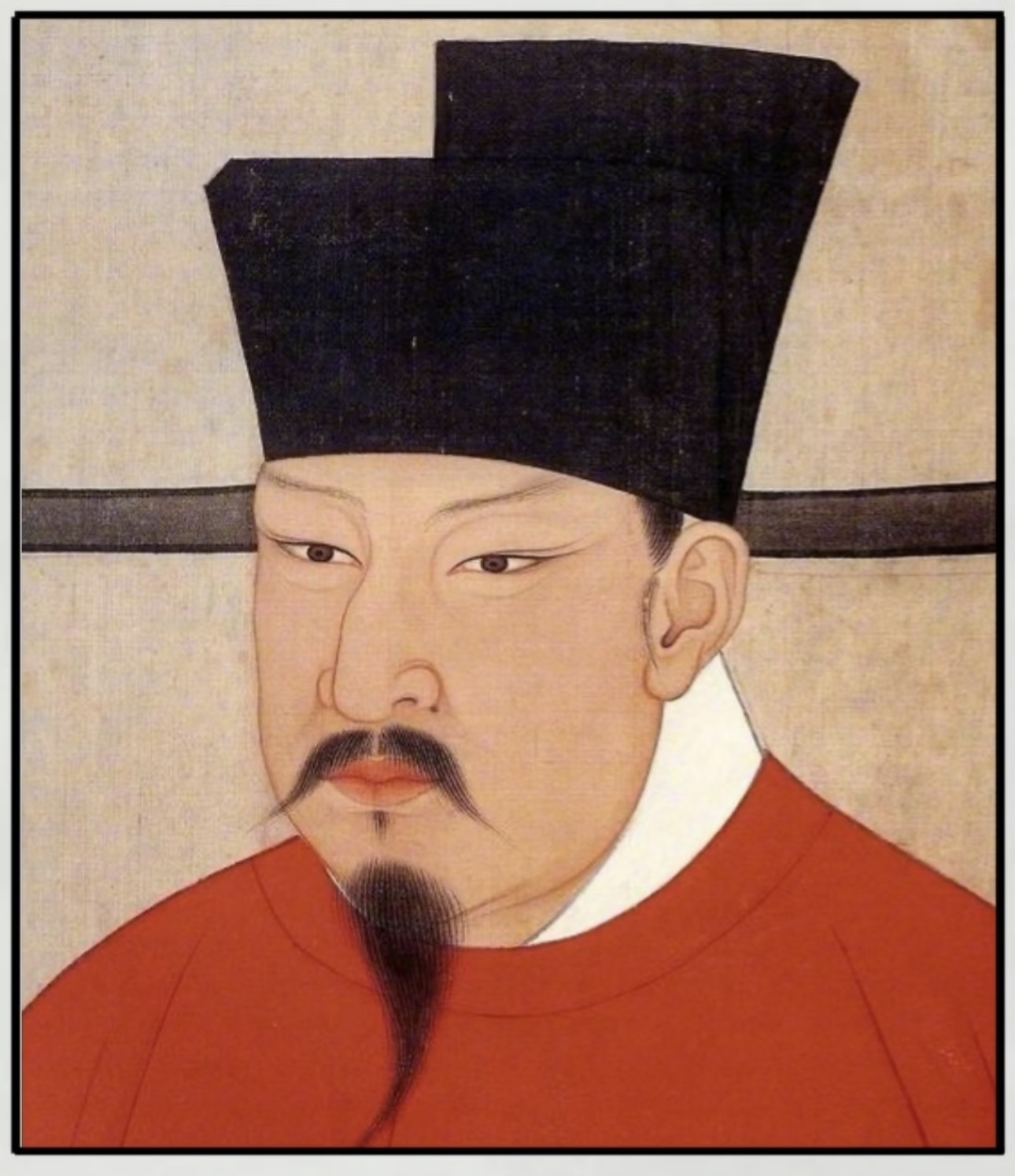
His characters are often pitiful, like Ah Q, the foolish Chinese everman, Kung Yi Ji, the bedraggled scholar trying to hold on to his dignity, or the unnamed madman, the only person in his town who can see the truth clearly.
Yet Lu Xun created them as a means of telling China hard truths that he wanted it to hear.
He was born as Zhou Shuran in 1881 in Shaoxing, Zhejiang province in eastern China.
He remembered his father becoming desperately ill when Lu Xun was still young and more and more of the household's meagre income being spent on quack medicines before his father's death.
Lu Xun was seized with several convictions that China's traditional culture was dominated by fakes and charlatans, like the ones who had failed to cure his father, and that the Confucian thinking that lay behind that culture was immensely destructive to China's progress.
Lucien's family couldn't afford to give him a traditional education and instead sent him to less prestigious but free government schools, where he learnt the elements of Western science as well as reading authors such as JS.
Mill and T.H.
Huxley.
Then, perhaps with a desire to save patients like his father in the future, he went to Japan to study medicine.
While there, he had a revelation –
It was during the Russo-Japanese War, and in a lecture hall, along with his fellow students, he was shown a photograph of a number of Chinese, one of them trussed up.
The one with his hands bound was a spy working for the Russians, who was to be beheaded by the Japanese military as a warning to others, while the Chinese beside him had come to enjoy the spectacle.
Before the term was over, I had left for Tokyo because this slide convinced me that medical science was not so important after all.
The people of a weak and backward country, however strong and healthy they might be, could only serve to be made examples of or as witnesses of such futile spectacles.
And it was not necessarily deplorable if many of them died of illness.
The most important thing, therefore, was to change their spirit.
So Lu Xun made his choice, abandoning the laboratory for literature.
In the next few years, he would travel back and forth between China and Japan, publishing works on literary theory, although not always to great success.
But he was working at an exciting time.
The years after the abdication of the last emperor in 1912 were politically tumultuous, with warlords carving up the country between them.
But it was also a time of huge cultural change.
A call emerged for a new culture that would abandon the shackles of the past.
This could include anything from reforming the Chinese language to make it reflect everyday speech to embracing new ideas about gender and sexuality.
Ding Ling, whom we met earlier in the series, was one of those whose writing took advantage of these new freedoms.
So Lu Xun turned his hand to fiction.
One of the first short stories that he wrote was a clear attempt to define that new culture.
A quiet corner of the Confucian temple in Shanghai, and out of the corner of my eye I can see part of the Hall of Respecting the Classics, that's as in the Confucian classics of philosophy that underpin Chinese culture for more than 2000 years.
One person who I guess would have hated this was Lu Xun, because he was part of that late 19th century generation of radicals who looked at China and its crisis, saw it being invaded by foreigners falling apart from inside, wondered why, and came up with the answer that Confucianism, Confucian thought, was at the heart of the problem.
Backward-looking, old-fashioned, hierarchical.
And Lucien wrote a devastating criticism of Confucianism with his short story Diary of a Madman, which contains the metaphor 痴人 cannibalism eating people, arguing that Chinese culture was essentially devouring its own children.
It was a chilling metaphor to use to criticise the society that he'd grown up in and to make the argument that it must be thrown out and that something completely new must take its place.
That's a pretty savage indictment from a young man, but it didn't stop there.
Another longer story, really a novella, tells the tale of RQ.
RQ is a fine fellow, at least in his own mind.
He thinks he cuts a dash.
He boasts about how smart he is, and he cheats, lies and steals.
Finally, he's condemned to death after having been wrongly convicted as a revolutionary.
But Lu Xun's last sting in the tail goes to the observers who complain that at his execution RQ didn't even show how tough he was by singing a heroic song.
Lu Xun is undoubtedly mocking RQ as a vain fantasist who he thinks embodies the worst aspects of the Chinese people, but he's also mocking the crowd who watch him die by implication, his own readers and the wider society beyond.
Another character in Lu Xun's repertory is Kong Yi Ji.
Kong imagines himself as a distinguished Confucian scholar in the making.
In truth, he's a washed-up failure who repeatedly flunks the official examinations and clings to his dignity and his tattered gown with equal pathos while trying to beg coins to buy a drink at the village inn.
There were surely shades here of Zhou Boyi, Lucian's own father, who had repeatedly failed to advance beyond the lowest level of the official bureaucracy and in his frustration, had turned to drink.
This is Lu Xun's old house in Beijing.
He lived here for a couple of years in the 1920s.
And it's rather an attractive house.
It's got these super whitewashed walls and these grey bricks which I think will be the envy of many a householder in parts of London.
But looking at this house reminds me of another house that he wrote about an iron house, the metaphor that Liu Xun used to talk about China's tragic fate.
He argued that China was a bit like a house, where everyone was locked inside, there was no way out, and the house was slowly on fire and heating up.
When someone asked him, wasn't that a metaphor without any hope in it whatsoever, he said, well...
Maybe if we shout loud enough, we can get one or two of the people in that iron house to wake up.
They might be able to save the others.
And that cry was epitomized in his first collection of short stories, which was indeed called Nahan War Cry.
These characters, the Madmen Kong Yi, Ji RQ and others, all made their first appearance in that collection, published in 1918, Lu Xun's first provocative manifesto to the world.
At the time, he was working for the Education Ministry of the Republican government and, from 1920, teaching at the powerhouse of the New Culture Movement, Peking University.
And that was the right place to be when it came to spreading ideas.
I'm in the lecture theatre where Lu Xun used to teach the history of the Chinese novel.
This is the old campus of Peking University, and it's said that this little lecture theatre was always filled to capacity when Lu Xun turned up to lecture.
His insights and his knowledge, his breadth of learning on foreign literature must have been very, very inspiring to that generation of of young students coming in in the late 19-teens, early 1920s, a time of China's cultural renaissance nicknamed the May Fourth Movement because on the 4th of May 1919 students had demonstrated near here in favour of patriotism and against foreign imperialism.
As the 1920s turned into the 1930s, Lu Xun's reputation as a distinguished intellectual grew.
His sceptical views took a more explicitly political turn as he chaired an organisation titled the League of Left-Wing Writers.
He became caught up in some of the vicious factional battles that small leftist organisations really excel at.
But he refused to make one particular move.
The communists wanted his prestige as a writer to reflect on their small and still illegal organisation.
They hoped he would join the party.
He declined.
Lu Xun had become increasingly ill with chronic TB and in 1936, on the eve of the war with Japan that would consume China for some eight years, he died.
He was wise to do so.
If he'd lived on into Mao's China, one thing is certain, he'd have hated it.
His sardonic views and sly humanism would have little place to breathe in a society where, in a phrase of the 1950s, politics is in command.
Yet Lu Xun did have a strange series of afterlives.
During the Cultural Revolution, he was praised as a great proletarian hero, largely because of his rejection of Confucius.
When that turmoil ended in 1976 and reform came, Liu Xun's reputation did not fade.
His presence as a central figure of the new culture movement meant that he was again placed at the heart of the literary canon.
And the characters he created live on.
Talking about a real-life RQ today brings to mind the vainglorious, self-deluding character that Lu Xun portrayed as the Chinese Everyday Joe.
That's spelt Z-H-O-U, of course.
One element of Lu Xun's thinking that has been reversed is his uncompromising anti-Confucianism.
China is once again very receptive to the sage and his ideas.
Yet the reasons that Lu Xun adopted that position are still valid.
He hated hierarchy, pomposity and hypocrisy.
As China becomes richer and more prosperous, it also risks bringing back many of the aspects of the injustices of an earlier era.
The year 2019 will bring the anniversary of the May 4th demonstrations that were an integral part of China's new culture movement.
Lu Xun would have been impressed by the progress that China has made, but he would still find plenty of kung-i-jis and RQs.
Next time.
A man who regarded himself as a great patriot, but to most of China he's remembered as one of the country's worst traitors.
We'll hear about the twisting path and strange loyalties of Wang Jingwei.