You're listening to Roundtable with myself, HeeYoung.
I'm joined by Hyunshin and Steve Hatherly in the studio.
Coming up, you thought grabbing that low -fat meal from the convenience store was a flex. Clean, green and calorie lean until your jeans start feeling tighter.
So, are these meals actually helping you to slim down?
known, or just selling you the illusion of health.
When was the last time you used a clothes dryer?
For most folks in China, it's probably never.
Instead, laundry gets a full day soaking up in the sun on the balcony, unlike in many other countries where dryers are part of the laundry washing routine.
So, what explains the difference?
Our podcast listeners can find us at Roundtable China on Apple Podcast. podcast. From the world of entertainment to what fuels your passion, our Heart to Heart segment is all about you.
Share your thoughts with us at RoundtablePodcast at QQ .com or better yet, send a recorded voice memo.
We'd love to hear your voice.
Now let's move on to the next topic discussion today.
For anyone keeping an eye on their weight or focused on staying healthy, grabbing a Low fat diet meal, salad wrap, and yogurt seem pretty smart.
But weeks later the scale stays the same or even goes up.
Hidden calories, sneaky sugars, and misleading portions could be sabotaging your weight loss plan.
So, why don't these meals deliver?
Or at least not all the time.
So first of all guys, what's on the menu of diet meals often found in convenience stores?
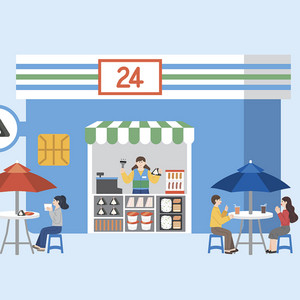
So basically they are beset meals and ready to go boxed meal served in convenience stores and You can imagine like salads, boiled eggs, veggies, lean wheat, wraps or sandwiches, or yogurt as you mentioned.
And also, and there's a quick and varied oden, if you know that, that's a staple in many Japanese -style convenience stores.
It's kind of a hot pot like snacks in the cubicles that you always see in Japanese -style convenience stores.
It's like a compressed fish cake, I think, which is probably the worst English description for food.
Yeah, different types of it.
Different types, that's what we're talking about here.
like rectangle shapes, square shapes on a stick.
And then you will have like tofu, kongjak noodles in white radish and also bamboo roots, suan, or something like that.
Yeah, you'll see these advertisers like low calorie or high protein or balanced nutrition or things like that, right?
To the customer, it looks like a healthy lunch option.
Right, and is it called– guòn dóng zhú, which you mentioned there, yuxuan, And that is a wonderful alternative for our Chinese diet because it's actually warm.
It's hot food. It's not like the salad or Power Bowls or whatever you call them or the sandwiches because they're cold.
And I like my hot water.
Also I want my hot meal.
Yeah, so that's like a really great, hot and low calorie alternative that we were advertised to, but okay.
And who do you think are the key or target customers who are buying these things up?
I would say office workers, right?
Who are headed out, maybe they don't have much time during the day, even for lunch. so they'll pop into a convenience store and get one of those to go meals.
Also, students who are busy, people who might have their weight loss goals, too, might look to these types of meals as as an option, too.
And the appeal for all of those groups, I think, is that they're fast. They're seemingly healthy.
You don't need to cook them by yourself and then you can have them heated up.
If they're not hot already, you can have them heated up in the store.
and oftentimes, you can just eat it right in the store as well.
And these products usually just have clearly labeled ingredients.
And some even list their calorie content, making them a popular choice for these people.
OK, and a lot of these meals are labeled as jian zhuzhan.
So a direct translation from Chinese would be way lost meal.
Oh, they're labeled like that, right.
Yeah, and sometimes it's like that.
and sometimes it's just perceived healthy meals, slash diet meals, and do they actually help people lose weight?
Actually, you know, let's make an example.
No one Netizen bought a convenience store sandwich labeled as 110 grams, only to find out later that it's 150 grams when weighed on a scale, nearly one third heavier than the you know stated amount and that is why some of these convenience store food or your so -called diet food is not that healthy or low calorie because they are offering you more than they actually labeled.
And in another case mentioned on sorry to stop you for one second this is really interesting.
Yeah yeah I can just I can just picture my dad who's who's been through the tougher times in China scratching his head listening to Yu Xun and go hold on young man that sounds like the best thing ever I'm actually getting more for my buck yeah that's like a free meal just landed on my lap and why are people complaining about that?
Yeah well they're complaining about it because of the fact that it is not what the label says it is.
I found this to be fascinating and I didn't know about this.
So food makers don't check every single item's calories.
Instead, they'll weigh groups of products together and if a group weighs enough it passes and if it's too light then they have to fix it.
So to avoid losing money by making batches that are too light, companies will add a little bit extra to each product, and that's why convenience store foods often have more than what's listed on the package.
Because it's safer to give too much than too little.
So the calorie count and the weight on the sticker might not be 100 % accurate because the food manufacturers intentionally add a little bit extra to avoid selling underweight products.
I did not know about that.
And I think we have maybe, without knowing, sort of drummed up enthusiasm for buying up these items because they actually offer a bit more than what you thought you're paying for.
Yeah, which sounds like a great thing.
But again, we're talking diet conscious here, right?
So that's why people might get a little bit upset about that and and they say that it doesn't mean that the label is way way way off but it's also not perfectly precise either.
Especially for things like snacks and pre packaged meals or even drinks where small overfills will add.
Right. Could you provide a bit more information on the hidden calories?
You know when when these are the things that well we thought okay the label looks really clean the ingredients table looks fantastic, but actually there you know these sneaky suckers in there which are like calorie bombs.
Yeah so basically when let's say if you want something healthy today I'm gonna go for the convenience store for a bowl of green salad or a bowl of just you know chicken with broccoli on their eyes.
But of course it sounds very healthy and low calorie but after a detailed breakdown of all of these maybe sandwiches you may discover that even without accounting for the calories in the salad dressing a sandwich labeled as maybe 150 kilo calorie actually contains over 230 kilo calorie while a salad with maybe creamy dressing ends up being 500 plus calories, and maybe different types of dressing can give you even more of your calories intake.
So that means for those rely on convenience store meals, they may be consuming nearly 50 % more calories per meal than they think.
It's so not fair, but yet it also kind of makes sense.
We see, as human beings, we see a label that says low fat and we think woohoo diet not necessarily it just means there's low fat but what about the sugar that's inside right low fat does not equal no sugar, so there's all these other types of tricks if you want to call them tricks or ways to promote products in a healthy way when maybe overall it's not so much yeah and a few weeks back or a couple of months back possibly, we talked about temple foods on this show.
How it's becoming something that is popular among also young people.
And temple and young people sometimes flock to these temples, not only for, you know, the spiritual aspect of things, but for the lean foods that are presented there.
and apparently there are some hidden calorie bombs there too.
Oh yeah! So imagine and as we discussed about it, served in temples are typically vegetarian food and made with simple ingredients like rice paired with a few seasonal fresh vegetables or just soup and noodles and there are no complex seasonings right?
no artificial flavoring it's what you might call a humble honest meal but imagine they they are just staple food and and maybe you are eating a staple food with another staple food which means you're in taking a lot of carb car carbon carbs right so carbohydrates Yes, and then it can maybe transfer to, or just get into more sugar in your body.
Or oil. Oil. Do you know how many calories are in one tablespoon of olive oil?
I have no idea. Olive oil is quite healthy.
It's good for you. But you can't drink it.
I suppose you could.
I don't know. But one tablespoon according to the Internet is 119 calories.
So two tablespoons, that's half a meal almost isn't it in terms of the calorie.
Yeah so calories can come from many different sources and those can add up quite quickly.
Yeah and also it's probably not all that useful if we're completely fixated on the number of calories or the number of, uh, uh, what was the other thing you mentioned just now?
The oils. that the oils, you know, like like, our lives should not be dictated by numbers.
I mean, okay. Well, that's just what I think, but what do you guys think?
How can we keep our weight in check without falling into these traps?
Read the labels as annoying as that can be, and time consuming, and difficult to see.
The labels are so small, and I have to use my smartphone camera, take a picture, and then zoom in on it to see the labels because is a print is so small sometimes, but if you really want to know what's inside the food that you're eating, then that's a good way to go about it.
They say too that when you're trying to eat healthy with these salads and wraps and these lighter meals and you're missing out on proteins and you are missing out on carbs, then it could cause you to eat more because you get hungrier faster.
but again that's a what if situation that's a could possibly maybe situation so yeah I mean I don't know there's tons of diet advice out there but I think the point here is just read the label so you know so you know what's inside my biggest take away from this chat today is that about the overweightness of the packages and stuff, I had no idea about that but it absolutely makes sense from their point of view.
and also maybe be conscious of what you are entaking and use portion control as your primary tool, you know, since most foods are just heavier than labeled as we're discussing in it, a 30 -50 % calorie buffer, and make that in your mind, if it says like 300 kilo calorie estimate as closer to 400 -450, Yeah, make that assumption.
Also, this is always the advice, right?
They say eat slower.
Have you ever heard about this?
that your full 20 minutes before your brain knows your full, you've heard that before.
Right. And I've I thought, oh, is that just a myth?
I looked it up and this is from live science, and this is what they say.
Yeah, it actually does take, on average, 20 minutes for your body to send signals to your brain to indicate that you've had enough to eat, that you're full.
Of course, that's going to depend on your diet and things like that.
Your your typical eating habits, there are other factors.
But just generally speaking the advice is take the time to eat your food chew your food swallow your food slowly And then you'll realize that you're full When you're actually full that actually leads to I think another thing that I read before Stay always stay a little bit hungry of course both And bullish Steve Jobs Both psychologically and physically but now we are talking about it physically So stay a little bit hungry Sounds like good business advice too Yeah no matter if it's after a meal or just before bed It can help your stomach to digest better I'm never gonna do that And burn more of your
fat in your body maybe Not saying it's bad advice, I just can't follow it you build your diet in a healthy way you have to eat something of everything right don't just cut out your grains and carbs or and also protein that's really important and in our Chinese diet sometimes we eat way too many carbs for example I'm gonna reference my dad my dad is like the fourth person on today's round table you get references throughout the show I think he's representative of a lot of older folks in China, maybe particularly Northerners.
OK, my dad treats potatoes as a vegetable.
Potatoes are a vegetable.
OK, I mean, as a leafy.
Wise man. Leafy, a leafy vegetable.
Like he's eating a salad or something.
And I'm like, Dad, no, there's a lot of carbs in there.
And then he'll also have another big bowl of rice.
Mmmm, carbs on carbs.
Yes, those kind of things.
And so I also, we eat some so many like noodles and a lot of these staple foods are so delicious and a lot of like dumplings, fried, all kinds of delicious things that make my mouth water a little bit.
But yeah, you know, just understanding your diet better, I think is going to be really useful for anybody alive and kicking and hope for a very healthy future so I think this is something that we can all work on coming up during the later part of the show let's chat about the simple joy of sunning your duvet and blanket because honestly nothing compares to slipping under covers that smell like sunshine.
Stay tuned. Looking for passion?
How about fiery debate?
Want to hear about current events in China from different perspectives?
Then tune in to Roundtable where East meets West and understanding is the goal.
You're listening to Roundtable with my love He Yang.
I'm joined by Steve Hatherly and Yu Shun.
All right. Quick question.
What do you do with your wet laundry?
hang it up on a rack, or a too air dry?
like most of us do in the northern part of China, where the air's dry and the sun's generous or do you toss it straight into a tumble dryer and let the machine do its thing if you live somewhere with a damper climate.
Now here's the fun fact, not every home in China has a dryer, yep they're still kind of a rare species around here, especially compared to places where dryers are practically part of the home infrastructure.
Please provide us with a quick look at the global penetration of dryers.
Mmm yeah this is from, yeah what a weird what a weird topic, but it's actually really interesting.
This is from a couple of different research firms, Euromonitor and CIICC Global Institute.
In the United States there are approximately 71 dryers per 100 households.
That number is quite high in the U .K., France and Germany.
That goes down to around 40 dryers per 100 households.
Japan even fewer, 29 dryers per 100 households.
And in China, almost nonexistent, only six dryers per 100 households.
In other words, using a dryer or finding a dryer in a Chinese household would be difficult, very difficult thing to do.
Okay, so let's look at those other countries as well as China.
Why are they so common in America, for example, and so not common here?
Yes, in a lot of American communities, drying your clothes outdoors is prohibited.
There are some areas of the country that have clothesline bans and violators might have to pay a fine.
This is from a report from the BBC.
They said that there are rules imposed by community associations like homeowner associations and also landlords that forbid millions and millions and millions of home owners from drying their washing outdoors The claim here is that it's unsightly doesn't look nice right could affect property values If everybody in the community is doing that It's not good for the aesthetic of the community and people just don't want to look at other people's underwear hanging on the clothesline right?
But there are states that are fighting back against that, and now I believe there are a certain number of states that do allow it that from the BBC from 2010 Florida, Utah, Maine, Vermont, Colorado, and then fast forward to 2012 -2013 this is from ABA Journal, 19 states have laws that prevent homeowner associations or other housing entities from banning the use of Clotheslines they call it the right to dry Yes, and also I think that's just based on different style lifestyles and habits, right?
Habits vary around the world and the media reports are saying that many other countries are also not big fans of dryers for example green living journals data shows that dryer usage rates remain very Lowing countries like Russia Brazil and Italy where traditional math is like light drying are still the norm yeah why why is it though that it's so low here in China because you know I get yeah it is quite high in the United States 71 out of 100 households but I would expect around maybe the UK numbers like around 40 per 100 or 50 per 100 because some people will like it some people won't but here
in China it's obviously real it's only like I said it's almost nonexistent why is that the case is it a cost issue a cultural thing or maybe just the simple idea of why pay for something the Sun does for free.
Fair and fair. We have like long used to that kind of habit of hanging our clothes or just duvet and blanket outside of our door and using the sunshine to dry it and also make it has a smell of sunshine.
Also, the mindset of maybe being cost effective clothes dryers consume a lot of electricity which can be quite expensive for when you're paying the electricity right also technical limitations elderly, I mean early dryers were like bulky, noisy, maybe damaged clothes and were expensive and other than that lifestyle habits, Chinese people are used to drying clothes as I said outdoors and believe that naturally dry clothes are healthier and more eco -friendly.
And don't get us wrong, it's not like we have all that space to hang all that stuff outdoors.
Maybe in certain parts of southern China, sometimes people do that or actually in all over the country, sometimes people do that but more commonly, for so many of us who live in apartments in China, then usually you have a balcony and it's an indoor balcony with And that's where you can hang your laundry to dry.
And also in our culture it's a great thing to sun your...
How should I put this?
The batting, the padding, and the stuffing of your comforter, duvet, blanky kind of thing.
And why is that? Okay.
If you put your duvet and your bedding outside.
Yeah, it's without the cover, and then it's been seen as ooh, sun kissed, and we love it.
Yeah, and also you can get rid of all the little mites that might be inside.
You can also dry it fully through without having to worry about any dampness.
Particularly if you're using air conditioning in the summertime, you're trying to dry your inside.
It's just not going to have that same smell and same cleanliness as drying it outside.
And fluffier is always better, of course.
And with that, we're signing off.
Thank you so much, Yuxun and Steve Hathaway, for joining the discussion.
You can always find us on Apple Podcast at Roundtable China.
And please feel free to join discussion by sending a voice memo to Roundtable Podcast at QQ Dotcom.
I'm Hea Young, we'll see you next time.