Sometimes, when we decide to love ourselves, it means that we will be treating ourselves differently than we have ever been treated before.
And that can be isolating.
When a way of existing is no longer serving us, we feel stuck.
We feel like we're going in circles, coming to the same conclusions and always ending up back where we started.
And sometimes it's easier to just accept that reality instead of creating a new one.
And that's what I'm talking about is how isolating sometimes creating a new one feels, and maybe that is why we push it off.
And so this idea of self-love, I feel like sometimes it's a bit premature.
There is some stuff that kind of has to come before that.
I feel like it's not until you sort of stick it through with yourself through ugly dark, inconsistent times that you actually begin to learn what the whole of loving yourself even means.
🎵
Hi everybody and welcome back to Flowering Philosophies.
I am your host Anaya, and today I wanted to chat about how lonely the reality of loving yourself actually can be because nobody told hold me.
The more that I started to heal or move towards my dreams, like we're always talking about, the more isolating it would feel.
And I'm not saying that the result or product of loving yourself is loneliness.
No, not at all whatsoever.
But sometimes The journey of getting there and what we must do, breaking old habits or outgrowing certain relationships or mindsets.
It can be isolating.
On this channel we're always discussing how to level up and to make the most out of our discipline and our awareness and this emotional intelligence journey.
But the reality is, whenever we start to embody these lessons and we actually start putting these things into practice and we start becoming aware of ourselves and what change we want to make and where we want to heal and where we want to create a new, when we start actually going down that path and that journey, it requires sacrifice and hard work and sometimes committing to that it can be lonely, Because maybe nobody else wants to commit in the same way that you are, or it means that you kind of have to do it yourself or do it in a way that's never been done before.
Sometimes, when we decide to love ourselves, it means that we will be treating ourselves differently than we have ever been treated before.
And that can be isolating.
It's very scary to be the first ones to treat ourselves with love or respect.
I want to talk about the whole idea of self-love, because it gets kind of repetitive and it's placed a certain sentiment in my head that I've kind of had to deconstruct and realize that self-love doesn't really mean self-care, and you know talking of ourselves highly.
Of course, like that is part of it, but that really isn't the core of the journey.
And I feel like we got to go through some unpleasant experiences and feelings sometimes in order to develop that love and respect for ourselves, and I feel like the journey kind of gets glamorized and we're all sort of pushed into this idea of self-care and it's supposed to look so nice and relaxing and good, but sometimes it's the opposite of that.
Sometimes, loving yourself and respecting yourself and showing up for yourselves looks like the opposite of getting your toes done or getting a massage.
Like, it's just so much more than that.
Sometimes, when we decide to love ourselves, We are treating ourselves in a way that nobody has ever treated us before, and that is scary and it's new and maybe it's confusing to others and ourselves.
It feels weird to embody love for ourselves if we weren't shown that we were worthy of that in the first place.
Even if we were shown love and compassion and respect, maybe we don't really feel that for ourselves.
But if we were never even given an example of that, if we never had people to look towards when it came to self compassion or a good representation of what love and relationships look like, or if we were never treated with love or respect, or maybe it was shown to us that we weren't really worthy of the highest praise or of respect in general?
It's hard then to give that to ourselves if we were never shown that initially.
It's almost like we're teaching ourselves a whole new skill.
It can be daunting, it can be isolating, it can be confusing.
It's worth it, of course, and I knew that, but nobody told me how lonely and isolating the journey could be diving into the world of bettering ourselves or respecting ourselves or loving ourselves.
It's a courageous act to commit, especially if we have never necessarily experienced that type of love and respect before.
But it is so worth it because it is one that changes our quality and perspective of life forever.
Sometimes the goal isn't to feel necessarily so positive or so negative.
Sometimes the goal is just to have a grounding, neutral place of acceptance, love and respect for ourselves.
And I feel like I finally reached that point where I do feel very positive feelings about myself.
And I get to have those kind of exciting ego moments, of course, like we can all hype ourselves up and have a good time.
But the reason I feel passionate about talking about this is because I've reached kind of a grounding place with it that I feel as though I can always come back to, and I just feel this foundation of love and respect for myself and for my dreams, for my aspirations, and that is something that has taken me a while to achieve.
Being able to consistently come back to that foundation is what has gotten me through life and changes.
Loving and respecting myself at the core of all things, whether i am in a good mood and hyping myself up or whether i'm feeling insecure and terrible, like having that grounding, neutral foundation to come back to is vital and i want to talk to you guys about how i have formed that and the realizations that have brought me to this point.
But, like I said, I'm not saying that the result of loving yourself is loneliness.
In fact, I would say that the more we embrace the journey of learning to love and respect ourselves, the more we attract company that aligns with our healthiest happiest, best selves.
I feel like the more we continue to commit to that path, The more we will find others who align with us.
That community will naturally form.
The more that we continue to commit to the things that we love and the things that bring health and betterment to ourselves.
Even that's the ultimate goal.
So I'm not saying that loving yourself and doing any of these things makes you lonely, but sometimes going through these realizations or making the mistakes that provoke these lessons and these mindsets, or even the will to change, can bring us into a state of isolation for a little bit, if it means that we've outgrown certain things in our lives or if we're just trying to create anew.
I talk so much about having a positive mindset and changing our mind, but whenever we're making all of this change, who is coming along?
Who is coming along with us?
Who's gonna make the change with us?
And not everybody has to.
Like I say, all of our journeys look different and we're doing it together ultimately.
But going on that path of change, sometimes it requires sacrifice and sometimes we outgrow our environments and situations and that can feel isolating.
We talk about how uncomfortable it can be sometimes to cultivate self-discipline or to break out of traditional cycles or mindsets or patterns, and that discipline and that awareness is a form of respect and love to ourselves.
That drive and will to learn those things is literally the reason why you guys are here, why I'm sitting here and talking about these things.
That in itself is a form of self-love, and I think self-love shows up in so many different ways and so many different practices.
When we finally start committing to the work of making the change that we want to see, or when we start reinforcing positive thoughts into our lives, or we start going against the grain of maybe, what we were taught because we're trying to create a new, we're trying to envision our dreams and our lives and the confidence that maybe we were never taught.
Maybe we're taking that uncomfortable step towards self-discipline or towards dismantling insecurities that kept us miserable or kept us in a place that we didn't want to be in.
When we start becoming aware of our jealousy or our pain, these realizations can feel isolating and maybe like we're the only ones going through it, or maybe we're the only ones putting ourselves through it, because who wants to think about these things?
When we start to become aware of maybe, what is weighing us down or what we would like to change, or where we want to feel love for ourselves, when we start to become aware of these things, it starts to become very obvious where that exists in our lives, like where we feel the most insecure, where we feel the most bad about ourselves, where we notice other people are being really mean to themselves.
Like when we start to bring this awareness to our lives, we start realizing where negativity and maybe toxic behaviors exist in our experience, where maybe we were sort of blind to that before because we weren't looking at things through the lens of trying to come back to a place of love and respect for ourselves.
When we start to become free of the things that are weighing us down, it becomes very obvious where we're still being weighed down, what is still holding us down.
It becomes very obvious when we're looking towards change and betterment.
It almost can bring negativity and toxicity to the surface when we start to create positive change or love ourselves.
That realization of you're outgrowing something, or a behavior, or a relationship, a city, a friend group, anything.
When you have that realization that, oh no, why am I not okay with being comfortable with this anymore?
I don't know if you guys have experienced that.
When you actually start moving towards the change that you say that you want and you actually start embodying habits and traits that you've always wanted and you're, you're putting that work and you're putting that effort in and it just makes it obvious where you don't want to be anymore.
It's sad and it's maybe you always felt comfortable and familiar in certain environments and now this change that you are bringing upon yourself because ultimately you are desiring change and you do want change and you do want to feel positively about yourself it's sad sometimes to realize what we were accepting and what we were living in and why maybe we were feeling the ways that we were feeling about ourselves, our lives based on our environment and what we're outgrowing.
I've said this before, but when a way of existing is no longer serving us, we feel stuck.
We feel like we're going in circles, coming to the same conclusions and always ending up back where we started.
And sometimes it's easier to just accept that reality instead of creating a new one.
And that's what I'm talking about is how isolating sometimes creating a new one feels.
And maybe that is why we push it off. at least I know for myself.
I've become aware of how I've consciously kept myself stuck because I am so afraid of loss that comes with change and the idea of sacrifice around change and the idea of change being isolating.
That's why I've avoided it and been scared of it for so long, and would have rather kept myself in the same cycle of sadness over and, over and over again, instead of making a change, because it felt as though I was gonna have to let go of something familiar and that I was going to have to sacrifice the way that I had been living.
And that is true, but it doesn't have to feel scary.
And that's my hope of making this video is that if I had somebody 10 years ago telling me hey, you know okay, you want this thing.
Sometimes it's not always gonna feel amazing and sometimes we are gonna have to be alone or it's gonna be scary, or we're gonna have to give this up or give that up, or we're gonna have to put ourselves through change and it's okay and everyone's doing it and it's uncomfortable.
Don't be scared of that.
If I had somebody telling me that, I feel like...
I'd probably be at a very different point in my life right now, but that's okay.
I'm okay with learning these lessons and being where I am, but I hope to be that reassurance for you guys and myself.
Sometimes it's easier to just keep ourselves stuck in the same cycle instead of creating a new way of life.
What if we could become the thing that we are chasing and create an abundance of whatever we are chasing or whatever we're claiming that we lack in this life and that we need somebody else to give us?
I'd like to take a quick break to thank the sponsor of today's video, Skillshare.
Teaching yourself skills is so vital in this day and age, when we're trying to learn to cater to our creativity and to really hone in on our skills and our talents.
Skillshare is the largest online community for creatives, with thousands of classes led by industry experts across film illustration design, freelance productivity and so much more.
I've told you guys before that Skillshare has helped me take my flower arranging to the next level, and now I am finding myself using Skillshare to improve my calligraphy skills.
And during this Valentine's Day season, I want to write little notes to my friends, to my family, to those who I love and to myself.
I find myself wanting to write my affirmations down, hang them up on my wall and make it look pretty.
With something like Skillshare, we have the freedom to look into whatever it is that we might want to learn more of, and it's just such a great use of time.
And the first 500 people to use my link in the description will receive a one-month free trial of Skillshare.
Get started on Skillshare.
I promise you it is the perfect place to start.
There is such a vast library of so many different classes, courses.
I will be using Skillshare to continue to better my flower arranging, to learn more about calligraphy and whatever else I want to learn this year.
A big thank you to Skillshare for sponsoring today's video.
The first thing that I want to discuss is what does loving yourself even mean?
I feel like I touched on this a little bit, but this idea of sort of this ooey gooey positive self-love like that is amazing and incredible, and if that makes you feel happy and excited to love yourself, then that is the way we should approach it.
But for me, that sentiment has always turned me off of loving myself, because I have felt as though I've needed to feel good about myself.
Like I know that's the goal, but for so long I was like what if you don't love yourself enough to go take a nice pampering bath and do your toes?
Like what if you can't bring yourself to that point?
What if you don't even like spending time with yourself in that way, or you don't see yourself in that regard that you want to pamper yourself?
There's so much that comes before that.
There is a foundation of respect we need to have for ourselves and our lives and our future if we want to have those fun moments of self-care.
And so this idea of self-love, i feel like sometimes it's a bit premature.
There is some stuff that kind of has to come before that.
I feel like it's not until you sort of stick it through with yourself through ugly dark, inconsistent times that you actually begin to learn what the whole of loving yourself even means.
And the beautiful thing about all this is loving yourself means so many things, because there are so many of us.
How many cultures traumas successes, sacrifices and stories make up all of us and all of our lives?
Loving ourselves means something different for every single person, because we come from something different.
We are different.
We have different things that make us up and make us who we are, and different things to discover that will make us the best version of ourselves.
It doesn't look the same for anybody.
We all have unique setbacks and advantages that we don't necessarily get to choose, but we do get to choose what we do with them.
When it comes to self-love, honesty is holding integrity to yourself, to who you are, to what you love.
If you were never encouraged to figure that out or you don't know what that is.
Being honest about that being honest about what you want where you're at.
And being honest with ourselves is not always easy, because it means uncovering painful truths that are there.
Sometimes being honest with ourselves means asking ourselves the questions that maybe we never even wanted answers to in the first place.
Maybe we didn't want to even ask ourselves these questions or think about these things, or think about why we don't love ourselves or what makes us not respect ourselves.
A lot of the time that just stays unanswered, because it is a little too painful to answer sometimes.
Loving ourselves means accepting what we discover through that honesty, no matter how unpleasant.
Like I said, we have a whole video on acceptance that you guys can dive into.
I'll link it below.
But I did want to touch on it because it definitely plays into honesty.
We will never be perfect, and learning to become okay with that, I feel like, is the closest to some sort of perfect that we can ever achieve.
And that is when I have felt the most at peace, is when I realized that I can accept all parts of myself, and that is the true definition of loving myself.
It's not changing myself so that I can become a version that I imagine in my head.
We can change as much as we want and we will change in this life, and we can change things on the outside and the inside whatever, but if we're not coming from a place of love and respect for ourselves as a whole and understanding that yeah, these things can exist.
That's why I'm moving towards this sense of change.
I can accept these parts of me that maybe i don't like so much and maybe that i do want to change, but i can accept them for what they are and i can love them for what they are and i can recognize where they come from and i can embody and own these things as i move on a path towards change and betterment.
That is what i am trying to preach, because any time that i have tried to move towards change out of hatred for myself or out of spite, that only creates so much fuel for so long you can only run on self-hatred until that starts to seep into the changes that you are trying to make in the first place.
It wasn't until i was honest with myself and started to accept the things that I was finding, even if it was ugly and not so pleasant and didn't look like this glamorized version of myself that I wanted to love.
Learning to be honest about all those parts and accept those parts was what actually brought me to a state of respect and love as a whole for myself.
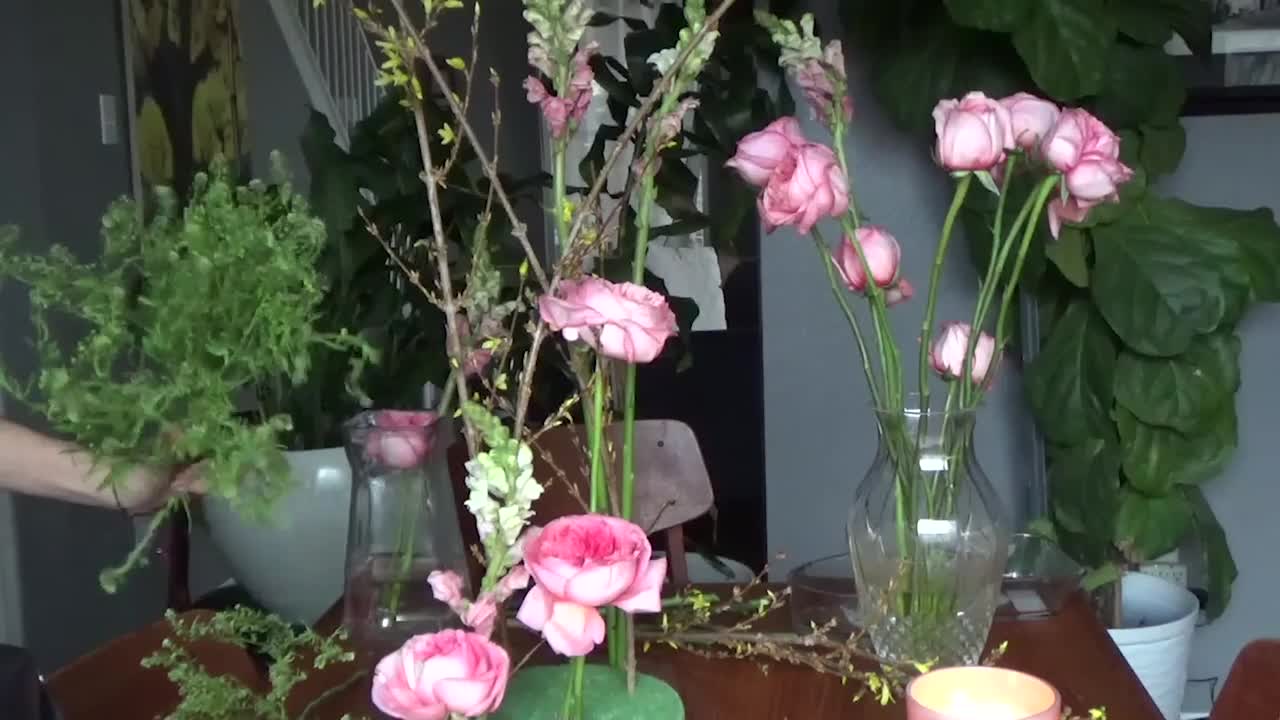
You know, Anais Nin has a quote that I love where she says something like That's the quote that inspired this self-love bouquet.
Smells so good.
I had to be honest about my insecurities and accept how they made me feel, accept where they might have come from and be okay with the fact that they've existed in my life forever, and be okay with the fact that they were going to change now and that I was gonna go on a journey of change and sacrifice.
That's why I'm saying it's so important to develop this acceptance, because that is what's gonna ground us through the process of change and loving ourselves.
I had to be honest about my insecurities, accept how they were making me feel, where I learned them and how I was perpetuating them in my own life.
Sometimes we don't want to see that stuff and we keep ourselves blind to it.
But being real about how are we perpetuating this?
How are we keeping this going?
Who am I allowing in my life?
What stories am I allowing?
What is going down here?
Until I was honest with myself about that, i couldn't come to that place of acceptance fully, no matter how long that took me or no matter how long it is taking me.
All of this is an ongoing journey and process, like accepting these things and inquiring to ourselves and making change.
All of this can it can take a while sometimes to come to terms with these things.
It's all up to us how fast we're able to accept what we must accept and how fast we really want to make change in our lives.
But for me it has taken years and years to just come to certain conclusions and be okay with those conclusions and be okay with moving forward.
Accepting the truth of what we discover, no matter how long it takes, no matter how long it is taking us, is how we get to know ourselves as a whole.
How can you love something you don't even know and accept?
Like i said, that's why i'm really trying to emphasize this holistic journey of loving ourselves.
It's not always pretty.
And once I finally got to know myself through accepting these truths as a wide hole, that was when I was able to see what I really needed, what type of love I was really lacking, and where I could find that usually we try to dilute disguise, numb or fix the things about ourselves that we're not truly willing to accept.
But it isn't until we can find that acceptance for ourselves that we can actually transmute our feelings of fear, dissatisfaction or shame into that true love we are desiring.
It sounds daunting, but the love that I am discussing here is the true unconditional, unwavering type of respect and love for ourselves that is only learned through the excavation of what is keeping us from that state in the first place.
Acceptance versus complacency.
I would like to be clear when we are honest about ourselves, our lives, what we don't like about ourselves, it does not mean that we have to stay stuck in that.
I feel like a lot of the time we think that accepting things means that we just have to accept them and that is the way that they are, but No.
Acceptance is our catalyst for change.
If anything, if we don't accept these truths as they are, they become harder to change and it becomes more difficult to ever transmute those types of feelings if we're not honoring them and accepting them for what they are.
Just because there is part of yourself that you really have shame about does not mean that you have to stay stuck in that.
You get to choose and you can come to terms with these things, even if it takes a long time and it is not pleasant.
You can see them for what they are and learn to be the change that you want to see, and learn what that change even looks like for you or what it even is based on.
Accepting what you are struggling with or what is there will help you realize what change needs to be made, where to even begin.
We get to learn to be that change that we want to see and we get to learn to be that thing that we are craving for or that we're searching for or longing for, or we're taught that we didn't deserve the parent you wish you had, the friends that you wish you had the partner that you're begging god for.
Learn to be those things that you're searching for.
Will all those come in different relationships?
Yes, but only if we can cultivate a sense of it on our own, to know what that looks like, feels like, to know what we want and to have that love within ourselves.
If we're not familiar with that, we can't accept that from the world around us.
Or even if we do get it, it's not gonna be enough.
We need to form that foundation of familiarity when it comes to love and respect that we're searching for.
Sometimes we're constantly searching for something because we're okay with perpetuating the lack of not having it, of living in the same way that we did yesterday, or ignoring our heart's truest desires, swallowing our self-respect down over and over and over again, or settling for less.
There are things that we are okay with doing, but we're not okay with the outcome.
It really goes back to what I was saying before.
People say you have to love yourself enough to make these changes or to do these things.
But what if you're not even there yet?
We have to form that foundation of self-love, sometimes in order to make the changes or go through the things that we want to in life.
There have been some very scary decisions that I have not wanted to make for a long time.
Even getting back into YouTube was one of them.
Things that I did not want to do, because I was scared and I admitted to myself I don't think that i love myself enough yet, or i don't think i have enough confidence in myself, i don't think i respect myself enough yet to make this decision, and that's okay.
That's why i'm saying let's be honest with where we're at, because a few years ago i i remember really having that thought in my mind like i don't respect myself enough yet to make this decision.
What could i do to form that self-respect so that i could make those difficult decisions?
That's why this awareness and this honesty with ourselves is so important, because it gives us what we need in order to move forward.
If we know that we don't even respect ourselves or love ourselves enough to do what is right?
How can we start to gain and cultivate that love and respect for ourselves and bring more of that into our lives so that we we can make those difficult decisions or we can continue to step out of our comfort zones and know that we have something to come back to?
When we don't have that foundation of respect and love for ourselves, we are okay with keeping ourselves in a cycle where we're perpetuating the things that we don't want, where we're perpetuating the lack of love or respect.
Acceptance towards where we're at can be painful, but it grants us that awareness.
And awareness is a tool that not all of us use in this life because, like acceptance, it means coming to terms with the unpleasant sometimes.
Always take my advice with a grain of salt what resonates with you, because I have friends that struggle with OCD and sometimes being so aware of how you're always feeling like sometimes that can create a bit of a mess and I've noticed that going on this journey of healing and self-love and being aware of myself, it really, really hurts sometimes.
It hurts to be aware of your behaviors in the midst of being around others that are not being aware of theirs, and being around destructive forces and people and behaviors that you're trying to heal yourself from.
It's not easy sometimes to hold that awareness.
A lot of the time, ignorance is bliss.
That's why that saying exists.
We don't want to be aware of what is hurting us or what is holding us back or how we feel in certain environments, because that means that change is on the horizon and necessary.
But, like I'm saying, even in the midst of change and that discomfort, if we have something to ground ourselves in and anchor ourselves in, we will be okay.
Even when you're holding awareness and you don't like what you're seeing, you don't like what you're being aware of, whether that's within you, within others.
I understand it's difficult sometimes to hold that awareness and to keep holding it.
I promise you, even if it is making you a little miserable right now, if you're holding that awareness with the intention of love and respect and betterment for yourself, for your life, it is worth it.
I talk a lot in my poetry about how clinging to my awareness sometimes feels as though it's ripping me straight through the night, or it's ripping me through a million different realizations and feelings and lessons, holding onto my awareness.
But it's worth it because it's taking me through it, even if it's painful.
Having that awareness, I get to learn what I need to learn and I get to see what I need to see, and it helps me form a different perspective that I need if I want to change my life.
Now I want to chat with you guys about raising the child in me.
There is a song that many of you probably know, Mythological Beauty by Big Thief.
I recommend that whole album.
Incredible lyricism.
But in Mythological Beauty she says there is a child inside you who is trying to raise a child in me.
And the reason that lyric came to my mind when I was writing all of this is because that is inevitably what happens, no matter how much healing and loving ourselves and everything.
When we are intermeshing our brains and bodies and hearts with somebody else, their inner child is also interacting with ours and sometimes, if we are not taking care of ourselves, we want that care from somebody else, but maybe they're also trying to take care of their inner child.
So then it's like two children almost trying to take care of each other in a relationship.
That's something that i have experienced.
That's something that i think many people go through is like sometimes there are these unhealed parts of ourselves that need to be taken care of and we're begging for that from somebody else who's trying to do the same thing for themselves or maybe hasn't done the same thing for themselves.
If you're inner child didn't get that care that it needed or it needs more, you're learning how to love yourself in those ways.
That's not always something that we learn to do when we're like teenagers or when we're young and when we are forming those early relationships, whether they be friendships, romantic anything.
And I think, a lot of the time we believe that we can get these things from others and that we can get these things from relationships and from people and, Like I said, of course that exists and can add on to our experience of self-love.
But trying to source from others the foundation of what we need is ultimately always gonna leave us in a state of lack.
I don't wanna lose you when I start talking about inner child and all that stuff, because I know that a lot of people You know don't really think about that.
And it can all kind of sound a bit metaphysical, because when you're thinking about your inner child you're having to kind of imagine a smaller version of yourselves.
If that's something that's difficult for you or you don't really resonate or connect with that idea, don't think about it as like just little version of you.
If that helps you envision it, then that's great.
But think about how you actually feel. and what is actually existing in your body right now.
I can promise you a lot of that is leftover, stored feelings from the past, and that's kind of what I'm trying to reference here is like our inner child is the part of ourselves that was formed early on that maybe needs more right now, or is maybe the reason that we're finding ourselves in a state of dissatisfaction or we feel hurt or bitter or negative.
It could be that that more early formation in ourselves needs something and we need to listen to it, and that's what i'm referencing here.
And it has been such a vital, important part of my self-love journey that I was honestly kind of late to discovering because I didn't know.
I didn't know that there was part of me that didn't get what it needed and was desiring certain things.
It takes a lot of honesty and acceptance to get to that point.
Realizing that there was still a child in me that needed care and I wanted so badly for somebody else to take care of it.
But I had to learn how to do that.
And if we weren't familiar with a sense of protection and compassion growing up, it is really hard to exist self sufficiently.
It's not really easy to feel as though we can be independent and just yeah, take relationships as the cherry on top and not need those things, because protection and compassion make up a lot of feeling safe and secure within ourselves.
Traditionally, we are kind of meant to have that protection and that security from a father figure and to have that compassion and nurturing from a mother figure, and that looks different for literally every single person.
What we were given, what we weren't.
And even if we did have equal amounts of that, maybe we didn't necessarily learn how to apply that to ourselves and integrate that into how we feel in our own bodies and our minds.
And it's up to us to either pull from those examples that we saw and bring them in or to cultivate and find them on our own, which is a very daunting journey.
And if you're on that journey, you are, you're not alone.
It's very normal to want to find that sense of security and safety and compassion and grounding in the world around us and in other people.
That is a survival tactic that we have.
Sometimes we believe that it will be provided solely through a romantic relationship or through intimacy or authority or friendship community.
And, like I said, it can come in all of these forms, can receive healthy forms of protection and compassion in all of these ways.
But I've noticed that we come across those healthy forms a lot more and resonate with them differently, when we are already familiar with these basic pillars of love for ourself.
If that child in us wasn't shown love in the way that we're searching for, How can we show it that now?
And has anybody ever said that it's easy to raise a child?
Absolutely not.
Nobody has ever said that.
So sometimes, listening to that inner child and trying to figure that out through help, through therapy, through meditation, through listening, through journaling, through asking ourselves questions, it's not easy.
Sometimes we're gonna get a lot of different answers.
Sometimes we're gonna get answers we don't like.
Sometimes we're gonna come to some painful conclusions or it's gonna take a while.
But how can we remind that version of us who needed that compassion, that love, that stability, that we are here to provide it that, and we're here to learn what it needs?
And that sort of leads me into loving others and the misconception of self-love versus loving others.
You hear it all the time.
You can't love someone else unless you love yourself.
What really bothers me is, I feel like self-love is just this, like repetitive, thrown out term that is often seen as something sort of self indulgent or self obsessed.
And I think the word selfish has such a negative connotation because we've attached this meaning that you can't give to others while also giving to yourself.
It seemed to just be very either or, but it really bothers me, because isn't it self indulgent to give and give to others and then not give anything to yourself and then expect others to provide that for you and then resent them for not giving it to you and then stay in a self-perpetuated cycle of dissatisfaction like that is?
What seems sort of selfish and negative to me is giving and giving and giving, having nothing left and then demanding and expecting it from things outside of us.
Giving back to ourselves.
However that may look for each of us, we are gaining more of ourselves to be able to give to others.
It is negative to not be giving ourselves those forms of compassion and care, because then we have less to offer others.
By giving back to ourselves, however that might look for each of us.
Like I said, it's different for all of us but by going on that journey of listening to ourselves, being honest with ourselves, just having that intention of love and respect for ourselves, we are gaining more of ourselves to be able to give to others and to be able to share with others.
And if we just have a constant flow of that, then we don't have to worry about not being able to give to others.
If anything, it is more and more abundance if we are able to give that to ourselves.
If we are empty.
I could not sit here right now and vocalize these vulnerable thoughts and emotions with the intention to try and help someone else, if I did not give myself the care necessary to process them.
If I was not doubling down in my self-love and respect and care and tuning into what I need, I couldn't sit here and share myself because there wouldn't be anything to give.
Hi guys.
The second half of my video, I was getting into some topics that I'm very passionate about and that are really important to the topic of loving yourself, but This character right here he decided to put his face right up in my tripod and then knock it over to where the camera fell on the ground.
The screen flipped backwards and the file of me speaking throughout the rest of the video got corrupted in the accident of the camera falling to the ground so haphazardly.
So I spent all day trying to recover this corrupted file so we could have the second half of the video done but alas, nothing worked.
I ran it through multiple softwares.
I did everything I could in my own knowledge newfound knowledge and power to try to recover it, and I couldn't.
And it makes me so mad and sad because I really enjoyed the second half of what I was saying, but I think I'm just taking it as a sign to continue this conversation in another way.
There's still a lot that I have left to say about loving yourself, and I do not want to cut this conversation short, because I think so much goes into this and it is a very complex topic.
I have a lot to say and I would love to continue the conversation with you guys.
I would like to talk about it.
I would like to answer your questions and have a real discussion instead of just me speaking.
I am going to discuss the topics that I was talking about in the video that we no longer have access to plus more, and chat with you guys.
Answer questions about this topic on the Patreon.
This is not a ploy to try to get you to join the Patreon.
This is me genuinely wanting to continue this conversation, but thinking maybe I could take this opportunity to do something a bit more interactive with you guys.
So I'm gonna be hosting a live discussion on this topic and I am gonna talk about the things that were supposed to be in the video but are not anymore because of this corrupted file.
So I'm going to be talking about those topics.
And I am going to be answering your questions around this.
And I just think it's a good time to talk about self love and what we can do to really ground ourselves in our confidence and that foundation of support for ourselves.
Um, especially right now, in this state of the world, it's more important than ever to feel peaceful and happy within our own presence, and it's something that has taken me a long time to learn how to do, and it's something i'm obviously very passionate about, as you can see from what we've already discussed, so i would love to continue this conversation with you on this date.
At this time, I will be hosting a live discussion to finish this conversation, as it was meant to be finished before this little monster ruined it for us.
Just kidding.
He gave us a different plan.
He gave us a bit of a different structure to have this conversation, I guess.
We've made amends.
I was really mad at him for a while when I was trying to recover the file, but maybe he is trying to get this patreon up and moving, so i would love if you guys could join me there, and i'm very, very excited to talk to you in real life.
I want to do this with multiple topics.
This one is starting us out, so i can't wait to see you at this day, at this time on the patreon, and if you want any more details, follow me on instagram.
I'll be reminding you and keeping you updated on the discussion, and i'm so happy that we had part of this chat, and also thank you for joining me in making this arrangement.
I hope that you are having a wonderful valentine's day with yourself, with your friends, with your cats hopefully they're not knocking your camera over um with whoever it is that you love and yourself.
I hope that you're having a loving day for yourself and i cannot wait to talk to you very, very soon.
Thank you guys, love you.
Thank you for watching.