
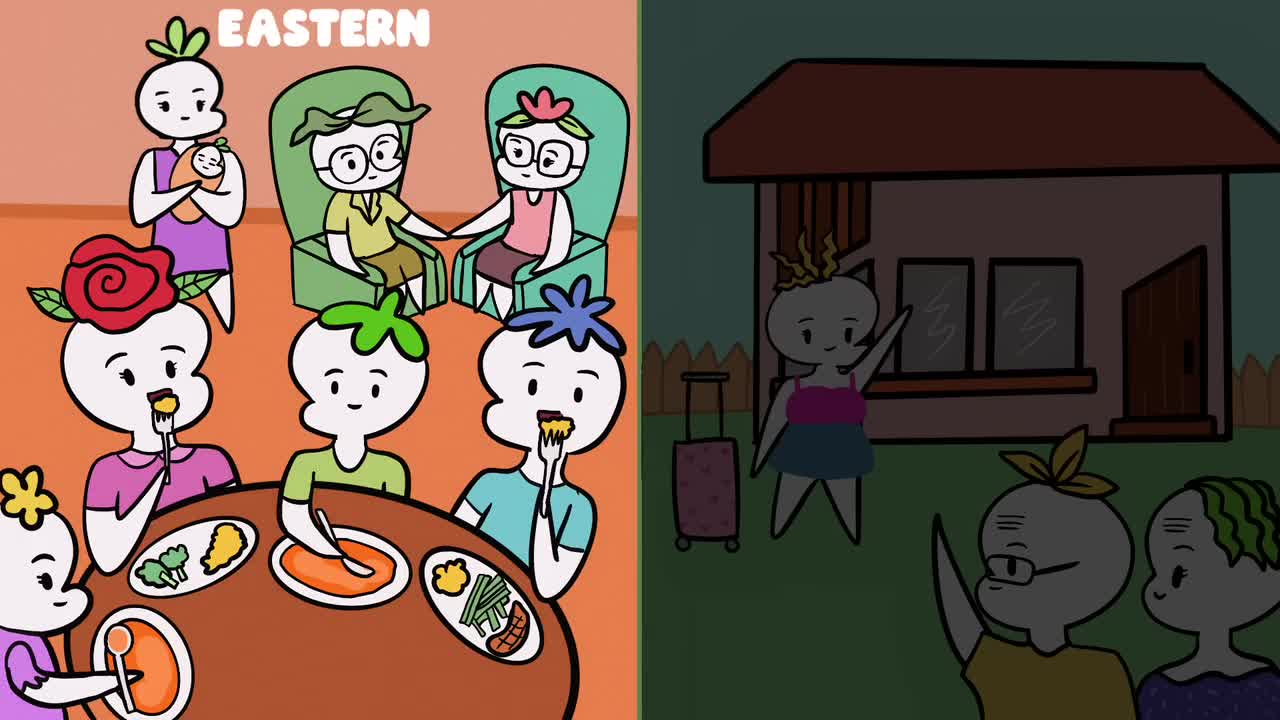
[Beyond the Cage: Redefining Love and Boundaries with Your Parents]-[Why Loving Your Parents Still Hurts (And You Don’t Know Why)]
📋 Summary
Beyond the Cage: Redefining Love and Boundaries with Your Parents
For many, the mandate to "love your parents" is a sacred foundation of life. However, when this love transforms from a "warm embrace" into a "cage," it demands a critical re-evaluation. This discussion explores the reality of enmeshed parent-child relationships, where the cost of devotion is one's own mental health and identity.
The Anatomy of Unhealthy Love
Loving your parents is not inherently problematic; the issue arises when the relationship becomes an "unhealthy love"—a transaction where you are "always giving but the account is never replenished." This imbalance often manifests in four distinct patterns:
1. Parentification
Many children are forced into the role of "emotional caretaker" for their parents. You are handed an "adult's toolkit" to manage their feelings, finances, or emotional crises. Like the dynamic seen in Gilmore Girls, you become the "mature peacekeeping adult in the room," effectively losing the freedom to simply be a child.
2. Boundaries as Suggestions
In an enmeshed relationship, your personal limits are ignored. Whether it is late-night calls or financial demands, your attempts to set boundaries are met with "guilt trips." When you are made to feel like a "bad, selfish child" for asserting space, you learn the damaging lesson that "your needs don't matter."
3. Identity as a Reflection
If your career, partners, and hobbies must strictly meet parental approval, you are living as a "reflection of them." Much like the struggle of Lizzie McGuire, your life becomes a "mirror" held up by your parents, leaving you without a clear sense of self beyond their validation.
4. Guilt as a Native Language
When love comes with a "receipt" that can be cashed in for obedience, guilt becomes your primary emotion. You feel guilty for success, happiness, and even for "simply existing." You begin to view your life as a "debt you can never repay."
The Path to Reclamation
Moving toward a healthier relationship does not require total abandonment, but rather a shift from sacrifice to balance. This process involves four vital steps:
- Grieve the Loss: Acknowledge the childhood you did not have. Recognizing the loss of the parent you wished for is not a "betrayal"; it is the essential first step toward healing.
- Quit the Role: Your job is not to be an "emotional caretaker." You must grant yourself permission to prioritize your own mental health. You are "not responsible for their feelings."
- Establish Rigid Boundaries: A boundary is not a request; it is a rule. Stop asking for permission and start enforcing your limits—for example, by choosing not to answer the phone after a certain hour. Though they may push back, "every time you hold a boundary, you're telling yourself, I matter."
- Build a Chosen Family: Surround yourself with people who offer "unconditional love," those who do not require you to "shrink yourself" to fit their expectations.
Conclusion: From Subscription to Autonomy
Transitioning from an "enmeshed child to an autonomous child" is a courageous journey. As the podcast aptly puts it, you have moved past the "free trial for the My Parents Dream software." Now, you have the agency to decide whether to uninstall those old expectations or pay for a "premium version" where you get to choose the features of your own life.
Ultimately, this is not about hatred or blame; it is about "honoring them without dishonoring you." By adapting to the modern reality—where the "cost of existing" is high and personal survival is a priority—both parents and children can evolve. Healthy love is not defined by the weight of your sacrifice, but by the authenticity of your own life.
Deep Learning with ListenLeap


