
[Casual English Idioms and Humorous Linguistic Insights]-[a little VARIETY and Vocabulary]
📋 Summary
Exploring Casual English: Idioms, Humor, and Linguistic Nuance
This podcast episode serves as an engaging and casual English language lesson, focusing on specific idiomatic phrases and vocabulary while weaving in humor to make the learning process more memorable. The host breaks down everyday expressions that are essential for natural-sounding communication.
1. Delegating with Ease: "I'll leave you to it"
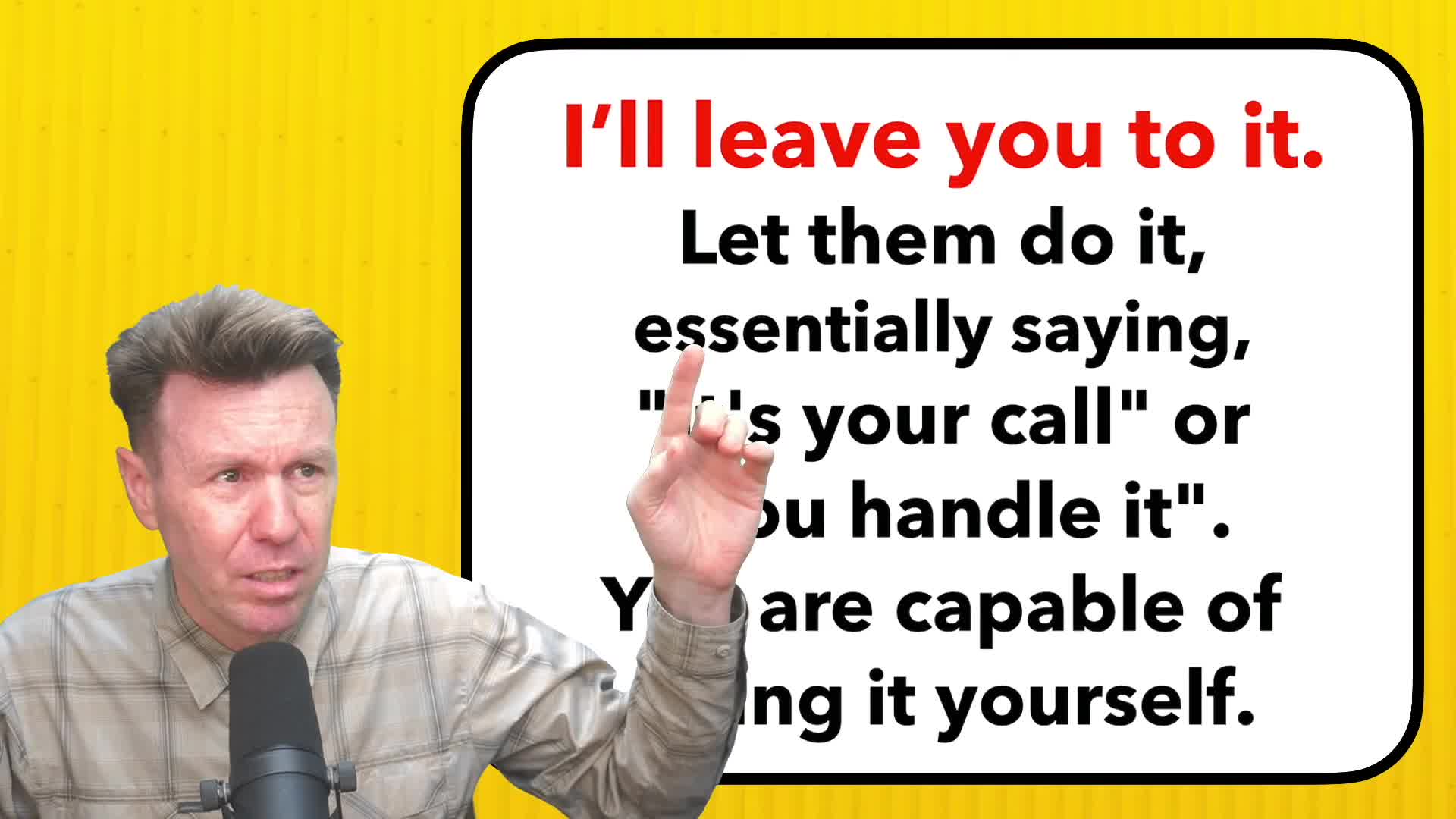
The phrase "I'll leave you to it" is introduced as a polite way to step back from a situation. It functions as a form of delegation, signaling to the other person that they are now in charge or responsible for the task at hand. The host explains that it is essentially saying, "It's your call" or "You handle it," implying that the individual is capable of managing the situation independently.
This phrase is humorously applied to a scenario involving Artificial Intelligence (AI). When AI promises to write posts and generate pictures, humans can jokingly say, "We'll leave you to it then," effectively using the phrase to relinquish control to the technology, thereby "freeing" themselves from social media management.
2. Deep Assessment: "Take a good hard look"
Moving into more descriptive vocabulary, the host discusses the phrase "take a good hard look" (or "take a long, hard look"). This idiom means to examine something closely, carefully, and critically. It implies a "deep, honest assessment" rather than a "casual glance."
- Scrutinize: The host explicitly defines this as the act of examining a situation or object to find flaws or opportunities for improvement.
- Application: The phrase is often used when making major life decisions or evaluating professional environments, such as "taking a long, hard look at the company culture" before accepting a job to ensure a good fit. It encourages the listener to "stop, think deeply, and scrutinize the situation."
3. Endless Discourse: "Go on and on about it"
To describe someone who speaks at excessive length, the podcast introduces the phrase "go on and on about it." This idiom can be used in two distinct ways:
- Tedious talking: Describing someone who talks without stopping about a specific, often boring subject.
- Demonstrating expertise: Describing someone who is so knowledgeable about a topic that they could talk about it endlessly.
The host uses a classic joke to illustrate this: "Never discuss infinity with a mathematician; they can go on and on about it forever." The humor lies in the double meaning of "infinity"—a mathematical concept that literally goes on forever, and the mathematician's tendency to lecture at length.
4. Cultural Trivia and Final Thoughts
The episode concludes with a fascinating piece of trivia about crows: they are known to remember the faces of those who have "wronged" them—meaning someone who has done something bad or mean to them. This serves as a final vocabulary point, teaching the word "wronged" as a way to describe being treated unfairly.
By blending these idioms with jokes and real-world examples, the podcast highlights that learning English is not just about memorizing definitions, but about understanding the social contexts and humor that make a language come alive.

Deep Learning with ListenLeap


