I'm Aisha Roscoe and you're listening to The Sunday Story, where we go beyond the news to bring you one big story.
Today, we're going to slow it down.
Sometimes life can feel nonstop.
If it's not one thing, it's another.
But whenever I get a bit of quiet I'll try and, you know, maybe do some coloring by numbers, or I'll pick up a book.
Recently I read a novel called Ruth and it stuck with me because of the questions it posed about the way we live.
The novel was written by Kate Riley, who drew from her own experiences living for a time in a Christian commune.
It was a place where individualism was sacrificed for the needs of the community and the greater good.
Now, that is far from what I personally desire.
But I was so intrigued because Kate, as a young woman, went against that societal push towards personal achievement and instead went in, like the direct opposite direction, and sought out this quiet life, one without a lot of thrills and distractions.
And it offered her a sense of purpose, meaning, and peace, something she hadn't found anywhere else.
And it was some of the happiest time of my life.
Kate grew up in New York City and while in college she found herself asking big questions about her role in the world.
I was preoccupied with being a good person and I studied philosophy in college and I did not find any answers.
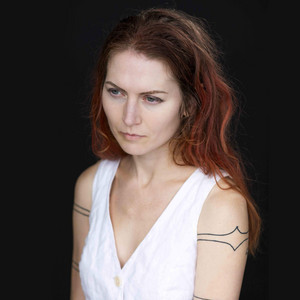
I recently sat down with Kate Riley to talk about her story and what led her to write the novel.
Now, of course, the title character of the book, Ruth, is not Kate.
The character Ruth was born in 1963 and grew up inside a Christian commune.
But the fictional woman seemed like a vessel that allowed Kate to explore her own feelings about a slower and more intentional life.
You're listening to The Sunday Story.
Stay with us.
This message comes from BetterHelp.
Instead, get guidance from a licensed therapist online with BetterHelp.
Visit BetterHelp.com for 10% off your first month.
And all plans include high-speed data, unlimited talk and text, and nationwide coverage.
See for yourself at mintmobile.com slash switch.
This message comes from Warby Parker.
What makes a great pair of glasses at Warby Parker?
It's all the invisible extras without the extra cost, like free adjustments for life.
Find your pair at warbyparker.com or visit one of their hundreds of stores around the country.
New customer offer for first three months only.
Then full price plan options available.
Taxes and fees extra.
See Mint Mobile for details.
We're back with the Sunday story.
I'm talking with Kate Riley.
Welcome to the program.
Thank you so much.
So tell us about this community that Ruth is born into.
What do they believe?
So there, the community is in the peace church tradition, which would be the Amish, the Friends.
It's a group that came from Europe.
They were persecuted by the Catholics because they didn't believe in infant baptism.
They thought that everybody who wanted to be a Christian should make that decision as an adult.
And so that was a hot take.
Back in the day.
Back in the day.
Yeah, it's a big deal.
Yeah.
Yes.
Yeah.
So they don't have any private property.
They share everything in common.
They don't have any official hierarchy.
Like you, come to decision through consensus and prayer rather than voting, or somebody is officially the boss.
It's sort of like summer camp your whole life.
Like when you get to share all your appliances or get to have to share your appliances with your closest neighbors.
You don't have quite as much to worry about.
Except you got a lot more like community negotiation to do to make sure people are getting what they want when they want it.
What is it like for Ruth in particular in this community when she's growing up?
She is very curious.
She is kind of questioning.
She has a lot of thoughts.
She's trying to figure things out.
It is in a lot of ways based on my experience in a community like that.
And I I'm a very inquisitive person, like often to my detriment, but like just wanting to know how things work, wanting to know what's going on outside and inside and not knowing whether that curiosity is itself something kind of a bad thing.
Like, should I just be content with the information I'm given?
Because a lot of people seem really good with that.
Like, that seems to satisfy a lot of people.
And what's wrong with me that I want to know everything about everything?
That was something that I felt constantly.
I didn't grow up in a the information of having access to all sorts of internet.
But I wanted to explore what it would be like if you didn't come from a place of total access but had that same drive to see the world and know what people were thinking, and know what the rules were in other places or why the rules were the rules.
All that stuff is so interesting to me.
I hate to do this to an author because...
You know it's not that Ruth is you, but do you feel like is Ruth kind of your exploration of some of your own thoughts?
Yeah.
I mean it's.
It's real weird to know that basically a slice of my brain is now being sold as fiction.
Yeah.
Yeah, a lot of her interior life is based on my own and my own worries about being bad or worries about why do I feel different, or why is something that seems so easy for other people like really tough for me.
Like, all those things were based on my experience, but I definitely was not the only person struggling with any of those questions there.
And so Ruth is inspired by an experience you had after dropping out of college.
You joined a community like this.
So what what happened there?
Like, how did you end up in joining the community and how long did you stay and all of that?
It was the kind of thing where I knew about this community.
I met a few young people who lived there, and it was so intriguing to me.
Why was it intriguing to you?
Like, as a young person, you're in college, you're like, look at those people over there.
What made you go?
That looks very interesting.
I want to see what that's about.
I was.
So I grew up in New York City and was exposed to everything in the whole world from basically day one.
And I think it was that...
I mean, I was preoccupied with being a good person and I studied philosophy in college and I did not find any answers, or any that like seemed to track in real life.
And so, when I left college, it was because, like I don't – this is not – I am not finding the answers that I'm looking for.
And when I met the kids from this community –
To see people who seemed so sincerely kind and thoughtful and hardworking in a way that wasn't – that I couldn't twist into.
Well, they were just naive, or they were just like deluded.
Like, they were smart and engaged.
And it was like the first time I'd seen a group of young people specifically who seemed –
To be able to both like talk and act on moral beliefs.
But they just happen to exist in this weird cloistered place that the only way to learn about it is to go there and do it.
Like I can't get this information remotely.
I have to go and try it for myself.
And it was terrifying.
Like I would go and visit for a weekend.
I'd like go and stay in one of their communities.
And just 48 hours of being there was like at once so impressive and overwhelming just to see that like a totally different way of life was available.
Like you could live in a world where, like kids did not encounter cash or screens until they were 18 years old.
If then that was not a part of your life.
You know, life was built around the needs of the sort of oldest and youngest parents, people like just everything was done with so much thought and I would be like overwhelmed with how great it was, but also, like I am used to so much time alone, I'm such an introvert.
Just the sort of the change in being around people every single waking hour and being like available, like having intense conversations for most of that time, or being like like genuinely present rather than sort of like dissociatively, like playing games on your phone was it's just a huge mental load.
And so I knew I knew that, like going there would be a lot more of that.
I mean like a lot more of just like struggling to stay present and not burn out on the kind of attention and honesty that was demanded in every interaction.
But I was like, if I don't at least try this, what a hypocrite will I be to like return to my life and like complain about capitalism and complain about like how nothing is designed with actual human needs in mind.
Like...
I knew that I would feel like just such a hypocrite if I didn't try it seriously, knowing that it existed, knowing that I could go there and try it.
So you tried it.
How long were you there?
I was there all told.
About a year of living in that community.
And it was some of the happiest time of my life.
Like I met so many like just fully realized people.
Like I think a lot about how, before I went, I was so nervous about having to like give up things that seemed so essential to my sense of myself.
Because I did feel like who I am is really just like a list of the things that I've consumed and like the choices I make about how I look.
And to go there and realize that I couldn't make a reference to The Office or some book that I thought was funny or like none of that had any currency.
You don't have—I mean, everybody wears the same thing.
You don't use— computers, most of the time the music that you hear is like the songs that you are singing together, that all those things that had seemed so essential to my sense of self were just like, like accessories.
But that i was the person that i was, the person that anybody is is way deeper than the shows and bands that they list on their whatever like facebook profile.
I feel like my teenage years especially, were defined by this feeling of just being like optimistically obsessed with things, with like people or places, or like you know bands, or like looking a certain way.
And it is a real fun way to like drag yourself through.
Time is like to keep looking to like this new person who might have all the answers, or this new version of yourself that's going to be really cool and confident.
But yeah.
Having just done that over and over, you're always still stuck in you.
I'm just trying to learn that, as briefly, exciting as new things can be, that it's probably going to be more of the same.
So maybe learn to learn to be okay with where you are and who you're with and sort of your immediate surroundings, rather than hoping that the change is going to come from like some external novelty.
That it will be internal.
I mean, there is a truth.
There is a, I mean well, like I know the eternal truth, but this is, you know, I do believe I should say is that like yes, there is a cost to going after what you want.
There's a cost to saying well, I got this right here and I'm going to stay right here and hold on to it.
But a lot of people.
If they just stay right there and hold on to that thing that's stable, they become resentful.
Yeah, yeah.
That's the cost, right?
Because you're like, I could have went over there.
And sometimes there's a gift to go and I went over there and shot after that thing that was wild.
It blew up in my face, but I did what I wanted to do.
You know?
Because you can have peace with that, too.
You could be like...
I did it.
It was what I wanted.
It didn't work out, but I did it.
And so I appreciate that I did what I wanted to do.
Absolutely.
But it does seem like with Ruth in that community, it seems like she really struggles with her life.
Right.
Because.
Because she is an individual in this communal place.
She's still having trouble with her identity.
I think because in the world that she lives in, in that community...
Nothing that you can do in that world is valuable beyond its ability to communicate love for the people around you.
Like there's just no point in doing something that isn't going to.
It's some way like take care of your family and your community.
And so I think she would like somebody in that position would have very little in the way of like role models of people who did something that was truly like what would qualify as like a passion project or like a selfish like.
This is this is my symphony that I needed to, you know, hole up for a year to write.
Or this is my novel that I was.
You know, I couldn't do a normal job for a year because I had to work on my novel, like that.
Those kind of pursuits there aren't really.
Maybe that's like the real downfall of a community like that is.
You can't.
You can't do something truly selfish, even if it's going to yield long-term something like art.
Ruth doesn't seem all that happy for much of her life.
Does that matter, the personal happiness of Ruth?
I mean, aside from the time when I lived in that community, I have basically been told—
From from all sides, like do what makes you happy like that.
That is.
That is the like resounding message that I've grown up with is like your happiness is of prime importance and whatever you need to do to find it is like the right thing to do.
So I don't I don't think that like living in community is an absolute answer to happiness.
I think there's got to be some, like, healthy middle ground.
That is also a way to get lost in a hall of mirrors and be really unhappy in that way.
I mean, I think something that I heard when I was living there, something that I heard from like lifetime members, something that I saw and something I absolutely believe, is like no particular lifestyle is ever going to spare you life.
The basic difficulty of being a human being, like nothing like that, that of existing because it is hard to exist.
There's nowhere you're gonna find that where you don't like, as long as you love things in the world, you are gonna be hurt in the world, and that doesn't I.
Yeah, I don't think there's a place you could find where that's not the case.
You know, like no marriage is easy to No relationship with your children is 100 good, no matter where you are.
And there are definitely systems that I think make it more humane or more fair.
But I think a lot of the things that that character and I struggle with are things that would be struggles anyway.
As long as you are conscious.
I mean, yeah, that's about having a brain rather than where that brain happens to be.
So you don't think it's about the community.
That in and of itself is not the struggle.
Your life can be your life.
And this book is not arguing that, being in the community, your life is somehow diminished because you don't have the absolute freedom.
Yeah, I absolutely believe that.
Like I think that if those things distress you in fiction, like just look at the ways that those exist.
Like I think that the idea that we've got it figured out in regular life and that like our versions of like freedom and romance and family and like work fulfillment yeah, that we, that we we're really killing it, we're knocking it out like yeah, now that you say it, now that you bring it up, There may be something to this.
Where you say that community was?
I mean, no, but that's a very different way of looking at things.
I got to ask you, on the book jacket under your author photo, it says this is your last book.
What?
Why?
I got to set the bar real low.
I got to.
It is so nerve wracking to me that anyone would expect more.
So if I do, if I manage to achieve anything after this, it will be a nice surprise.
OK, OK.
That's a way to look at it.
Kate Riley, author of Ruth, her first and maybe not her last book.
Thank you so much for joining us.
Thank you so much, Aisha.
This episode of The Sunday Story was produced by Justine Yan and edited by Jenny Schmidt.
It was engineered by Kwesi Lee.
The original interview was produced by Samantha Balaban and edited by Melissa Gray.
The Sunday Story team also includes Andrew Mambo and Liana Simstrom.
Our executive producer is Irene Noguchi.
I'm Ayesha Roscoe.
Up first, we'll be back tomorrow with all the news you need to start your week.
Until then, have a great rest of your weekend.
This message comes from NetSuite.
What does the future hold for business?
Can someone invent a crystal ball?
Until then, over 42000 businesses have future proved their business with NetSuite by Oracle, the number one cloud ERP, bringing accounting, financial management, inventory and HR into one platform.
With real-time insights and forecasting, you're able to peer into the future and seize new opportunities.
Download the CFO's Guide to AI and Machine Learning for free at netsuite.com.
This message comes from Lisa.
Lisa mattresses are meticulously designed and assembled in the USA for exceptional quality, and each mattress is designed with specific sleep positions and feel preferences in mind.
Plus, they back it all up with free shipping, easy returns, and a 100-night sleep trial.
Visit Lisa.com for 25% off mattresses, plus get an extra $50 off with promo code NPR.
That's L-E-E-S-A dot com, promo code NPR.
This comes from NPR sponsor, Sierra.
How businesses connect with customers defines their brand.
Sierra is the platform for building better, more human customer experiences with AI.
No stock answers, no halt music, just real solutions fast.
Visit Sierra.ai to learn more.