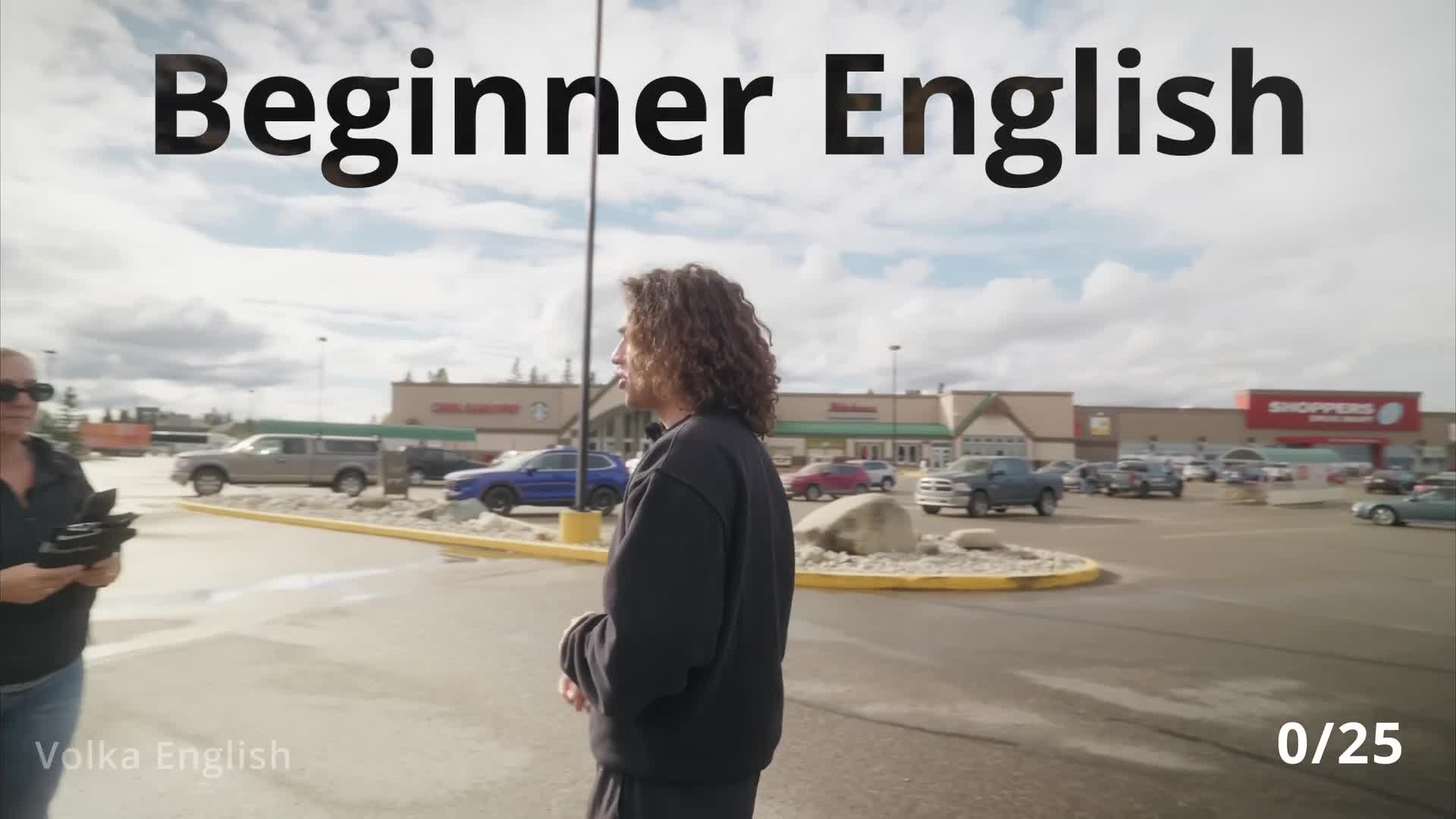
welcome guys today we are learning beginner english at the grocery store we're in hinton today home of the first frees and bros in canada and it's one of the largest independently owned grocery store chains in canada and we're going to do our grocery shopping here for the week so start the word count and let's go right now we're in the vegetable and fresh produce area so this is all fresh produce these are watermelons we take some just to have on the road you want you don't want to get a whole watermelon no because it's easy just to eat the piece we're just going to buy already pre-cut watermelons and this is my shopping cart and i'm going to place this into my shopping cart i just put down the watermelon in my shopping cart and they have like a mini restaurant in here so you could order fresh food here and here is a salad bar so they sell local food as well you can see that this is this cheese it's from the local area yeah it's from the local area so this right here is the cheese area so we just picked up a piece of cheese that we're gonna buy but you can see here these are all cheeses these different types of cheeses this is a very popular brand called the laughing cow me personally i'm not a huge fan of cheese but most people in the world love cheese i don't so this is the sliced meat area so all that meat you see behind the glass there you can ask them to slice the meat and they'll slice it into thin strips for you or however i think you want it so this is the meat section are we going to get any sliced meat or meat here What are we going to eat for our late lunch?
We can look for a roasted chicken over there.
Should we do that?
Or what do you guys want?
I'm buying some cheese to snack on.
We could just get a roasted chicken, but also this pre-cooked meals kind of looks good.
They got ginger beef and sweet and sour pork.
And there's some honey garlic wings.
Have a look what you guys want there.
So these meals are all pre-cooked meals.
You just have to warm them up and then you can eat them.
There's lasagna here.
There's sweet and sour pork, Salisbury steak, ginger beef, honey garlic wings.
Okay, so we just picked up some honey garlic wings and I put it down into my shopping cart.
Now this is the bakery.
You see, behind there they have ovens, baking bread, and all those workers, all those employees behind there bake bread.
And this is just the bakery section.
You get fresh bread here that they make fresh every single day.
This type of bread is called buns.
These are buns.
So this is the packaged meat section.
All these meats are packaged.
See this, this is a package, and these meats are packaged and they're vacuum sealed, vacuum sealed.
These are all vacuum sealed packaged meats.
And this, this is not vacuum sealed because there's still air inside.
This is vacuum sealed because there's no air.
This is beef oxtail three pieces.
This is a portion just for you.
Oh, I need more than that.
$15.
Yeah, no, I wouldn't buy it here.
I get a tail for 12 and here you have.
You have the poultry sections.
Speaking is just as important as listening when you want to become fluent in english, but how can you practice your speaking when you have no one to speak with?
If you guys want to practice your speaking and you don't have anyone to speak with, check out my patreon in the description.
There you get three to five new videos every single week, specifically made to practice your speaking in english, where you can practice your accent, your pronunciation and your confidence in english.
Check out my patreon in the description to get started.
You have a whole chicken here.
You have chicken breast here, just chicken breast.
You have chicken thighs here chicken thigh.
These are called chicken drumsticks, chicken wings, and then the chicken legs pork.
And then over here you have beef.
Beef is a lot more red in color than pork, So you see this right up there it's called an aisle.
So this is aisle number two.
This is called an aisle.
And there's another aisle beside it and another aisle.
So you see that's aisle three, four, five.
And this section, there's a lot of canned goods.
There's canned tomatoes, canned beans down there.
And there's more canned foods here.
Canned beans, canned ravioli, canned chili.
These foods are canned.
So this is all made in Calgary, Alberta.
So not imported, local, provincial produce.
And these are dill pickled eggs.
Nice.
Although I don't like dill pickled eggs, I respect them.
Proudly Alberta made.
Oh, this is from Alberta too.
This right here, this is the cheese area.
There's also more cheese here.
And a lot of these are dips.
Crackers.
You could really dip anything, but most common is dipping with chips.
So you have a chip and you dip it and it just adds flavor.
Did you see a spinach dip anywhere?
So that right there is the fruit juice section.
There's different types of fruit juices.
What's your favorite type of fruit juice?
Yeah, this is the yogurt section.
So all of these are different flavors of yogurt strawberry yogurt, vanilla yogurt, mixed berry yogurt.
So this is the frozen section, the frozen foods.
There's ice cream and other frozen foods down there, but something that caught my eye something that caught my eye, that just means something that caught my attention is this.
Malona.
If you're Korean, then you know what this is, Malona.
This is my favorite ice cream.
I'm surprised it doesn't say like Lotte there or something, but Malona.
Actually, I do think it says somewhere on it.
Oh, this one says Lotte on it.
That one.
Yukimi.
And these are just frozen foods, so you can buy one of these and just warm it up in a microwave and then eat it.
These are all frozen foods.
And I remember when I was a kid, I used to eat Pop-Tarts all the time for lunch, all the time.
These loaves of bread are a lot more processed than the ones we saw over there, because these last longer.
These are not freshly made every day.
These are not as fresh, they're more processed.
You want a peanut butter?
Yeah, it's crunchy.
Crunchy peanut butter.
I'm going to place that down in the cart.
And if I didn't want this, i took it and i didn't want it, i could put it back.
So i'm gonna put back the peanut butter because i don't want it and i'm gonna take this one instead instead.
So i don't want that one, but i want this one instead.
Now there's a lot more made in canada.
Signs to promote canadian products made in canada became very popular because people started just buying canadian products.
We'll buy some honey.
All this section right here is cereal.
These are all cereals, My favorite cereal right here.
This is my favorite cereal.
Cinnamon Toast Crunch.
And I'm going to say, very high in sugar.
This whole section is just pet foods.
This is dry food, I think.
And this is wet.
This is wet food.
And this is dry food.
Did you want to take some whiskers there for our cat?
This one?
Yep, as a treat.
As we're going home now.
This one is for our cat.
Yes.
Whiskers.
On the other side, these are all detergents for your laundry.
So these ones are just pods.
So it's not a liquid.
And these in the bottom here are in liquid form.
These up top here are in pod form.
So you just throw a pod into your washing machine.
Cleaning supplies, household necessities like dish soap, dishwasher pods, stuff to clean your stainless steel, to clean your vehicle, to clean your bathroom.
So you can see these bananas right here are very green.
These ones are very yellow.
So you can say these bananas are not ripe, but these bananas are ripe.
See how yellow they are.
These bananas are ripe.
That means ready to eat.
These ones are not ripe.
So they're not ready to eat.
All right.
Can I get two pulled pork ones?
Yes, please.
Just a sandwich to go.
I got two sandwiches.
So we each got a pulled pork sandwich.
I was wondering why she brought out a big box and then she brought out that bun.
I was like, it looks good with the pulled pork.
You guys could have shared one.
You better eat it all.
I didn't realize that.
So now we're going to check out.
This is the checkout counter and we're going to check out.
The cashier, the person working here is going to check us out.
And now we're going to unpack our shopping cart and put it on the conveyor belt.
This is the conveyor belt and it spins around.
This one's kind of unique.
They usually look like this.
No, we'll just carry them like that.
Okay, so we just finished our shopping here at Friesens.
How much did we spend?
$120.
$120 and we got all this shopping and now we're walking back to our camper van.
Okay, so we got all our shopping now.
What's that piece of paper they gave you at the very end?
It's a grocery receipt and it tells us what we purchased and how much we paid.
Okay, so this is a grocery receipt, or you can just call it a receipt, and it just tells you everything you purchased and then the total amount at the end.
And our total was $120 and 50 cents, which is normal in Canada.
Okay guys, now we're just stopped at the side of the highway to have some lunch.
This is my lunch.
So we stopped to get a pulled beef sandwich.
This is the sandwich.
So this is a sandwich bossing, so that is a good sandwich, and if something tastes good, a very popular slang word in english to say is uh bossing, it's bossing and this is busing.
So remember guys, if you want to get the 3000 most common English words, it's in the description.
This was my favorite comment from last video.
And these were the top three countries you were from last video.
Leave a comment again, where you're from, what you learned and what you want to see next video.
Thank you guys.
Grocery store chains in Canada.
Fresh produce area.
Piece of cheese that we're gonna buy.
Sliced meat area.
So all are packaged.
Vacuum sealed.
You have a whole chicken here.
There's canned tomatoes.
Local fruit juice section there's.
Yeah, this is the yogurt section.
So so this is the frozen section, the frozen foods for lunch, these loaves of bread, you want a peanut butter cereals these are all cereals, so you can see.
These bananas right here are very green, but these bananas are ripe.
Just a sandwich.
So now we're gonna check out and put it on the conveyor belt.
120 dollars.
This is a grocery receipt, or you can just call it a receipt.
If you guys are serious about learning English and you want to practice your speaking, then check out my Patreon in the description.
I post three new videos a week that help you practice your pronunciation, your accent and, most importantly, your confidence when speaking English.
So if you guys want to improve your English, check out my Patreon in the description.
I'll see you guys there.
And remember, you will become fluent in English.