
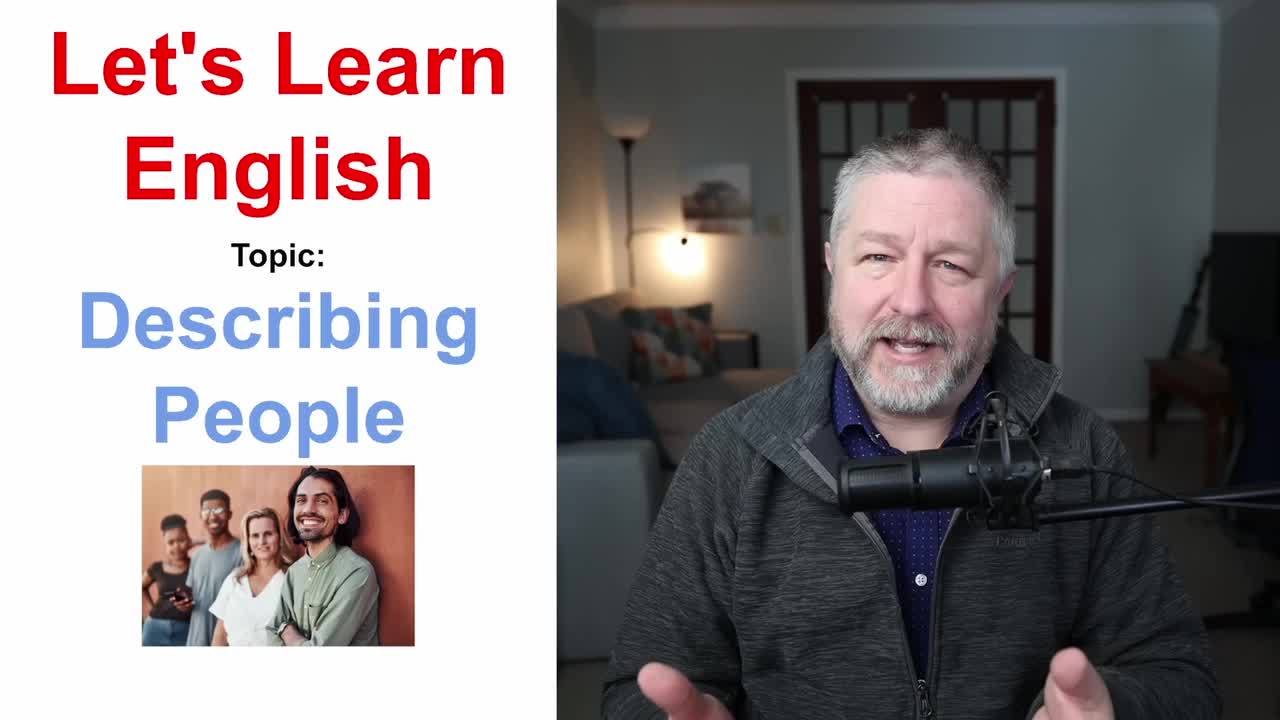
[A Guide to Describing Human Character and Personality]-[Let's Learn English! Topic: Describing People! 🧩👑🏈 (Lesson Only)]
📋 Summary
Introduction to Character Adjectives
Describing people effectively requires a nuanced vocabulary that goes beyond physical appearance. This guide explores various adjectives used to characterize personality traits, behavior, and social tendencies, providing a framework for how we perceive and interact with others.
Social Dynamics and Interpersonal Behavior
Many personality traits are defined by how individuals relate to others in social or professional settings.
- Arrogant and Egotistical: These terms describe individuals who believe they are "better or more important than others." Such people often disregard others' needs, insisting on their own schedules or asserting authority where none exists.
- Warm and Welcoming: In contrast, a "warm" person is "kind, friendly and makes others feel comfortable," often serving as a positive catalyst in social gatherings. Similarly, someone who is "welcoming" ensures that others feel happy and at ease when arriving in a new environment.
- Polite vs. Impolite: This distinction centers on manners. A "polite" person demonstrates respect and good etiquette, while an "impolite" person lacks consideration for social norms, often behaving in ways that are disrespectful or disruptive.
Emotional Temperament and Conflict
How individuals handle stress and disagreement often defines their character:
- Calm vs. Impatient: A "calm" person stays relaxed and does not get upset easily, which is essential for conflict resolution. Conversely, an "impatient" person "gets annoyed easily when things take too long," a trait often triggered by waiting or unexpected delays.
- Aggressive, Violent, and Cruel: These traits represent escalating levels of hostility. "Aggressive" individuals are ready to fight or push others to get what they want, either verbally or physically. "Violent" individuals use physical force to hurt others, while "cruel" people derive a sense of indifference or enjoyment from the pain of others.
- Timid: A "timid" person is "shy and easily scared," often avoiding the challenges that a "courageous" person—someone "brave and not afraid to face danger"—would tackle head-on.
Personal Integrity and Habits
Ethical behavior and daily habits provide further insight into a person's character:
- Honest vs. Dishonest: Honesty is defined by telling the truth and following the rules. A "dishonest" person, however, is willing to "lie or cheat" to gain an advantage.
- Lazy vs. Frugal: A "lazy" person "does not like to work or make an effort," which can be a source of frustration in team environments. On the other hand, a "frugal" person is "careful with money and avoids wasting it," prioritizing sustainability over excess.
- Absent-minded and Clumsy: These traits relate to focus and physical coordination. An "absent-minded" person often "forgets things or is not paying attention," while a "clumsy" person "often drops things or moves in an awkward way."
Social Energy and Disposition
Finally, personality is often categorized by how one gains or spends energy:
- Introverted vs. Extroverted: An "introverted" person "prefers being alone and feels tired after socializing," whereas an "extroverted" person "enjoys being around people and feels energized by socializing."
- Funny vs. Fun: While often confused, these are distinct. A "funny" person is like a personal comedian who makes others laugh, while a "fun" person makes activities enjoyable and helps others feel happy through their presence.
- Adorable and Lovable: These terms describe people who are easy to love. "Adorable" refers to someone who is cute and endearing, while "lovable" emphasizes a kind and pleasant nature that naturally draws people in.
Deep Learning with ListenLeap
✓
Listen Sentence by Sentence
✓
AI Q&A
✓
Word Favorites



🎯Key Sentences
1
I'm not really a pet person.
2
They're very fun to be around.
3
This is a character trait that I have.
4
I wish that I was just always calm.
5
It's probably the one character trait I do not enjoy in life.
📝Key Phrases
1
run into people
2
fun to be around
3
get annoyed easily
4
go wrong
5
disagree on something
📖 Transcript
Well hello and welcome to this English lesson about describing people.
So when you run into people they're not all the same.
Some people you can describe in certain ways, and the words I'm going to teach you today are basically describing what they're like and character, the way they behave.
We're not going to talk about short or tall or bald or anything like that.
We're going to talk about how to describe people so you know what they are like.
So once again welcome to this English lesson about describing people. arrogant.
ListenLeap Brings You Into Real Context Learning
🎨
Interesting Content
🌍
Real Materials
📱
Listen Anytime